by No Comments

City Newspaper. Rochester: an emerging world-class cycling spot

Back to News Articles

CYCLING: Rochester: an emerging world-class cycling spot

By Jeremy Moule on December 16, 2009

Andrew Dollard, Gary Young, and Frank Regan, all members of the Rochester Cycling Alliance. PHOTO BY MATT DETURCK

Recommend Article
Total Recommendations (1)

Cyclists race through downtown Rochester during the 2007 Twilight Criterium. FILE PHOTO

Rochester Cycling Alliance's Andrew Dollard says that he wants cyclists to have a voice in city planning. PHOTO MATT DETURCK

High Falls is a stunning natural landmark and attraction in downtown Rochester, but to people bicycling through the city on the Genesee Riverway Trail, there's no clear, marked way to get there. Cyclist Jon Schull says that he takes a different route each time because he doesn't know the best way to go.

"We are already one of the best bicycling destinations in the world, but no one is telling that story," says Schull, a member of the newly formed Rochester Cycling Alliance, an advocacy group. "And if you were going to tell that story, you'd want to take care of a few embarrassments, like what's the right way to ride to High Falls? And how do I get from High Falls back on the trail that will take me up to Seneca Park and Lake Ontario?"

Schull is one of several people trying to hammer home just how close the Rochester region is to becoming a world-class cycling destination.

The region has plenty of scenic and functional trails, unique attractions like the city's Turning Point Park, several thriving cycling cultures, and a top-notch amateur racing circuit. The Rochester cycling scene got a big boost from the professional races in downtown organized by Full Moon Vista owner Scott Page. Racers and spectators packed into downtown for the events. The next step was supposed to be the six-day Tour de New York race, which was originally set to debut this past summer. Page postponed the race a year because of money, but he plans to hold it in 2010.

Representatives of cycling's international governing body met with Page in 2007, the year the Twilight Criterium became an internationally sanctioned race, to talk about ideas for a multi-day tour race in and near Rochester – the Tour de New York. They were extremely interested, Page says, because of New York's international name recognition.

"They knew this terrain incredibly well," Page says, of the Rochester-Finger Lakes-Western New York region. "It's some of the nicest riding on the continent."

The Criterium has been a high-profile event, but the region's high-profile trails can be a draw, too. Each year, the state Canal Corporation measures usage of the Erie Canal Trail. During 2008, the number of people on different sections along the trail between Genesee Valley Park and Perinton Town Park ranged from about 100,000 and 200,000, half of whom were cyclists. Monroe County is one of the more active areas along the canal system, says Carmella Mantello, director of the Canal Corp.

On the tourism side, 500 bicyclists travel the canal trail each year as part of the Cycling the Erie bicycle tour.

But if Rochester wants to be a true cycling destination, it has an obstacle to overcome: government officials and cycling advocates – and even the different cycling groups in the region – haven't worked closely together. That's starting to change. The Rochester Cycling Alliance, which brings together cyclists from different groups and backgrounds, wants to take an active role as city officials develop a Rochester cycling master plan.

"We want to see bicyclists have more of a voice in the city planning process," says Andrew Dollard, a member of the Cycling Alliance.

The city has $250,000 in regional transit funds for bicycle-related improvements, as well as $2.1 million in federal funding over the next four years for projects on or connecting to the Genesee Riverway Trail. The 16 miles of completed trail run between Ontario Beach Park and Genesee Valley Park, though there's a break in the downtown area.

The city plans to form an advisory group with members from transportation agencies, environmental groups, and cycling groups. Among other things, that committee will evaluate trails, determine appropriate locations for bicycle lanes and shared-use lane markings ["sharrows"], and develop policies that encourage bicycle-friendly facilities in new construction projects. The city's ultimate goal is to earn Bicycle Friendly Community status from the League of American Bicyclists.

The city's in the process of hiring a consultant for the project. City Planning Director Charles Thomas says he expects the contract will take effect at the start of the city's next fiscal year, July 1.

How does a planning document relate to the region's potential as a cycling destination? The same improvements that will make the city more hospitable to the cyclists who live here will also make the city more attractive to visiting cyclists.

Bicycle master plans are also being developed in some Rochester suburbs, which will help the region's cycling appeal, says Richard DeSarra of the Rochester Bicycling Club. Penfield has completed its plan, and Brighton is preparing to start. But the different communities also need to make sure that plans and projects in one place tie into the efforts in another.

Making the Rochester region bicycle friendly and a cycling destination will also require passionate local leaders with clout to push for the necessary policies and projects, Page says.

One way to make the region more bicycle-friendly is for municipalities to make sure they connect existing trails and trail segments. Over the past decade or so there has been progress, DeSarra says.The Erie Canal trail and the Genesee Valley Greenway are examples; they even connect to each other. But there's still work to be done on those trails, such as making more connections or offering better markings.

The Greenway, combined with the Genesee Riverway, provides a straight shot from RIT to downtown, says Jon Schull, an RIT professor who's involved in bicycling-related projects at the school. The Greenway and Riverway are actually the most direct way to get from RIT to downtown. And the University or Rochester is along the way.

Students could live downtown "without having to worry about cars and parking and all of that," Schull says. "So I see that as a real transportation innovation that could make a difference."

The Greenway and the Erie Canal trail are not complete or connected in certain parts, mostly in lesser-populated areas. If they were, those paths could be useful to commuters, Dollard says. They could act as a bicycle highway from outlying areas into the city.

On a broader scale, there's the potential to connect trails from Lake Ontario and the City of Rochester to Williamsport, Pennsylvania, via 230 miles of trails, including the Genesee Riverway Trail and the Genesee Valley Greenway. The only hurdle is a few short gaps and one 20-mile gap that need to be connected, Schull says.

And that doesn't even touch on the cycling opportunities that are available in the Finger Lakes region, east of the Greenway. Bike-based scenic tours and wine country tours are already popular.

DeSarra sees potential for bicycle-based heritage tourism. A visitor could bike into Rochester on the Erie Canal trail, hop on to other local trails and visit sites related to Susan B. Anthony, Frederick Douglass, or the Underground Railroad, then continue on to Canandaigua, Seneca Falls, or Auburn.

"We've got some great cultural things that would bring them in," DeSarra says.

Comments for "CYCLING: Rochester: an emerging world-class cycling spot " (3)

City Newspaper is not responsible for the content of these comments. City Newspaper reserves the right to remove comments at their discretion.

User Photo

it is unfortunate said on Dec. 16, 2009 at 10:41am

It is unfortunate that so many irresponsible bike riders ruin the reputation of bicyclists for those who are responsible, law-abiding riders.

User Photo

groc said on Dec. 16, 2009 at 1:38pm

Rochester is a great location for all forms of cycling, Allot of towns are starting to look at making long term decisions making the roads and creating connectivity to make a more bike friendly community. Victor is a good example. Lets not forget about the trails off-road as well as the on road routes

User Photo

rochester99 said on Dec. 16, 2009 at 2:51pm

Biking on and off road in the Metro region of Rochester has to be among the best in the country. As an avid off-road/mountain biker who has experienced the best in urban bike trails (Toronto, Portland, Oregon, Seattle, Austin…), I can easily state that Rochester has many outstanding biking assets…but like many other valuable assets in our region…we tend to ignore or underfund them.

The region is dotted with many great segments of biking but because they lack proper signage, amenities and continuity…they loss their potential impact. I have often taken my mountain bike along both sides of the Genesee River…from the Erie canal north to Lake Ontario ….passing many outstanding sites…upper falls, lower falls, the massive pedestrian bridge crossing the river near Seneca park, Seneca park zoo and the lower swan lake, the recently completed one mile long raised bridge over the west side of the River near turning point Park, several active marinas, the Lighthouse at Charlotte and ending at the Pier at Charlotte Harbor. Most of the trip does not cross any roads…at times you think you are in the middle of Letchworth state Park. 
Other impressive stretches of bikeways exist along Lake Ontario at Durand Eastman Park and of course the Erie canal towpath….and still many more others that are sprinkled throughout the region.

But until we take this asset serious and willing to accelerate funding/investing in these trails, we will just have a “potential” asset rather than an outstanding/valuable asset. 

Leave A Comment

(This will not be published)

(Optional)

Respond on Your Blog

Create an Account 
or
Login

If you have a City Account you can not only post comments, but you can also respond to articles in your own City Blog. It's just another way to make your voice heard.


Jon.Schull@rit.edu

Sent from my iPhone 585-738-6696; pls excuse tyops.

by No Comments

City Newspaper. Rochester: an emerging world-class cycling spot

Back to News Articles

CYCLING: Rochester: an emerging world-class cycling spot

By Jeremy Moule on December 16, 2009

Andrew Dollard, Gary Young, and Frank Regan, all members of the Rochester Cycling Alliance. PHOTO BY MATT DETURCK

Recommend Article
Total Recommendations (1)

Cyclists race through downtown Rochester during the 2007 Twilight Criterium. FILE PHOTO

Rochester Cycling Alliance's Andrew Dollard says that he wants cyclists to have a voice in city planning. PHOTO MATT DETURCK

High Falls is a stunning natural landmark and attraction in downtown Rochester, but to people bicycling through the city on the Genesee Riverway Trail, there's no clear, marked way to get there. Cyclist Jon Schull says that he takes a different route each time because he doesn't know the best way to go.

"We are already one of the best bicycling destinations in the world, but no one is telling that story," says Schull, a member of the newly formed Rochester Cycling Alliance, an advocacy group. "And if you were going to tell that story, you'd want to take care of a few embarrassments, like what's the right way to ride to High Falls? And how do I get from High Falls back on the trail that will take me up to Seneca Park and Lake Ontario?"

Schull is one of several people trying to hammer home just how close the Rochester region is to becoming a world-class cycling destination.

The region has plenty of scenic and functional trails, unique attractions like the city's Turning Point Park, several thriving cycling cultures, and a top-notch amateur racing circuit. The Rochester cycling scene got a big boost from the professional races in downtown organized by Full Moon Vista owner Scott Page. Racers and spectators packed into downtown for the events. The next step was supposed to be the six-day Tour de New York race, which was originally set to debut this past summer. Page postponed the race a year because of money, but he plans to hold it in 2010.

Representatives of cycling's international governing body met with Page in 2007, the year the Twilight Criterium became an internationally sanctioned race, to talk about ideas for a multi-day tour race in and near Rochester – the Tour de New York. They were extremely interested, Page says, because of New York's international name recognition.

"They knew this terrain incredibly well," Page says, of the Rochester-Finger Lakes-Western New York region. "It's some of the nicest riding on the continent."

The Criterium has been a high-profile event, but the region's high-profile trails can be a draw, too. Each year, the state Canal Corporation measures usage of the Erie Canal Trail. During 2008, the number of people on different sections along the trail between Genesee Valley Park and Perinton Town Park ranged from about 100,000 and 200,000, half of whom were cyclists. Monroe County is one of the more active areas along the canal system, says Carmella Mantello, director of the Canal Corp.

On the tourism side, 500 bicyclists travel the canal trail each year as part of the Cycling the Erie bicycle tour.

But if Rochester wants to be a true cycling destination, it has an obstacle to overcome: government officials and cycling advocates – and even the different cycling groups in the region – haven't worked closely together. That's starting to change. The Rochester Cycling Alliance, which brings together cyclists from different groups and backgrounds, wants to take an active role as city officials develop a Rochester cycling master plan.

"We want to see bicyclists have more of a voice in the city planning process," says Andrew Dollard, a member of the Cycling Alliance.

The city has $250,000 in regional transit funds for bicycle-related improvements, as well as $2.1 million in federal funding over the next four years for projects on or connecting to the Genesee Riverway Trail. The 16 miles of completed trail run between Ontario Beach Park and Genesee Valley Park, though there's a break in the downtown area.

The city plans to form an advisory group with members from transportation agencies, environmental groups, and cycling groups. Among other things, that committee will evaluate trails, determine appropriate locations for bicycle lanes and shared-use lane markings ["sharrows"], and develop policies that encourage bicycle-friendly facilities in new construction projects. The city's ultimate goal is to earn Bicycle Friendly Community status from the League of American Bicyclists.

The city's in the process of hiring a consultant for the project. City Planning Director Charles Thomas says he expects the contract will take effect at the start of the city's next fiscal year, July 1.

How does a planning document relate to the region's potential as a cycling destination? The same improvements that will make the city more hospitable to the cyclists who live here will also make the city more attractive to visiting cyclists.

Bicycle master plans are also being developed in some Rochester suburbs, which will help the region's cycling appeal, says Richard DeSarra of the Rochester Bicycling Club. Penfield has completed its plan, and Brighton is preparing to start. But the different communities also need to make sure that plans and projects in one place tie into the efforts in another.

Making the Rochester region bicycle friendly and a cycling destination will also require passionate local leaders with clout to push for the necessary policies and projects, Page says.

One way to make the region more bicycle-friendly is for municipalities to make sure they connect existing trails and trail segments. Over the past decade or so there has been progress, DeSarra says.The Erie Canal trail and the Genesee Valley Greenway are examples; they even connect to each other. But there's still work to be done on those trails, such as making more connections or offering better markings.

The Greenway, combined with the Genesee Riverway, provides a straight shot from RIT to downtown, says Jon Schull, an RIT professor who's involved in bicycling-related projects at the school. The Greenway and Riverway are actually the most direct way to get from RIT to downtown. And the University or Rochester is along the way.

Students could live downtown "without having to worry about cars and parking and all of that," Schull says. "So I see that as a real transportation innovation that could make a difference."

The Greenway and the Erie Canal trail are not complete or connected in certain parts, mostly in lesser-populated areas. If they were, those paths could be useful to commuters, Dollard says. They could act as a bicycle highway from outlying areas into the city.

On a broader scale, there's the potential to connect trails from Lake Ontario and the City of Rochester to Williamsport, Pennsylvania, via 230 miles of trails, including the Genesee Riverway Trail and the Genesee Valley Greenway. The only hurdle is a few short gaps and one 20-mile gap that need to be connected, Schull says.

And that doesn't even touch on the cycling opportunities that are available in the Finger Lakes region, east of the Greenway. Bike-based scenic tours and wine country tours are already popular.

DeSarra sees potential for bicycle-based heritage tourism. A visitor could bike into Rochester on the Erie Canal trail, hop on to other local trails and visit sites related to Susan B. Anthony, Frederick Douglass, or the Underground Railroad, then continue on to Canandaigua, Seneca Falls, or Auburn.

"We've got some great cultural things that would bring them in," DeSarra says.

Comments for "CYCLING: Rochester: an emerging world-class cycling spot " (3)

City Newspaper is not responsible for the content of these comments. City Newspaper reserves the right to remove comments at their discretion.

User Photo

it is unfortunate said on Dec. 16, 2009 at 10:41am

It is unfortunate that so many irresponsible bike riders ruin the reputation of bicyclists for those who are responsible, law-abiding riders.

User Photo

groc said on Dec. 16, 2009 at 1:38pm

Rochester is a great location for all forms of cycling, Allot of towns are starting to look at making long term decisions making the roads and creating connectivity to make a more bike friendly community. Victor is a good example. Lets not forget about the trails off-road as well as the on road routes

User Photo

rochester99 said on Dec. 16, 2009 at 2:51pm

Biking on and off road in the Metro region of Rochester has to be among the best in the country. As an avid off-road/mountain biker who has experienced the best in urban bike trails (Toronto, Portland, Oregon, Seattle, Austin…), I can easily state that Rochester has many outstanding biking assets…but like many other valuable assets in our region…we tend to ignore or underfund them.

The region is dotted with many great segments of biking but because they lack proper signage, amenities and continuity…they loss their potential impact. I have often taken my mountain bike along both sides of the Genesee River…from the Erie canal north to Lake Ontario ….passing many outstanding sites…upper falls, lower falls, the massive pedestrian bridge crossing the river near Seneca park, Seneca park zoo and the lower swan lake, the recently completed one mile long raised bridge over the west side of the River near turning point Park, several active marinas, the Lighthouse at Charlotte and ending at the Pier at Charlotte Harbor. Most of the trip does not cross any roads…at times you think you are in the middle of Letchworth state Park. 
Other impressive stretches of bikeways exist along Lake Ontario at Durand Eastman Park and of course the Erie canal towpath….and still many more others that are sprinkled throughout the region.

But until we take this asset serious and willing to accelerate funding/investing in these trails, we will just have a “potential” asset rather than an outstanding/valuable asset. 

Leave A Comment

(This will not be published)

(Optional)

Respond on Your Blog

Create an Account 
or
Login

If you have a City Account you can not only post comments, but you can also respond to articles in your own City Blog. It's just another way to make your voice heard.


Jon.Schull@rit.edu

Sent from my iPhone 585-738-6696; pls excuse tyops.

by No Comments

Cities for Cycling

Yesterday, Bicycle Retailer and Industry News (“BRAIN”) reported on a new initiative called Cities for Cycling:

www.bicycleretailer.com/news/newsDetail/3513.html

According to BRAIN,

Cities for Cycling is a new effort by city governments to promote best practices in urban cycling and to increase the use of bicycles to improve urban mobility, livability and public health while reducing traffic congestion and CO2 emissions.

Bikes Belong and the SRAM Cycling Fund are providing support for Cities for Cycling—a project of the National Association of City Transportation Officials (NACTO). Cities for Cycling is comprised of transportation and elected officials from Atlanta, Baltimore, Boston, Chicago, Detroit, Houston, Los Angeles, Minneapolis, New York, Philadelphia, Phoenix, Portland, San Francisco, Seattle, and Washington, D.C.

Let’s hope Cities for Cycling will allow smaller cities like Rochester into the fold.
by No Comments

Cities for Cycling

Yesterday, Bicycle Retailer and Industry News (“BRAIN”) reported on a new initiative called Cities for Cycling:

www.bicycleretailer.com/news/newsDetail/3513.html

According to BRAIN,

Cities for Cycling is a new effort by city governments to promote best practices in urban cycling and to increase the use of bicycles to improve urban mobility, livability and public health while reducing traffic congestion and CO2 emissions.

Bikes Belong and the SRAM Cycling Fund are providing support for Cities for Cycling—a project of the National Association of City Transportation Officials (NACTO). Cities for Cycling is comprised of transportation and elected officials from Atlanta, Baltimore, Boston, Chicago, Detroit, Houston, Los Angeles, Minneapolis, New York, Philadelphia, Phoenix, Portland, San Francisco, Seattle, and Washington, D.C.

Let’s hope Cities for Cycling will allow smaller cities like Rochester into the fold.
by No Comments

Monthly Meeting Tuesday Night!

    When: Tuesday December 15 @ 6:30p.m.; may last until 8:30 p.m.
    Where: RIT Student Innovation Center
        

View RIT Center for Student Innovation in a larger map
 

Proposed Agenda:
  • Welcome/Introductions
  • Update on past month’s bike related activities
  • Discussion of monthly meeting at RIT/UofR
  • Discussion of biweekly (Sunday) meeting at SPOTS Coffee
  • Discussion regarding Sunday group’s management of Events/Social Activities
  • Assignment of leadership roles in following committees:
    • Policy
    • Events/Social Activities
    • Advocacy
    • Communications
  • Closing comments, next steps, next meeting
  • by No Comments

    Monthly Meeting Tuesday Night!

      When: Tuesday December 15 @ 6:30p.m.; may last until 8:30 p.m.
      Where: RIT Student Innovation Center
          

    View RIT Center for Student Innovation in a larger map
     

    Proposed Agenda:
    • Welcome/Introductions
    • Update on past month’s bike related activities
    • Discussion of monthly meeting at RIT/UofR
    • Discussion of biweekly (Sunday) meeting at SPOTS Coffee
    • Discussion regarding Sunday group’s management of Events/Social Activities
    • Assignment of leadership roles in following committees:
      • Policy
      • Events/Social Activities
      • Advocacy
      • Communications
  • Closing comments, next steps, next meeting
  • by No Comments

    Brooks development too speedy for some | democratandchronicle.com | Democrat and Chronicle:


    Residents seek a clear plan for river corridor

    Brian Sharp • Staff writer • December 1, 2009
    After more than 20 years spent trying to bring investment to the Rochester’s south river corridor, some neighbors now want things to slow down.
    Historian John Curran gives a tour to Lynnetta Robinson, left, and Katrina Hanson  of city property along the Genesee River.

    Historian John Curran gives a tour to Lynnetta Robinson, left, and Katrina Hanson of city property along the Genesee River. (SHAWN DOWD staff photographer)

    Brooks Landing currently consists of a Staybridge Suites hotel, a retail/office building and a spin-off Boulder Coffee shop, all at Genesee Street and Brooks Avenue.
    The next phase, to get under way in spring 2010 and open in summer 2011, proposes a six-story building — with a restaurant plus five floors and 85 beds of student housing — plus a drive-thru ATM and a two-story Chabad house, or Jewish community center.
    After all that is completed, developer Ron Christenson is talking about condos.

    Christenson envisions spending another $20 million on Brooks Landing, adding to the $20 million already invested.
    A short distance up South Plymouth Avenue is the 120-unit Riverview Apartments, which opened in fall 2008. The city is studying how best to clean up the old Vacuum Oil site farther north, a riverfront property at the end of Flint Street. Stretching back from the river is seven privately-owned acres, including an old junkyard, that local businessman Thomas Masaschi bought for $660,000 last year. The land is assessed at $208,000.

    by No Comments

    City of Rochester | Highland Park-Canalway Trail Project

    City of Rochester | Highland Park-Canalway Trail Project


    About the Project

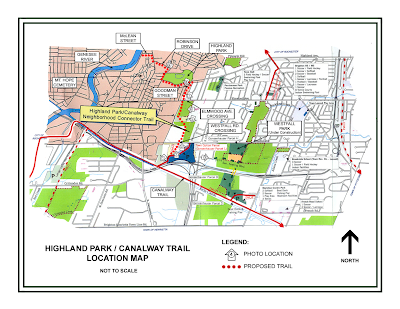
    The Highland Park/Canalway Trail Project is a joint venture between the Town of Brighton and the City of Rochester. Fisher Associates and Trowbridge and Wolf Landscape Architects are on hand to assist the City with the project. An engineer's rendition of the off-road portion of the trail.
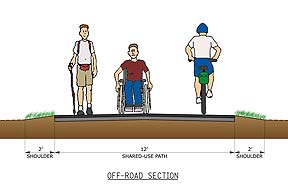
       
    The trail is intended to:

    1. Connect Highland Park with the Erie Canalway Trail and the Genesee Riverway Trail,
    2. Provide a safe pedestrian and bicycle route to Highland Park,
    3. Build a cost-effective, context-sensitive, community-valued trail, and
    4. Enhance the regional trail system.

    Documents

    Project Timeline

    Project Initiation → January 2009
    Develop Alternatives → May-June 2009
    Public Meeting → July 1, 2009
    Trail Design & Approvals → July-Spring 2010
    Bid & Award Project→ Summer 2010
    Trail Construction → Fall 2010- Spring 2011

    Questions?

    Contact City project manager, Jeff Mroczek, at (585) 428-7124 or email him.

    by No Comments

    'Bullet bike' keeps pace with city traffic | HeraldTribune.com | Sarasota Florida | Southwest Florida's Information Leader

    ‘Bullet bike’ keeps pace with city traffic

    Here’s part of the article. (The argumentative Comments section is worth reading, but all the controversy would go away if the vehicles were on a dedicated transitway.) Thanks for the tip, Rebecca

    The 75-pound, three-wheeled curiosity is known generically as a velomobile, or a bullet bike. Mickevicius fell in love with it several years ago when his son, Ray Jr. of Toronto, began importing them from Europe.

    In March, Popular Science described how Ray Jr. is now manufacturing velomobiles in hopes of creating a North American market.

    The model his father brought to Sarasota this fall is called a Quest, which the elder Mickevicius labels the “sports model” of the industry.

    It can blow away any bicycle on the road and is designed with such aerodynamic economy it deprives tailgaters of drafting opportunities.

    With enough room to accommodate a bag of groceries, the Quest offers some obvious practical applications, Mickevicius says.

    “I’d say a velomobile is for people who are concerned about the environment, and like to stay fit and have a good time.”

    But don’t look for velomobiles to jam the bike lanes anytime soon. The Quest’s $8,000 to $9,000 sticker price guarantees an exclusive clientele.

    Its fully loaded Cab-Bike model, marketed not as a racer but as a muscle-powered green alternative to automobiles, has completely enclosed interiors and runs around $12,000.

    At the Bluevelo factory in Toronto, where just three new hand-crafted vehicles roll out a month, Ray Mickevicius Jr. doesn’t anticipate a transportation revolution.

    by No Comments

    NYC Bike Lane Design

    Here’s an interesting video from the New York City Department of Transportation describing the newest bike lanes and signals there:

    by No Comments

    NYC Bike Lane Design

    Here’s an interesting video from the New York City Department of Transportation describing the newest bike lanes and signals there:

    by No Comments

    Railroad bridge could become trail walkway

    November 14, 2009

    Railroad bridge could become trail walkway

    Brian Sharp
    Staff writer

    From 200 feet above the Genesee River gorge, the abandoned railroad bridge offers spectacular views and some uncertain footing.

    The 700-foot span, just north of Smith Street, came to the city as part of a $1 million-plus land deal in 2005. he land, nearly 20 acres of abandoned rail line, stretches from Charlotte to High Falls, and a significant portion will be converted to a recreational trail next year. The 130-year-old bridge was something of an extra — and also an unknown.bilde.jpg

    If it turns out to be the “workhorse” city officials hope, however, then it could be a stunning addition to the city trail system one day, on par with the Pont du Rennes pedestrian bridge at High Falls.

    “You are pretty high up. It’s a scary situation,” said Tom Hack, senior structural engineer for the city. “(But) it does have a bit of coolness to it — it really does.”

    Work began this week inspecting the bridge, a $135,000 project with the city paying engineers from Bergmann Associates, aided by Skala Inc. technicians, to go over the side of the bridge on ropes, to climb and check the support structure. The on-site work will continue into next week, with a feasibility study — outlining options from demolition to rehabilitation — due to the city by mid-2010.

    “It’s really a process of discovery for us,” said Mike Cooper, project manager with Bergmann. “We really don’t have a lot of background information.”

    Much of what is known about the bridge came from railroad history buffs on the Internet. The bridge last was used in the mid-1980s and decommissioned in the mid-1990s. Inspectors have found reinforcement steel, and some problems with the stone masonry of the east abutment. Up top, the steel rails have been removed, allowing some of the ties to warp and shift, “which is an uneasy feeling” when crossing on foot, Cooper said.

    This is one of two unused railroad river bridges the city hopes to reuse. The other is south of Ford Street and links the Plymouth-Exchange neighborhood to the University of Rochester campus.

    “There’s certainly a number out there that are probably still lying around, unused,” said Cooper, whose firm just completed work last month on the former Poughkeepsie-Highland Railroad Bridge over the Hudson River.

    Early indications are that Rochester’s bridge is sound, Cooper said.

    Once the city knows the stability of the bridge, how much weight it will support, and other fundamentals, officials would need to decide whether to move ahead and seek funding. Factoring in planning and design, the project likely remains at least three or four years off, and could cost as much as $2 million or $3 million, Hack said.

    The bridge would be another link in the Genesee Riverway Trail, and connect into the planned El Camino-Butterhole-Seneca Park Trail. Construction on the El Camino trail should begin next summer, running along the old rail line between Seneca Park and St. Paul Street, and crossing Ridge Road West on another old railroad bridge.

    That work is being paid for with a $2 million federal grant and $150,000 from Eastman Kodak Co. Also next year, the city should receive $70,000 in state money to design a Genesee Riverway Trail connection on the west side of the river from Smith Street to Brown and Mill streets in High Falls. The city will spend $20,000 on a temporary trail connection next year.

    All this fits into a larger $1 million connection running all the way from Lower Falls to downtown on the west side of the river. Separately, the city plans to put up signs next year for on-street trail routes downtown.

    “Now, we don’t think that is perfect, but at least it will connect up from Court Street to the Riverway Trail at St. Paul,” said JoAnn Beck, the city’s senior landscape architect.

    There also are plans for the city to develop a bicycle master plan, mapping connections to neighborhoods.

    BDSHARP@DemocratandChronicle.com

    by No Comments

    NYSDOT rumble strip proposal. Use extreme caution!


    The New York State department of transportation is proposing a policy that could doom one or our region’s most promising growth opportunities: bicycling for recreation, transportation, and tourism.

    NYSDOT Proposing Widespread Use of Rumble Strips on Secondary Highways, Posing New Hazards to Bicyclists

    Contact NYSDOT and Your Legislators—Urge NYSDOT Not to Jeopardize the Safety of Its Roadway Users!

    CURRENT NYSDOT POLICY: Do not install rumble strips on secondary roads except in rare instances

    PROPOSED NYSDOT POLICY: Installation of rumble strips will be the preferred practice in the design of all secondary roads with a few exceptions
    Rumble strips are a well-documented hazard to bicyclists. Accepted practice nationwide dictates that rumble strips be used only sparingly on roads permitting cycling

    NYSDOT is proposing an Engineering Instruction (EI), titled “Secondary Highway Audible Roadway Delineators – Guidance and Policy,” which is at variance with the practices recommended by the Federal Highway Administration, The American Association of State Highway and Transportation Officials, and other standards setting agencies. Such national agencies generally recommend if rumble strips to be used on two-lane roads if there is a documented run-off-the road accident problem—and then, used only as a last resort due to the hazards they may create for other roadway users, including bicyclists.
    Contact NYSDOT and your legislators to urge NYSDOT to not issue the proposed policy. Ask them to work with groups, such as the New York Bicycling Coalition, organizers of bicycling tours and events, and local cycling clubs to construct a less hostile policy that better balances the needs of motorist and bicyclist safety.

    BACKGROUND: Rumble strips, as illustrated, are audible roadway delineators or indentations in the shoulder pavement that make sound when a car runs over them at high speeds. While an important safety tool used to prevent run-offs on high-speed Interstates and other limited access highways, they are a well-documented hazard to individuals on bicycles and should be used only sparingly on roads permitting cycling. NYSDOT is proposing to replace current stated policy — not have rumble strips on secondary roads except in rare instances — with a new one declaring “installation of shoulder rumble strips to be the preferred practice in the design of all secondary highways” with a few exceptions.
    In short, the proposal would have NYSDOT install rumble strips (with certain exceptions) on secondary roadways throughout New York State, compromising bicyclists’ safety and the quality of riding surfaces on thousands of miles otherwise scenic roadways. National practice is to have rumble strips nowhere with some exceptions on secondary roadways. By taking the opposite tack, NYSDOT’s policy promiscuously promotes rumble strips, going far beyond what is seen as efficient deployment. Aside from the policy’s cost implications, it is unwise. It means rumble strips in urban areas, creating or adding to the din. It means rumble strips on roads with speeds too low to generate sound. Rumble strips also mean higher maintenance costs for the taxpayer. And, of course, they pose a danger to cyclists by causing spills, erratic avoidance maneuvers, or causing them to avoid the shoulder and ride mingled in automobile traffic.

    A check of other states with such secondary highway policies shows they require an accident analysis be done before such rumble strip use; the proposed NYSDOT policy does not. Other states specify where rumble strips are used, have at least 5 feet of paved shoulder between them and any guardrail; the proposed NYSDOT policy does not. Other states say not to even consider rumble strips unless there are high speeds and high traffic volumes: while the proposed NYSDOT policy does have speed and volume thresholds, they are considerably lower than those of any other state. There are dozens of other such examples in this EI where the proposed policy varies from generally accepted practice.

    Action Alert from NYBC (Continued)

    Contact NYSDOT and your legislators to urge NYSDOT to not issue the proposed policy TODAY. Call, write, or email (or utilize all 3 methods of communication) your Assembly Member, State Senator and the Commissioner of Transportation.
    WHO REPRESENTS ME?
    Prefer to mail?

    Simply send a postcard (28¢ each at your nearest US Post Office) to your legislators and the Commissioner. For an investment of 84¢, you have the ability to improve bicycling throughout New York State, including in your village, town or city. Or, if easier, just stuff a copy of this notice in an envelope (adding personal comments if you wish) and mail (44¢ postage) it off to the Commissioner and elected representatives..

    WHO REPRESENTS ME?

    Who’s my Assemblyperson?
    Click here to search by Zip Code http://assembly.state.ny.us/mem/

    Who’s my NYS Senator?
    Click here to search by Zip Code http://www.nysenate.gov/senators

    At the above sites, clicking on the highlighted names will bring you directly to the legislator’s official website where you may make comments.

    How to contact NYSDOT:
    Website: Click here to email NYSDOT https://www.nysdot.gov/about-nysdot/contact

    Or write: Commissioner Stanley Gee
    NYS Department of Transportation
    50 Wolf Rd.
    Albany, NY 12232

    About the New York Bicycling Coalition

    The New York Bicycling Coalition is dedicated to preserving New York State’s wide and smoothly paved shoulder network as an important asset for use by the State’s residents (bicyclists and pedestrians) as well as visiting cyclists. Since 1992, the New York Bicycling Coalition (NYBC) has served as the only statewide, not-for-profit organization of its kind advocating various “Share the Road” education and safety initiatives on behalf of both cyclists and motorists, while working to assure highway, street, and transit facilities are amenable to bicyclists and pedestrians. Support Our Efforts to Increase Bicycling and Pedestrian Safety and Access Today by joining online: http://www.nybc.net/donate