The term “car lite” encompasses a variety of multimodal transportation lifestyles, featuring little dependence (but not NO dependence) on a car. It typically looks like sharing one car within a household or only using a car when absolutely necessary.
Wanna rep it? Check out the t-shirt in our online shop.

Simplicity and Saving – Two Motivations for Being Car-Lite
By Cody Donahue:
As the holiday season ramps up, I am probably with the majority of Americans when I say that I’d really like to save more money while still fully celebrating our holiday traditions. Over the years, the holidays seem to start earlier and earlier and the expectations of giving and getting keep inflating. As does cost: Bloomberg found that inflation and tariffs are driving up costs for just about every category of holiday giving. Sorry family, it’s socks for everyone!
While many of us are stressed and anxious about the gift and food budget, let’s throw the overwhelming cost of car ownership into the mix. For years, we have reported on the AAA’s cost of car ownership, but I just recently saw USA Today’s report that put car ownership in the perspective of “The American Dream.” To achieve the “American dream” of owning a new car, a dream shared by 72% of Americans, you’ll have to spend $900,346 over your lifetime in 2025, up from $811,440 a year ago. By comparison, a lifetime of homeownership costs $957,594, up from $929,955 in 2024.
Amazingly, car ownership roughly costs the same as raising two children and sending them to college. In a place like Rochester, it’s incredibly hard to have young kids and not drive one or sometimes two cars. And if you can’t afford cars, you probably have no other choice than to use the bus or rely on other people whether those are good options or not.
If you have kids, live in Greece, can’t get to a grocery store without hitting 390, and your place of work is in Henrietta, then car-free rankings and weeks without driving just probably feel out of reach.
Political talk in New York State will continue to emphasize “affordability” throughout the next state election cycle in 2026, and I for one would like to see “affordable” applied to transportation choices differently. Transportation choices that are created from state investments in all modes of transportation can pay off in numerous ways, but let’s start with money first: according to an RMI analysis, NY state could save households an average of $3,750 per year (fuel, maintenance, and depreciation) by putting money into programs that would reduce vehicle miles traveled (VMT) by 20% per-capita.
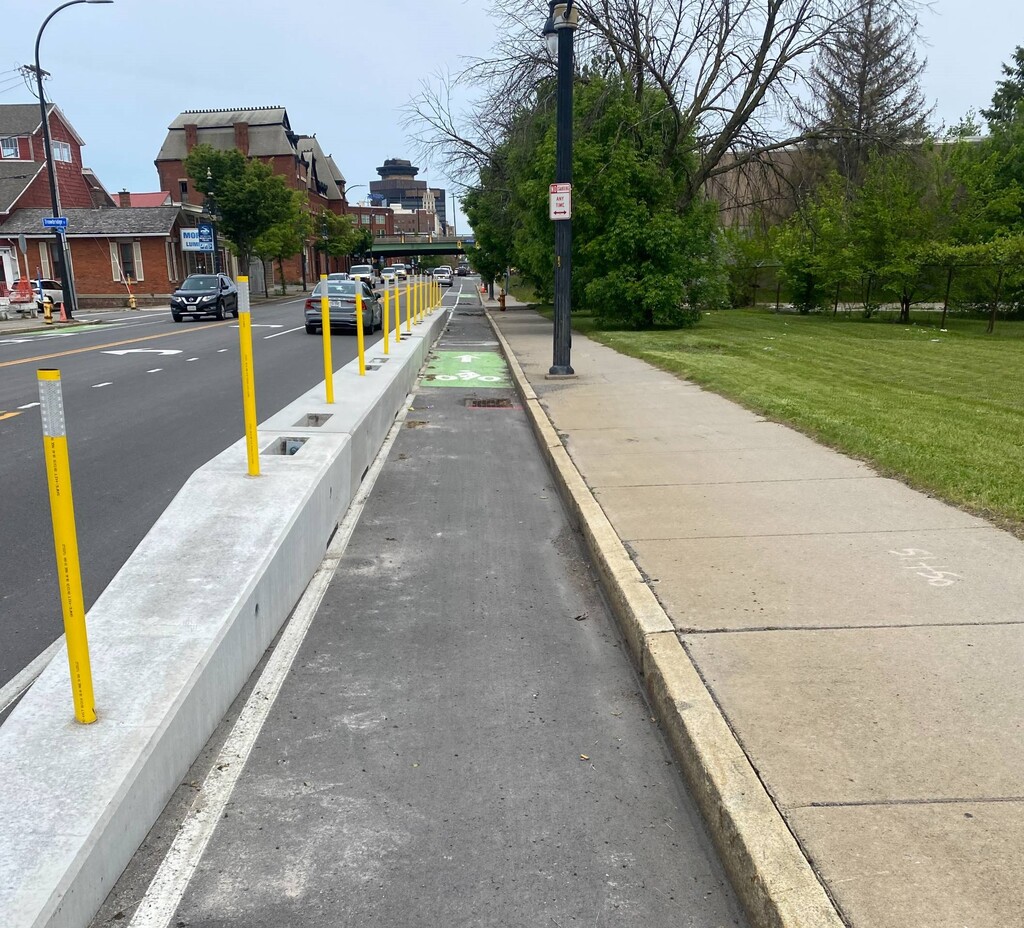
There are lots of ways to reduce VMT, including but not limited to investing in the bus system, adding safe and continuous bike lanes, sidewalks and making land use choices that place daily destinations in neighborhoods. $3,750 is a lot more than any rebate program any politician has talked about or implemented.
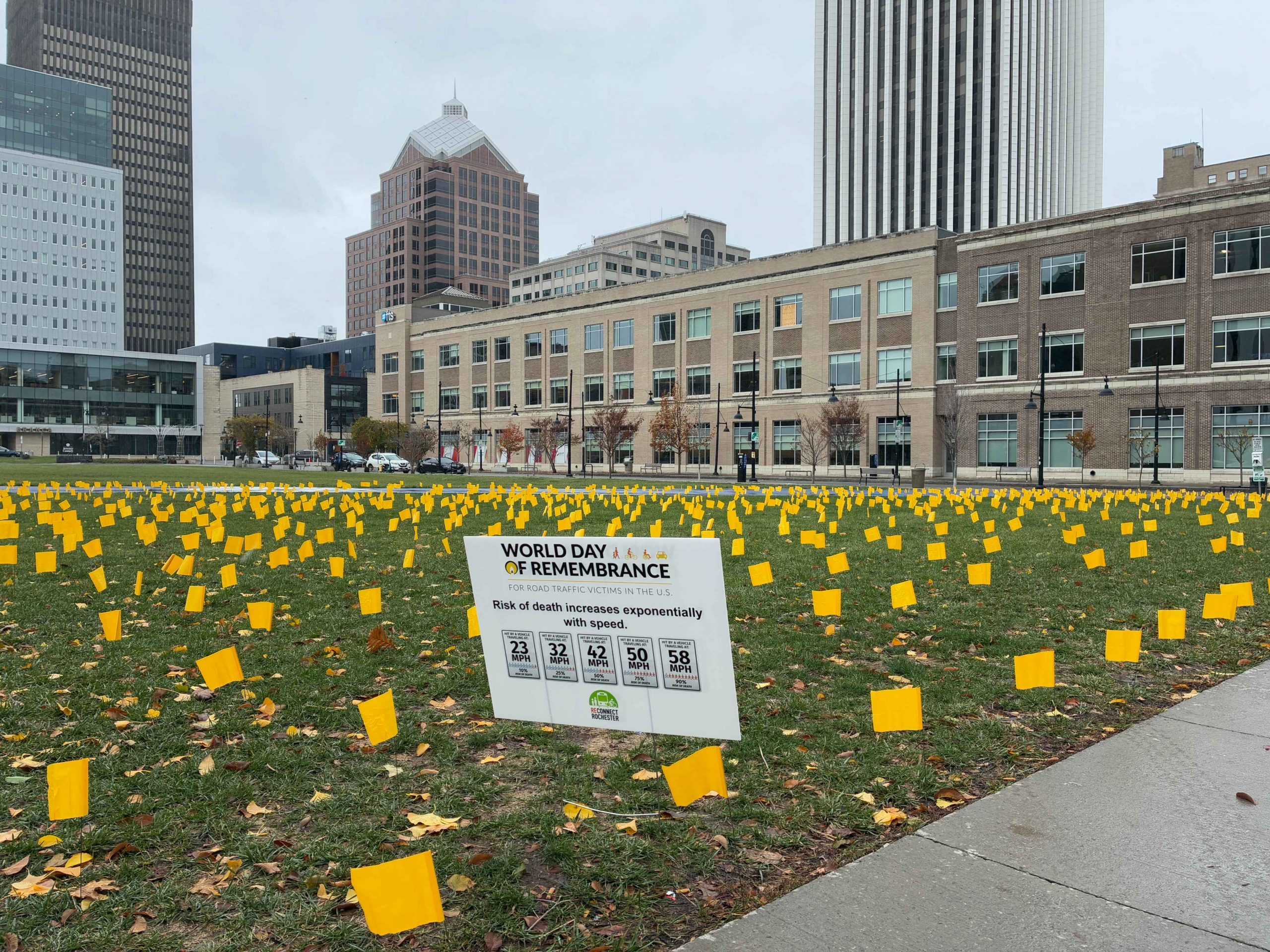
Beyond the monetary savings, affordable transportation choices would also create societal savings: by avoiding car crashes, 593 lives on average per year could be saved in the state. By increasing active lifestyles and avoiding bike/ped crashes, you could save 4,294 lives in NY state. Finally, 53 lives could be saved by reducing air pollution on average per year in New York State. Avoiding having to pay for something because it didn’t happen in the first place seems like a great approach to me.
Reconnect Rochester recently challenged folks to try going car-free or car-lite for a week, and we heard a lot of positive feedback if your lifestyle lined up to having a shorter commute (1 bus ride or 1 bike ride) or you lived in a place where getting to the store was as easy as walking. We also heard the feedback from folks for whom this doesn’t work as well – people who have young kids, people who live in one suburb and work in another suburb, people who have no grocery stores in their neighborhood, or people whose bus commute would exceed 45 min when they could drive the same distance alone in their car in 10 min.
A national storage unit company recently published a listicle about the best cities to be car-optional that ranked Rochester as 9th in the country, one place higher than Portland, OR! While I’d be really happy to believe that all of Rochester’s hard work has paid off and we’re a fantastic place to live car-free, I would caution that this is only true for certain people.
If you’re an able-bodied, city resident who enjoys the average 4.1 mile commute, you have a direct bus route, you are a practiced cyclist or you have the time to walk, this probably rings true. If you have kids, live in Greece, can’t get to a grocery store without hitting 390, and your place of work is in Henrietta, then car-free rankings and weeks without driving just probably feel out of reach. But that doesn’t mean those people don’t want more of their life to be car-optional. The point for me is that people should have more options, our policy choices should expand those options, and at the end of the day those options make household life more affordable.
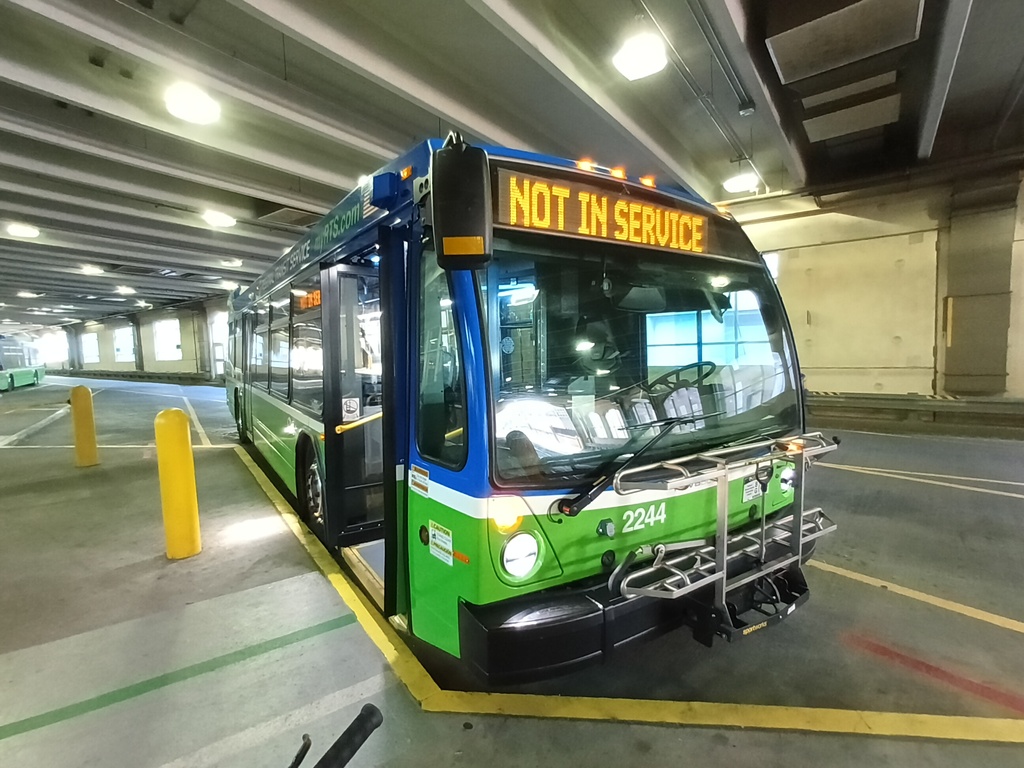
Photo: John Paul Corona
Is there a way to make car-optional living more attractive for more residents? I recently re-read Voluntary Simplicity by Duane Elgin and in it, he emphasizes that for those of us privileged to have choices, we can choose simpler ways of living that promote personal, community and global sustainability, while also saving money. For example:
- While easier said than done in this housing market, choosing a place of work that is accessible by public transit or biking. As Mr. Money Mustache commented over a decade ago, car commuting costs a lot more than gas.
- If the option is available, working remotely a few times a week to avoid the time and cost of commuting.
- Chaining trips together so you get your groceries, pharmacy and other shopping done together or on the way home from work one day.
- Choosing simple or free recreational activities within your local area that involve active lifestyles, greenspace, public libraries, and community building activities.
What ways are you simplifying and saving this holiday season? Send us your examples or tag Reconnect Rochester on Instagram and Facebook with your stories.