After a whirlwind of activity this Spring, we’re taking a moment to report back to the community on the results of recent advocacy efforts.
Federally we’ve seen a shift back to car-centric priorities while threatening funding to public transportation and complete streets infrastructure. In spite of that, we’re fighting with national coalition partners for a better transportation reauthorization bill and increases to safe streets and public transportation funding.
On the state level we were deeply disappointed by Governor Hochul’s weakening of the Climate Leadership and Community Protection Act (CLCPA), a law that included recommendations to create more sustainable transportation networks. In addition, the Governor pushed for and got significant changes to car insurance, making it likely that crash victims – especially those who don’t own a car and don’t carry car insurance – will have a harder time getting compensated for medical costs.
However, there are many local bright spots we’re making sure to capitalize on. In 2026, we reorganized our advocacy efforts around five key campaigns and we’re reporting the latest updates below.
- State Funding of RTS: despite advocates and transit authorities sounding the alarm and demanding a 15% increase, upstate transit systems received only a 7% increase in the New York State budget. Though the media is reporting this increase should help avoid service cuts, we’re concerned about the long term financial picture of RTS’s budget crisis. We need to do more than just keep up with costs. We need the resources to make meaningful improvements to frequency and destinations served. We will be engaging with RTS to hold them accountable while continuing our advocacy efforts statewide through the New Yorkers for Transportation Equity to push for additional funding.
- Study on Fares: RTS put out an RFP for a comprehensive study on bus fares. Their $1 fare has been in place since 1991, with a brief period ending in 2012 where it was higher. Farebox revenue accounts for about 5% of total revenues.
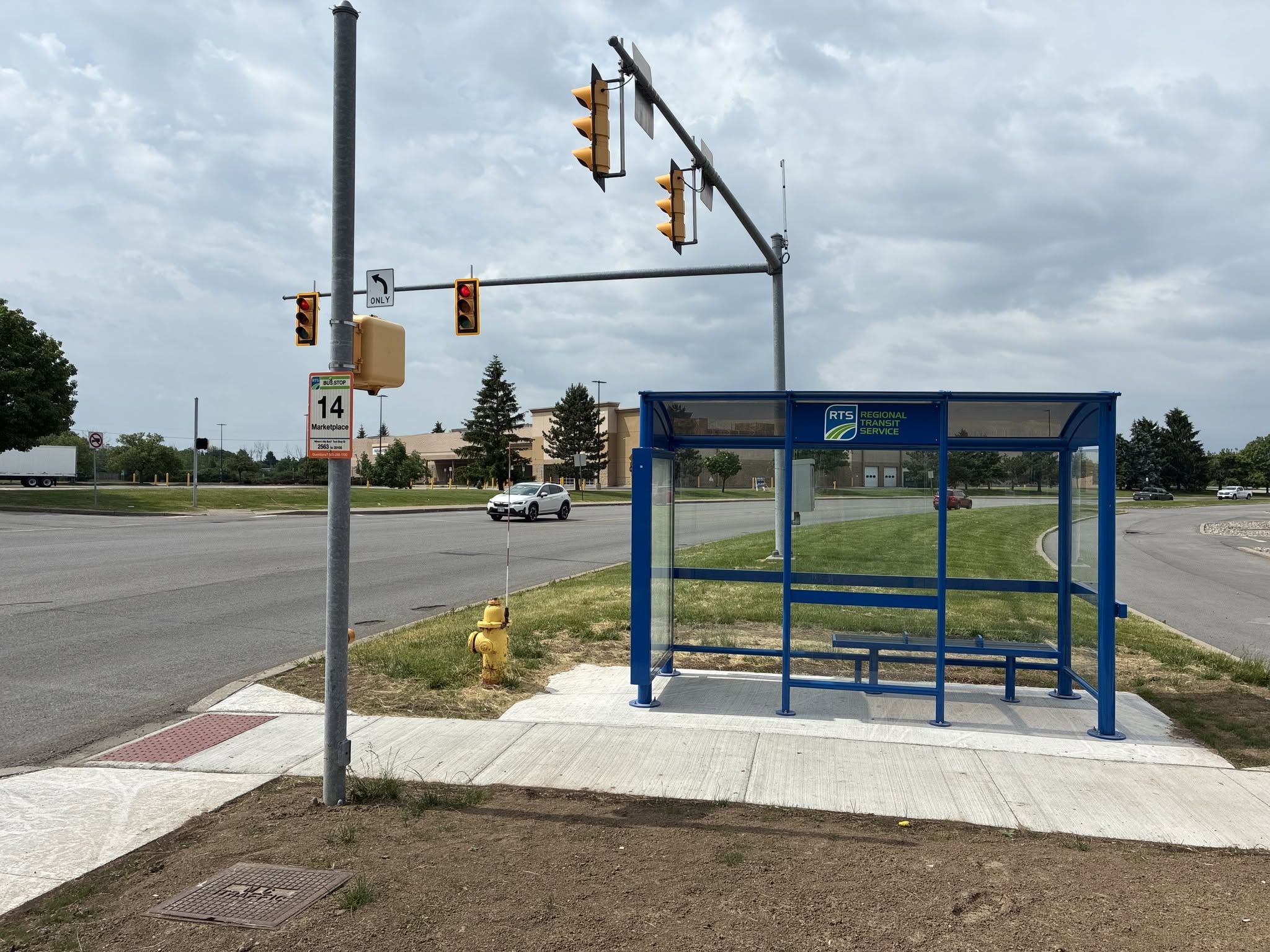
Bus Stop Improvements: We are happy to report that the City’s Bus Stop Improvement project is moving forward and is set to expand amenities at bus stops within the City of Rochester. We will be able to share more on locations, amenities, and timelines soon. We’re also happy to see a new shelter in front of the WalMart in Henrietta, which was enabled by a concrete pad poured by the Town of Henrietta.
- RTS On Demand changes that went into effect in September 2025 continue to trouble us. The changes RTS implemented did not make the system more financially viable, but made service more difficult to use. We’re engaging with RTS to advocate for a return to a fixed route model that serves, at minimum, key municipal and medical facilities in the towns and suburbs.
- Save the date! Reconnect is planning to hold a community conversation on Thursday, July 16 at 6:30 PM at our office on how to move the needle on public transportation system improvements and to urge more frequent buses that serve the places we all need to go to. Join us for that conversation!
- University Avenue cycletrack design walk-back: Reconnect joined local cyclists to express disappointment with the City of Rochester’s walk-back of proposed cycletracks on both the north and south sides of University Avenue. The City not only changed a good design that was presented to the public that Reconnect supported, but it also built part of a southside cycletrack only to rip it up, at the cost of over $400,000.
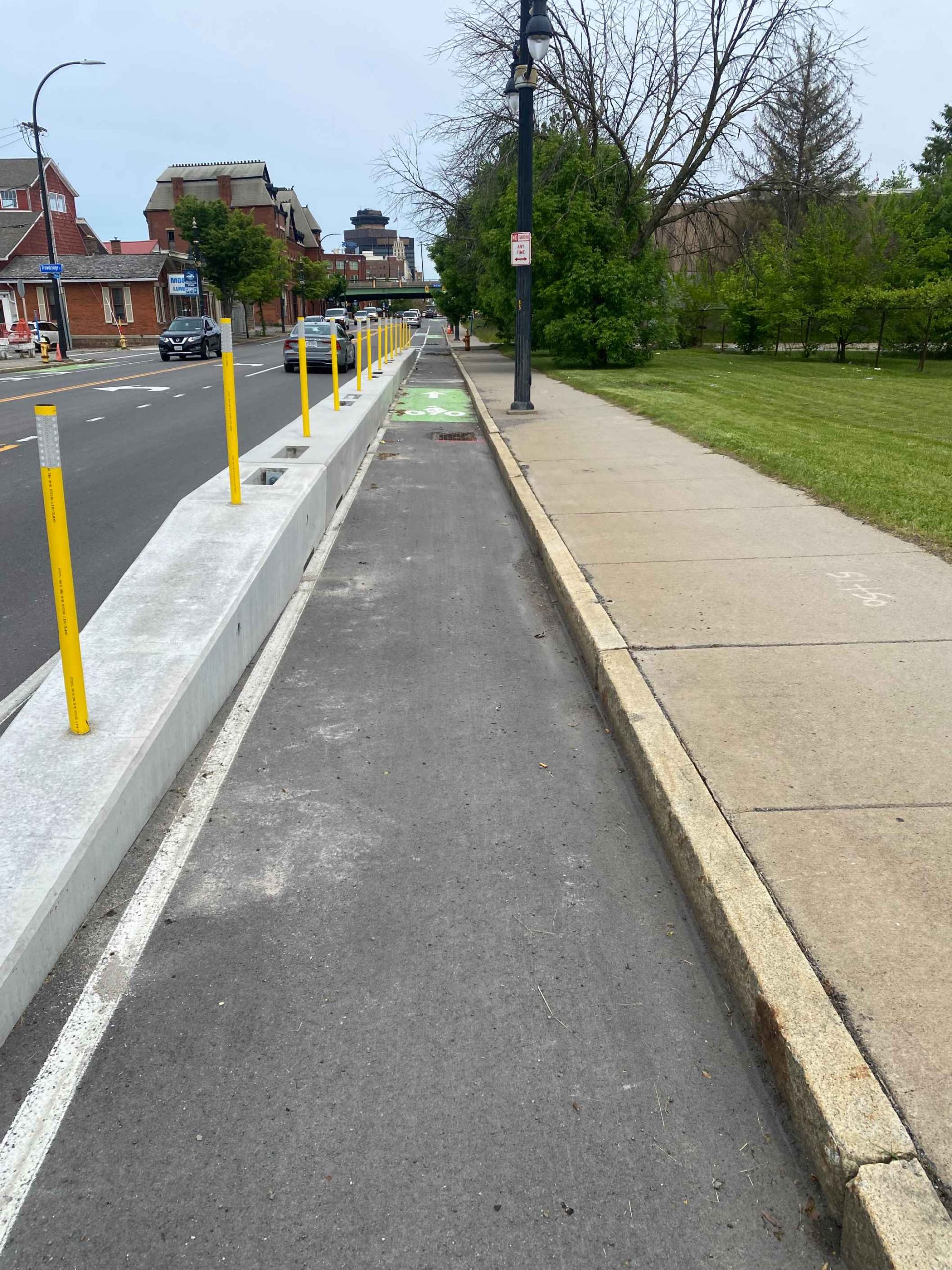
West Main protected bike lane barriers reinstalled: We advocated to the City to reinstall the West Main barrier as early in the spring as possible, though RGE utility work has delayed the full reinstallation. We are continuing to advocate for routine sweeping of the lanes because they accumulated debris last year.
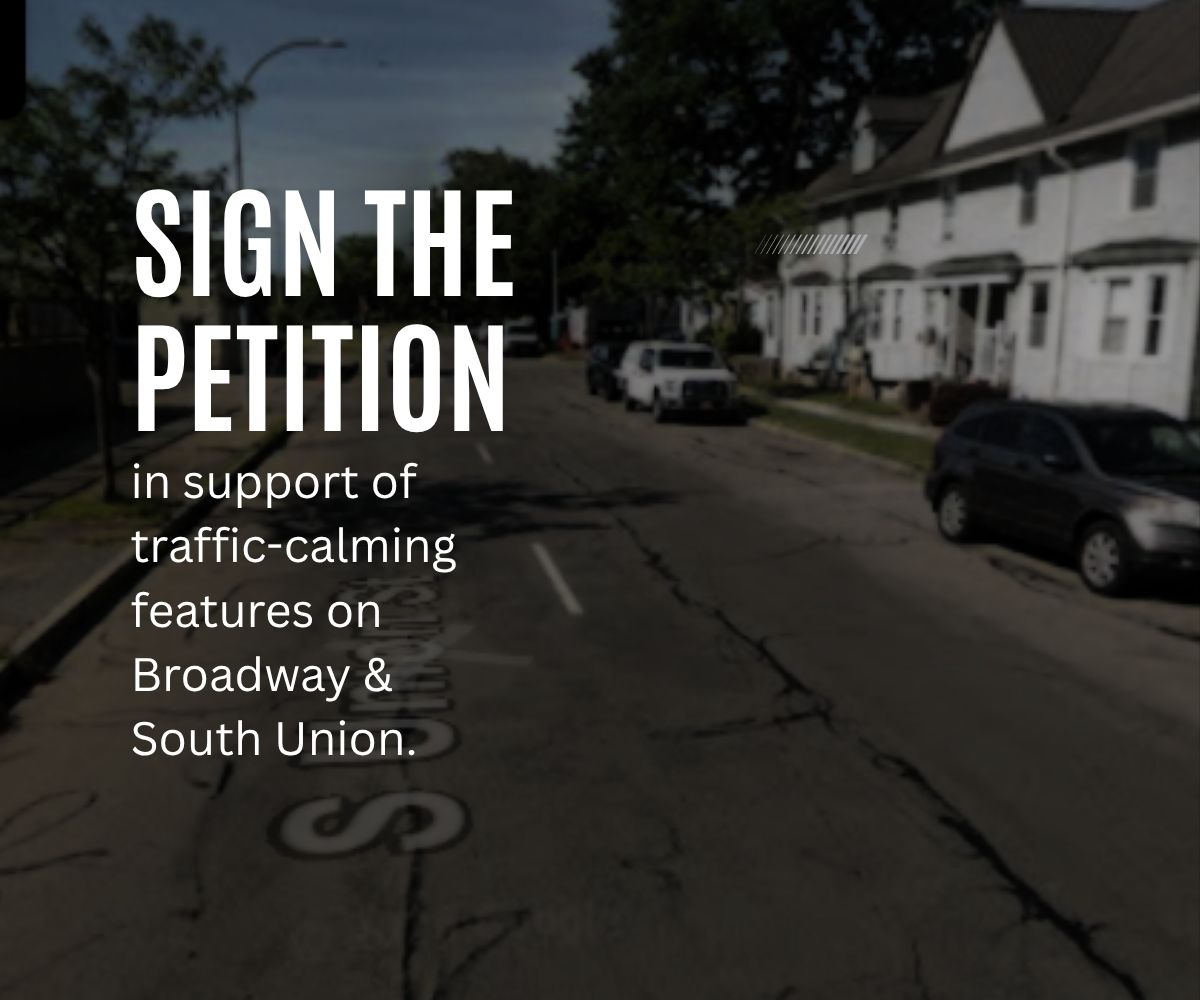
- Broadway & South Union Reconstruction: a community-led initiative is pushing the City to make changes to the Broadway & South Union reconstruction design through a public petition and letter-writing campaign. Sign the petition today! We hear there will be another public meeting on the project this summer.
- We are closely following the process of unlocking federal funding for key corridors of the bike spine network (N. Clinton, E. Main, Chili Ave.) The City is conducting a study to see how they can rapidly implement the bike spine, and separately, they are trialing protected bike lanes and enhancing bike boulevards.
- The Seneca Ave project is underway, which will create the most comfortable crossing across RT-104. We shared our thoughts on the project in 2025.
- We were excited to see a $150K city budget line item dedicated to trail maintenance in future budgets. We are trying to understand whether this is envisioned to be matching dollars to state grants or will this repair a certain length of trail.
- The City included funds in the budget to complete a portion of the Riverway trail on the west side from Smith St to the Running Track Bridge. In addition, the City has submitted Transportation Alternatives Program applications for the rehabilitation of the Genesee Riverway Trail in the City.
- The City is still accepting bike boulevard phase 3 suggestions at this website.
- ROC Vision Zero is very active currently, implementing the 10 point plan announced by the Mayor in 2024 to eliminate traffic fatalities and serious injuries. In January, the City released a major update and 2026 plan with key actions to take this year.
- While we’re urging faster progress to move the City speed limit to 25 MPH, we can confirm that the City is working through the engineering investigation for 25 MPH and continue to signal support for moving ahead on this. The city budget included $100,000 of new funding for Vision Zero efforts, which should provide more resources to move this effort forward. Meanwhile over a dozen municipalities across New York state are in the process of lowering the speed limit (this resource is regularly updated).
- The City is exploring a new automated enforcement program and held 5 public input sessions to understand the community’s hopes and concerns for the use of automated camera technology in holding drivers accountable for reckless driving. We published our perspectives here and participated in several media activities around the input sessions. Later in June, there will be a community-wide survey. We will be working closely with the City as part of the ROC Vision Zero taskforce to review the public input and discuss next steps.
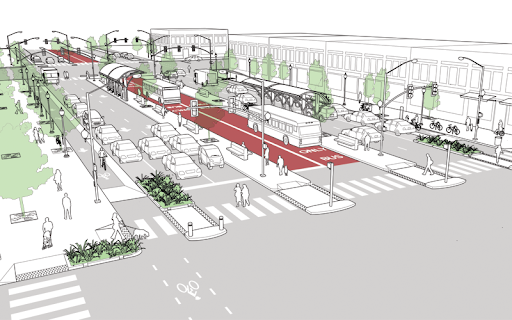
Courtesy of NACTO https://nacto.org/publication/urban-street-design-guide/street-design-elements/transit-streets/dedicated-median-bus-lanes/
- Lake Avenue and Bus Rapid Transit (BRT): In 2025, the City conducted an initial assessment of Lake Avenue safety enhancements and Bus Rapid Transit feasibility, and handed it off to RTS. We’re trying to understand the next steps. Reconnect feels BRT could be a catalyst for both safety and transit-oriented development.
- Advocating for “Quick-Build” as part of Vision Zero: Some of the most impactful traffic safety measures can be done quickly and cheaply:
- Refreshing lane markings
- Clearly painted crosswalks
- Flexposts and other vertical delineators
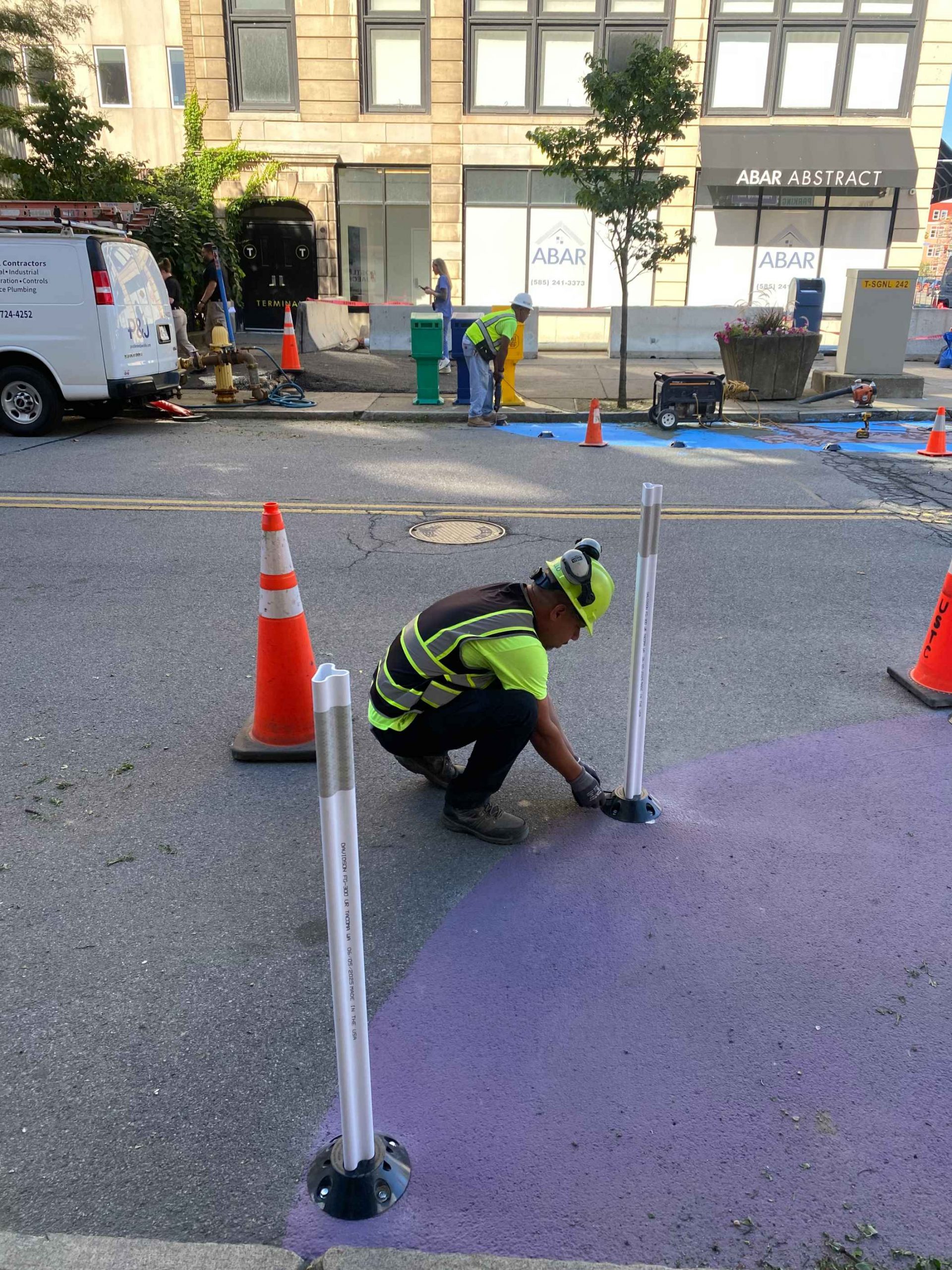
That’s why we’ve continued to push for building out the City’s quick-build capacity. Some of the funded safe streets projects being pursued by the City get at this (e.g., rapid bike spine implementation, protected bike lane trials), but we see more can be done. Part of the problem is that few roadway striping companies are properly bonded to do work for municipalities like the City of Rochester. What if the City could do that work in-house? The City has always been helpful in installing flexposts for our Complete Streets Makeover and Downtown SmART Streets. We’d love to see more physical delineators protecting pedestrians and cyclists.
- Since it’s 88 degrees out as of this writing, we’re also thinking about winter maintenance! According to their website, By June 2026, the City of Rochester Department of Environmental Services (DES) will accept a Technical Report for the Active Transportation Winter Maintenance Study. It’s unfortunate the budget is decided in June and bakes in to some extent the level of service for snow clearing for the upcoming winter. We’re also curious if the report will analyse the “effectiveness” of the city’s current policies of “property owners are the primary responsible party” for snow clearance. The City does often cite property owners for tall grass and improper refuse disposal, but a 24 inch snowbank created by their driveway plow isn’t (to our knowledge) addressed.
- On June 4, at the County Executive’s State of the County Address, Adam Bello announced that Monroe County will be undertaking a planning process to explore making a Vision Zero commitment, unifying its current efforts on Active Transportation, School Bus Safety Program, the Community Traffic Safety Team, and road design changes. We’re planning to actively engage in this process and shape it to maximize benefits for bus riders, pedestrians and cyclists. Our hope too is that Monroe County’s suburban towns and villages see this commitment and move to lower their speed limits to 25 MPH more aggressively.
- The Town of Penfield is wrapping up their Active Transportation Plan.
- With the NY State Safe Streets Coalition, Reconnect Rochester has led the push for Complete Streets legislation to be updated to include a requirement for routine maintenance projects to consider bike lanes and sidewalks as well as to publish updated guidelines on complete streets for counties and local municipalities. Maintenance projects are how walking and biking infrastructure can be built quickly and cheaply as part of pavement resurfacing projects. Both Complete Streets bills had a huge list of co-sponsors in both the Senate and Assembly and passed through the Transportation Committees of both houses. One of the bills has even repeatedly passed the Senate! Yet, this year, leadership did not move the bills to a floor vote. We remain committed to reforming complete streets policies at New York State DOT and we’ll be pushing for new legislation to introduce in the next legislative session.
- We are urging NYSDOT to move forward with their Active Transportation Strategic Plan (ATSP) to provide direction and guidance for future active transportation investments. They are currently 6 months behind their posted schedule on the release of a final draft.

- NYSDOT shared that the previously announced $5 million fund for an engineering study of Empire Blvd is being held up by the federal government. We remain steadfast in our belief that Empire Blvd should be significantly redesigned to slow drivers and bring sidewalks and cycling infrastructure to the entire corridor. Meanwhile, the RT-104 Bridge over Irondequoit Bay is reaching the end of its life and there’s a study underway to evaluate replacement designs. This offers an opportunity to advocate for multimodal travel across that bridge to link up to the 104 Trail in Webster, and there’s always our hope to see a bike ped bridge over the Irondequoit Bay Outlet 24 hours a day, 365 days a year.
- Our campaign to make Monroe Avenue safer generated 535 letters from residents to decision makers to call for the full implementation of proposed safety enhancements. We heard from advocates that there was disappointment about the 4’ shoulders that were proposed, which doesn’t meet anyone’s standards for a bike lane. We’re joining with the Town of Brighton to push for a narrower center turn lane to create at least 5’ shoulders. Again, it’s no one’s ideal bike infrastructure, but we also recognize that this project won’t be moving curbs so they have to work within the space they have. Perhaps in a future world, Monroe Ave’s sea of parking lots abutting the sidewalk can be changed to build off-road cycletrack infrastructure?
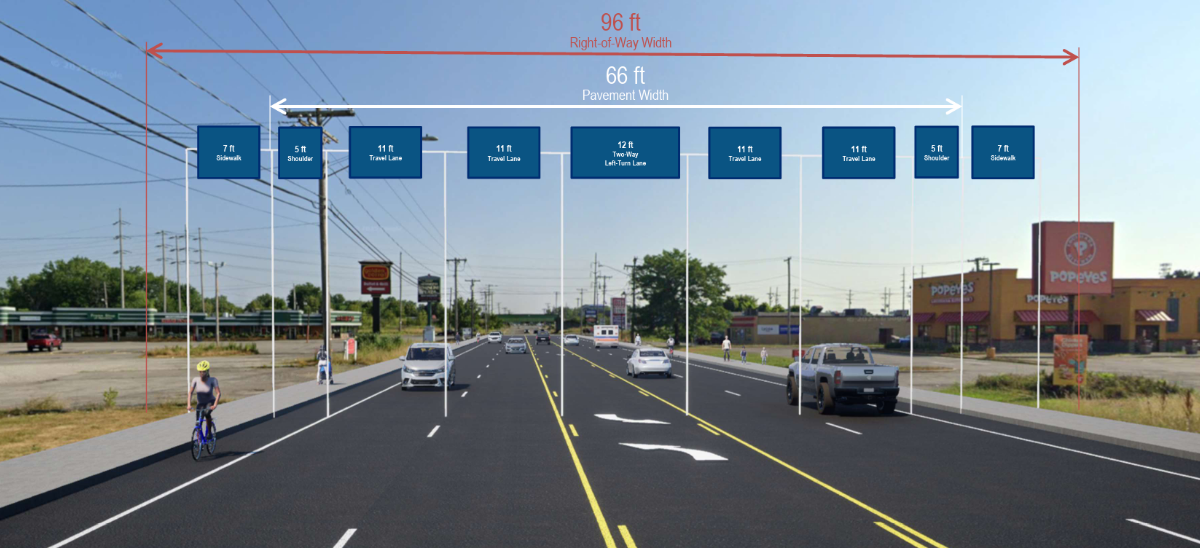
NYSDOT’s proposed W. Henrietta Rd design which we’d like to improve.
- This however is not the case for West Henrietta Road: NYSDOT is moving curbs and utilities to expand the right-of-way to have sidewalks. However, the proposed bike infrastructure does not provide safe, comfortable space for cyclists to ride, with 5 lanes and speeds in excess of 40 MPH. We are advocating for off-street cycletracks alongside the sidewalk , and our campaign to NYSDOT generated 154 letters calling for better bike infrastructure.
- It’s been more than two years since State funding was awarded, and the fully funded Rochester Intermodal Station bus terminal expansion project has still not started. We’ve been ratcheting up pressure on NYSDOT & Amtrak, and Senator Cooney and the City of Rochester have remained steadfast allies in getting this project underway.
- The two biggest local zoning updates are that Fairport adopted a new code and the City of Rochester’s ZAP final draft dropped. In coalition with many local partners, we are calling on the City to further reform parking by eliminating minimums citywide and relax the accessory dwelling unit requirements. There is one more public hearing on the ZAP before it goes to City Council on July 13th.
- Inclusive Housing Coalition / Build a better Rochester met twice this spring with local residents, in Brighton and Irondequoit. In Irondequoit, we focused heavily on building more housing that is accessible to buses, connected to safe biking and walking infrastructure, and ways we can build housing that doesn’t come with a sea of parking lots.
- Inner Loop North is still moving forward, but there have not been significant updates in the last 6 months. A mobility and development land use study was completed trying to envision how the newly created parcels could be utilized.
E-bikes: With New York Bicycling Coalition and the NY Safe Streets Coalition, we developed a position paper on common sense e-mobility regulations to stop the harmful bills that were advancing in the NYS Assembly this session. We’re happy to see that potential e-bike regulations will be delayed until the 2027 legislative session, and we’ll keep everyone updated on future threats.
Where we landed on Autonomous Vehicles:
The Governor ended the conversation in February for now by removing her proposal for Autonomous Vehicles from the state budget. We pushed back on the roll-out, citing the need to consider its potential impact on public transit, the need for greater transparency and oversight by local municipalities. Labor and environmental groups also pushed back, citing concerns over the loss of driver jobs and increases in vehicle miles traveled.
We’re looking forward to the summer of advocacy work. Let us know if you have suggestions!
Please share our Mobility Action Alerts with your friends and family who care about mobility and encourage them to sign up! We are so grateful that we now have 650 people working with us to move the needle on mobility in Monroe County. If you ever miss an action alert, we are posting them to our website. We’re committed to providing more frequent updates through our blog posts and social media – if there are ways we can do better or answer specific questions, please let us know.
I live in north chili and have been fighting for a it’s option on the west side. It is ridiculous That I work 12 miles from downtown Rochester and cannot get there on public transportation I eve.n wrote an article for city newspaper that was published about no access to public transportation