By: Chaz Goodman
I’ve had two recent outdoor dining experiences that have stuck with me. In one, I was at a lovely place in North Winton Village, enjoying good food and the weather, but I couldn’t help but notice the giant SUV that was six inches away from me for the duration. In fact, other than the narrow sidewalk where we were eating, pretty much all I could see was the parking lot. I could hear cars zooming by on the adjacent street and smell the exhaust.
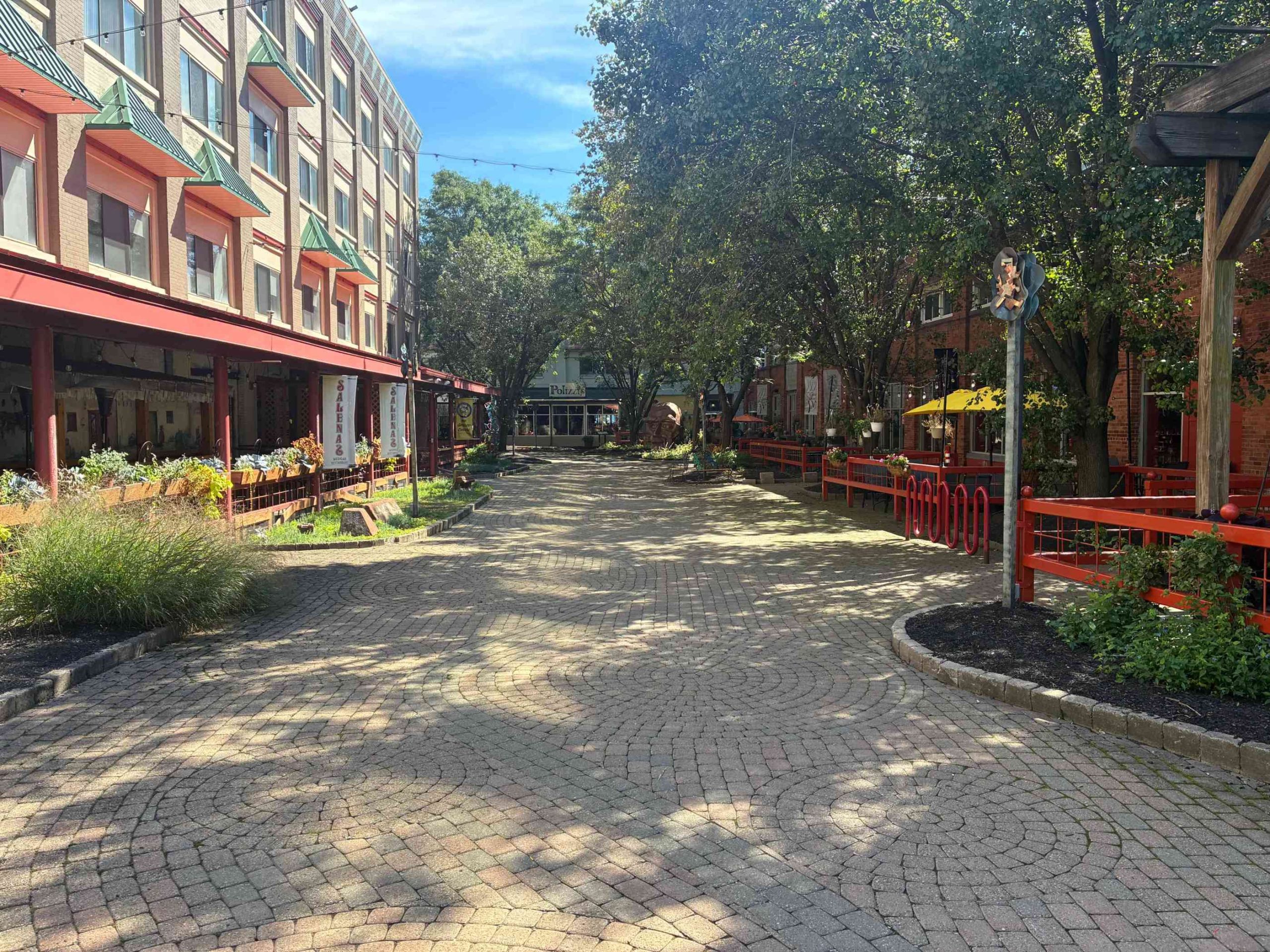
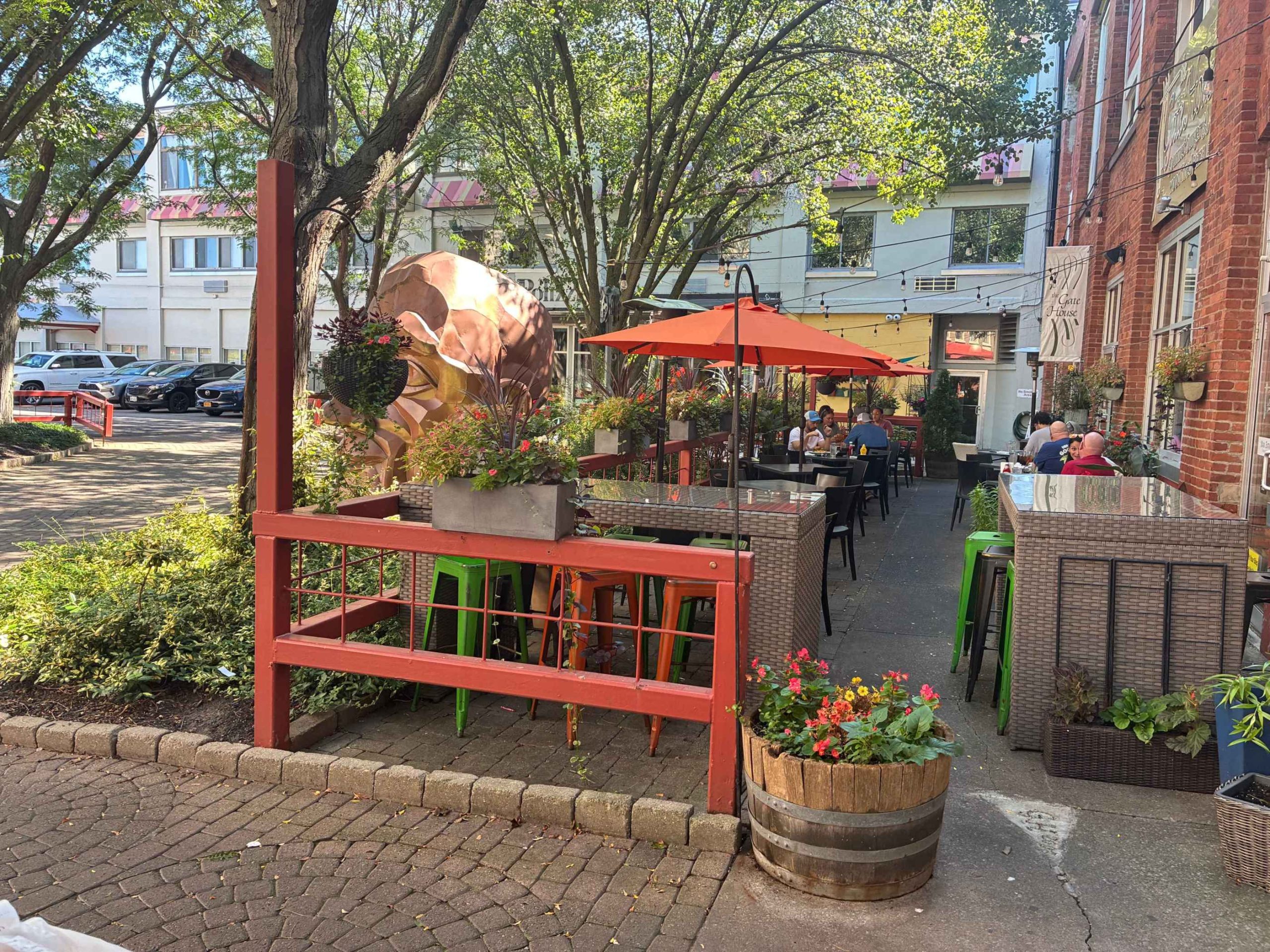
The other was outdoors at Village Gate. There are multiple restaurants with outdoor seating all next to each other. There is open space for people to gather in the middle. The gate mostly keeps the cars out of sight and mitigates a lot of the traffic noise. The pedestrian island near the entrance on Goodman slows down passing vehicles for crossing pedestrians. I saw a woman with a cello on her back checking her cell phone, I heard laughter from a nearby group dinner, and all I smelled was food.
Obviously Village Gate has a massive parking lot behind it to accommodate the cars of the people who traveled here for a pedestrianized experience. Creating similar public areas like Village Gate requires a large expense and a massive amount of land. Which brings me to my point: we are using too much space storing cars.
Followers of our work at Reconnect Rochester are no doubt aware of the environmental impacts, the financial burden, and the safety issues that come with driving. Another cost of our collective car dependency is one of most valuable commodities: our land. Did you know that downtown Rochester has devoted 28% of available land to storing private vehicles?
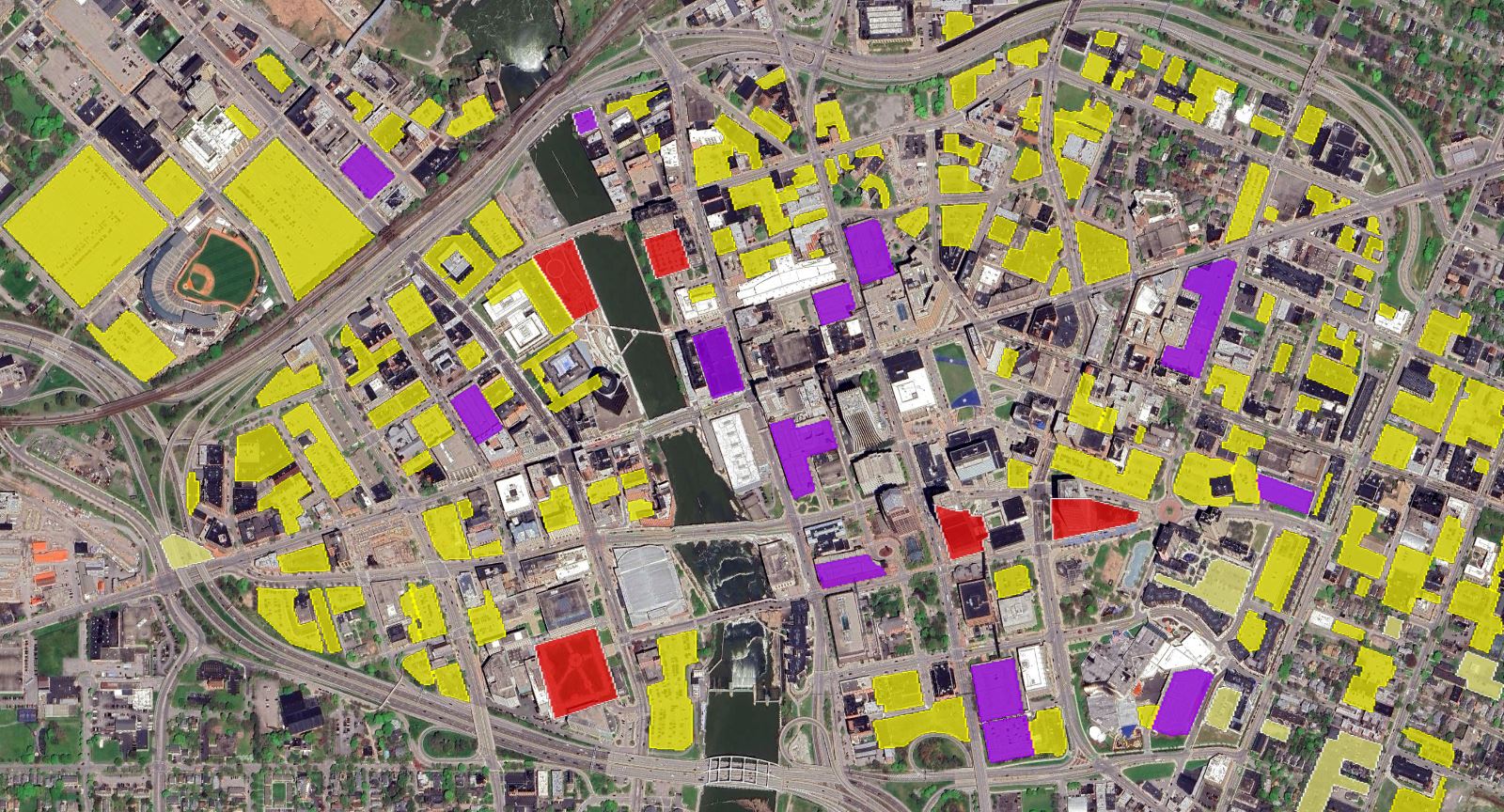
Parking map of downtown Rochester by Brent Liberati. Red are underground, purple are above ground, and yellow are surface lots.
There are 2 BILLION parking spaces in America for roughly 300 million cars. Drivers need a storage space at the beginning and the end of each journey. As space is increasingly hard to come by, drivers are desperate not to lose parking access whenever there is a resurfacing or reconstruction project. Parking is so sacred people have even tried to preserve a lot as a landmark to avoid losing it.
The craziest thing is that even with all of that parking (with much more in the suburbs) it’s often still not enough to meet demand on busy days. I recently biked my kids to their tennis lesson at Buckland Park in Brighton. It was a beautiful day. There were multiple soccer games, the playgrounds were full, there was a birthday party. It was a lovely afternoon of people enjoying the park. I used the bike path on Westfall, locked up my bike and trailer and went to the tennis court, only to wait 15 minutes for the other students (and even the teacher!) to show up because no one could find parking.
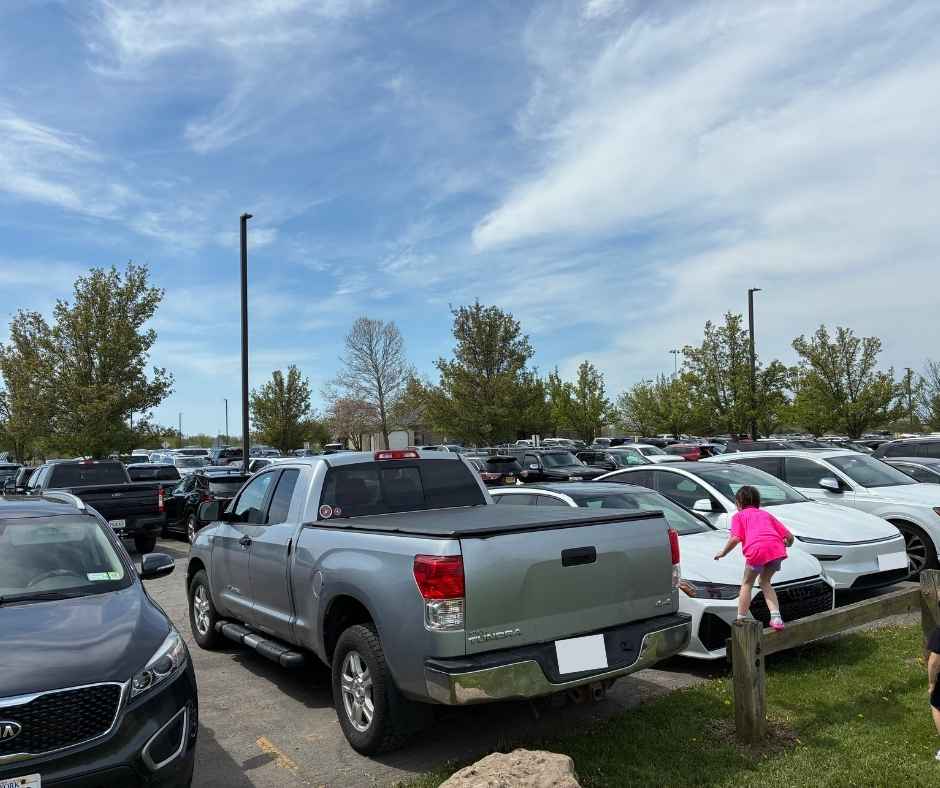
In our line of work we frequently are told about the convenience of cars. Yet people don’t always consider the headache of finding a parking spot or waiting an hour to get out of an event at Blue Cross Arena (an area that is quite accessible by bus!).
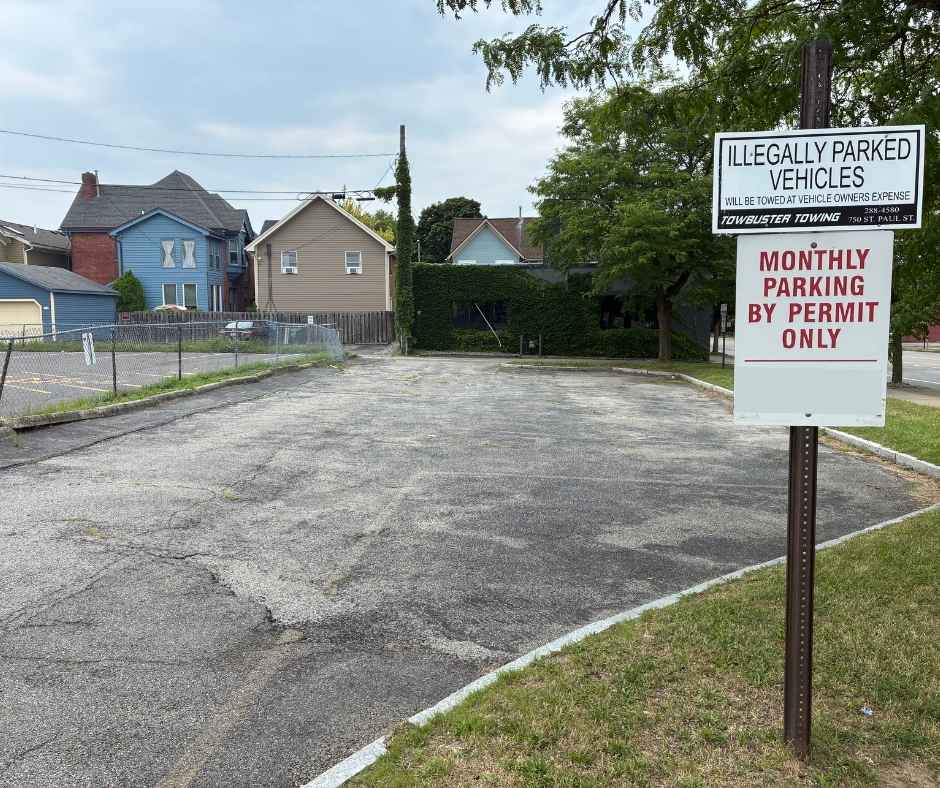
I understand why we have this much parking. Car dependent communities are structured in a way where it is difficult to get places without a car. If everyone needs to drive, then everyone needs a place to store their car. Hence the reason that we have so much open space designated for parking. It’s also the reason we need to have threatening signs reminding owners they will be towed if they use space that is reserved for someone else.
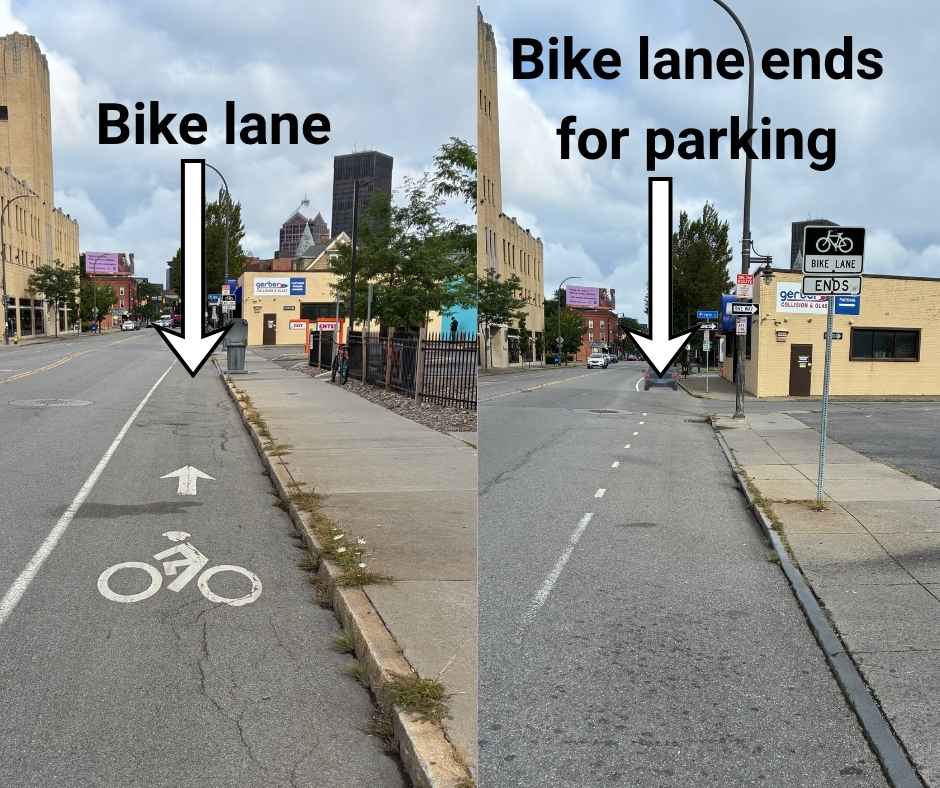
We sacrifice a lot for parking; even safety! Rochester cyclists are aware of the concept of biking in a lane only to have it disappear for a few blocks where you are left in the lane directly with cars. More often than not, this is to preserve a block of parking. Drivers and cyclists alike don’t like sharing one lane. We are delaying drivers and scaring cyclists so 5-6 people can take up a block of space storing a large machine that more often than not serves one person.
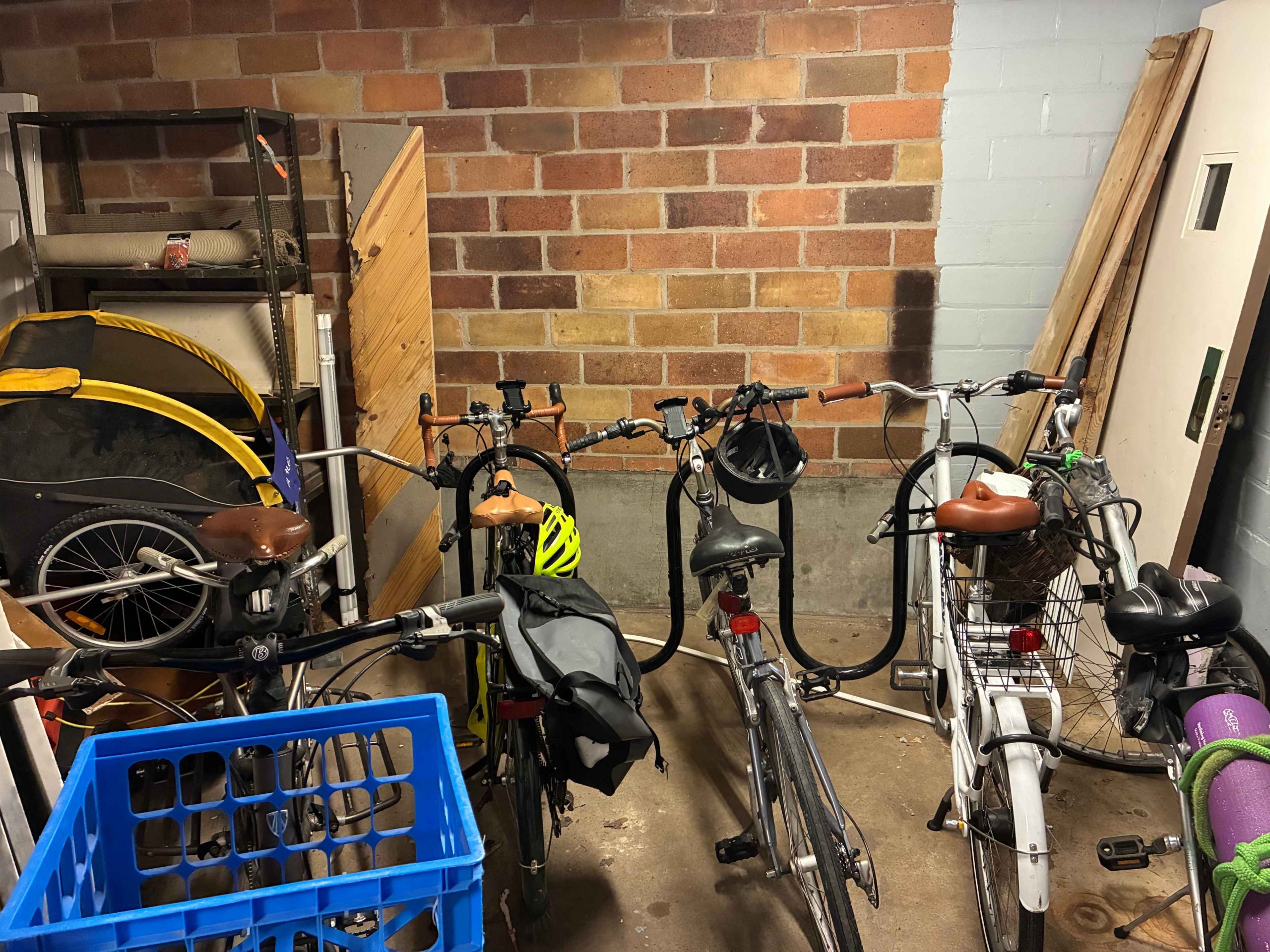
Consider the Reconnect Rochester staff bike storage room which is smaller than one parking space. In this picture there are five bicycles (including a cargo bike meant for three riders), a cargo trailer, and a passenger trailer. This can move nine people, and a variety of items for every day errands all in the space where you could fit one car.
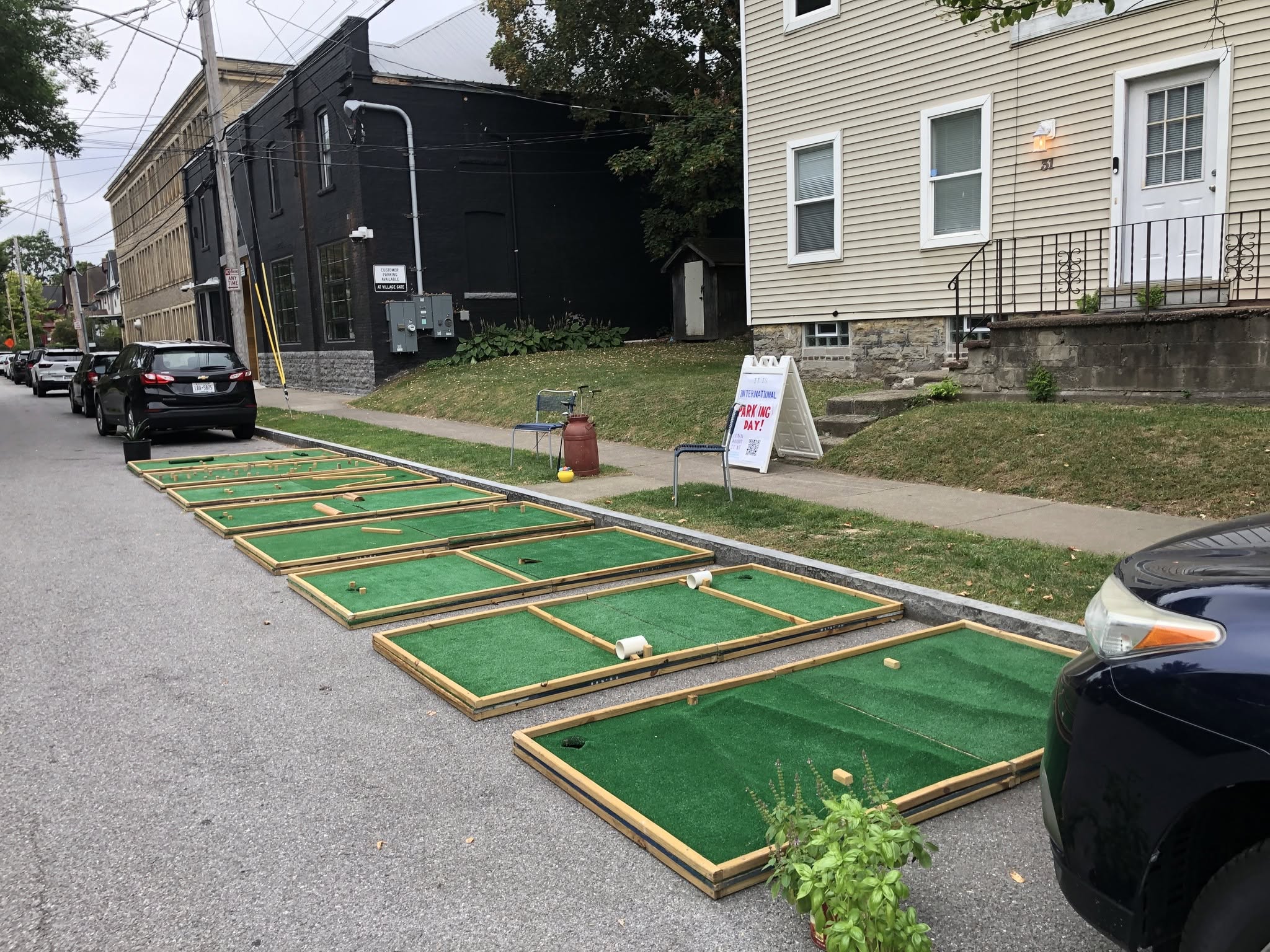
What if we used three parking spaces? As Evan Lowenstein showed us last summer, you could fit 7 holes of mini golf!
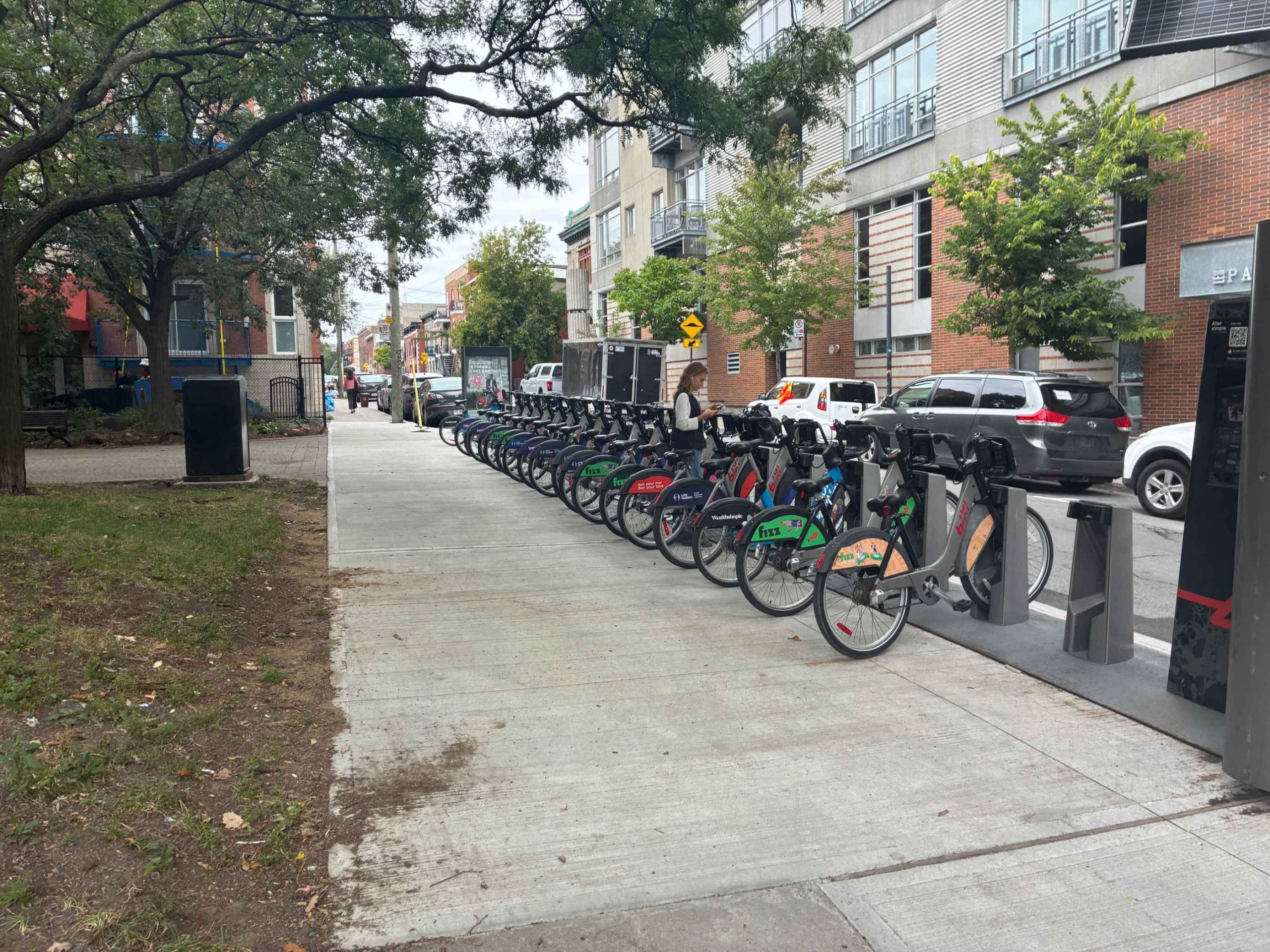
Take this photo of a bike share docking station in Montreal. You can fit more than 20 bikes in the amount of space that would normally hold four cars.
OK…SO WHAT IS RECONNECT DOING ABOUT IT?
We’re so glad you asked! On a big picture scale we continue to make it easier to live in Monroe County without a car through transit advocacy, on-street safety projects, bicycle education, and inspiring people to reduce their driving one trip at a time.
Specifically we are advocating to eliminate parking minimums for new construction. We understand cars are a part of our infrastructure and we cannot just get rid of parking without inconveniencing a majority of our residents. But do we have to require new businesses to build an expensive and sprawling lot regardless of their needs or budget?
Happily, Rochester’s 2034 plan has acknowledged that parking minimums can be a barrier to establishing new shops, businesses and housing. We’ve also seen the city transform disused parking lots into new housing units within walking distance of bus lines and other amenities. In coalition with many local partners, we are calling on the City to further reform parking by eliminating minimums citywide.
Franklin Street Parking Lot 2022
Franklin Street Housing 2026
W. Main Street Parking Lot 2022
W. Main Street Housing 2026
We are encouraged by Fairport’s new more permissive zoning code, and Brighton’s ongoing collaboration with the Inclusive Housing Coalition / Build a Better Rochester to work on transit oriented development. Dense housing near transit allows more people to live car lite or car free. In Irondequoit, we’re working with local advocates to encourage building more housing that is accessible to buses, connected to safe biking and walking infrastructure, and ways we can build housing that doesn’t come with a sea of parking lots.
WHAT CAN I DO ABOUT IT?
One of the most powerful things we can do as individuals is to get multimodal! Join our Week Without Driving to get started! Going somewhere on a bus line? Try using RTS! Is your next trip one of the 50% of trips nationwide that’s under 3 miles? Try riding a bike! Do you feel uncertain about riding with cars? Check out our ROC Easy Bike Map, our on-bike smart cycling class, or join one of our weekly Wednesday rides to try it out with a group! The more of us who use alternative modes of transportation, the more they will be prioritized for public investment.
It is worth reiterating that we are not anti-car, we are anti-car dependency. When we give people safe, viable alternatives to driving, we can take cars off the road which can remove congestion, reduce collisions, and make travel easier for everyone including drivers.
And we can take back some of this land to allow more enjoyable communal gathering spaces like Village Gate and Buckland Park.
Have an idea for a blog post about alternative transit? Contact us to get started!