by No Comments

Tour de New York

The Tour is Coming

The Tour de New York is a 6-day professional cycling stage race that’s coming to Upstate New York in August 2010. The race will explore the Greater Rochester area and portions of the beautiful Finger Lakes region.

The inaugural 2010 UCI 2.2 Tour de New York will explode onto the international cycling scene and showcase the beautiful Western New York and Finger Lakes Regions of upstate New York from August 7th through August 12th. The six-day stage race will bring world-renowned professional teams to the Rochester Twilight Criterium on Saturday, August 7th, a 10-mile Individual Time Trial on August 8th and the tour will continue through August 12th with three road races and one circuit race.

by No Comments

Rochester-Williamsport Greenway in the Williamsport Sun Gazette

Sunday, February 21, 2010

Rochester-Williamsport Greenway in the Williamsport Sun Gazette


NY-PA trail blends recreation, conservation
By PATRICK DONLIN – pdonlin@sungazette.com

POSTED: February 21, 2010
Save | Print | Email

When they decided they had a common interest of creating recreational trails, two professors determined it was time to band together with one another and others to blaze a 230-mile path connecting Williamsport and Rochester, N.Y.

Jon Schull, Rochester Institute of Technology associate professor of innovation and invention, said he and Allen Kerkeslager met a couple months ago in Philadelphia, where Kerkeslager is a professor at St. Joseph’s University.

“We talked about the synergy between his (Kerkeslager’s) work in the Genesee Wilds Association and my work which I call the ‘Rochester Greenway,’ ” Schull said. “We realized the two sections we had been focusing on were the two end points of this project.”

Schull, one of the founders of the Rochester Cycling Alliance, is excited about the recreation possibilities.

Kerkeslager described different reasons he wants to get involved. He grew up in rural New York, near the proposed trail project, and continues to go home to see family there, driving through Williamsport on the way.

The trail project also is a chance for Kerkeslager, a religions of the ancient world professor, to delve into something he admits isn’t as obscure.

‘A breather … for humanity’

“Much of this (trail project) is a breather to do stuff for humanity,” he said.

It comes with a price.

Kerkeslager said the cost for the 230-mile connection could be $100 million, but he offered an explanation.

To offer it completely with trails, he expects a $50 million expense.

There would be another cost of $50 million for the water conservation measures he recommends.

It’ll take time, too, as Kerkeslager said, “Twenty years, I think that’s a fair estimate to be completely off-road.”

Kerkeslager, who rides a bicycle 10 miles round trip on his daily work commute, said he’s a proponent of the proposed cycling recreation.


Environmental improvements

But, he’s also an advocate for environmental improvements possible through the trail plan.

The project spans the Susquehanna, Genesee and the headwaters of the Allegheny River, all watersheds Kerkeslager i
ntends to protect.

Kerkeslager believes building a riparian buffer along the trail is a cost-saving conservation alternative to building expensive rock wall dams.

Greenway planning preserves forests and conserves nature, according to Rick Biery, regional planning program manager for Northern Tier Regional Planning and Development Commission.

Biery embraces plan development and the possible trail if it’s conducted responsibly.

“From a concept standpoint, these things are great,” Biery said. “It brings an opportunity to tap into a resource hikers and bikers may not get to go through unless we look at the possibilities.”

Through connectivity, the recreational system experience improves, according to Kerkeslager.

He said it will connect the nationally renowned Pine Creek Gorge bicycle trail to the Genesee River’s gorgeous waterfalls.

Jobs will be created, Kerkeslager added, especially in the sectors of tourism, hospitality, recreation and tour guiding.

He intends to bring the plan to the forefront at meetings of the Northcentral Pennsylvania Regional Planning and Development Commission in Ridgway.


Facing up to the challenge

Some consider the most challenging interstate link to be completed as a 40-mile proposed trail running northwest from Wellsboro to the New York border.

A connection just west of Wellsboro is in the conceptual stage, according to Biery.

“We’re working with a consultant to develop a greenways open space outdoors recreation plan. It’s an overall concept plan,” he said.

Matt Marusiak, project coordinator for the Northcentral Pennsylvania Greenways and Open Space Plan, said land deals still need to be made there to acquire trail property, much of which lack old railroad beds ideal for making recreation trails.

In areas where land can’t be bought, Kerkeslager said the trail may have to go along Route 6.


Railroad beds ideal

A recreational trail using a road area isn’t uncommon, as Kerkeslager said portions of the Appalachian Trail he’s explored are the same way.

Railroad beds like what are used in the local Pine Creek Trail are ideal, but alternatives can be used if necessary.

Kerkeslager said there’s often a section here and there where planners have to route a trail along roads where landowners want to keep their property or where an area is undevelopable.

Since July, Biery’s been involved in what he described as an outreach process including public meetings, contact with stakeholders, and thousands of resident surveys in the counties of Tioga, Sullivan, Wyoming and Susquehanna.

Biery hopes to reach the next goal by early June, which includes a direct recommendations document he said is drafted for review by the planning partners.

“That’s where projects will come from,” Biery said of further details to be unveiled.


Project offerings

Bicycle recreation is important but so is waterways enjoyment, organizers say.

Like the canoe and kayak launches already offered along the Genesee and Pine Creek rail trails, Kerkeslager plans on offering more boat launches where possible.

He hopes his entire New York to Pennsylvania circuit can be as beautiful as the Pine Creek trail residents enjoy here, but he realizes some adjustments may be necessary.

A hurdle in New York is not to have a trail, but to have it off-road.

A 20-mile section from Belfast, N.Y., to Wellsville, N.Y., can be offered as soon as this summer if it’s presented on an existing country road.

“In the long run, we’d like to get these trails off the roads entirely,” Kerkeslager said.

Using a combination of existing roads and trails, he said a route from Williamsport to New York could be offered later this year.

Organizers would merely have to offer maps, a Web site and post some trail sections with markers honoring the trail.

“It could say future home of (the NYPA Greenways),” Kerkeslager said, reminding it’s only a working name.

“To open for usage with provisional usage on roads, we can do that as soon as it gets warm,” he said.

People already bicycle from Rochester to Williamsport, according to Schull.

“They ride on trails and ride on roads when the trail peters out,” he said.

It can be done now, but Lycoming County Visitors Bureau Executive Director Jason Fink doesn’t suggest competing with traffic along the Route 14-15 corridors.


‘A safer way’

“This would be a safer way to enjoy it,” said Fink, himself an avid local bicycle rider. “To ride up to Rochester would be a very exciting thing for a bicyclist.”

Because the existing Pine Creek Trail is extensively used, he believes a new trail would be popular around here.

It would be quite an experience to explore a different terrain in the Great Lakes region up north, according to Fink.

The trail is more than just about recreation to Schull, who said, “it becomes a plan for real development and transportation development.”

He said bicycling is especially popular among the five cycling clubs in his city.

Schull said there are great places to ride around the Erie Canal, Genesee Riverway Trail, Lake Ontario and Finger Lakes. He said his region already had wonderful trails but they can be improved.

“There are stretches where there’s roads that we ride that could be more bikeable,” Schull said. “And there’s stretches that could be more scenic or more direct.”


Extending their outreach

Attracting expanded stakeholders interested in conservation is critical to success, according to Kerkeslager.

“With more interest in the trail, we’ll expand the profile,” he said. “Get people using it and once they’re using it, it promotes more stakeholders to build up funding.”

“If there’s enough support out there, the right people should be able to find those funds out there,” Fink said of needed grants.

Separate but similar projects are happening elsewhere, as Schull said a national network of trails is developing.

“There’s an emerging view of greenways all over the country,” he said.

The East Coast Greenway project from Cape Cod to Key West, Fla., is being developed along a proposed 3,000-mile trail, which runs down the eastern seaboard, incorporating the Philadelphia area.

In addition to his planning involvement with the Pennsylvania Wilds, Jerry Walls also is a board member of the Susquehanna Greenway Partnership, which he said may benefit from the NYPA plan.

From the headwaters of the West Branch in Cambria County to Williamsport to Sunbury to the Chesapeake Bay, Susquehanna Greenway partners including Walls are planning a 500-mile recreational route that he said could tie into Kerkeslager’s plan.
by No Comments

Tour de New York

The Tour is Coming

The Tour de New York is a 6-day professional cycling stage race that’s coming to Upstate New York in August 2010. The race will explore the Greater Rochester area and portions of the beautiful Finger Lakes region.

The inaugural 2010 UCI 2.2 Tour de New York will explode onto the international cycling scene and showcase the beautiful Western New York and Finger Lakes Regions of upstate New York from August 7th through August 12th. The six-day stage race will bring world-renowned professional teams to the Rochester Twilight Criterium on Saturday, August 7th, a 10-mile Individual Time Trial on August 8th and the tour will continue through August 12th with three road races and one circuit race.

by No Comments

Rochester-Williamsport Greenway in the Williamsport Sun Gazette

Sunday, February 21, 2010

Rochester-Williamsport Greenway in the Williamsport Sun Gazette


NY-PA trail blends recreation, conservation
By PATRICK DONLIN – pdonlin@sungazette.com

POSTED: February 21, 2010
Save | Print | Email

When they decided they had a common interest of creating recreational trails, two professors determined it was time to band together with one another and others to blaze a 230-mile path connecting Williamsport and Rochester, N.Y.

Jon Schull, Rochester Institute of Technology associate professor of innovation and invention, said he and Allen Kerkeslager met a couple months ago in Philadelphia, where Kerkeslager is a professor at St. Joseph’s University.

“We talked about the synergy between his (Kerkeslager’s) work in the Genesee Wilds Association and my work which I call the ‘Rochester Greenway,’ ” Schull said. “We realized the two sections we had been focusing on were the two end points of this project.”

Schull, one of the founders of the Rochester Cycling Alliance, is excited about the recreation possibilities.

Kerkeslager described different reasons he wants to get involved. He grew up in rural New York, near the proposed trail project, and continues to go home to see family there, driving through Williamsport on the way.

The trail project also is a chance for Kerkeslager, a religions of the ancient world professor, to delve into something he admits isn’t as obscure.

‘A breather … for humanity’

“Much of this (trail project) is a breather to do stuff for humanity,” he said.

It comes with a price.

Kerkeslager said the cost for the 230-mile connection could be $100 million, but he offered an explanation.

To offer it completely with trails, he expects a $50 million expense.

There would be another cost of $50 million for the water conservation measures he recommends.

It’ll take time, too, as Kerkeslager said, “Twenty years, I think that’s a fair estimate to be completely off-road.”

Kerkeslager, who rides a bicycle 10 miles round trip on his daily work commute, said he’s a proponent of the proposed cycling recreation.


Environmental improvements

But, he’s also an advocate for environmental improvements possible through the trail plan.

The project spans the Susquehanna, Genesee and the headwaters of the Allegheny River, all watersheds Kerkeslager i
ntends to protect.

Kerkeslager believes building a riparian buffer along the trail is a cost-saving conservation alternative to building expensive rock wall dams.

Greenway planning preserves forests and conserves nature, according to Rick Biery, regional planning program manager for Northern Tier Regional Planning and Development Commission.

Biery embraces plan development and the possible trail if it’s conducted responsibly.

“From a concept standpoint, these things are great,” Biery said. “It brings an opportunity to tap into a resource hikers and bikers may not get to go through unless we look at the possibilities.”

Through connectivity, the recreational system experience improves, according to Kerkeslager.

He said it will connect the nationally renowned Pine Creek Gorge bicycle trail to the Genesee River’s gorgeous waterfalls.

Jobs will be created, Kerkeslager added, especially in the sectors of tourism, hospitality, recreation and tour guiding.

He intends to bring the plan to the forefront at meetings of the Northcentral Pennsylvania Regional Planning and Development Commission in Ridgway.


Facing up to the challenge

Some consider the most challenging interstate link to be completed as a 40-mile proposed trail running northwest from Wellsboro to the New York border.

A connection just west of Wellsboro is in the conceptual stage, according to Biery.

“We’re working with a consultant to develop a greenways open space outdoors recreation plan. It’s an overall concept plan,” he said.

Matt Marusiak, project coordinator for the Northcentral Pennsylvania Greenways and Open Space Plan, said land deals still need to be made there to acquire trail property, much of which lack old railroad beds ideal for making recreation trails.

In areas where land can’t be bought, Kerkeslager said the trail may have to go along Route 6.


Railroad beds ideal

A recreational trail using a road area isn’t uncommon, as Kerkeslager said portions of the Appalachian Trail he’s explored are the same way.

Railroad beds like what are used in the local Pine Creek Trail are ideal, but alternatives can be used if necessary.

Kerkeslager said there’s often a section here and there where planners have to route a trail along roads where landowners want to keep their property or where an area is undevelopable.

Since July, Biery’s been involved in what he described as an outreach process including public meetings, contact with stakeholders, and thousands of resident surveys in the counties of Tioga, Sullivan, Wyoming and Susquehanna.

Biery hopes to reach the next goal by early June, which includes a direct recommendations document he said is drafted for review by the planning partners.

“That’s where projects will come from,” Biery said of further details to be unveiled.


Project offerings

Bicycle recreation is important but so is waterways enjoyment, organizers say.

Like the canoe and kayak launches already offered along the Genesee and Pine Creek rail trails, Kerkeslager plans on offering more boat launches where possible.

He hopes his entire New York to Pennsylvania circuit can be as beautiful as the Pine Creek trail residents enjoy here, but he realizes some adjustments may be necessary.

A hurdle in New York is not to have a trail, but to have it off-road.

A 20-mile section from Belfast, N.Y., to Wellsville, N.Y., can be offered as soon as this summer if it’s presented on an existing country road.

“In the long run, we’d like to get these trails off the roads entirely,” Kerkeslager said.

Using a combination of existing roads and trails, he said a route from Williamsport to New York could be offered later this year.

Organizers would merely have to offer maps, a Web site and post some trail sections with markers honoring the trail.

“It could say future home of (the NYPA Greenways),” Kerkeslager said, reminding it’s only a working name.

“To open for usage with provisional usage on roads, we can do that as soon as it gets warm,” he said.

People already bicycle from Rochester to Williamsport, according to Schull.

“They ride on trails and ride on roads when the trail peters out,” he said.

It can be done now, but Lycoming County Visitors Bureau Executive Director Jason Fink doesn’t suggest competing with traffic along the Route 14-15 corridors.


‘A safer way’

“This would be a safer way to enjoy it,” said Fink, himself an avid local bicycle rider. “To ride up to Rochester would be a very exciting thing for a bicyclist.”

Because the existing Pine Creek Trail is extensively used, he believes a new trail would be popular around here.

It would be quite an experience to explore a different terrain in the Great Lakes region up north, according to Fink.

The trail is more than just about recreation to Schull, who said, “it becomes a plan for real development and transportation development.”

He said bicycling is especially popular among the five cycling clubs in his city.

Schull said there are great places to ride around the Erie Canal, Genesee Riverway Trail, Lake Ontario and Finger Lakes. He said his region already had wonderful trails but they can be improved.

“There are stretches where there’s roads that we ride that could be more bikeable,” Schull said. “And there’s stretches that could be more scenic or more direct.”


Extending their outreach

Attracting expanded stakeholders interested in conservation is critical to success, according to Kerkeslager.

“With more interest in the trail, we’ll expand the profile,” he said. “Get people using it and once they’re using it, it promotes more stakeholders to build up funding.”

“If there’s enough support out there, the right people should be able to find those funds out there,” Fink said of needed grants.

Separate but similar projects are happening elsewhere, as Schull said a national network of trails is developing.

“There’s an emerging view of greenways all over the country,” he said.

The East Coast Greenway project from Cape Cod to Key West, Fla., is being developed along a proposed 3,000-mile trail, which runs down the eastern seaboard, incorporating the Philadelphia area.

In addition to his planning involvement with the Pennsylvania Wilds, Jerry Walls also is a board member of the Susquehanna Greenway Partnership, which he said may benefit from the NYPA plan.

From the headwaters of the West Branch in Cambria County to Williamsport to Sunbury to the Chesapeake Bay, Susquehanna Greenway partners including Walls are planning a 500-mile recreational route that he said could tie into Kerkeslager’s plan.

by No Comments

Rochester-Williamsport Greenway in the Williamsport Sun Gazette


NY-PA trail blends recreation, conservation
By PATRICK DONLIN – pdonlin@sungazette.com

POSTED: February 21, 2010
Save | Print | Email
When they decided they had a common interest of creating recreational trails, two professors determined it was time to band together with one another and others to blaze a 230-mile path connecting Williamsport and Rochester, N.Y.

Jon Schull, Rochester Institute of Technology associate professor of innovation and invention, said he and Allen Kerkeslager met a couple months ago in Philadelphia, where Kerkeslager is a professor at St. Joseph’s University.

“We talked about the synergy between his (Kerkeslager’s) work in the Genesee Wilds Association and my work which I call the ‘Rochester Greenway,’ ” Schull said. “We realized the two sections we had been focusing on were the two end points of this project.”

Schull, one of the founders of the Rochester Cycling Alliance, is excited about the recreation possibilities.

Kerkeslager described different reasons he wants to get involved. He grew up in rural New York, near the proposed trail project, and continues to go home to see family there, driving through Williamsport on the way.

The trail project also is a chance for Kerkeslager, a religions of the ancient world professor, to delve into something he admits isn’t as obscure.


‘A breather … for humanity’

“Much of this (trail project) is a breather to do stuff for humanity,” he said.

It comes with a price.

Kerkeslager said the cost for the 230-mile connection could be $100 million, but he offered an explanation.

To offer it completely with trails, he expects a $50 million expense.

There would be another cost of $50 million for the water conservation measures he recommends.

It’ll take time, too, as Kerkeslager said, “Twenty years, I think that’s a fair estimate to be completely off-road.”

Kerkeslager, who rides a bicycle 10 miles round trip on his daily work commute, said he’s a proponent of the proposed cycling recreation.


Environmental improvements

But, he’s also an advocate for environmental improvements possible through the trail plan.

The project spans the Susquehanna, Genesee and the headwaters of the Allegheny River, all watersheds Kerkeslager intends to protect.

Kerkeslager believes building a riparian buffer along the trail is a cost-saving conservation alternative to building expensive rock wall dams.

Greenway planning preserves forests and conserves nature, according to Rick Biery, regional planning program manager for Northern Tier Regional Planning and Development Commission.

Biery embraces plan development and the possible trail if it’s conducted responsibly.

“From a concept standpoint, these things are great,” Biery said. “It brings an opportunity to tap into a resource hikers and bikers may not get to go through unless we look at the possibilities.”

Through connectivity, the recreational system experience improves, according to Kerkeslager.

He said it will connect the nationally renowned Pine Creek Gorge bicycle trail to the Genesee River’s gorgeous waterfalls.

Jobs will be created, Kerkeslager added, especially in the sectors of tourism, hospitality, recreation and tour guiding.

He intends to bring the plan to the forefront at meetings of the Northcentral Pennsylvania Regional Planning and Development Commission in Ridgway.


Facing up to the challenge

Some consider the most challenging interstate link to be completed as a 40-mile proposed trail running northwest from Wellsboro to the New York border.

A connection just west of Wellsboro is in the conceptual stage, according to Biery.

“We’re working with a consultant to develop a greenways open space outdoors recreation plan. It’s an overall concept plan,” he said.

Matt Marusiak, project coordinator for the Northcentral Pennsylvania Greenways and Open Space Plan, said land deals still need to be made there to acquire trail property, much of which lack old railroad beds ideal for making recreation trails.

In areas where land can’t be bought, Kerkeslager said the trail may have to go along Route 6.


Railroad beds ideal

A recreational trail using a road area isn’t uncommon, as Kerkeslager said portions of the Appalachian Trail he’s explored are the same way.

Railroad beds like what are used in the local Pine Creek Trail are ideal, but alternatives can be used if necessary.

Kerkeslager said there’s often a section here and there where planners have to route a trail along roads where landowners want to keep their property or where an area is undevelopable.

Since July, Biery’s been involved in what he described as an outreach process including public meetings, contact with stakeholders, and thousands of resident surveys in the counties of Tioga, Sullivan, Wyoming and Susquehanna.

Biery hopes to reach the next goal by early June, which includes a direct recommendations document he said is drafted for review by the planning partners.

“That’s where projects will come from,” Biery said of further details to be unveiled.


Project offerings

Bicycle recreation is important but so is waterways enjoyment, organizers say.

Like the canoe and kayak launches already offe
red along the Genesee and Pine Creek rail trails, Kerkeslager plans on offering more boat launches where possible.

He hopes his entire New York to Pennsylvania circuit can be as beautiful as the Pine Creek trail residents enjoy here, but he realizes some adjustments may be necessary.

A hurdle in New York is not to have a trail, but to have it off-road.

A 20-mile section from Belfast, N.Y., to Wellsville, N.Y., can be offered as soon as this summer if it’s presented on an existing country road.

“In the long run, we’d like to get these trails off the roads entirely,” Kerkeslager said.

Using a combination of existing roads and trails, he said a route from Williamsport to New York could be offered later this year.

Organizers would merely have to offer maps, a Web site and post some trail sections with markers honoring the trail.

“It could say future home of (the NYPA Greenways),” Kerkeslager said, reminding it’s only a working name.

“To open for usage with provisional usage on roads, we can do that as soon as it gets warm,” he said.

People already bicycle from Rochester to Williamsport, according to Schull.

“They ride on trails and ride on roads when the trail peters out,” he said.

It can be done now, but Lycoming County Visitors Bureau Executive Director Jason Fink doesn’t suggest competing with traffic along the Route 14-15 corridors.


‘A safer way’

“This would be a safer way to enjoy it,” said Fink, himself an avid local bicycle rider. “To ride up to Rochester would be a very exciting thing for a bicyclist.”

Because the existing Pine Creek Trail is extensively used, he believes a new trail would be popular around here.

It would be quite an experience to explore a different terrain in the Great Lakes region up north, according to Fink.

The trail is more than just about recreation to Schull, who said, “it becomes a plan for real development and transportation development.”

He said bicycling is especially popular among the five cycling clubs in his city.

Schull said there are great places to ride around the Erie Canal, Genesee Riverway Trail, Lake Ontario and Finger Lakes. He said his region already had wonderful trails but they can be improved.

“There are stretches where there’s roads that we ride that could be more bikeable,” Schull said. “And there’s stretches that could be more scenic or more direct.”


Extending their outreach

Attracting expanded stakeholders interested in conservation is critical to success, according to Kerkeslager.

“With more interest in the trail, we’ll expand the profile,” he said. “Get people using it and once they’re using it, it promotes more stakeholders to build up funding.”

“If there’s enough support out there, the right people should be able to find those funds out there,” Fink said of needed grants.

Separate but similar projects are happening elsewhere, as Schull said a national network of trails is developing.

“There’s an emerging view of greenways all over the country,” he said.

The East Coast Greenway project from Cape Cod to Key West, Fla., is being developed along a proposed 3,000-mile trail, which runs down the eastern seaboard, incorporating the Philadelphia area.

In addition to his planning involvement with the Pennsylvania Wilds, Jerry Walls also is a board member of the Susquehanna Greenway Partnership, which he said may benefit from the NYPA plan.

From the headwaters of the West Branch in Cambria County to Williamsport to Sunbury to the Chesapeake Bay, Susquehanna Greenway partners including Walls are planning a 500-mile recreational route that he said could tie into Kerkeslager’s plan.

by No Comments

ENVIRONMENT: Biking’s benefits �" realistically – Letters – Rochester City Newspaper

ENVIRONMENT: Biking’s benefits �” realistically – Letters – Rochester City Newspaper

…A pragmatic approach to improving cycling in a city like Rochester would include a collaborative effort between non-profit entities, residents, cycling shops and clubs, city government, and state legislators to consolidate funds for relatively low-cost solutions like painting bike lanes on arterial routes and installing bicycle racks at public meeting places.

For example, a bike lane along Monroe Avenue stretching from Cobb’s Hill to downtown (or even more optimistically, from Pittsford), would have positive impacts on the businesses lining the route and on the quality of life of people living in or visiting that area. …

ERIK REINERT, ROCHESTER

by No Comments

ENVIRONMENT: Biking’s benefits �" realistically – Letters – Rochester City Newspaper

ENVIRONMENT: Biking’s benefits �” realistically – Letters – Rochester City Newspaper

…A pragmatic approach to improving cycling in a city like Rochester would include a collaborative effort between non-profit entities, residents, cycling shops and clubs, city government, and state legislators to consolidate funds for relatively low-cost solutions like painting bike lanes on arterial routes and installing bicycle racks at public meeting places.

For example, a bike lane along Monroe Avenue stretching from Cobb’s Hill to downtown (or even more optimistically, from Pittsford), would have positive impacts on the businesses lining the route and on the quality of life of people living in or visiting that area. …

ERIK REINERT, ROCHESTER

by No Comments

The missing link, aka the "Tweenway Spur"

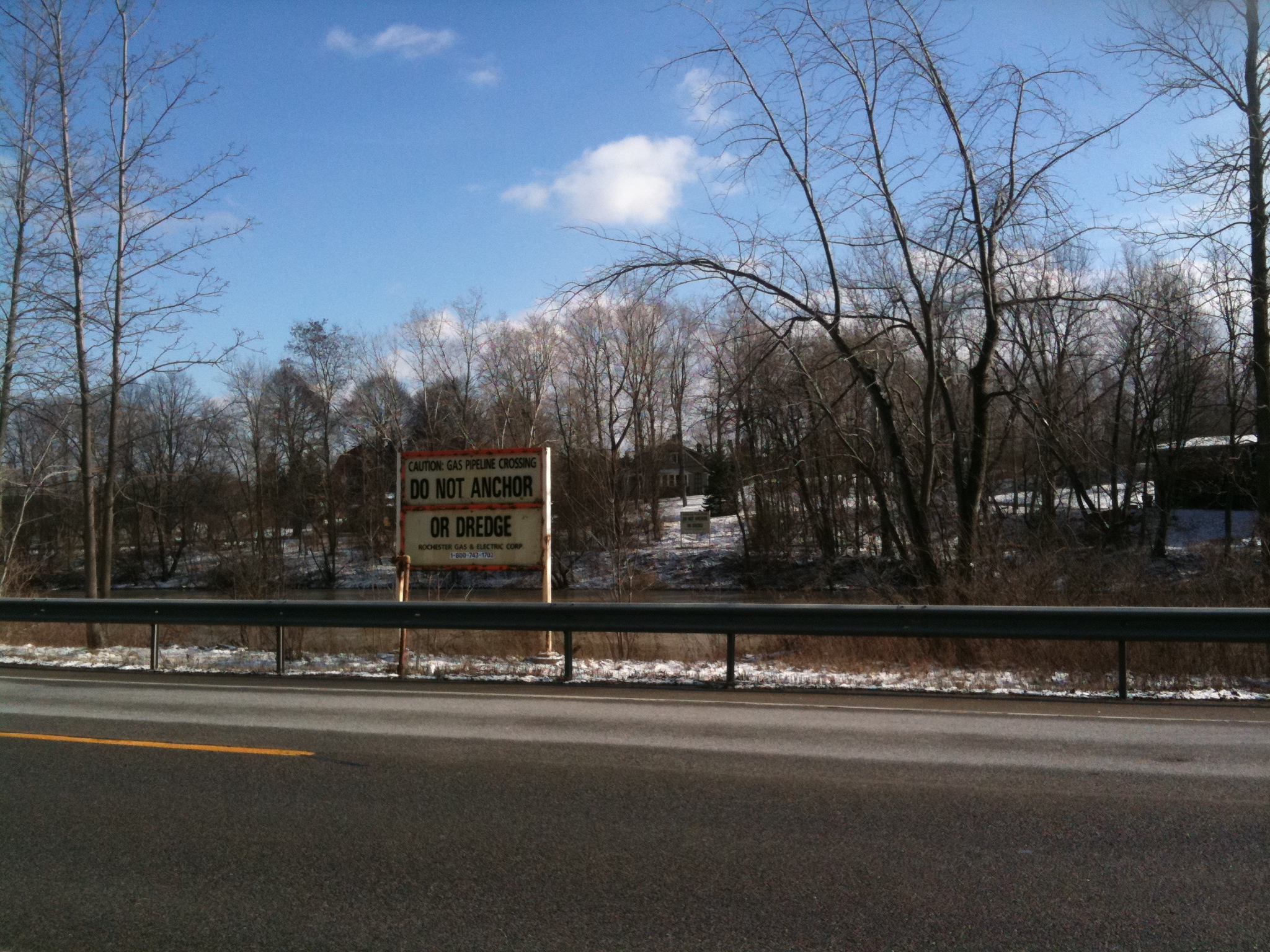
We have identified an RGE gas pipeline that runs from a hill on the West Side of RIT’s campus (just South of the Red Barn) across East River Rd, across the river, across Scottsville Rd, and through cleared woods to the GVGreenway Trail.

This path has just the trajectory we might want in developing the RIT Tweenway, and the trees are already cleared.  (The path is not surfaced.)


View tweenway Spur in a larger map

Here are some panoramas
The view from the hill to the West: http://farm3.static.flickr.com/2721/4309845639_f1e422dcce_o.jpg

The view from Scottsville Rd East to RIT: http://farm5.static.flickr.com/4045/4309844619_70c0ddf04f_o.jpg

The view at the GVGreenway-Pipeline intersection (380 degrees) : http://farm3.static.flickr.com/2798/4338153998_0616943c66_o.jpg:

Let’s call the path that might be made from the pipeline the “Tweenway Spur” (assuming the cross-RIT bike trail is to be called the RIT Tweenway.)

The ideal  long-range vision is for a cycle/pedestrian bridge from the hill on the RIT campus to the Tweenway Spur, without their having to touch down on the East River Rd, Scottsville Rd, or the River.

However, even without the Tweenway Bridge, this spur would provide a more intuitive, scenic and safer alternative route to the Ballantyne Bridge (and thence to  RIT or Jefferson Road and the Lehigh Valley North Trail).

by No Comments

Towpath Trail idea really floats


The newest segment of the Towpath Trail in South Akron includes a floating section that runs nearly a third of a mile along Summit Lake’s southern shoreline and passes under the Kenmore Boulevard bridge.

http://www.ohio.com/lifestyle/ohio_travel/56239382.html

—————————————————————————————————————
—————————————————————————————————————
And then there’s these:
by No Comments

Alta Planning & Design – Bicycle, Pedestrian, Greenway & Trail Projects – Project Links & Resources – Research & Study Documents

Alta Planning & Design – Bicycle, Pedestrian, Greenway & Trail Projects – Project Links & Resources – Research & Study Documents

< div id="ctl00_mainPlaceHolder_ctl00_contentcontrol_RadAjaxPanel1">

Research & Study Documents

Alta is at the forefront of nationally significant bicycle and pedestrian research to advance the fields of transportation, land-use, planning, and design. You can learn more about Alta’s research capabilities on ourResearch service page . Below you’ll find a number of our published studies for download. Documents unavailable on our website may be available upon request .

Documents for Download

Bicycling Related Documents & Studies

Facilities and Infrastructure Related Documents & Studies

Trail Related Documents & Studies

Programs and Education Related Documents & Studies

by No Comments

ENVIRONMENT: Cycling can boost the area's riches – Letters – Rochester City Newspaper

RCA member Scott Macrae wrote a great followup letter to City Newspaper a few weeks ago, and articulates several insights that we’ve not emphasized previously.  (So they are bolded below)


I read the December 16 article on Rochester’s emerging cycling plans with great interest. We Rochesterians are fortunate to have a golden opportunity to improve our city and quality of life by completing the Genesee Valley Trail, participating in the Greater Rochester Cycling Plan, and continuing to build on our success. Rochester will see the multiple benefits of this investment in years to come.

Cities like Portland, Oregon; Minneapolis; and Copenhagen have pioneered the urban craft of improved cycling and pedestrian access with remarkable results. Copenhagen, a snowy northern European city, boasts a 37 percent cycling commuter rate and consistently is ranked one of the highest quality-of-life cities in Europe and the world. (You can see a film on Copenhagen’s cycling effort here.) Portland’s cycling commuter rate is 6.5 percent and consistently is rated, along with Minneapolis, in the upper echelon of livable cities. I lived in Portland for 17 years and saw the transformation from a downtrodden downtown to robust, youthful, and financially vibrant destination and place to live. Cycling and pedestrian development was a key element of their urban renaissance.
Here are a few compelling reasons why Rochester should kick into high gear and support a cycling and pedestrian program.
1) There are surprisingly strong economic benefits. Portland economist Joe Cartwright calculated an annual regional savings of $1.1 billion, or 1.5 percent of the region’s income. These dollars are much more likely to stay and circulate within the region than money spent on gasoline, of which at least 73 percent of its value is exported to gas producing countries.
2) Biking cities and countries are safer. Holland has one-third the motor-vehicle fatality rate compared to the US. Paradoxically, cities that have busy pedestrian-cycling cultures are safer for all motorists and for pedestrians and cyclists because people are more alert while driving.
3) Biking communities are healthier. Two-thirds of Americans are either overweight or obese. In Holland, where almost every road has a bike lane, and 27 percent of all trips are by bike, the obesity rate is one-half that of the US.
4) Bicycling communities develop a strong pedestrian and youth culture. Cities like Minneapolis, Portland, and Boulder all are attracting young adults and families that revitalize neighborhoods. I was amazed at the transformation of rundown neighborhoods in Portland that are now bustling with restaurants, shops, and small businesses.
Rochester has equivalent or better higher-education centers than Portland, but it lacks a youth culture, which promotes outdoor activity and mingling within the city. Cycling and pedestrian activities nurture these types of environments.
5) The Greater Rochester area has fantastic cycling terrain for road biking, touring, and mountain biking. Recreational cycling promotion would pay huge dividends in ecology, tourism, economic development, and improved quality of life for the region at relatively little cost. Cycle Oregon, a week-long bike ride across a different part of Oregon each year, was started 21 years ago by the Oregon State Department of Tourism and attracted 1,033 riders. Now rural communities compete heavily to have it come to their town. There is a lottery to be one of the privileged 2,200 riders from 44 states and 11 foreign countries, and it donates more than $120,000 a year to local rural communities.
Iowa has a similar ride through rural Iowa, called RAGBRAI, with 15,000 riders, which has given an enormous economic, tourism, and goodwill boost to rural Iowa. A similar ride featuring the Finger Lakes, New York’s wineries, and farmlands and bridging to the Erie Canal and 230 miles of trails along the Genesee Valley Greenway would highlight the beauty of the region.
Rochester’s citizen and politicians should seize this opportunity to finish the Genesee River Trail and also think bigger to make Rochester a high-profile bicycling mecca. Portland has done it, and people have responded to its youthful, recreational, environmentally friendly approach while boosting its economy and improving its quality of life. Now is our chance. Let’s seize it.
SCOTT MACRAE, ROCHESTER

by No Comments

ENVIRONMENT: Cycling can boost the area's riches – Letters – Rochester City Newspaper

RCA member Scott Macrae wrote a great followup letter to City Newspaper a few weeks ago, and articulates several insights that we’ve not emphasized previously.  (So they are bolded below)


I read the December 16 article on Rochester’s emerging cycling plans with great interest. We Rochesterians are fortunate to have a golden opportunity to improve our city and quality of life by completing the Genesee Valley Trail, participating in the Greater Rochester Cycling Plan, and continuing to build on our success. Rochester will see the multiple benefits of this investment in years to come.

Cities like Portland, Oregon; Minneapolis; and Copenhagen have pioneered the urban craft of improved cycling and pedestrian access with remarkable results. Copenhagen, a snowy northern European city, boasts a 37 percent cycling commuter rate and consistently is ranked one of the highest quality-of-life cities in Europe and the world. (You can see a film on Copenhagen’s cycling effort here.) Portland’s cycling commuter rate is 6.5 percent and consistently is rated, along with Minneapolis, in the upper echelon of livable cities. I lived in Portland for 17 years and saw the transformation from a downtrodden downtown to robust, youthful, and financially vibrant destination and place to live. Cycling and pedestrian development was a key element of their urban renaissance.
Here are a few compelling reasons why Rochester should kick into high gear and support a cycling and pedestrian program.
1) There are surprisingly strong economic benefits. Portland economist Joe Cartwright calculated an annual regional savings of $1.1 billion, or 1.5 percent of the region’s income. These dollars are much more likely to stay and circulate within the region than money spent on gasoline, of which at least 73 percent of its value is exported to gas producing countries.
2) Biking cities and countries are safer. Holland has one-third the motor-vehicle fatality rate compared to the US. Paradoxically, cities that have busy pedestrian-cycling cultures are safer for all motorists and for pedestrians and cyclists because people are more alert while driving.
3) Biking communities are healthier. Two-thirds of Americans are either overweight or obese. In Holland, where almost every road has a bike lane, and 27 percent of all trips are by bike, the obesity rate is one-half that of the US.
4) Bicycling communities develop a strong pedestrian and youth culture. Cities like Minneapolis, Portland, and Boulder all are attracting young adults and families that revitalize neighborhoods. I was amazed at the transformation of rundown neighborhoods in Portland that are now bustling with restaurants, shops, and small businesses.
Rochester has equivalent or better higher-education centers than Portland, but it lacks a youth culture, which promotes outdoor activity and mingling within the city. Cycling and pedestrian activities nurture these types of environments.
5) The Greater Rochester area has fantastic cycling terrain for road biking, touring, and mountain biking. Recreational cycling promotion would pay huge dividends in ecology, tourism, economic development, and improved quality of life for the region at relatively little cost. Cycle Oregon, a week-long bike ride across a different part of Oregon each year, was started 21 years ago by the Oregon State Department of Tourism and attracted 1,033 riders. Now rural communities compete heavily to have it come to their town. There is a lottery to be one of the privileged 2,200 riders from 44 states and 11 foreign countries, and it donates more than $120,000 a year to local rural communities.
Iowa has a similar ride through rural Iowa, called RAGBRAI, with 15,000 riders, which has given an enormous economic, tourism, and goodwill boost to rural Iowa. A similar ride featuring the Finger Lakes, New York’s wineries, and farmlands and bridging to the Erie Canal and 230 miles of trails along the Genesee Valley Greenway would highlight the beauty of the region.
Rochester’s citizen and politicians should seize this opportunity to finish the Genesee River Trail and also think bigger to make Rochester a high-profile bicycling mecca. Portland has done it, and people have responded to its youthful, recreational, environmentally friendly approach while boosting its economy and improving its quality of life. Now is our chance. Let’s seize it.
SCOTT MACRAE, ROCHESTER

by No Comments

Fwd: BikeIt organizing collective!

Can anyone help organize a BikeIt contingent?  (We’ll put your email address on the poster below!)
I’m trying to have RIT host the Ithaca contingent on their way to Detroit.
More info on this initiative here
This from Claire Stoscheck BikeIt National Coordinator, who visited last week.

As promised, I’ve attached the BikeIt Rochester poster. Please put a local contact in the contact box in the lower left corner as well, so Rochester folks can start organizing with each other to go to Detroit! Also attached is a template for an outreach email that you could use for your various groups/list serves/web-sites/blogs. Please modify it as you see fit!
Also, if folks want to stay in the loop you can join our listserve at: http://groups.google.com/group/fingerlakesbikeit

by No Comments

Fwd: BikeIt organizing collective!

Can anyone help organize a BikeIt contingent?  (We’ll put your email address on the poster below!)
I’m trying to have RIT host the Ithaca contingent on their way to Detroit.
More info on this initiative here
This from Claire Stoscheck BikeIt National Coordinator, who visited last week.

As promised, I’ve attached the BikeIt Rochester poster. Please put a local contact in the contact box in the lower left corner as well, so Rochester folks can start organizing with each other to go to Detroit! Also attached is a template for an outreach email that you could use for your various groups/list serves/web-sites/blogs. Please modify it as you see fit!
Also, if folks want to stay in the loop you can join our listserve at: http://groups.google.com/group/fingerlakesbikeit

by No Comments

Hale and Harmful: Are the Healthful Effects of Riding a Bike on City Streets Ruined by Inhaled Pollutants?: Scientific American

Hale and Harmful: Are the Healthful Effects of Riding a Bike on City Streets Ruined by Inhaled Pollutants?: Scientific American:

Interesting article, and another reason why the Rochester Greenway could be a pace-setter!
    “Ironically, many cities that offer dedicated bike lanes often lay them out right next to busy bus lanes, unintentionally ensuring that bicyclists breathe in as much diesel exhaust as possible. “I ride along one of these high-traffic bus routes,” Housen says, “and…there was between two and five or six times more magnetic fine particulate matter along the bus route than [on less-busy streets].” Housen would like to expand his research so it could be used by urban planners to better design bike and pedestrian routes so as not to intermingle so much diesel transit and pedestrian/bicycle traffic.”
by No Comments

Funding Pedestrian and Bicycle Projects

APBP Webinar: Funding Pedestrian and Bicycle Projects

Posted by: “Stephen Miller” stephen@railstotrails.org   stephenmrtc

Thu Jan 14, 2010 7:10 am (PST)

Many of you may be interested in this. It uses the example of a trail
project in Greenville, SC:

Webinar: Funding Pedestrian and Bicycle Projects
<http://www.apbp.org/event/jan-10_webinar##>

1/20/2010

When:

Wednesday, January 20
3:00 to 4:00 p.m. EST

Contact:

Debra Goeks (info@apbp.org info@apbp.org> )

Registration Information

Online registration is available until: 1/20/2010

* Register for this event >
<http://www.apbp.org/events/event_login.asp?id=89076>

Funding Pedestrian and Bicycle Projects

January’s webinar takes a comprehensive look at funding sources, both
familiar and nontraditional. First, we examine how Greenville County,
S.C., leveraged the power of one grant to obtain trail funding from many
different nontraditional sources. Learn how the powerful ripple effect
of a partnership between the county and the Greenville Hospital System
led to building widespread community, business, and political support
for the Swamp Rabbit Trail project, which is the flagship greenway of a
county-wide Greenways Master Plan that is currently being developed.

This outstanding example will demonstrate
* techniques to identify and approach funding sources.
* how to parlay one grant into multiple partnerships.
* the impact of creating a business plan and following through.

The Federal Highway Administration’s Transportation Enhancement (TE)
Activities and Recreational Trails Program (RTP) provide funds to
develop transportation and recreation infrastructure. Gabe Rousseau and
Christopher Douwes of the FHWA will explain these and other federal
programs and offer suggestions on how to apply for funds. The
presentation will also provide information about the authorization of
the Federal Surface Transportation Program expected in 2010.TE
activities increase transportation choices and access for pedestrians
and bicyclists and enhance the built and natural environment through
scenic and historic highway programs, landscaping, historic
preservation, and environmental mitigation. The RTP provides funds to
states to develop and maintain recreational trails and trail-related
facilities.

Webinar presenters are Ty Houck, Director of Greenways, Natural and
Historic Resources, Greenville County Recreation District; Dr. Gabe
Rousseau, U.S. Department of Transportation and FHWA Bicycle and
Pedestrian Program Manager; and Christopher Douwes, FHWA Trails and
Enhancements Program Manager. APBP board member Tom Dodds, South
Carolina’s Bicycle and Pedestrian Engineer, will moderate the webinar
and add his insights on how state coordinators can assist local
jurisdictions in identifying and applying for funding.

APBP has applied for one CM credit from the AICP for this webinar. A
certificate of attendance for those wanting to claim Professional
Development Hours will be available.

Invite colleagues and clients to attend at your location for one very
reasonable price. Cost is $50 per site for APBP members, $75 per site
for non-APBP members. Each site license includes one phone connection
(toll charges apply, or use VoIP), one internet connection, one set of
handouts for unlimited attendees in the same location, and access to the
recording. APBP accepts Visa, MasterCard or AMEX; payment should be made
by noon on January 19. For more information, contact Debra Goeks
(262-228-7025 or deb@apbp.org deb@apbp.org> ).