As promised, I’ve attached the BikeIt Rochester poster. Please put a local contact in the contact box in the lower left corner as well, so Rochester folks can start organizing with each other to go to Detroit! Also attached is a template for an outreach email that you could use for your various groups/list serves/web-sites/blogs. Please modify it as you see fit!Also, if folks want to stay in the loop you can join our listserve at: http://groups.google.com/group/fingerlakesbikeit
Fwd: BikeIt organizing collective!
As promised, I’ve attached the BikeIt Rochester poster. Please put a local contact in the contact box in the lower left corner as well, so Rochester folks can start organizing with each other to go to Detroit! Also attached is a template for an outreach email that you could use for your various groups/list serves/web-sites/blogs. Please modify it as you see fit!Also, if folks want to stay in the loop you can join our listserve at: http://groups.google.com/group/fingerlakesbikeit
America's 75 Worst Commutes, Rochester NY tops Portland OR
America ‘s 75 Worst Commutes
by The Daily Beast
Portland, OR may be a better place for bicyclist but we have an easier commute.
Notice the quote;”As anyone who drives on Interstate 5 or listens to the traffic reports knows, I-5 and most of the
#16, I-5,
Weekly hours of bottleneck congestion: 238
Worst bottleneck: Northbound, Marine Dr/Exit 307
Length of worst bottleneck: .76 mi
Weekly hours of congestion on worst bottleneck: 23
Speed of worst bottleneck when congested: 14.8 mph
Commuter Buzz: “,” wrote Gerald Fox. “There are numerous choke points and frequent incidents delaying traffic throughout the region.”
66, I-490,
Weekly hours of bottleneck congestion: 14
Worst bottleneck: Inner loop westbound, Washington St/Exit 14
Length of worst bottleneck: .27 mi
Weekly hours of congestion on worst bottleneck: 9
Speed of worst bottleneck when congested: 18 mph
Commuter Buzz: “The closing of the
America's 75 Worst Commutes, Rochester NY tops Portland OR
America ‘s 75 Worst Commutes
by The Daily Beast
Portland, OR may be a better place for bicyclist but we have an easier commute.
Notice the quote;”As anyone who drives on Interstate 5 or listens to the traffic reports knows, I-5 and most of the
#16, I-5,
Weekly hours of bottleneck congestion: 238
Worst bottleneck: Northbound, Marine Dr/Exit 307
Length of worst bottleneck: .76 mi
Weekly hours of congestion on worst bottleneck: 23
Speed of worst bottleneck when congested: 14.8 mph
Commuter Buzz: “,” wrote Gerald Fox. “There are numerous choke points and frequent incidents delaying traffic throughout the region.”
66, I-490,
Weekly hours of bottleneck congestion: 14
Worst bottleneck: Inner loop westbound, Washington St/Exit 14
Length of worst bottleneck: .27 mi
Weekly hours of congestion on worst bottleneck: 9
Speed of worst bottleneck when congested: 18 mph
Commuter Buzz: “The closing of the
National Bike Summit 2010
March 9-11, 2010
Washington, D.C.
National Bike Summit 2010 – Building on 10 Years of Progress
Bicycling has come a long way in the last 10 years. Our movement has grown larger and more effective; the number of people riding is growing in almost every community in the nation. We need more people on bikes more often, and the reasons just keep on growing. Whether it’s obesity, health care, climate change, air quality, energy independence, traffic congestion, economic development or quality of life issues – bicycling has got to be part of the solution. In 2010, Congress and our Federal agencies will be setting national targets and goals for 2020. They will be writing transportation, climate, health care, natural resources and other critical pieces of legislation that will shape our future. Bicycling must be prominently featured in these important pieces of legislation, documents, funding streams and programs.
Ten years ago, the first National Bike Summit brought just over 100 advocates and industry leaders to Washington, D.C. – this year we need to be closer to 1,000 participants to make a strong impact. Join us and speak up for bicycling; discover how your voice can truly be heard. Help the League of American Bicyclists celebrate 10 years of progress, and help us propel into a new decade of the bicycle!
Source: http://www.bikeleague.org/conferences/summit10/index.php
National Bike Summit 2010
March 9-11, 2010
Washington, D.C.
National Bike Summit 2010 – Building on 10 Years of Progress
Bicycling has come a long way in the last 10 years. Our movement has grown larger and more effective; the number of people riding is growing in almost every community in the nation. We need more people on bikes more often, and the reasons just keep on growing. Whether it’s obesity, health care, climate change, air quality, energy independence, traffic congestion, economic development or quality of life issues – bicycling has got to be part of the solution. In 2010, Congress and our Federal agencies will be setting national targets and goals for 2020. They will be writing transportation, climate, health care, natural resources and other critical pieces of legislation that will shape our future. Bicycling must be prominently featured in these important pieces of legislation, documents, funding streams and programs.
Ten years ago, the first National Bike Summit brought just over 100 advocates and industry leaders to Washington, D.C. – this year we need to be closer to 1,000 participants to make a strong impact. Join us and speak up for bicycling; discover how your voice can truly be heard. Help the League of American Bicyclists celebrate 10 years of progress, and help us propel into a new decade of the bicycle!
Source: http://www.bikeleague.org/conferences/summit10/index.php
Hale and Harmful: Are the Healthful Effects of Riding a Bike on City Streets Ruined by Inhaled Pollutants?: Scientific American
- “Ironically, many cities that offer dedicated bike lanes often lay them out right next to busy bus lanes, unintentionally ensuring that bicyclists breathe in as much diesel exhaust as possible. “I ride along one of these high-traffic bus routes,” Housen says, “and…there was between two and five or six times more magnetic fine particulate matter along the bus route than [on less-busy streets].” Housen would like to expand his research so it could be used by urban planners to better design bike and pedestrian routes so as not to intermingle so much diesel transit and pedestrian/bicycle traffic.”
Funding Pedestrian and Bicycle Projects
APBP Webinar: Funding Pedestrian and Bicycle Projects
Posted by: “Stephen Miller” stephen@railstotrails.org stephenmrtc
Thu Jan 14, 2010 7:10 am (PST)
project in Greenville, SC:
Webinar: Funding Pedestrian and Bicycle Projects
<http://www.apbp.org/event/
1/20/2010
When:
Wednesday, January 20
3:00 to 4:00 p.m. EST
Contact:
Debra Goeks (info@apbp.org
Registration Information
Online registration is available until: 1/20/2010
* Register for this event >
<http://www.apbp.org/events/
Funding Pedestrian and Bicycle Projects
January’s webinar takes a comprehensive look at funding sources, both
familiar and nontraditional. First, we examine how Greenville County,
S.C., leveraged the power of one grant to obtain trail funding from many
different nontraditional sources. Learn how the powerful ripple effect
of a partnership between the county and the Greenville Hospital System
led to building widespread community, business, and political support
for the Swamp Rabbit Trail project, which is the flagship greenway of a
county-wide Greenways Master Plan that is currently being developed.
This outstanding example will demonstrate
* techniques to identify and approach funding sources.
* how to parlay one grant into multiple partnerships.
* the impact of creating a business plan and following through.
The Federal Highway Administration’s Transportation Enhancement (TE)
Activities and Recreational Trails Program (RTP) provide funds to
develop transportation and recreation infrastructure. Gabe Rousseau and
Christopher Douwes of the FHWA will explain these and other federal
programs and offer suggestions on how to apply for funds. The
presentation will also provide information about the authorization of
the Federal Surface Transportation Program expected in 2010.TE
activities increase transportation choices and access for pedestrians
and bicyclists and enhance the built and natural environment through
scenic and historic highway programs, landscaping, historic
preservation, and environmental mitigation. The RTP provides funds to
states to develop and maintain recreational trails and trail-related
facilities.
Webinar presenters are Ty Houck, Director of Greenways, Natural and
Historic Resources, Greenville County Recreation District; Dr. Gabe
Rousseau, U.S. Department of Transportation and FHWA Bicycle and
Pedestrian Program Manager; and Christopher Douwes, FHWA Trails and
Enhancements Program Manager. APBP board member Tom Dodds, South
Carolina’s Bicycle and Pedestrian Engineer, will moderate the webinar
and add his insights on how state coordinators can assist local
jurisdictions in identifying and applying for funding.
APBP has applied for one CM credit from the AICP for this webinar. A
certificate of attendance for those wanting to claim Professional
Development Hours will be available.
Invite colleagues and clients to attend at your location for one very
reasonable price. Cost is $50 per site for APBP members, $75 per site
for non-APBP members. Each site license includes one phone connection
(toll charges apply, or use VoIP), one internet connection, one set of
handouts for unlimited attendees in the same location, and access to the
recording. APBP accepts Visa, MasterCard or AMEX; payment should be made
by noon on January 19. For more information, contact Debra Goeks
(262-228-7025 or deb@apbp.org
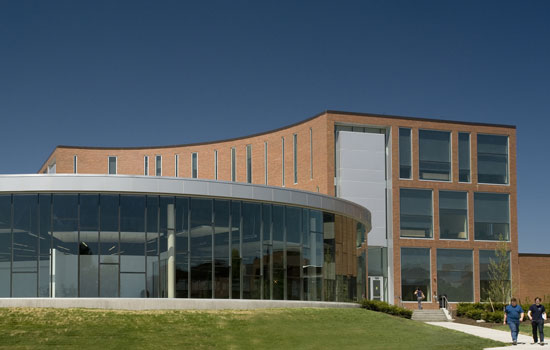
RIT’s University Services Center Certified LEED Platinum

Photo by A. Sue Weisler
RIT’s University Services Center Certified LEED Platinum

Photo by A. Sue Weisler
Wegmans unveils plans for East Avenue store | democratandchronicle.com | Democrat and Chronicle
Rails-to-Trails Conservancy:: Trail of the Month: Walkway Over the Hudson, New York
After a fire severely damaged the tracks in 1974, though, nearby communities debated whether to tear down the railroad relic. The bridge sat idle for nearly 20 years before local advocate Bill Sepe began promoting the idea of restoring the landmark as a pedestrian walkway.


Greenways 101
Greenways 101 (Pennsylvania is ahead of us!)
Greenways 101
What is a Greenway?
The word “greenway” means different things to different people. Since the 19th century, “greenway” has been used to describe a variety of linear corridors across the land that conserve natural areas and provide people with recreation and transportation opportunities. Often greenways are associated with off-road trails, such as the Appalachian Trail or the Pine Creek Rail-Trail, although not all greenways include trails.
There is a growing national movement to promote greenways, especially since 1987 when the President’s Commission on American Outdoors recommended establishing a nationalgreenways network. A greenways network is similar to a roadway network, which connects all kinds of destinations through a linear system. However, a greenways network is designed for recreation, conservation, and smart land use – a network for people, nature, and “livable” communities.
Greenways are often established and managed through partnerships between municipalities, counties, and non-profit organizations.
| Story of PA Greenways | |
| Frequently Asked Questions | |
| Benefits of Greenways | |
| Greenways Glossary | |
| Clearinghouse Database |
John Curran's Vision
John Curran (last seen here ) is incorporating the RochesterGreenway into his vision for network of Biking, Hiking, and Historical Trails in SW Rochester.
He also suggests that the Pedaling History Museum be located in the same neighborhood (so people could bike to Museum. How cool is that?)
Perhaps there could be a home…in the Susan B. Anthony Preservation District which includes several vastly underutilized 19th century factory buildings. It’s located on West Main Street near Nick Tahou’s.
I can’t think of a more appropriate location locally.
Some of the buildings in this area were part of the former Cunningham Carriage Manufactory which dealt with “spoked wheel” carriages, ambulances, hearses and, later, custom-built luxury automobiles and aircraft. There is an effort underway to restore one of the Cunningham buildings and I believe the owner wants to display some Cunningham memorabilia on-site.
….The bicycle history fits in with the late 19th Century Industrial period that the Preservation District includes and hopes to showcase. Susan B. herself marveled at the freedom that bicycles gave to women.
…There will be quite a bit of improvement to the attractiveness of this District in the years ahead in an effort to draw tourism from the Aqueduct (Broad Street at South Ave) westward to the Susan B. Anthony Preservation District. This route is called the Rochester Heritage Trail and will have interpretive signage installed along the route in the year ahead.
The Susan B. Anthony Preservation District is the destination for a “Genesee Valley Canal Heritage Trail” intended for bicyclists that I’m championing.
Actuatr | Open Your Data To Developers Instantly
Actuatr Tour from Adeel Ahmad on Vimeo.
DFNYC – Democracy For New York City – Toxic Natural Gas Drilling in NY State?
|
|||||||||


.jpg)