

by Jesse Peers, Cycling Manager
As Reconnect Rochester has grown over the years, we’ve gotten better and better at getting residents engaged during the public input process for road projects. We get the word out about public meetings and open houses. (Subscribe to our Mobility Action Alerts!) We post the proposed designs on social media, encouraging residents to submit feedback. We equip the public with potential talking points. We encourage folks to show up in droves to meetings to outnumber the naysayers (it really makes a difference!). We’ve even started using petitions folks can easily and quickly sign onto.
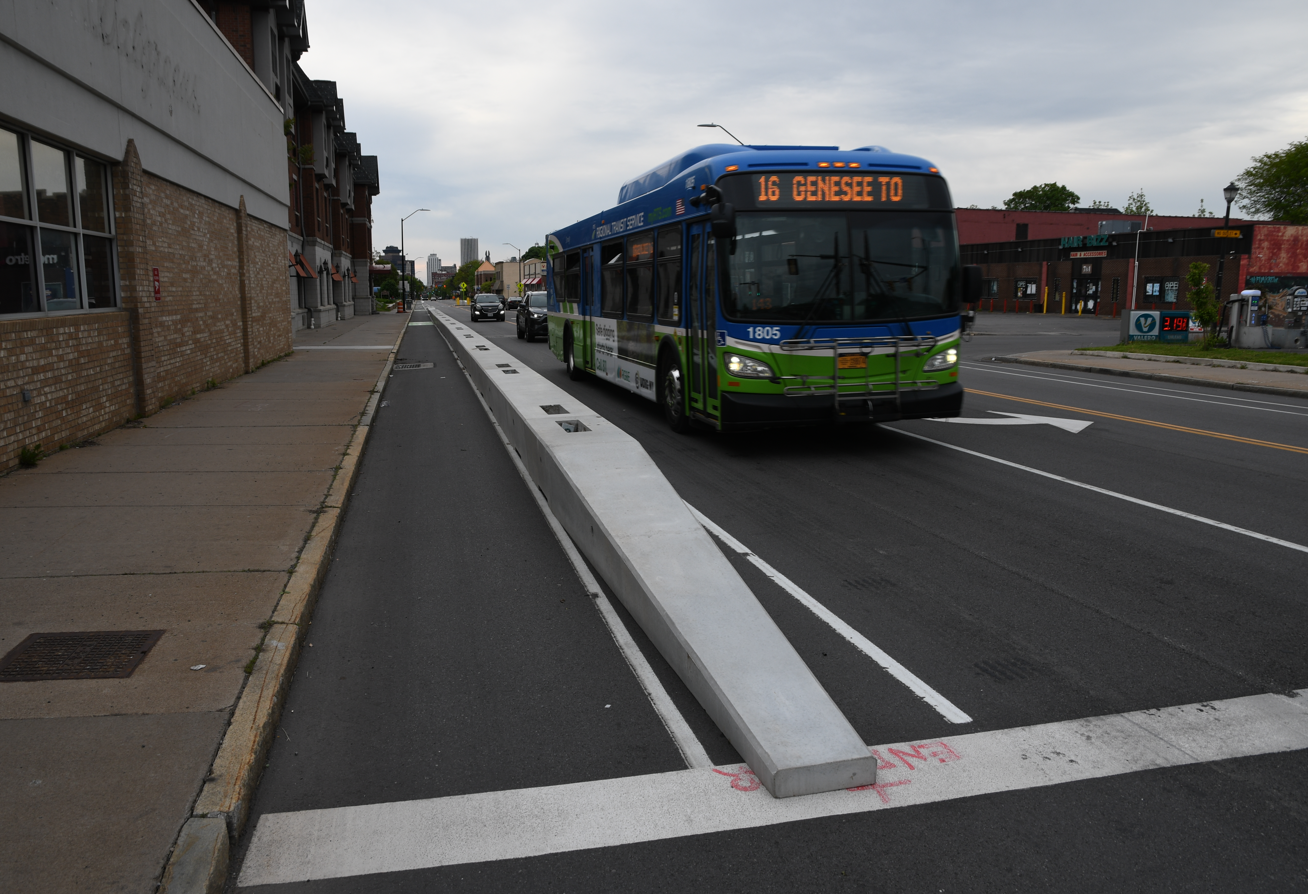
As one City Hall staffer told us years ago, “Bike advocacy is changing the way street design is conducted in Rochester.”
But after the last public meeting where the “final design” is unveiled (after which sometimes changes are made), things go silent. After construction is completed, there are rarely ribbon cuttings or press events. No parties or celebratory rides where residents are invited to bike it with City staff. People just happen upon new infrastructure on their own. No mechanism is in place either for the City to receive feedback about their work.
Reconnect Rochester thought it was time for a simple grading system for completed road projects; a means by which residents can assess a new segment’s bike-friendliness and grade various styles of bike infrastructure in different contexts.
But first…
Before we dive in, however, I need to briefly address a common refrain we’ve heard over the years: “If it’s not a protected bike lane, it’s not worth riding in.”
Reconnect Rochester just doesn’t believe that. No one will deny that protected bike lanes are safer, attract more ridership and generate more bike trips. That, of course, is what we’re after! But we must acknowledge too that CONTEXT MATTERS and that the outcome sometimes depends on whether a road project is a rare reconstruction or standard milling & repaving project. A conventional painted bike lane on a road with low traffic volumes and slow motorist speeds is rideable for many people. On the other hand, a conventional painted bike lane on a road with high traffic volumes and high motorist speeds isn’t rideable for many people. Furthermore, as we’ve noted before, “Though not all bike riders will be comfortable riding along bike boulevards, most people find them manageable, even pleasant to bike along.”

Notice the popularly-used diagram above is about *perceived* safety, not actual safety. Motorists drifting into shoulders/bike lanes and hitting cyclists is very, very rare. On the other hand, motorists hit sidewalk-riding cyclists everyday.
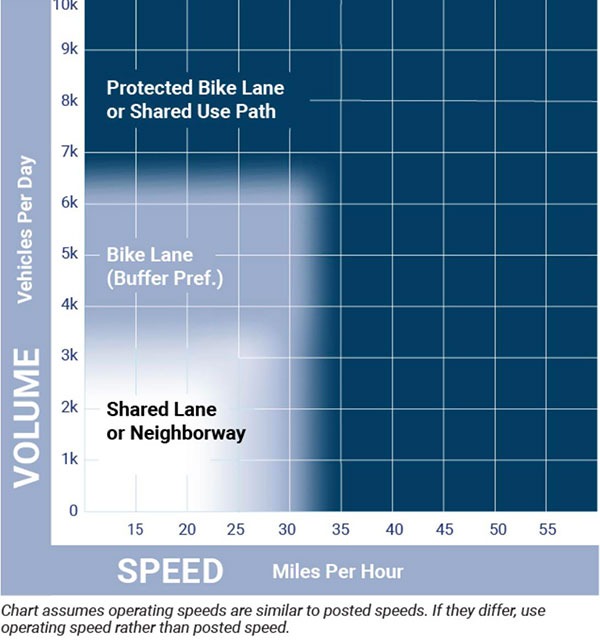
Even the most progressive bicycle planners from Europe contend: With 25mph speeds, “painting a lane is an acceptable solution. When speeds hit 30mph, it’s time for hard separation from motorized vehicles.” Once vehicle speeds reach “43mph or higher, there is only one goal: getting cyclists as far away as possible from motorized traffic.”
Reconnect Rochester’s grading system
Everyone’s experience and degree of comfort along various bike facilities is different. And that’s okay. We’re proud to present Reconnect Rochester’s custom grading system below, along with penultimate examples for each tier in my opinion. If you’d grade these examples differently, that’s fine, indeed expected. That’s why we’re grading each project collectively and taking the average.
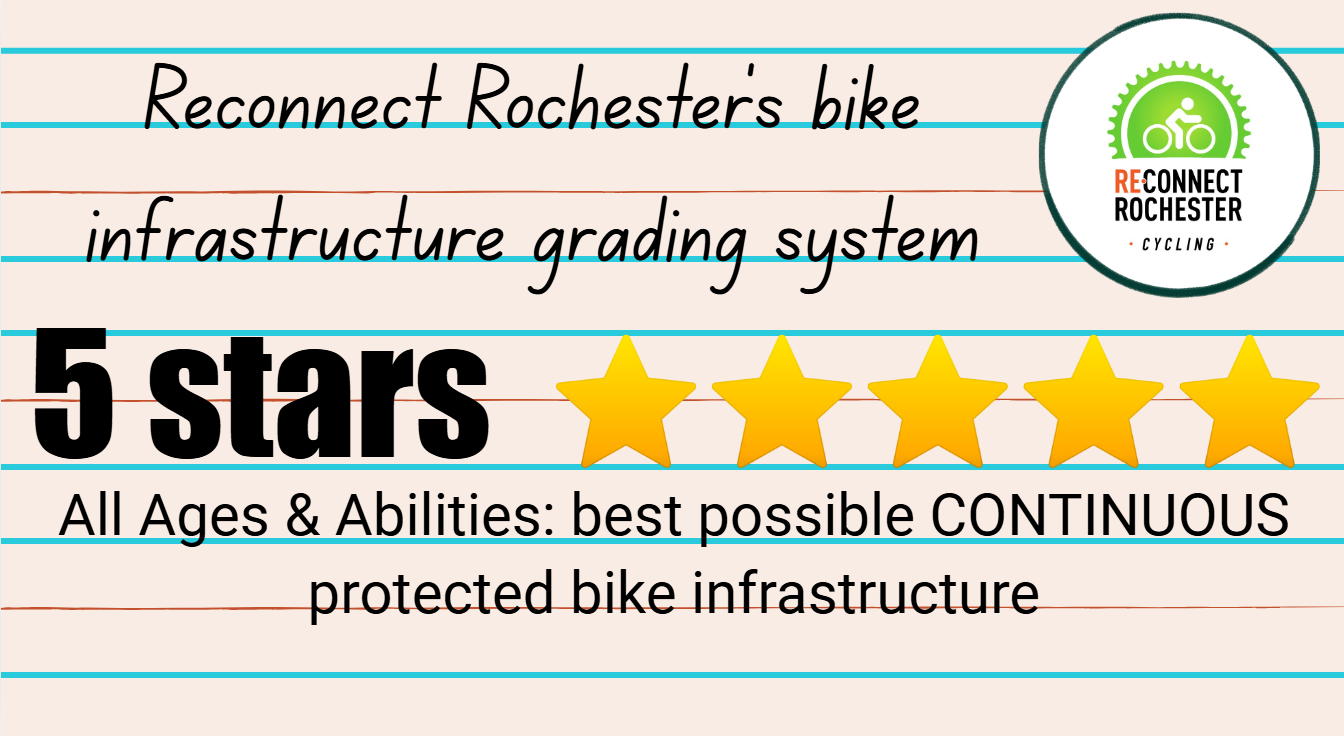
In my view, with the exception of trails, 5-Star Bike Infrastructure in Rochester is rare. But we do get something every once in a while.
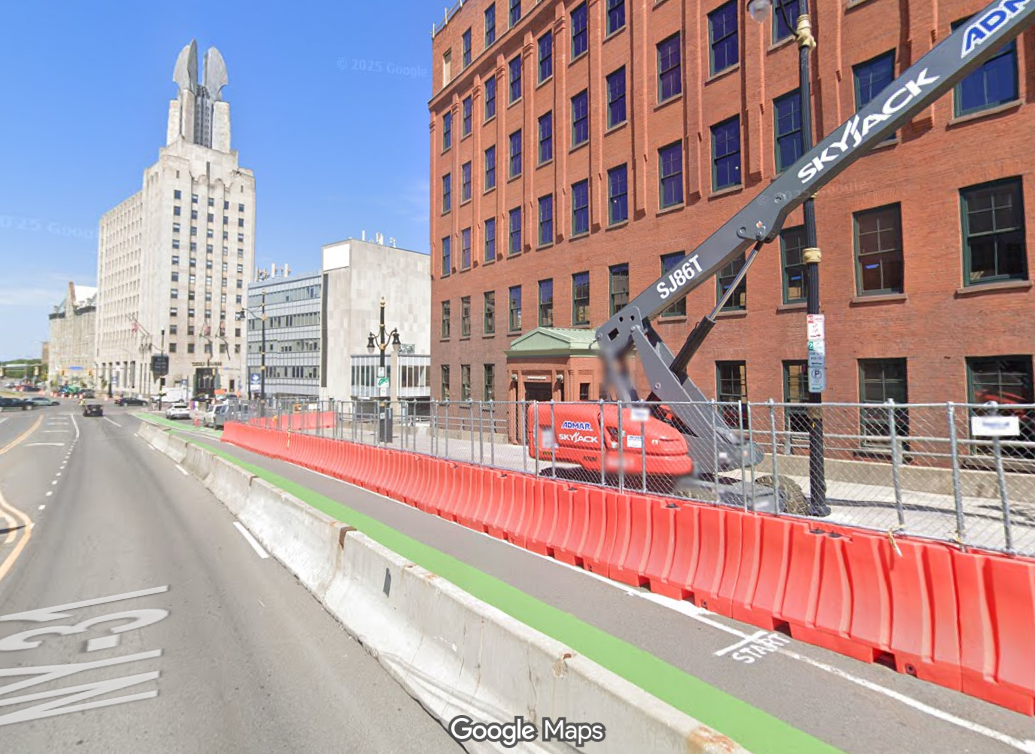
Google Maps shot of the temporary Jersey Barrier protected bike lane we had in 2022
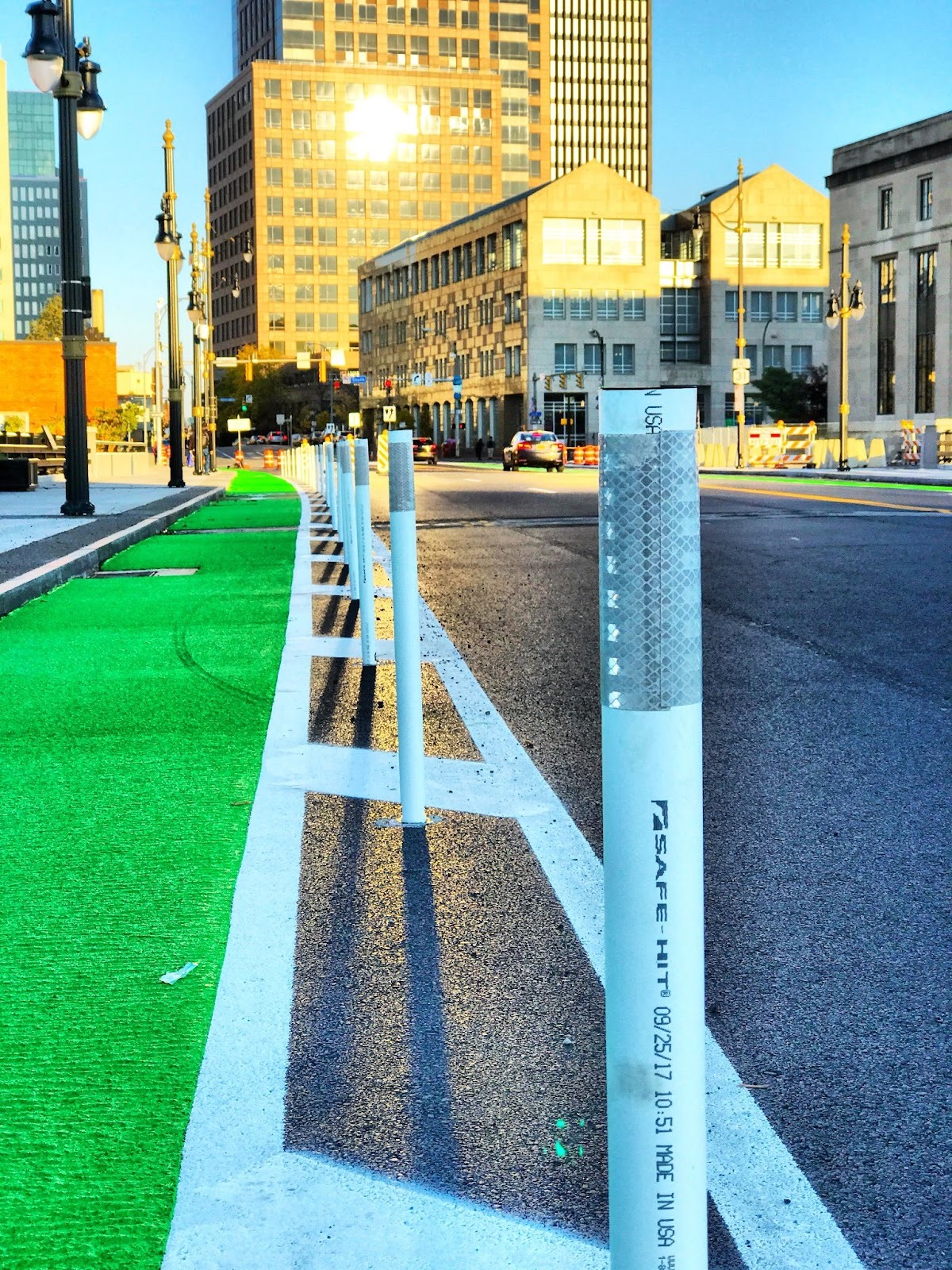
The flex posts Broad Street used to have before they were put away for the season & lost, courtesy of The Urban Phoenix
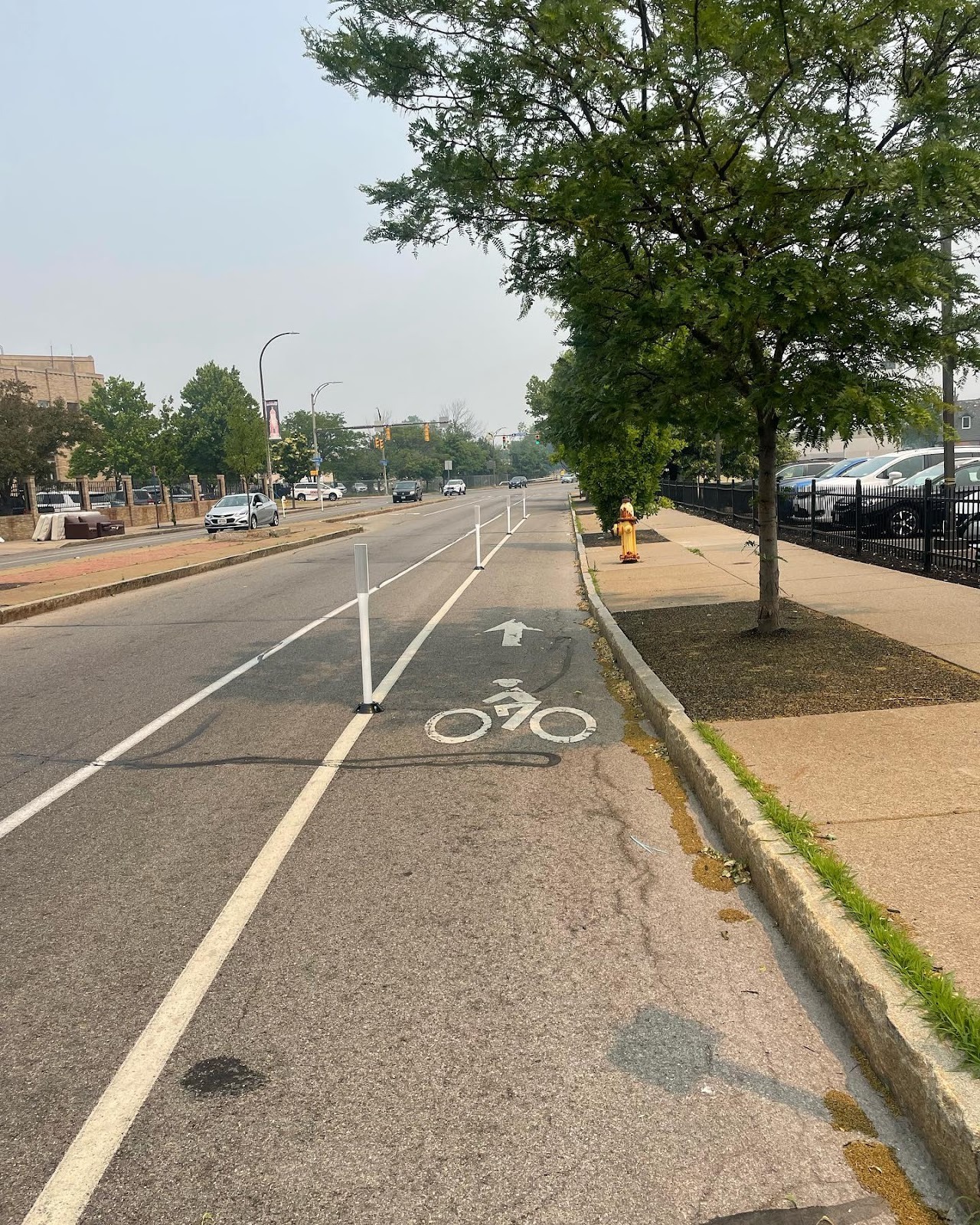
North Chestnut Street, the way it used to be before its seasonal flex posts were lost
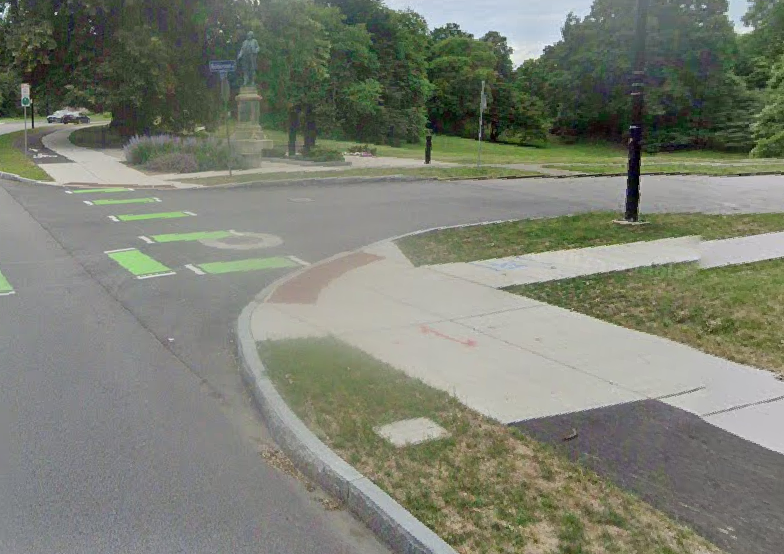
The South Ave raised cycle track (by Highland Bowl), a place where that treatment works since development is sparser
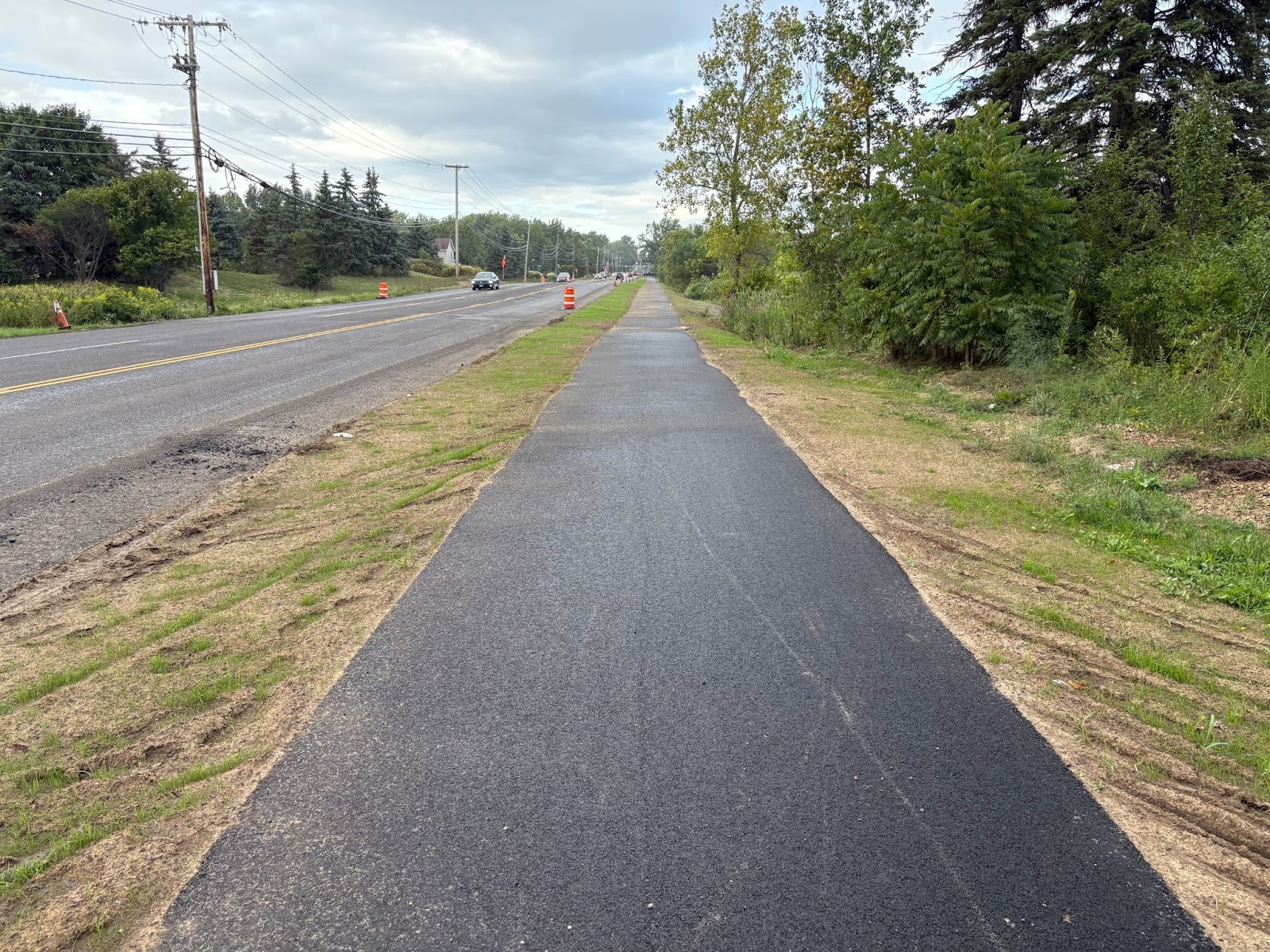
The new side path along East River Road in Henrietta works very well in this context. Well done Monroe County DOT!
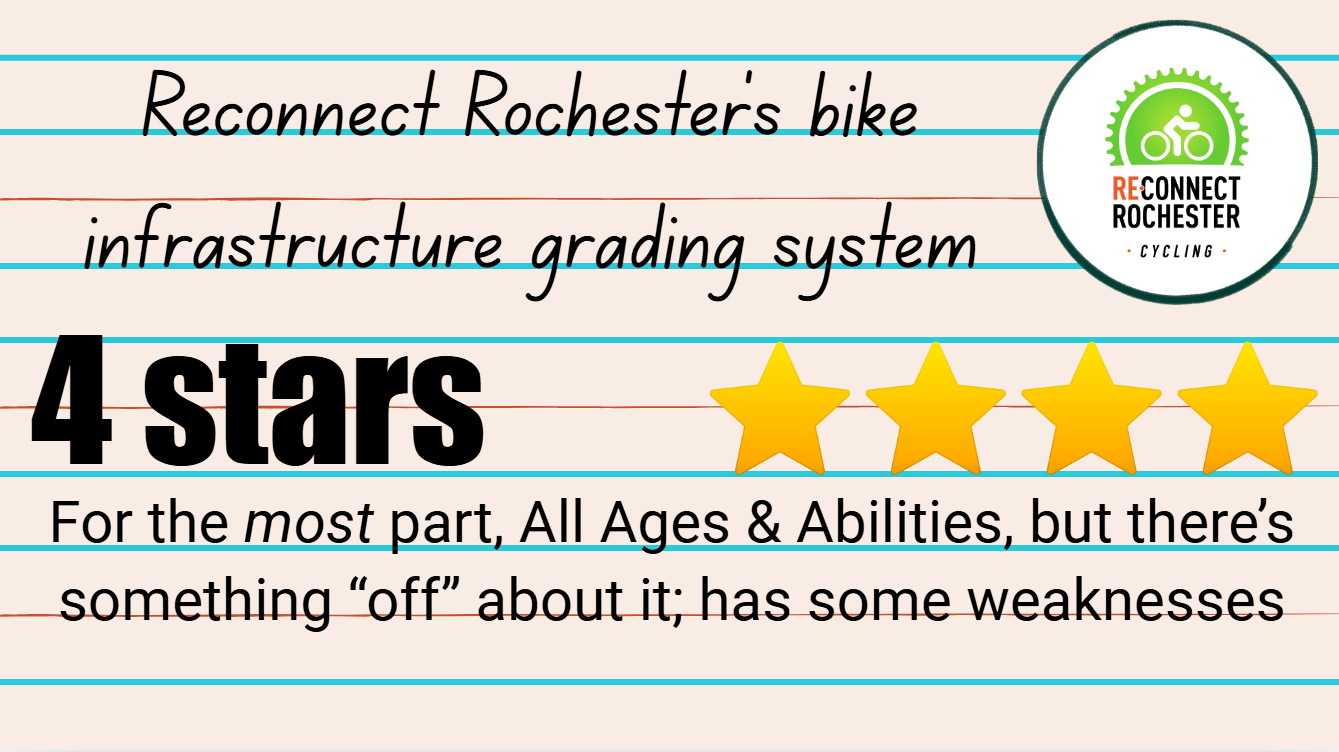
Nothing exemplifies 4 stars like raised cycle tracks in places where they just don’t work: frequent/short driveways, many side streets and parking lot exist: buildings close to the street.
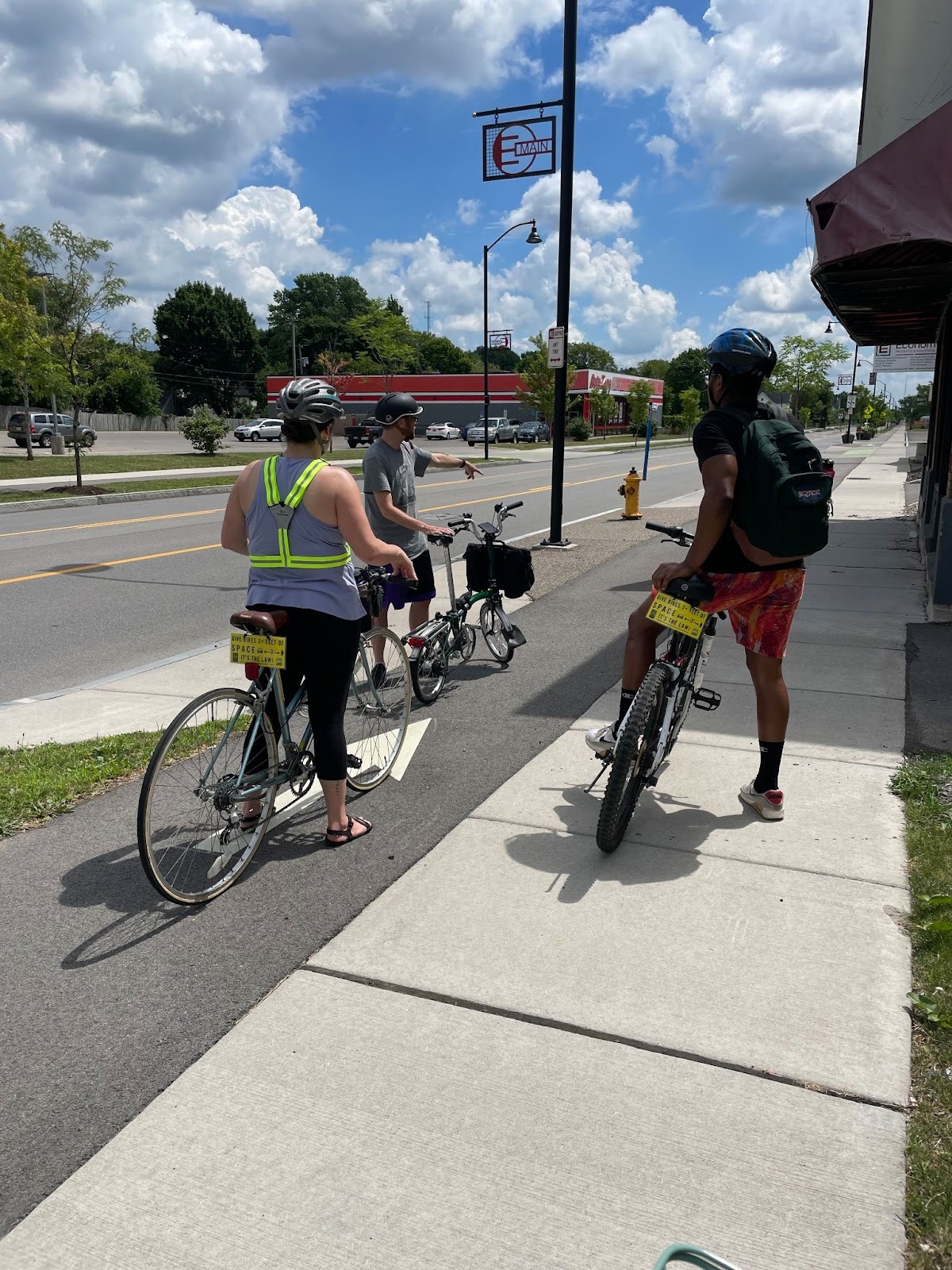
Three shots of the raised cycle track on East Main Street between Goodman & Culver
For the most part, when there’s one motor vehicle lane in each direction and conventional bike lanes on each side (and traffic isn’t too bad), I’m giving it 3 stars. Bike boulevards too.

Conventional bike lane Downtown on Andrews Street outside Harro East
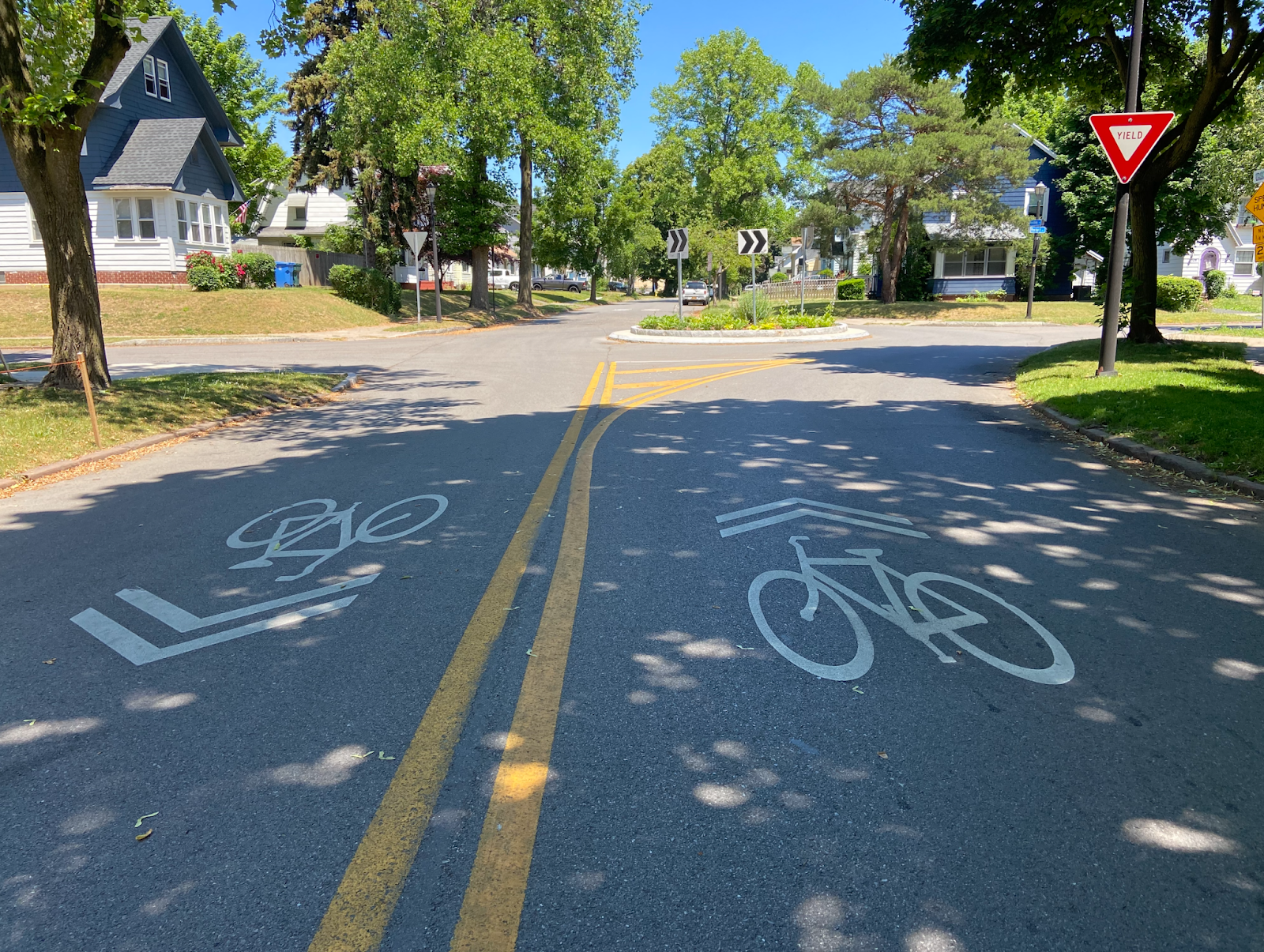
Bike Boulevard roundabout in the Homestead Heights neighborhood of Rochester
When there are brief bike lane disappearances or when a continuous lane is next to multi-lane traffic in an urban context, that’s 2 stars. As an experienced cyclist, I can bike these just fine but definitely see why others are turned off.
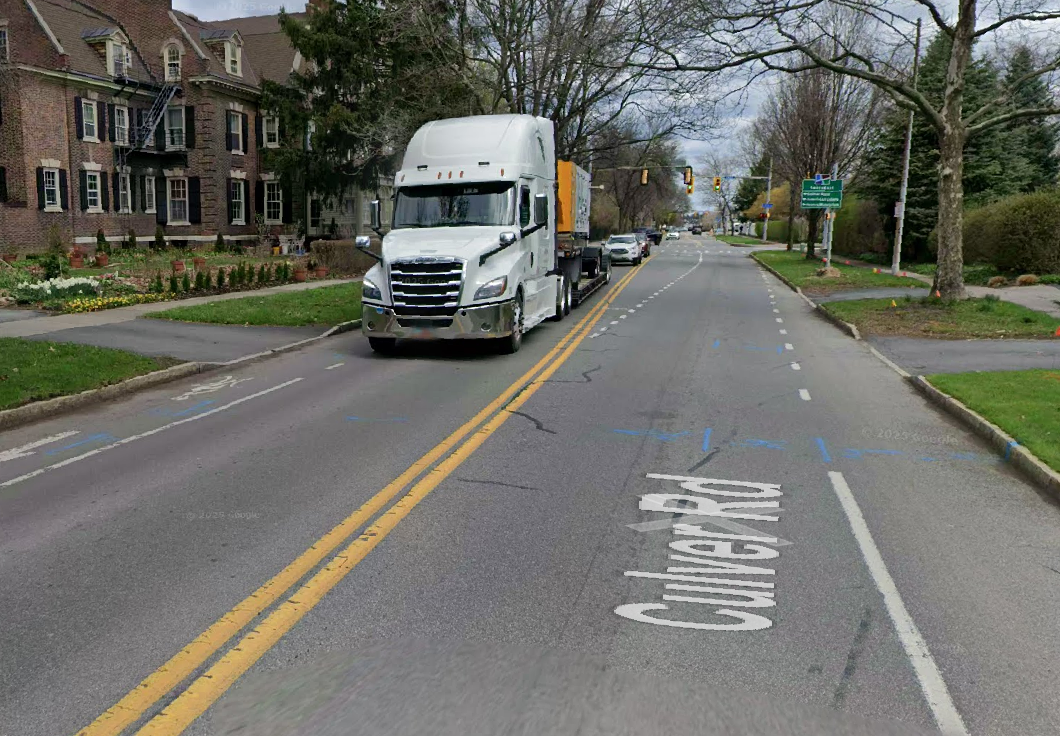
Disappearing bike lanes on Culver Rd approaching Park Ave & East Ave

Bike Lane on East Main Street between Union & Goodman (by the Auditorium & Armory)
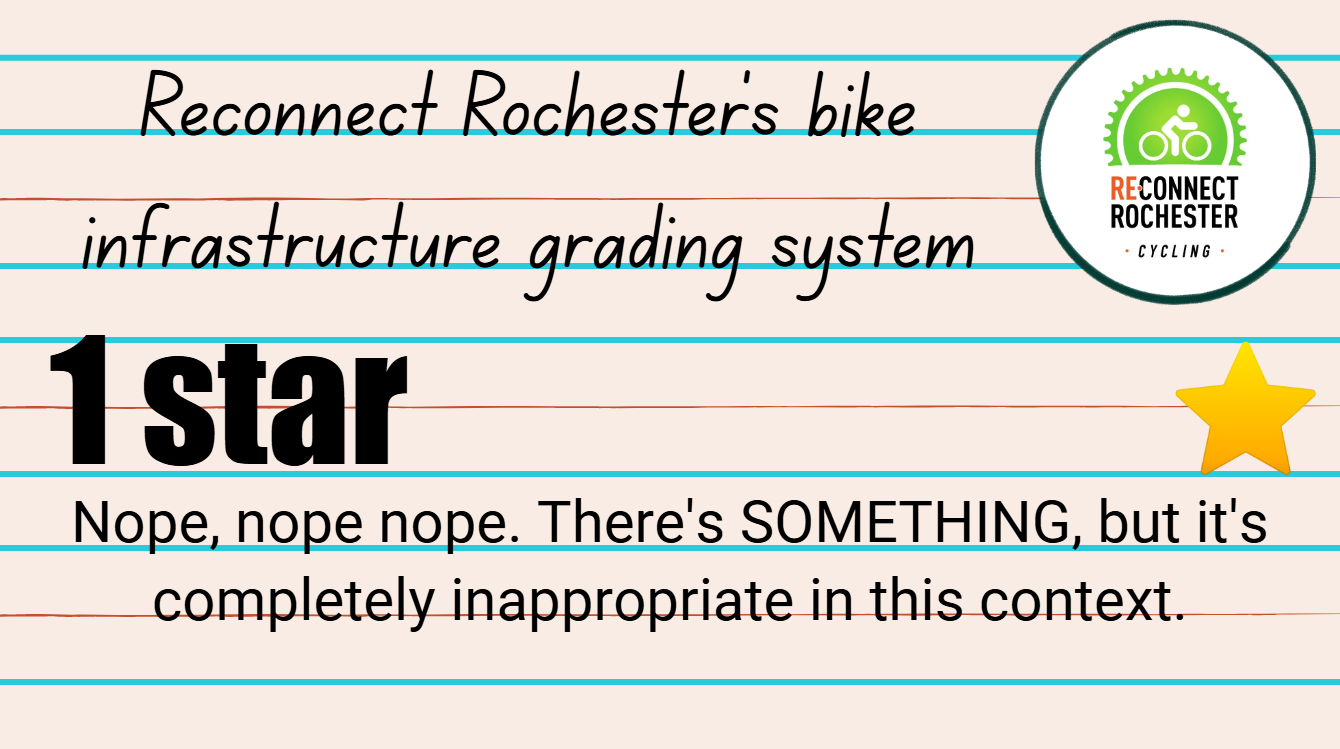
Something is better than nothing. But my heart goes out to anyone having to use this.
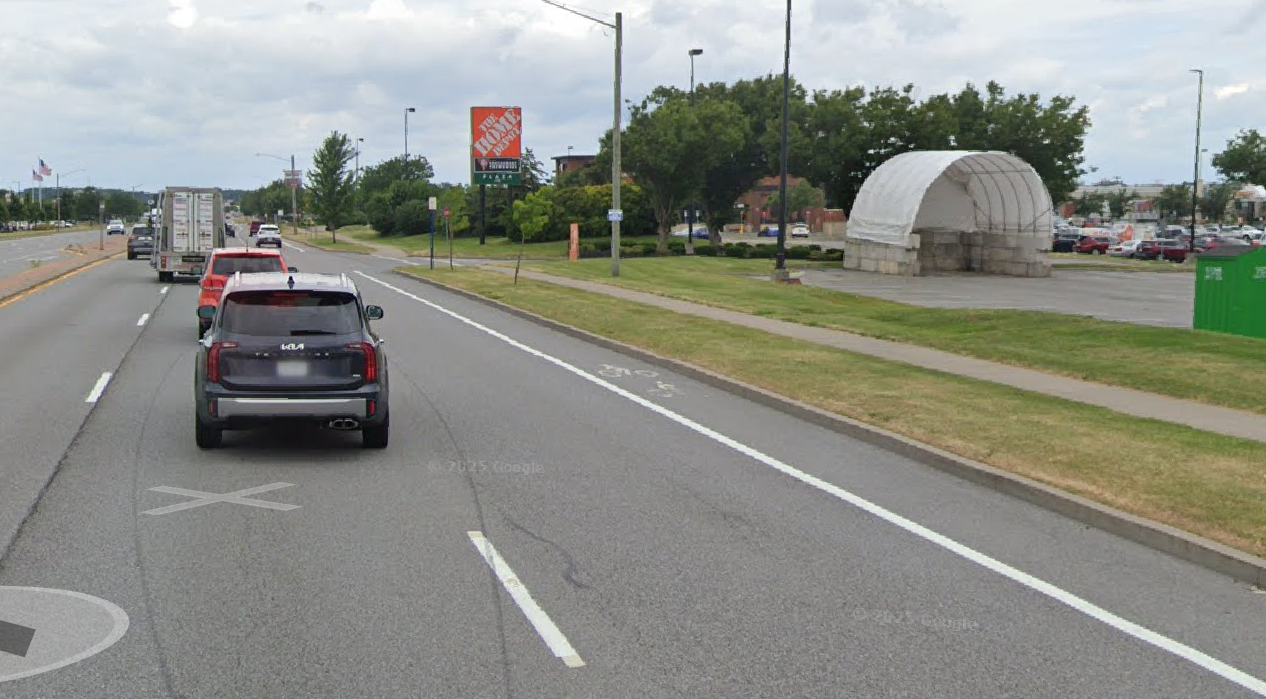
Bike Lane on Jefferson Road in Henrietta
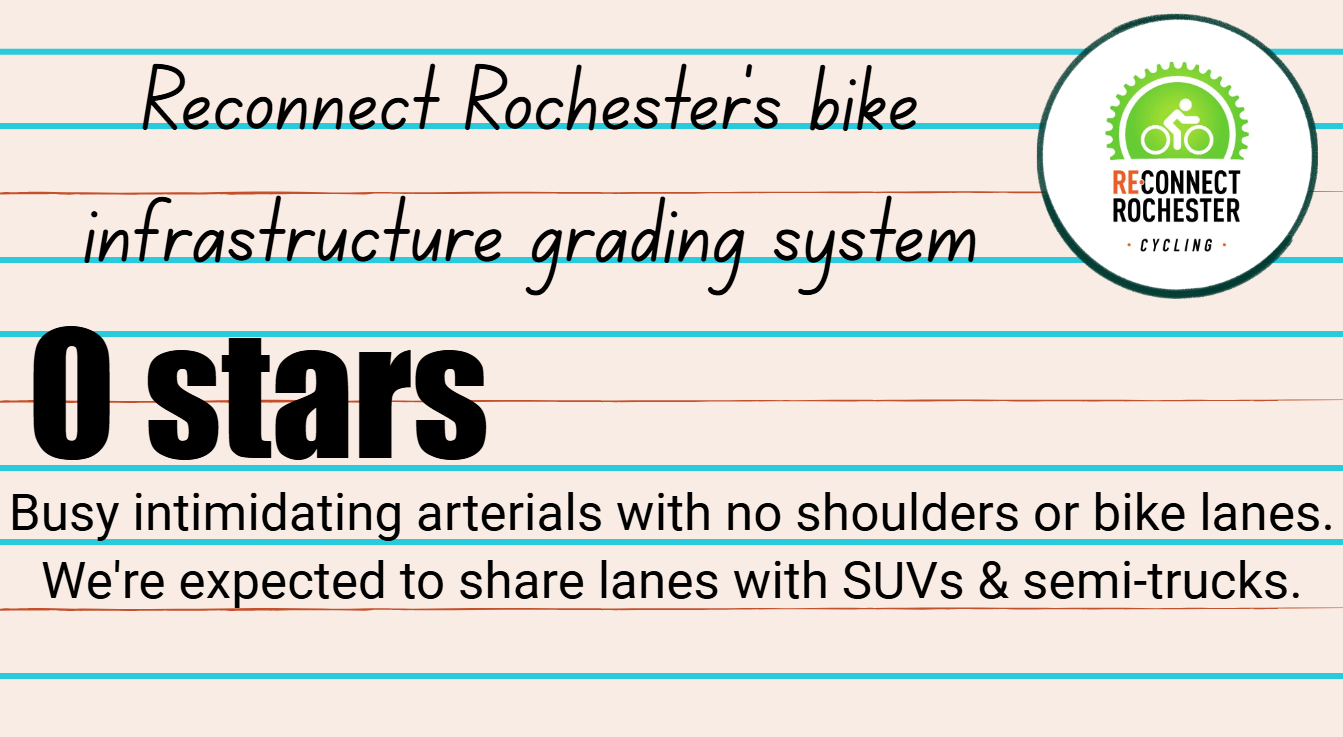
I avoid these like the plague. Rochester’s most dangerous roads look like this.
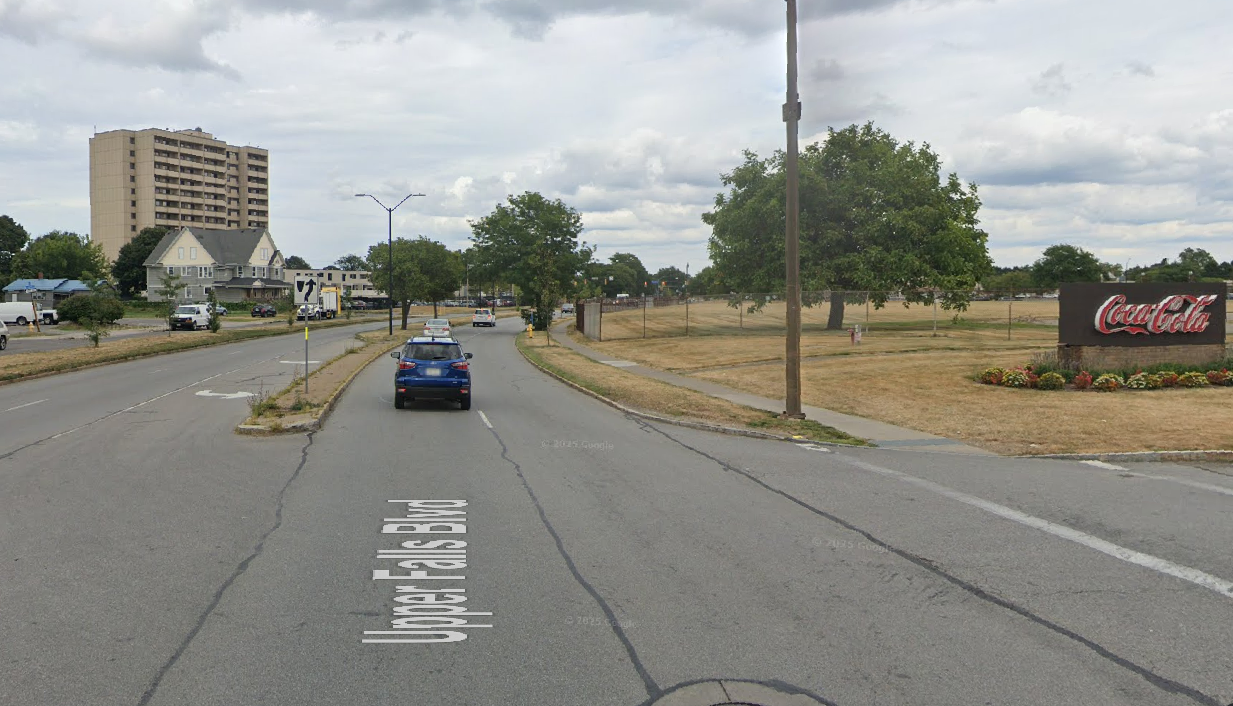
Upper Falls Boulevard in Rochester
We need your help!
Over the course of the peak 2026 riding season, one by one over 2.5-week stretches, we’re going to ask those that are comfortable to ride these recently completed (2023-25) road projects once in each direction, preferably on your own, and tell us your grade for each completed stretch. (Spend some money at a local business while you’re at it, telling them you appreciate bike lanes!) We’ll take the average grade for each project and communicate that to City Hall. Hopefully this feedback will move the needle towards infrastructure that gets more residents on bikes and generates more bike trips.

We’ve outlined a timeline for grading each stretch of road below but feel free to submit your rating whenever is convenient for you to ride and share your thoughts.
- April 15-May 2, 2026 East Ave (Culver to Probert only) 2023 Preventive Maintenance, Phoenix Howell, Project Manager
- May 3-20, 2026 Exchange Boulevard (Ford to Basin only) and Ford Street ( Plymouth to Exchange only) 2024 Preventive Maintenance Project, Ruben Escobar, Project Manager
- May 20-June 6, 2026 South Avenue (Elmwood to E. Henrietta Rd only) 2023 Preventive Maintenance, Phoenix Howell, Project Manager
- June 7-24, 2026 State Street (Inner Loop to Lyell only) 2024 Preventive Maintenance Project, Ruben Escobar, Project Manager
- June 24-July 11, 2026 North Goodman (Bay to Clifford only) 2024 North Goodman Reconstruction Project, Tim Hubbard, Project Manager
- July 12-29, 2026 St Paul (Lowell to Riverbank, Norton to Tyler only) 2024 Milling & Resurfacing Project, David Riley, Project Manager
- July 29-August 15, 2026 West Main Street (W Broad Street and Churchlea only) 2024 State Touring Routes Project, Darin Ramsay, Project Manager
- August 16-September 2, 2026 Culver (Garson to Laurelton, Clifford to Norton only) 2023 Preventive Maintenance, Phoenix Howell, Project Manager
- September 2-19, 2026 Genesee Street (Elmwood to Brooks only) 2024 Genesee Street Reconstruction, Donna Clements, Project Manager
- September 20-October 7, 2026 Culver (Monroe to Atlantic only) 2025 Preventative Maintenance Project, Darin Ramsay, Project Manager
- October 7-24, 2026 South Plymouth Ave (Ford to Genesee only) 2024 State Touring Routes Project, Darin Ramsay, Project Manager
- October 25-November 11, 2026 University Ave (One grade for Goodman to Culver and one grade for Goodman to Blossom) 2025 Preventative Maintenance Project, Darin Ramsay, Project Manager and 2023 Preventive Maintenance, Phoenix Howell, Project Manager