
The City of Rochester installed its first raised cycle track on Lake Avenue in 2016 beside St. Bernard’s Seminary and the Holy Sepulchre/Riverside Cemeteries. Since then, raised cycle tracks and doublewide sidewalk “trails” such as the Eastman Trail along Ridgeway, have become the City’s go-to protected bike infrastructure. Raised cycle tracks and “trails” like Eastman are separated from the street and “above” the curb next to the sidewalk. Our friend The Urban Phoenix has done a great job examining these and his thoughts are a great complement to what follows.
- June 2021 Is It A Sidewalk? Is It A Path?
- January 2024 What Can We Learn From Rochester’s Cycle Tracks?
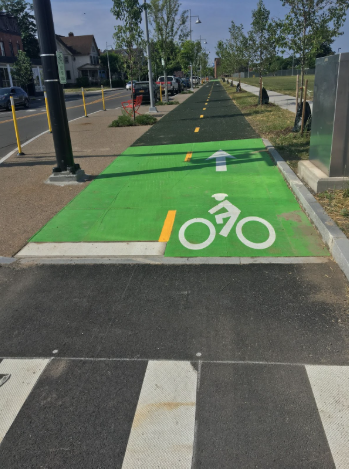
Bike and scooter riders of all ages and abilities tend to be comfortable on those cycle tracks and this is great! Reconnect Rochester’s historical preference for most City streets, however, has been for protected bike lanes in the street – the gold standard we see in great cycling communities who really grow their ridership. Well-designed raised cycle tracks have their place in some settings, especially for suburban higher speed roads, which we’ll get into in a future blog post.
Rochester’s Union Street cycle track (“above” & outside the street at sidewalk level)
If Rochester’s ideal Bike Spine Network is composed primarily of cycle tracks constructed during very rare, very expensive Reconstruction projects, we won’t have the Bike Spine Network in 100 years.
Rochester installed some protected bike lanes with bollards/posts on Broad Street and Chestnut ~2017. The bike community was excited, expecting those to be the forerunners of many. But the bollards/posts went missing, we never saw any more protected bike lanes and started seeing a regular dose of raised cycle tracks next to the sidewalk instead. There are 8 recently completed or in-design projects with cycle tracks. Some cyclists have grown concerned that City Hall has developed a raised-cycle-tracks-or-nothing philosophy when it comes to protected bike infrastructure. Fortunately, that seems to be changing. More on that in a bit.
The primary drawback of raised cycle tracks is cost: They’re typically only feasible during rare Reconstruction projects, which come along (if you’re lucky) once a lifetime to a given stretch of road. If Rochester’s ideal Bike Spine Network is composed primarily of cycle tracks constructed during very rare, very expensive Reconstruction projects, we won’t have the Bike Spine Network in 100 years. This goes against the recommendations and spirit of the City’s 2023 Active Transportation Plan, which urges concentrating political will on achieving that Bike Spine Network in the near term.
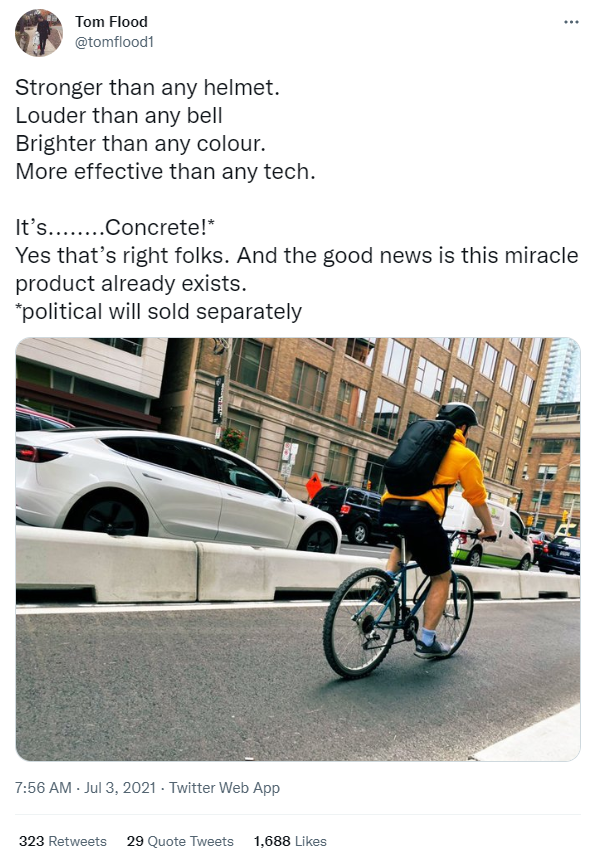
Luckily there is a cheaper way to build the bike spine: The lower hanging fruit when it comes to bike infrastructure is cheaper, routine preventative maintenance (resurfacing) projects, which roll along every few years and allow for space reallocation between curbs. This is where protected in-street bike lanes become possible, provided the design allocates the space to the bike lane.
This is also where things get thorny: We’d contend that there’s often room for protected bike lanes on many roads. But there’s often not room for both protected bike lanes and on-street parking. This trade-off and elephant in the room can’t be ignored. Along those proposed spines, the safety and comfort of vulnerable road users must override free on-street parking, especially in light of safety initiatives like ROC Vision Zero. If a City reconstruction project comes along to widen a road and enable both on-street parking and protected bike infrastructure, great. Safety above all in the meantime.
For the above reasons, these two tenets hold true:
- Sidewalk level cycle tracks don’t require confronting bad driver behavior and take more money and time.
- Protected bike space in the street confronts driver habits (like illegal parking and speeding) and is cheaper and faster to implement.
Other concerns about raised cycle tracks
Cycle tracks might subtly convey to motorists that cyclists shouldn’t ride in the road. Raise your hand if you’ve been yelled at by a motorist to “get out of the street” and “ride on the sidewalk.” Cycle tracks feed this thinking and are seen by some as bowing to car-dominance. Great cycling cities challenge that car-dominance.
So many cyclist crashes in Rochester involve sidewalk-riding cyclists. Raised cycle tracks are not much different than sidewalk-riding and they open riders up to some very common motorist mistakes, especially locally. Motorists pulling out of driveways and parking lots tend to pull right into the sidewalk/cycle track area as they wait for a break in traffic. (They’re required by law to come to a complete stop *before* the sidewalk and only creep up for a better view once they know it’s clear. Very few drivers do this). Bike riders in protected bike lanes are more visible and predictable in the street than they are outside the street.
Raise your hand if you’ve been yelled at by a motorist to “get out of the street” and “ride on the sidewalk.” Cycle tracks feed this thinking and are seen by some as bowing to car-dominance.
The line between sidewalk and cycle track have blurred in recent Rochester projects, which is concerning. See the new doublewide sidewalk on University, the shared path on State Street by MCC and the way cyclists are supposed to go up on the Culver sidewalk now over 490.
Cycle tracks, especially bidirectional ones on one side of the street, often create awkward, unintuitive, inconvenient, sometimes scary transitions when they end abruptly or switch sides of the road. See Elmwood/East Drive or Union/University for examples. (When regular bike lanes end, you just keep going straight).
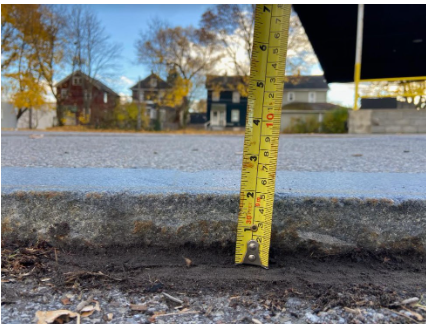
Though this has gotten better, Rochester has a less-than-stellar record when it comes to curb cuts and smooth transitions for raised cycle tracks. Constant curb cut riding isn’t required when riding in the road.
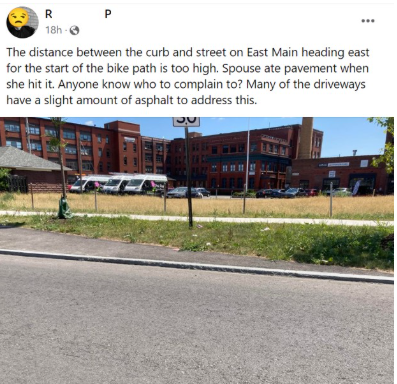
As the cycle track on East Main Street has taught us, if a resident has multiple cars parked in their driveway, the cycle track is blocked and unusable. Garbage cans, hot dog stands, anything really – can make cycle tracks unusable.
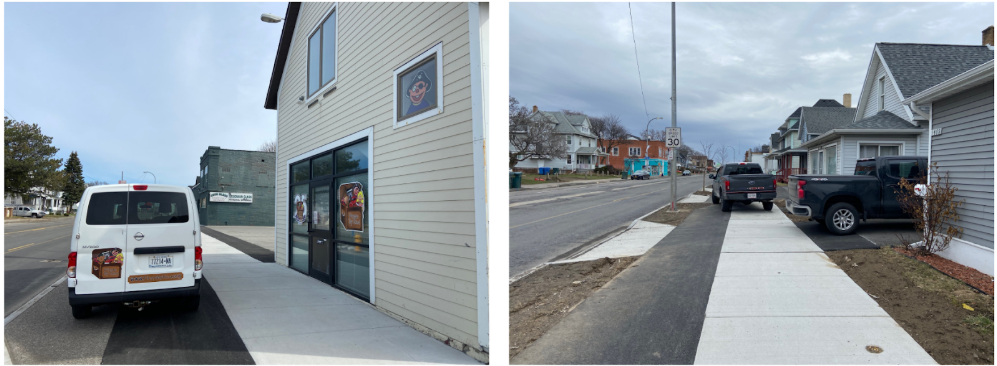
Though Rochester doesn’t clear its bike lanes of snow (they’ve got a plan for (studying) that), at least the responsibility for keeping roadway travel space is clear: the owner of the road. With cycle tracks, it’s ambiguous who should clear the snow. Property owners are responsible for clearing sidewalks of snow, but not the cycle track right next to the sidewalk.
Here’s a much bigger picture problem: Raised cycle tracks don’t calm traffic. Studies are clear that protected bike lanes in the street calm traffic and make everyone on the road, including drivers and car passengers (!), safer. It’s evident to us that this doesn’t apply to raised cycle tracks, when unaccompanied by changes to the street itself. See Lake Ave, which leaves the road entirely to motorists. Is Lake Ave calmer and safer as a result of that raised cycle track? Nope. It’s still a dangerous speedway.
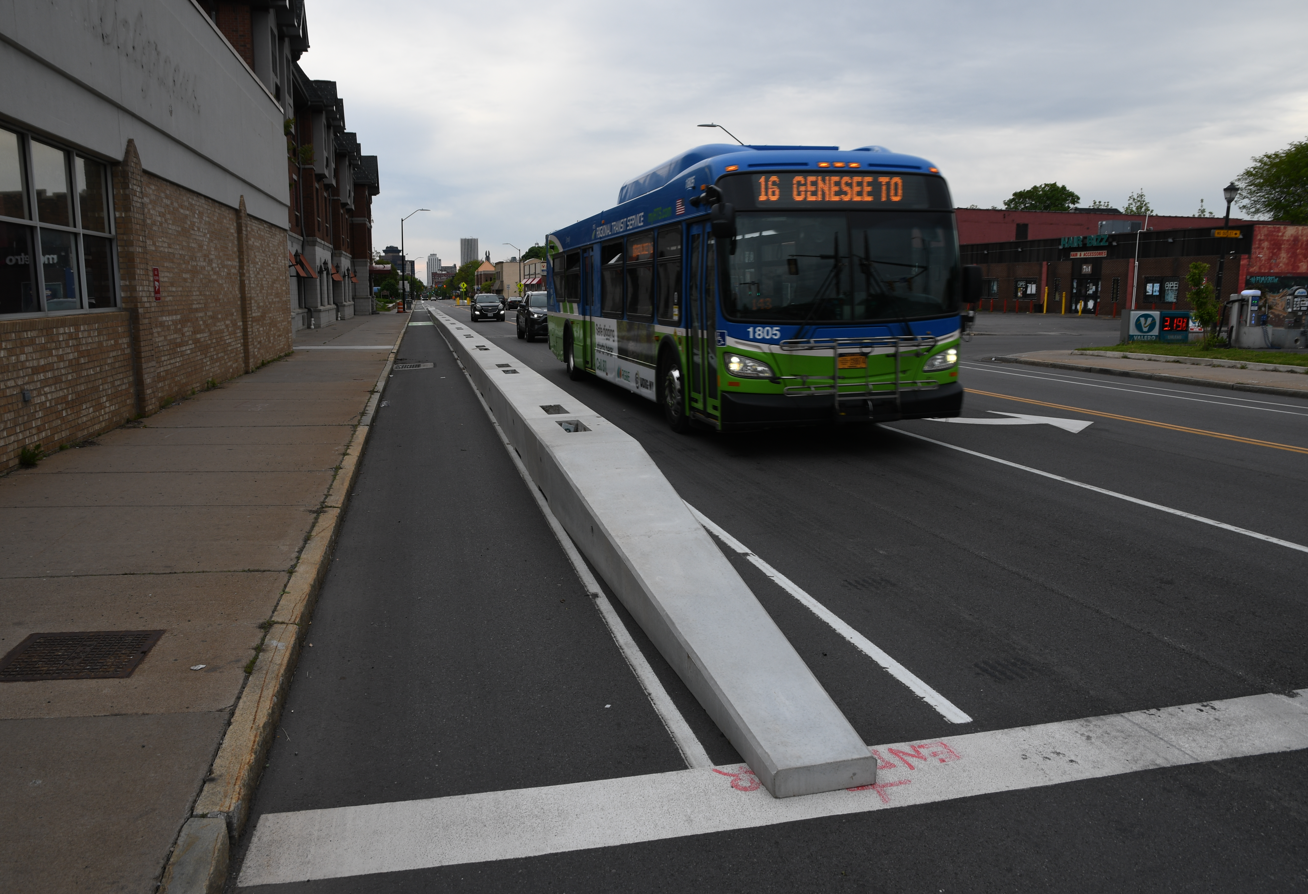
In sum, Reconnect Rochester would love to see more in-street protected bike lanes. They really drive up ridership, create less conflicts, and it’s the cheaper, faster way to realize the City’s vision. We’re excited for the City’s upcoming Protected Bicycle Lanes Demonstration Project, which will “trial a number of semi-permanent barriers…that can be left out during the winter season. These barriers will be evaluated on cost, their ability to create safe cycling infrastructure, their resilience to snow plowing, and their ease of maintenance.” These demo protected bike lanes are expected in 2027 on St Paul, State Street, Ford Street and East Avenue.
For a taste of what’s in store, check out the new protected bike lane segments on West Main Street! This seasonal barrier should be reinstalled in April.
This summary of pros and cons is so timely in light of the upcoming public info session on NYSDOT’s W Henrietta Rd Rt 15 project in Brighton. You’ve confirmed many of my observations and preferences for in-road, protected cycling infrastructure. Thank you!
Exactly. We have an awkward “merging” on the between Atlantic Ave/Humboldt Street and the train bridge, on Culver Road – it is a very dangerous spot, not knowing that the widening path is for cyclists. I see OFTEN the cars riding on that path.