by No Comments

Where They Stand: 2023 Candidates for Rochester City Council and Monroe County Legislature Primary Election

Reconnect Rochester surveyed all primary candidates for Rochester City Council and Monroe County Legislature to learn where they stand on issues related to transportation and mobility.

Questions were designed to give the candidates the opportunity to share their opinions, ideas and vision for a well-connected and accessible community.  We hope this information will help you make an informed decision when you head to the polls on June 27th.  We did our best to make contact with all of the candidates.

Click on the candidate names below to read their full, unedited responses. Candidates are listed in alphabetical order.

**This list includes all candidates for City of Rochester City Council and Monroe County Legislature on the June 27th Primary Election ballot. To check if you are registered to vote, confirm your polling location, and even see a preview of what your ballot will look like, click here.**

Candidates for City Council:

Paul Conrow

Candidate Email: Not available

Website: https://www.conrowforrochester.com/


We did not receive a response from this candidate.

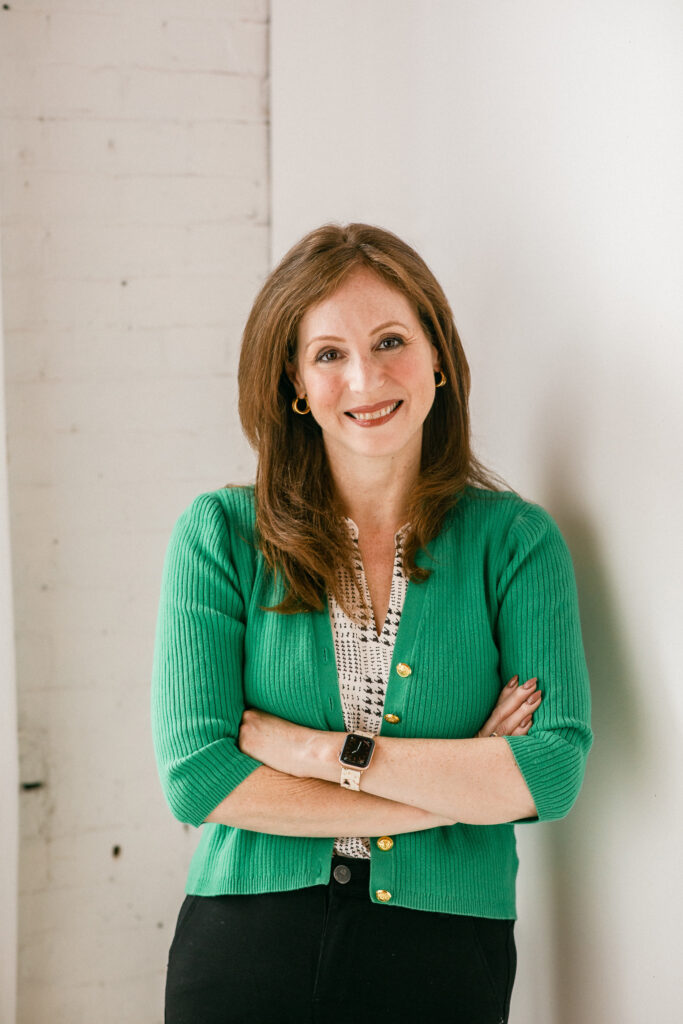
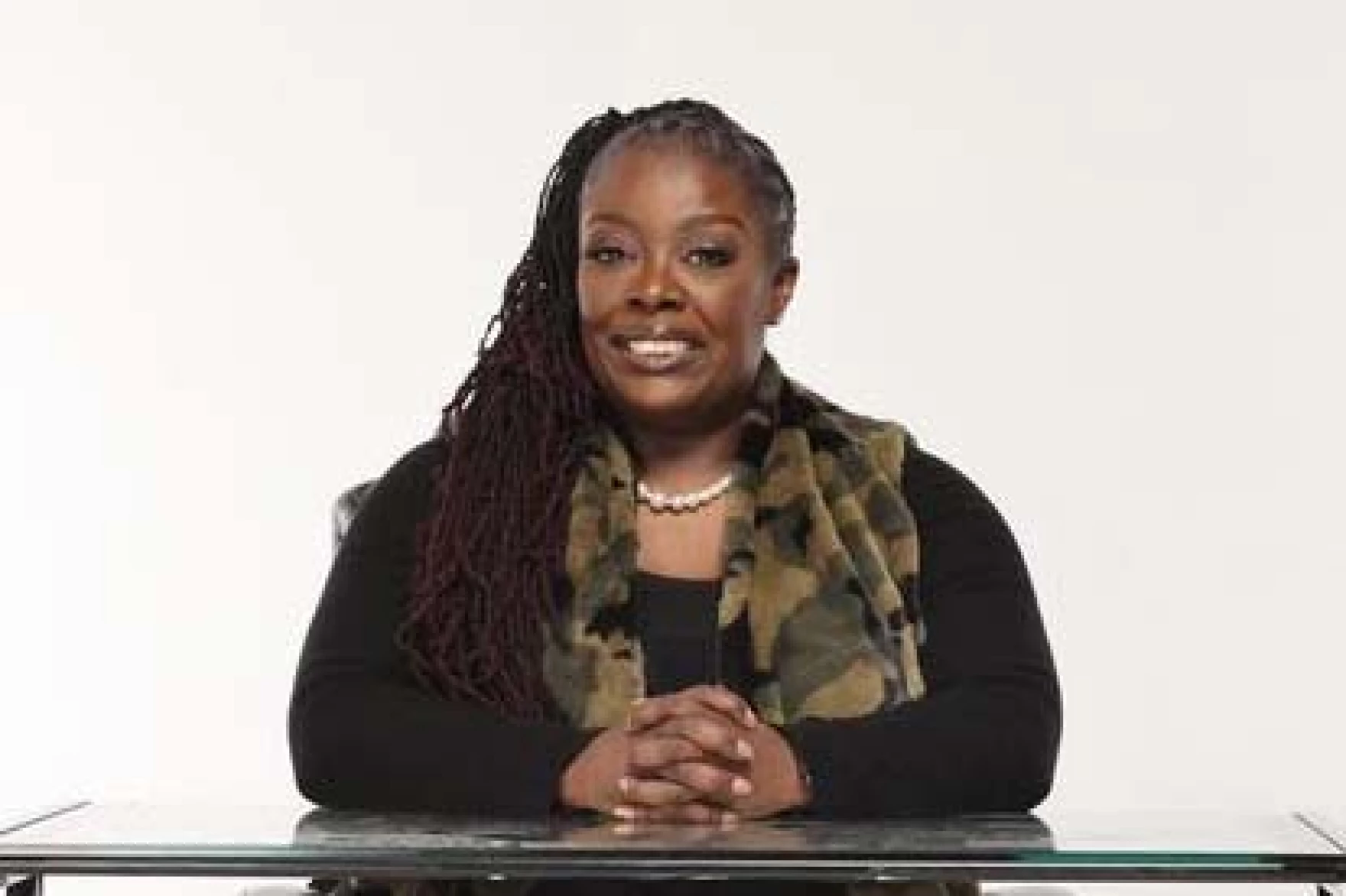
LaShay Harris

Candidate Email: LaShay4citycouncil@gmail.com

Website: https://www.lashayharris.com/


We did not receive a response from this candidate.

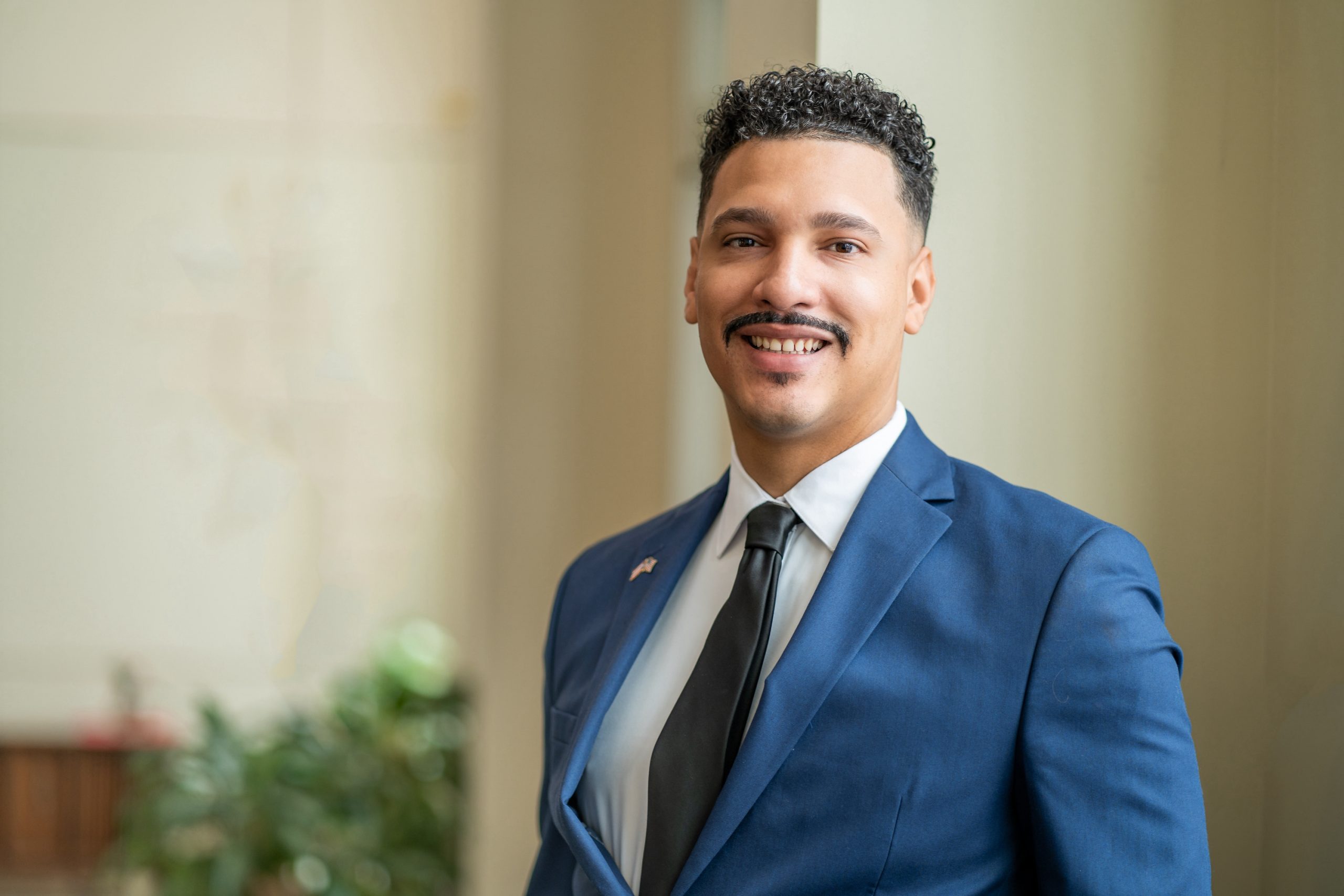
Frank Keophetlasy

Candidate Email: Contact@frankkeophetlasy.com

Website: Frankkeophetlasy.com


1. What are Rochester’s greatest transportation challenges?

Through my work as a County Legislator on the RASE Commission, one of the greatest transportation issues was accessibility to cheap or free public transportation to some of the most important locations of major employers. The accessibility of transportation is a major barrier to sustainability of jobs and workforce development.

2. What role do you see the City Council playing in addressing those transportation challenges?

I will fight for adequate resources and funding for public transportation and listen and fight for constituents when those problems arise. We also have a role in advocating and fighting for safe complete streets when any major road work is done in the City of Rochester.

3. The transportation sector is responsible for a large portion of emissions, which contribute to poor air quality, poor health outcomes, and overall climate change. Please share your ideas for reducing emissions as it relates to transportation in Rochester.

Reducing emissions is essential for long term sustainability in a community. More active transportation via biking and walking with streets that welcome biking and walking would help. Advocacy for carpooling and public transit is essential as well.

4. Pedestrian and cyclist injuries and fatalities are on the rise, and reckless driving is eroding safety and quality of life for everyone. Solutions include street design, driver education and increased enforcement. What solutions would you support to make Rochester safer for people walking and biking?

Supporting complete streets going forward is essential. As we invest on our infrastructure its important to move forward with this in mind to ensure equitability for all in street design. Working with a former State Assembly Transportation Chairman I now realize the importance of transportation issues and the role government has in making sure we are considering all sides.

5. 24% of Rochester households do not have access to a personal vehicle and must rely on public transportation to get to work. What land use and economic development policies would you pursue to encourage job creation and development to remain in the city core, and better connect people in the city to employment opportunities?

Again, through my work on the RASE commission it was evident that this is an issue. We need to incentivize public transit and future potential employers to work hand in hand with one another so we can maximize the workforce that we have in Rochester while eliminating these barriers together.

6. Rochester currently ranks at the “Bronze” level award (the average level) as a bike-friendly community, according to the League of American Bicyclists Bike-Friendly Communities criteria. One of the key steps to receiving “Silver” status is a dedicated budget for implementing our Bike Master Plan. Would you support a line item in the budget devoted to bike infrastructure?

I would support a bike master plan depending on the cost and outcomes because I believe a bike friendly community can benefit Rochester in the long term.

7. Why should Rochesterians who care about safer streets, better mobility, and better public transit vote for you?

I am an active and accessible leader that will listen and respond to my constituents and that includes Rocheterians that care about safer streets, better mobility, and better public transit. Some of the most successful metropolitan cities have great infrastructure for public safety and Rochester should as well.

Mary Lupien

Candidate Email: thepeoplesslate@gmail.com

Website: https://www.marylupien.com/


We did not receive a response from this candidate.

Bridget Monroe

Candidate Email: Bridgetmonroe2023@gmail.com

Website: https://bridgetmonroe.com/


1. What are Rochester’s greatest transportation challenges?

The greatest challenges include the lack of enough bus routes and regular, 15 minute service, along with needing more bike trails & complete streets. The current dangerous driving also presents major challenges for all travelers.

2. What role do you see the City Council playing in addressing those transportation challenges?

I will continue to support complete streets and the addition of bike and walk trails throughout the community. Although we don’t have control over RTA, I will certainly advocate for increased bus coverage throughout the area. The problem of dangerous driving will need to be handled under police and needs to be prioritized to keep pedestrian, bikers and other car drivers safe.

3. The transportation sector is responsible for a large portion of emissions, which contribute to poor air quality, poor health outcomes, and overall climate change. Please share your ideas for reducing emissions as it relates to transportation in Rochester.

A continued switch to EVs for the city’s fleet will help the environment and save money. With our GPS technologies, we should also pinpoint/maintain sanitation route efficiencies, thereby lessening emissions.

4. Pedestrian and cyclist injuries and fatalities are on the rise, and reckless driving is eroding safety and quality of life for everyone. Solutions include street design, driver education and increased enforcement. What solutions would you support to make Rochester safer for people walking and biking?

I would start with increased enforcement. People must be stopped and ticketed for violating traffic law. Then I will look to street design, possibly introducing new speed humps along residential streets, and learn about new ideas that are being used elsewhere.

5. 24% of Rochester households do not have access to a personal vehicle and must rely on public transportation to get to work. What land use and economic development policies would you pursue to encourage job creation and development to remain in the city core, and better connect people in the city to employment opportunities?

Helping new and expanding businesses locate to Rochester is critical to keeping downtown active. I think that using design as the standard for land use in our commercial areas allows for more creative business models to settle in the city. Promoting the restoration of Tent City for housing and using that as a jumping off point for renewed investment on Lyell Ave. can help grow local jobs. Supporting Eastman Business Park and the Port of Rochester & Charlotte Vision Plan will all encourage job creation that is more easily accessible on foot, bicycle, or bus for city residents.

6. Rochester currently ranks at the “Bronze” level award (the average level) as a bike-friendly community, according to the League of American Bicyclists Bike-Friendly Communities criteria. One of the key steps to receiving “Silver” status is a dedicated budget for implementing our Bike Master Plan. Would you support a line item in the budget devoted to bike infrastructure?

I see value in moving up to silver status, however, this would be something in the capital improvement plan and not the budget. With the CIP, the city forecasts five years worth of investment and this is where I would think implementation of the bike master plan would reside. I cannot, in good faith, promise support for the project without the context of the entire budget, current economics impacting the city, and more detail from the NBD.

7. Why should Rochesterians who care about safer streets, better mobility, and better public transit vote for you?

They should vote for me because I am dedicated to safe streets, know we need better and more accessible bus service, support rental scooters and bikes, and want fully connected trails in and around the city.

Michael Patterson

Candidate Email: Not available

Website: Not available


We did not receive a response from this candidate.

Barbara Rivera

Candidate Email: thepeoplesslate@gmail.com

Website: https://www.peoplesslateroc.com/


What are Rochester’s greatest transportation challenges?

People need an affordable way to get to work, go to the store, and visit loved ones. Balancing the needs of people driving, walking, and taking the bus is one of the biggest challenges in this area.

2. What role do you see the City Council playing in addressing those transportation challenges?

We need to make sure people are able to catch a bus, since not everyone has a car. Making sure any new construction is pedestrian-friendly would also help people out.

3. The transportation sector is responsible for a large portion of emissions, which contribute to poor air quality, poor health outcomes, and overall climate change. Please share your ideas for reducing emissions as it relates to transportation in Rochester.

Promoting public transportation can go a long way in reducing emissions. Plenty of people will still drive a car, but if we can make it easier to choose public transportation that would help the climate.

4. Pedestrian and cyclist injuries and fatalities are on the rise, and reckless driving is eroding safety and quality of life for everyone. Solutions include street design, driver education and increased enforcement. What solutions would you support to make Rochester safer for people walking and biking?

Making street designs safer makes a lot of sense to me. I think it’s important to listen to people who are hurt by the way things are now, so I would want to hear what walkers and bikers think about current street designs.

5. 24% of Rochester households do not have access to a personal vehicle and must rely on public transportation to get to work. What land use and economic development policies would you pursue to encourage job creation and development to remain in the city core, and better connect people in the city to employment opportunities?

I think the key is creating jobs that pay people well, are close to where they live, and aren’t going to leave the city if the company gets a better offer somewhere else. Sometimes the rush to bring in out-of-town businesses seems good on paper but doesn’t hold up in real life.

6. Rochester currently ranks at the “Bronze” level award (the average level) as a bike-friendly community, according to the League of American Bicyclists Bike-Friendly Communities criteria. One of the key steps to receiving “Silver” status is a dedicated budget for implementing our Bike Master Plan. Would you support a line item in the budget devoted to bike infrastructure?

Yes, making biking safer and expanding opportunities for people to bike makes sense to me. This is especially important for our youth and young adults who would benefit from biking as a form of transportation, exercise, and recreation.

7. Why should Rochesterians who care about safer streets, better mobility, and better public transit vote for you?

My experience doing tenant organizing has taught me that the power of the people is unmatched. When we come together, we can do so much to improve our community. That’s the mentality I’m running my campaign with, and it’s what I’ll bring to City Council to advocate on your behalf.

Chiara "KeeKee" Smith

Candidate Email: thepeoplesslate@gmail.com

Website: https://www.peoplesslateroc.com/


1. What are Rochester’s greatest transportation challenges?

We need cheap public transportation that gets us where we need to go. Right now, that is not the case for everyone in Rochester.

2. What role do you see the City Council playing in addressing those transportation challenges?

I believe City Council should be a strong advocate for affordable public transportation. I believe in listening to people impacted by a problem and figuring out a solution together. That’s the sort of co-governance that I will support on City Council.

3. The transportation sector is responsible for a large portion of emissions, which contribute to poor air quality, poor health outcomes, and overall climate change. Please share your ideas for reducing emissions as it relates to transportation in Rochester.

We know public transportation is more efficient than everyone driving their own car. That’s why I support robust investments in RTS to make sure everyone can take a cheap, smooth bus ride. Investing in electric buses could also cut greenhouse gas emissions.

4. Pedestrian and cyclist injuries and fatalities are on the rise, and reckless driving is eroding safety and quality of life for everyone. Solutions include street design, driver education and increased enforcement. What solutions would you support to make Rochester safer for people walking and biking?

Safe street design is definitely part of the equation. I also know from talking to members of the community that we need to create spaces for dirt bike riders to practice their sport without putting pedestrians and other cyclists at risk.

5. 24% of Rochester households do not have access to a personal vehicle and must rely on public transportation to get to work. What land use and economic development policies would you pursue to encourage job creation and development to remain in the city core, and better connect people in the city to employment opportunities?

I believe we should stop giving handouts to huge corporations and real estate developers who don’t have a stake in supporting our community. Working with locally-owned small businesses to ensure people have jobs is a better way to go. It’s all about creating an environment where sustainable jobs are close enough to the people in this community.

6. Rochester currently ranks at the “Bronze” level award (the average level) as a bike-friendly community, according to the League of American Bicyclists Bike-Friendly Communities criteria. One of the key steps to receiving “Silver” status is a dedicated budget for implementing our Bike Master Plan. Would you support a line item in the budget devoted to bike infrastructure?

Yes. And I would want to talk to the people I represent to make sure bike funding is done in an equitable way. For too long, transportation funding (including for bikes) has left Black people and poor people behind. I want to make sure that doesn’t keep happening and rectify the current inequities.

7. Why should Rochesterians who care about safer streets, better mobility, and better public transit vote for you?

I like to tell folks when I’m at their door, if you want different, you have to vote different. I’m running because I believe the community is ready for change. I believe I can bring that change, whether it’s advocating for gun violence prevention, food security, or improved public transportation.

Candidates for Monroe County Legislature Primaries:

Carolyn Hoffman

Candidate Email: carolyndhoffman@carolynforthecounty.com

Website: carolynforthecounty.com


1. What are Monroe County’s greatest transportation challenges?

The lack of public transportation perpetuates segregation, prevents access to jobs and is a drawback to those who would consider making a home here. The lack of bikable and walkable streets is a safety and quality of life issue, pushing a reliance on cars and further disadvantaging those who cannot afford a car. We are truly behind as a modern community and it touches every aspect of our lives.

2. What role can the Monroe County Legislature play in addressing our transportation challenges?

We can advocate for County funding for better public transportation and push the Department of Transportation to change their complete streets policy to prefer bike lanes over paved shoulders.

3. The transportation sector in the Genesee Finger Lakes region is responsible for 33% of greenhouse gas emissions, which contribute to poor air quality, poor health outcomes, and overall climate change. Please share your ideas for reducing emissions as it relates to transportation in Monroe County.

We need to plan and help fund the construction of more electric vehicle charging, especially at high density areas like apartments and where we want to attract shoppers to local businesses. We should also be incentivizing the switch to electric vehicles for individuals who are not ready to stop using cars. The County can lead by shifting its own fleets to electric. Finally, we can encourage healthier alternatives like walking and biking by creating safer communities and roads.

4. The concept of “Complete Streets” focuses on designing our roads to be safe for everyone, including pedestrians, cyclists, and transit users. How can Monroe County work with local municipalities and New York State toward that vision?

We can work to educate local municipalities while advocating at the state level so that when the opportunities for Complete Streets appear, all stakeholders are ready and able to move forward. I hope the Active Transportation Plan will be adopted this summer and will provide the framework for prioritizing road redesign.

5. Why should Monroe County residents who care about safer streets, better mobility, and better public transit vote for you?

Because I agree it is important and I will support efforts to improve our systems to better address the community needs for more equitable transit.

Santos Cruz

Candidate Email: Not available

Website: https://www.votesantoscruz.com/


We did not receive a response from this candidate.

William Burgess

Candidate Email: Legislatorburgess@gmail.com

Website: VOTEWILLIAMBURGESS.COM


1. What are Monroe County’s greatest transportation challenges?

Unsafe pedestrian and bike lanes. Public transportation not going to jobs that are in the suburbs along with not being “carpool’/”ride share” friendly.

2. What role can the Monroe County Legislature play in addressing our transportation challenges?

The County can pass referrals to provide more money for safer bike lanes, pedestrian sidewalks and other forms of public transportation. Something else that would help would be to have more paved bike lanes instead of paved shoulders.

3. The transportation sector in the Genesee Finger Lakes region is responsible for 33% of greenhouse gas emissions, which contribute to poor air quality, poor health outcomes, and overall climate change. Please share your ideas for reducing emissions as it relates to transportation in Monroe County.

I would like to see the County encourage and support the use of public transportation, like carpooling, biking and walking. Education and awareness: Increase public awareness about the impacts of greenhouse gas emissions and the importance of individual actions. Promote sustainable lifestyles and encourage behavioral changes. This education should be introduced in elementary school. If children are taught to respect the earth at an early age, they will have a more sense of responsibility later in life.

4. The concept of “Complete Streets” focuses on designing our roads to be safe for everyone, including pedestrians, cyclists, and transit users. How can Monroe County work with local municipalities and New York State toward that vision?

The County should establish clear lines of communication between themselves, municipalities and outreach groups. The County can develop complete streets policies that provide a framework for complete streets. These policies should outline the vision, goals, and design principles of complete streets. It takes a collaboration and teamwork to reach the goal of complete streets.

5. Why should Monroe County residents who care about safer streets, better mobility, and better public transit vote for you?

I’ll be the first to admit that I am no expert when it pertains to complete streets, but I have been researching and learning. I don’t claim to be the foremost expert, but as a servant leader I’ll surround myself with those that are knowledgeable. As a County Legislator I have learned to seek out those that have the information and know how in certain areas to help me become more efficient in this role.

Oscar Brewer

Candidate Email: thepeoplesslate@gmail.com

Website: https://www.peoplesslateroc.com/


1. What are Monroe County’s greatest transportation challenges?

People need to be able to get where they’re going cheaply. Sometimes that’s not possible or efficient for people who don’t have a car.

2. What role can the Monroe County Legislature play in addressing our transportation challenges?

The county should be investing in public transportation opportunities to help low-income folks in our community. No one should be too poor to get where they need to go. I know first-hand the challenges of transportation in a county that’s built for people driving cars. In the County Legislature, I will be a voice for people who need transportation support.

3. The transportation sector in the Genesee Finger Lakes region is responsible for 33% of greenhouse gas emissions, which contribute to poor air quality, poor health outcomes, and overall climate change. Please share your ideas for reducing emissions as it relates to transportation in Monroe County.

Public transportation is a must. We need cheap, efficient public transportation options available to reduce reliance on cars. Also, making streets safer for people walking would encourage more people to walk to where they need to go.

4. The concept of “Complete Streets” focuses on designing our roads to be safe for everyone, including pedestrians, cyclists, and transit users. How can Monroe County work with local municipalities and New York State toward that vision?

We need to put people at the center of what we’re doing at all levels of government. Too often, politicians make decisions to benefit developers and big money interests. If we listen to our neighbors in the community, we’ll be able to prioritize what people need. That includes making sure sidewalks are safe for pedestrians and bike lanes are available for cyclists.

5. Why should Monroe County residents who care about safer streets, better mobility, and better public transit vote for you?

I know first-hand what it’s like not to have a car. I strongly believe in public transportation, which lets people live their lives without having to own a vehicle. I’m a man of the people fighting for the people. And that’s exactly what I’ll do in the County Legislature.


Rose Bonnick

Candidate Email: Not available

Website: https://www.voterosebonnick.com/


We did not receive a response from this candidate.

Rachel Barnhart

Candidate Email: rachel@rachbarnhart.com

Website: rachbarnhart.com


1. What are Monroe County’s greatest transportation challenges?

Monroe County is built for cars, not people. Jobs, retail and health care have been migrating over time farther away from where people live, making these things inaccessible by public transit. This exacerbates inequality. We also don’t consistently support infrastructure for pedestrians and cyclists, or road design that lends itself to lower speeds. People are at higher risk of injury and death as a result of these policy decisions.

2. What role can the Monroe County Legislature play in addressing our transportation challenges?

I am working with colleagues on a “complete streets” policy that we can pass into law. As a legislator and member of the Monroe County Planning Board, it is my job to scrutinize infrastructure projects. I ask tough questions about the design of roads so they can be a place where everyone can safely and efficiently get around. In addition, I wrote and introduced the bill that overwhelmingly passed the Legislature to mandate that cars, when passing bicyclists, give them three feet of space. I also have written memorializing resolutions to state lawmakers supporting policies at the state level to provide more funding and enact laws to make our roads safe for everyone.

3. The transportation sector in the Genesee Finger Lakes region is responsible for 33% of greenhouse gas emissions, which contribute to poor air quality, poor health outcomes, and overall climate change. Please share your ideas for reducing emissions as it relates to transportation in Monroe County.

We must make Monroe County a place where people are not car-dependent. This means investing in public transit, housing near population centers and transit, and sidewalks and protected bike lanes. By building a place where everyone can get around safely and efficiently we can reduce greenhouse gas emissions.

4. The concept of “Complete Streets” focuses on designing our roads to be safe for everyone, including pedestrians, cyclists, and transit users. How can Monroe County work with local municipalities and New York State toward that vision?

I am working with colleagues on a “complete streets” policy that we can codify into law. Monroe County is also incentivizing municipalities to install sidewalks. We should advocate for better policies and funding to support roads that are built for all, and a transit system that is robust.

5. Why should Monroe County residents who care about safer streets, better mobility, and better public transit vote for you?

I have been a longtime advocate for pedestrians, cyclists and transit riders. I have shown real results on the County Legislature with the passage of a law protecting cyclists and the imminent introduction of a “complete streets” policy. I use my considerable platform and leadership role to rally for policies that help all road users.

Nadja Justice

Candidate Email: Not available

Website: Not available


We did not receive a response from this candidate.

Sabrina LaMar

Candidate Email: LegislatorLaMar@gmail.com

Website: Not available


We did not receive a response from this candidate.

Candice Lucas

Candidate Email: Not available

Website: https://www.voteforcandicelucas.com/about


We did not receive a response from this candidate.

Virginia McIntyre

Candidate Email: virginia4district4@gmail.com

Website: Not available


We did not receive a response from this candidate.

Jessie Parson

Candidate Email: Not available

Website: Not available


We did not receive a response from this candidate.

Rita Pettinaro

Candidate Email: Rita.Pettinaro@gmail.com

Website: Not available


We did not receive a response from this candidate.

Allan Richards

Candidate Email: Richardsforlegislature@gmail.com

Website: richardsforlegislature.com


1. What are Monroe County’s greatest transportation challenges?

The biggest challenge for any transportation is moving people for point A to point B, safely and efficiently. To overcome this challenge we must have creativity in our local transportation community leadership. The solutions may include additional public transportation, expansion of bike lane and sidewalks and changing with way our cities are constructed. I am willing to be part of that converstaion and part of the solution, but we need strong leadership from transportation experts that are willing to work on the solution.

2. What role can the Monroe County Legislature play in addressing our transportation challenges?

The county legislature is the body that can set policies that will allow for the solutions that are agreed upon by the community to be written either as statue or as goals that will allow our community to acheive a safe, sustainable model of transportation and community development. Additionally, the county can bring resources to any solutions and offer support to ensure success.

3. The transportation sector in the Genesee Finger Lakes region is responsible for 33% of greenhouse gas emissions, which contribute to poor air quality, poor health outcomes, and overall climate change. Please share your ideas for reducing emissions as it relates to transportation in Monroe County.

An investment into complete streets is a good start to reducing the need for transportation that contrubites to our poor health and poor air quality that negatively impacts our community. We also need to invest and expand those area that we know will make a positive impact on the greenhouse issue. These resources can include the expansion of bike lanes. narrowing of streets, and expansion of sidewalks, bike storage areas that promote bke usage. We als need to educate and expand the use of public transportation and remove the stigma of riding the bus or using a bike as the main mode of transportation.

4. The concept of “Complete Streets” focuses on designing our roads to be safe for everyone, including pedestrians, cyclists, and transit users. How can Monroe County work with local municipalities and New York State toward that vision?

Every dollar invested in the county and localities, must include a design element that includes all the provisions of the complete street concept. We must focus and give priority to the projects that have the safety of our citizens in mind.

5. Why should Monroe County residents who care about safer streets, better mobility, and better public transit vote for you?

Through my experience in the NYS Assembly allows me to work with many of the highway department from across the county. I understand their need to ensure roads are safe, but I also understand that with proper education they can work to ensure our streets are well maintained and safe. I have also served on the City and Irondequoit Planning Boards and understand the need to adopt our zoning codes to reflect anrea that are able to reduce the amount of pavement need to move people and things. We need to look at zooning the reflects our goal of reducing the amount of carbon and travel time. I am committed to working with transportation specialist to ensure that our communities are move forward in a cleaner brighter future for our children and our families.

Mercedes Vazquez Simmons

Candidate Email: mercedesforld22@gmail.com

Website: https://www.mercedesforld22.com/


1. What are Monroe County’s greatest transportation challenges?

Safe walking and biking routes for commuters

2. What role can the Monroe County Legislature play in addressing our transportation challenges?

Increase funding and allocate engineering resources to adapt current aging infrastructure to accommodate alternate transportation choices including walking, biking, bus, train

3. The transportation sector in the Genesee Finger Lakes region is responsible for 33% of greenhouse gas emissions, which contribute to poor air quality, poor health outcomes, and overall climate change. Please share your ideas for reducing emissions as it relates to transportation in Monroe County.

Working towards goals in alternative energy transportation options in vehicles and public transportation. Governments should lead the way in providing the example.

4. The concept of “Complete Streets” focuses on designing our roads to be safe for everyone, including pedestrians, cyclists, and transit users. How can Monroe County work with local municipalities and New York State toward that vision?

The first would be the creation of such a concept that currently does not exist in Monroe County.

5. Why should Monroe County residents who care about safer streets, better mobility, and better public transit vote for you?

We must all care. The impact of climate globally is a real challenge, and we must all do our part to insure we take the initiative to works towards repairing and hopefully reversing it’s negative impact on the quality of our lives and the planet.

Reconnect Rochester would like to thank all of the candidates (and their teams) for the time and effort they’ve dedicated to our community, and for taking the time to answer our questions. We look forward to working with them very soon.

by 2 Comments

An Open Letter to Greater Rochester Media: Why Language Matters When Reporting on Pedestrian and Cyclist Crashes

Dear Members of the Local Media,

The media plays a critical, leading role in educating and engaging the public.  We appreciate the hard, nonstop work required to provide this essential community service.

As you know, our community struggles with violence, and that violence often leads the news. Yet a particular violence crisis is flying under the radar of the local media and the community – road violence. Tremendous harm is being inflicted on our community as a result of the wildly increasing number of pedestrian and bicycle injuries and deaths on our streets, which disproportionately affects our neighbors of color.

It is becoming more dangerous to walk here in our community and across the country. In the U.S., pedestrian fatalities have skyrocketed, increasing by 62% from 2009-2020, and another 13% in 2021 alone. Bicyclist deaths are also at the highest point since 1975. In Monroe County, 5,498 crashes from 2012-2021 involved bicyclists and pedestrians, with 4,466 resulting in injury or death. On average, 10 people die on our local streets every year as a result of these crashes (a majority of them pedestrians).

Recent incidents include the death of Edgar SantaCruz and his dog Rosie, struck by a driver in the crosswalk at North Goodman and Park Avenue; the death of octogenarian Madeleine Schreiber in Brighton, who was backed over by a driver on Oakdale Street; the death of Ernest Martin, a cyclist hit by two drivers on North Street; the death of pedestrian Khadijah Stanley, hit by a driver while on the sidewalk on Hudson Avenue; and the death of Jarod Jones, a teenager killed by a driver in a hit-and-run on Lake Avenue. These are only a few of the many reported and unreported cases of precious lives lost in our community just the last few years.

We have observed that the media can do more to accurately and adequately report on these incidents of road violence. While driver-pedestrian or driver-bicyclist crashes often receive media coverage, the coverage tends to misattribute the causes and consequences of the crashes. Going forward, we encourage  you to report on these crashes – and the preventability of them – more thoughtfully.

Below is a compilation of ways the media often misrepresents these incidents, and some suggestions for more balanced reporting.

Blaming the victim and absolving the driver.  Media coverage often highlights that the person injured or killed “wasn’t in a crosswalk,”  “was wearing dark clothes,” or “was out walking at 3 a.m.” Meanwhile, drivers are often recognized in a positive light with commentary such as  “the driver stayed at the scene” and “no charges were filed.”

Blaming the vehicle and absolving the driver.  Crashes are often described as pedestrians or cyclists being “hit by a car”, rather than being hit by a driver operating a car. Language matters!
Calling crashes “accidents.”  Again, language matters. The word “accident” implies that the crash couldn’t be avoided, and has the effect of normalizing them as unavoidable and acceptable since “accidents happen”.

These crashes often occur because of driver behavior, as well as poor street design that fails to protect those outside a vehicle. In many cases, the driver could have prevented the crash by paying attention, slowing down, and driving responsibly. While driver behavior is relevant to crash causes and consequences, as important are street design, conditions and policies that enable and encourage dangerous driver behavior, namely:

  • Streets and roads that are too wide, which encourages motorists speeding and distractibility at the expense of pedestrian, cyclist *and* driver/passenger safety. Landscape architect Ian McHarg once said that “if you design a road like a gun barrel, people are going to drive like bullets.”
  • Poorly designed infrastructure and poor maintenance of existing infrastructure: signal crossings that don’t give pedestrians sufficient time to cross, insufficient street lighting, lack of crosswalks or worn out crosswalk paint are some examples. At Reconnect Rochester, we advocate for complete streets design that accommodates and protects ALL users of the road.
  • Unsafe speed limits: The citywide and village 30 mph speed limits seem slow and safe to our speed-desensitized experience, but 30 can easily be a lethal speed for a vehicle, and many people regularly drive at 40 mph or more in those zones. Speed kills. The chance of a pedestrian surviving a hit from a 3,000-7,000-pound machine plummets from 95% if hit at 20 mph, to 55% at 30 mph, to 15 percent at 40 mph.
  • The build-up of snow and ice covering sidewalks and curb cuts, conditions that force pedestrians, cyclists, and transit users into the streets. Compounding this problem:  plows that bury or block sidewalks with the snow they throw aside to ensure the streets and driveways are clear for drivers.

To help with greater mindfulness and accuracy about the ways you report on pedestrian-driver and bicycle-driver crashes, we suggest investigating the following questions when preparing your reporting.

Road Design/Conditions:

  • Was the road where the crash occurred designed to promote vehicle speed with wide open lanes and few markings on the road? Does it have safe, dedicated space for cyclists and pedestrians, and protective design features such as crossings, bike lanes, pedestrian medians, and other complete streets features?
  • If the crash happened at night, was a lack of street lighting a factor?  The majority of vehicle-pedestrian crashes happen at night.
  • If the crash happened during winter, was the sidewalk clear of snow and ice?

Drivers:

  • Was the driver driving over the legal speed limit, or did the driver disregard a different traffic control device (e.g. light, stop sign)?
  • Was the driver distracted or impaired by a cell phone, alcohol or drugs or other distraction? Driver inattention is a leading cause of crashes.
  • Was the driver properly licensed, and did they have a history of crashes or traffic infractions (i.e. “chronic bad driver”)?  We often hear of crash perpetrators who are unlicensed and/or have had their licenses revoked dozens of times, and are still driving.

Vehicles:

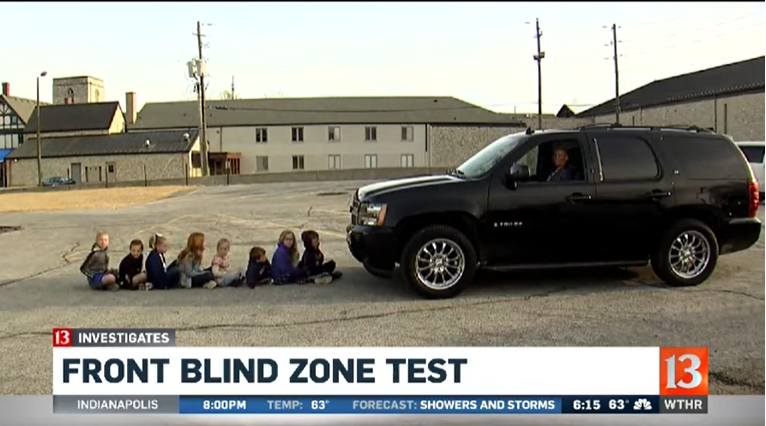
  • Did the vehicle have limited front, side or rear visibility? This is the case with many of the most popular SUVs and pickup trucks. For example, studies have shown that front blind zones on SUVs lead to deadly crashes and especially endanger children.

We appreciate your time and consideration. Reconnect Rochester is standing by as a resource and willing partner to improve your media outlet’s approach to crash reporting, as well as helping to educate the public and policy makers about the crisis of rising road violence.  We would welcome an opportunity to meet with your team if you wish to have further dialogue on this subject.

Best,

Reconnect Rochester


Special thanks to Evan Lowenstein, a passionate advocate for better mobility in the Rochester community, who collaborated with us to write this piece.

Header Image Source: Man will appear in court in January in connection to death of pedestrian on Park Ave by Evan Bourtis News10NBC

by No Comments

Hey Albany! 2023

Reconnect’s Virtual Trip to Albany – 2023

Last week, Reconnect Rochester went on a (virtual) trip to Albany to champion public transit and safe streets for Rochester residents (and all New Yorkers). We spent the day meeting with state legislators and their staff and having great conversations about what needs to be done to move towards our vision of a robust and equitable transportation network. We’re fortunate to have many allies in our State delegation to push for better multi-modal transportation across New York.

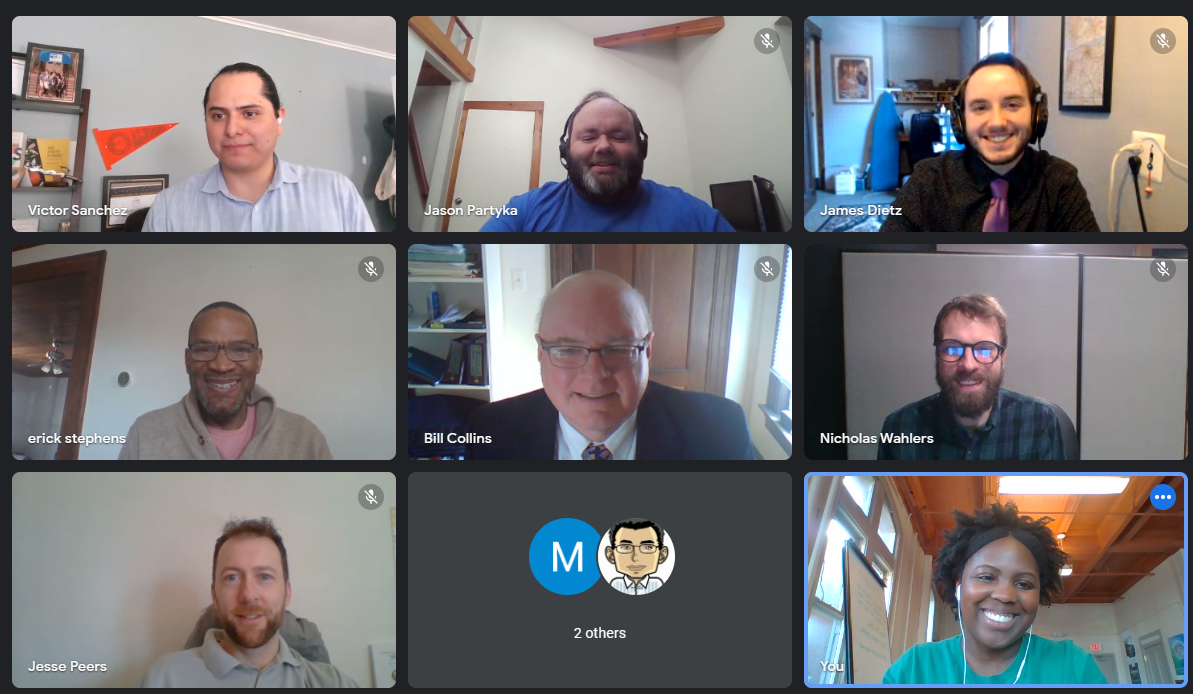
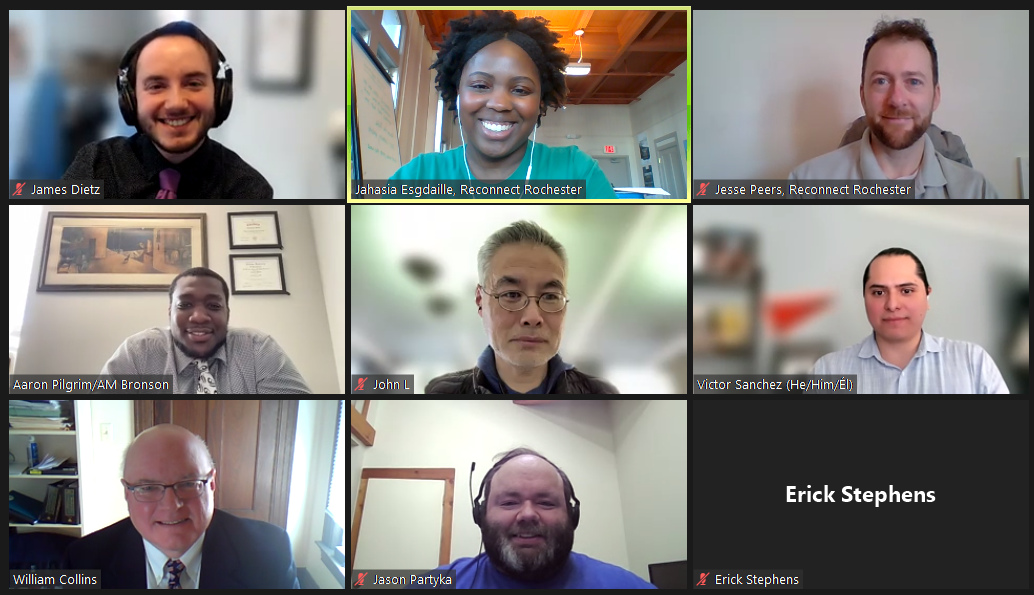
Reconnect team meeting with Assemblymember Harry Bronson’s Legislative Assistant, Aaron Pilgrim


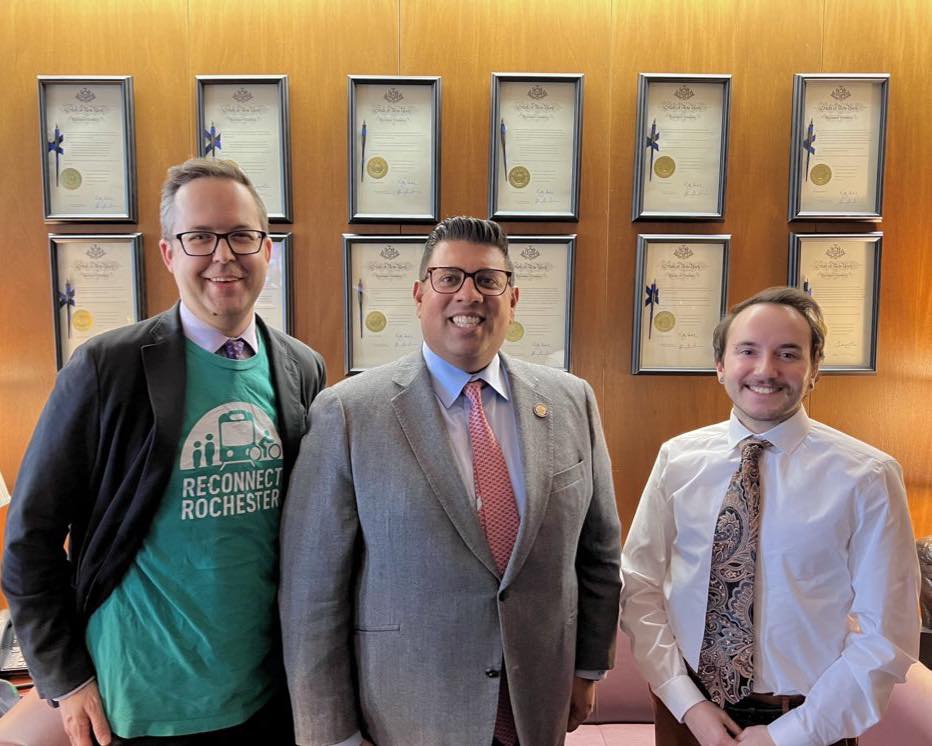
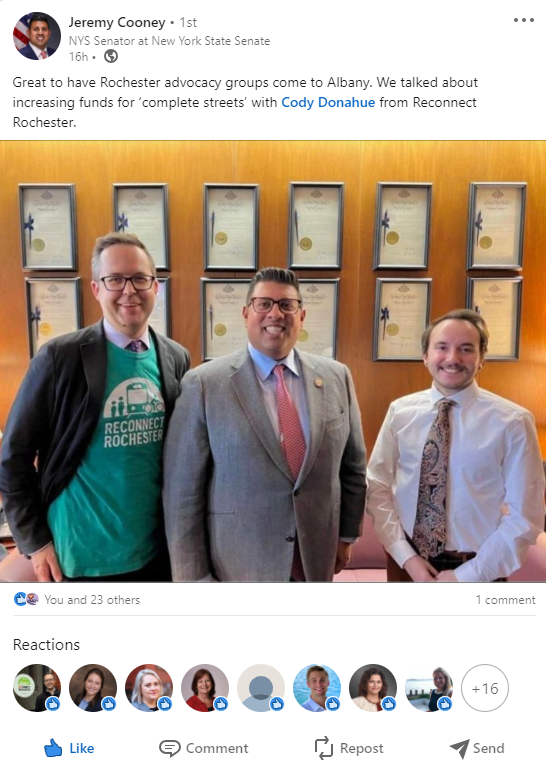
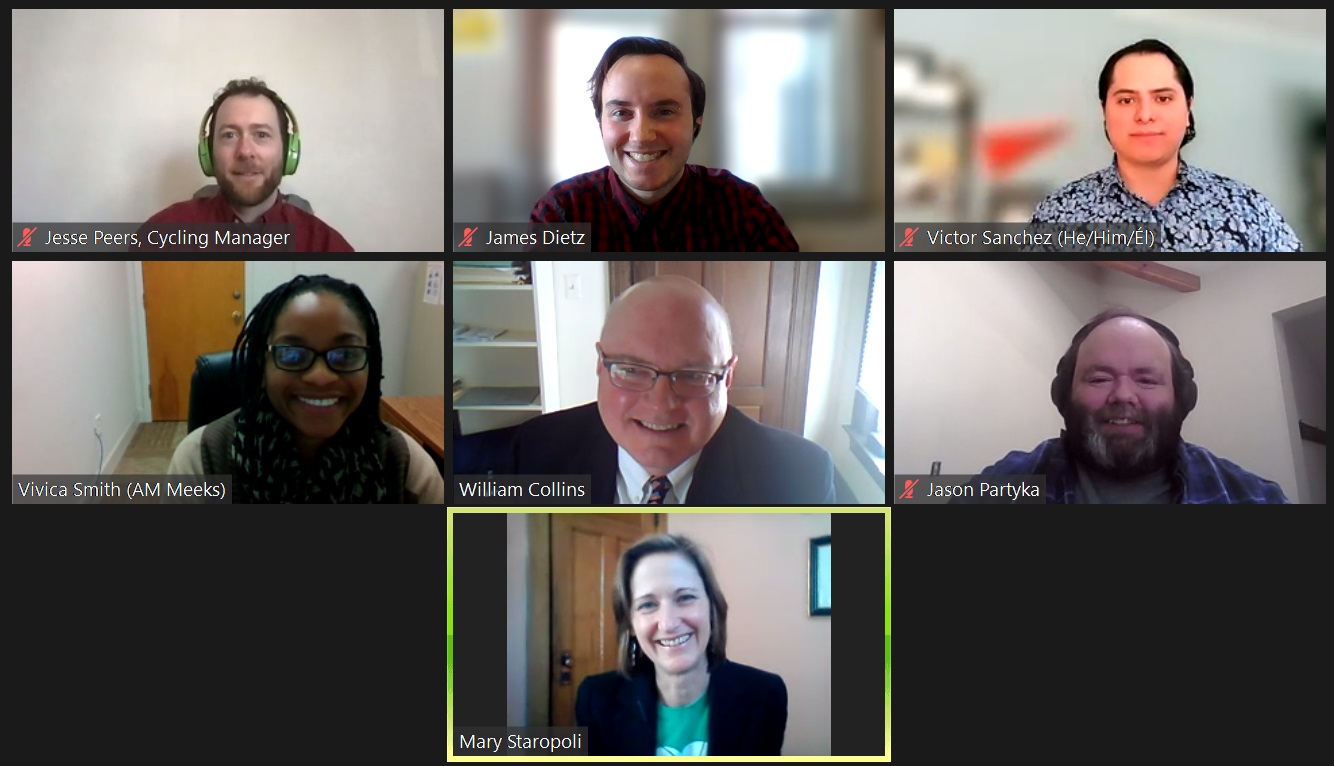
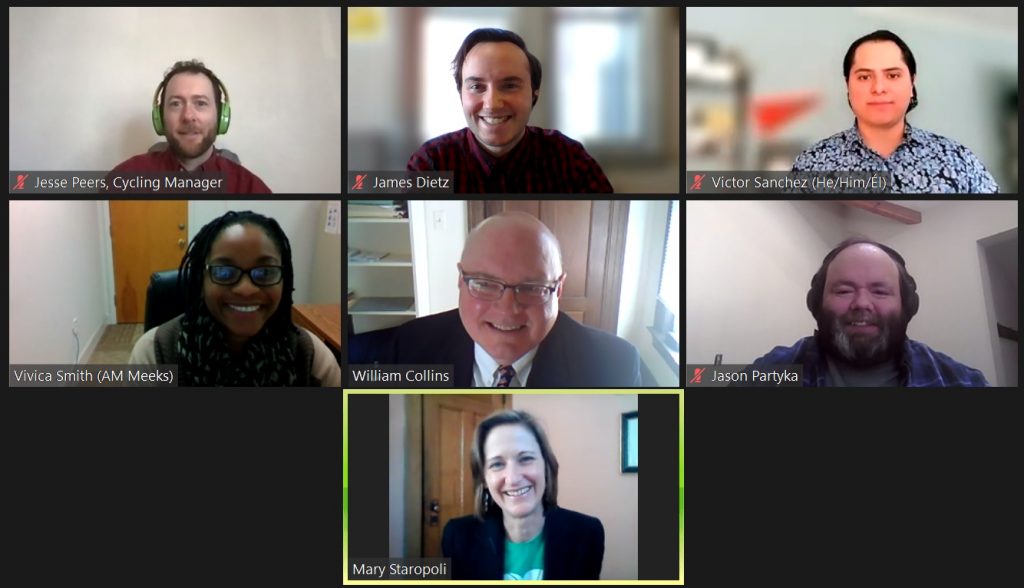
We’d like to shout out Reconnect Rochester Board members Victor Sanchez, Bill Collins, Jason Partyka, Erick Stephens and John Lam for devoting their time to the effort, and a huge thank you to all the legislative offices who took the time to meet with us: Assemblymembers Demond Meeks, Harry Bronson, Jennifer Lunsford, Sarah Clark, Josh Jensen, and William Magnarelli, and Senators Samra Brouk, Jeremy Cooney, and Tim Kennedy. Check out more screenshots from the day!

In the coming months we will continue to advocate at the state level for this crucial legislation to be passed this year. Wondering how you can help? Check out our platform and the links below to find out how you can help us advocate for better transit and safer streets for all! 


New York Public Transit Association
NYS S.A.F.E. Streets Act Climate, Jobs & Justice Package


New York State 2023-24 Transportation Priorities

Public Transit:

Public transportation is a vital service for residents of our region, especially for Rochester. Twenty-six percent of households in Rochester do not have access to a car. They rely on public transportation to access jobs and vital services. While increases to upstate transit systems last year were helpful, many agencies like RTS still need robust, long-term funding to grow and sustain our system. Please consider supporting the following budget priorities:

  1. Develop a statewide funding package that provides additional and sustainable dedicated revenue into the future to address growing structural operating deficits for all upstate and downstate transit systems. There is an immediate need in FY 2023-24 to grow STOA funding by $134 million for Upstate systems.
  2. Fully fund the 2nd year of the Non-MTA 5-Year Transit Capital Program at $159.5 million.
  3. Continue the STOA program hold-harmless provision to avoid reductions in operating aid to smaller transit systems, as ridership has not returned to pre-pandemic levels.
  4. Release the $60 million in currently available Non-MTA capital appropriations for electric vehicles and infrastructure to allow projects to move forward.

Bicycle and Pedestrian (Active Transportation):

Pedestrian and cyclist injuries and fatalities are on the rise. Reconnect Rochester is working with the NYS Safe Streets Coalition to prioritize legislation to address this silent epidemic. Consider sponsoring or co sponsoring the S.A.F.E. Streets Act which includes the following legislation:

  1. Complete Streets Application (S100/A3180) – Expands the state’s current complete street design principles policy to include all state, county and local transportation projects that are undertaken by the DOT or receive federal, state or both federal and state funding.
  2. Complete Streets Maintenance (S2714/A1280) – Includes, when possible, complete street design features in resurfacing, maintenance and pavement recycling projects and further enables safe access to public roads for all users.
  3. Vehicle Safety Standards (S1952/A4057) – Mandates standards in new vehicles including intelligent speed assistance and other features.
  4. Crash Victims Bill of Rights (A1901) – Guarantees rights & a voice for crash victims and their loved ones in legal proceedings
  5. Sammy’s Law (S2422) – Allows for lower life-saving speed limits in NYC
  6. Safe Passage (S1724/A4346) – Requires that drivers pass bicyclists at a safe distance of min. 3 feet.

In addition to the S.A.F.E. Streets Act package, these are additional bills related to bicyclists that we would encourage you to sponsor or co-sponsor:

  1. Idaho Stop Law (S2643/A3986) – Allows cyclists to treat a stop sign as a yield sign, and a red light as a stop sign.
  2. Ebike Rebate (S314/A275) – Directs the New York state energy and development authority to establish a ride clean rebate program for electric assist bicycles and electric scooters.
  3. Ebike Access (S1123/A2627) – Repeal certain provisions of the vehicle and traffic law and would allow ebikes to be ridden anywhere regular bikes can.

Train and Long-Distance Bus:

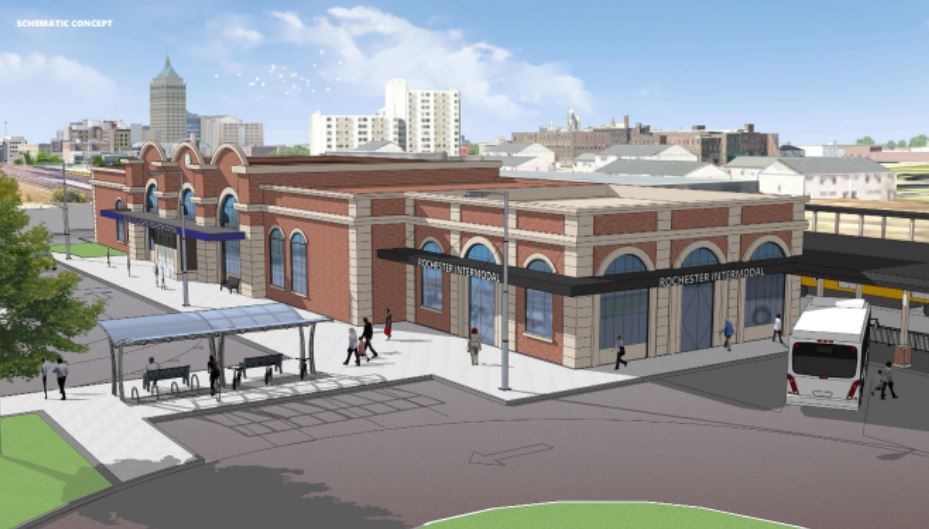
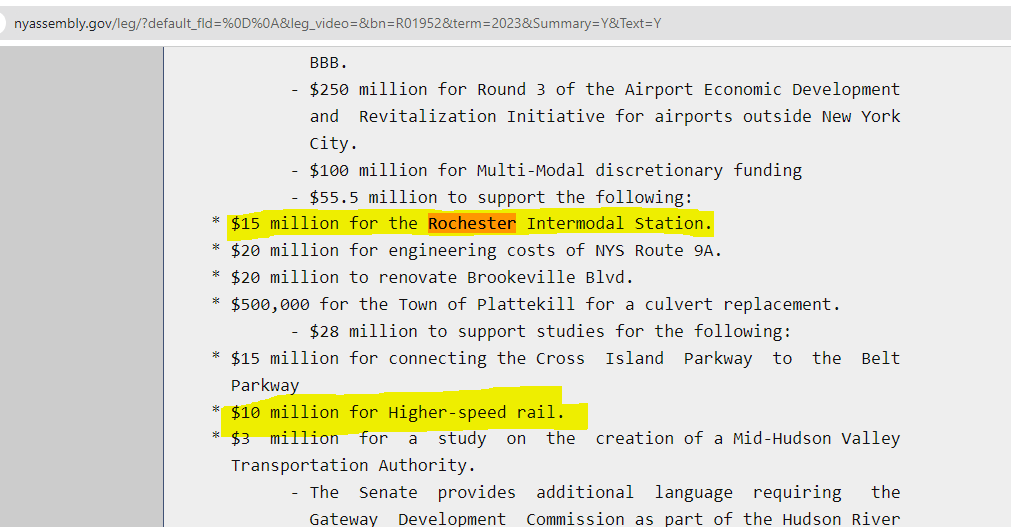
Inter-city bus and train passengers tend to be lower income and people of color. They deserve equitable funding for their long-distance transportation that is comparable to the investments made in airline travel. Consider including funding for a new long distance bus terminal (Phase II of the Intermodal Station) in next year’s NYS budget or when Federal funding becomes available.

EV Carsharing:

Nonprofit carshares like Floshare, an electric carshare system in the City of Rochester, provide a valuable service to many in our community who lack access to public transportation or cannot afford to own a personal vehicle which is about a quarter of Rochester households who don’t have access to a vehicle. Many people rely on carshare systems like Floshare to access basic necessities like getting groceries or going to medical appointments. Currently, the most reliable and economical way for nonprofits in New York to acquire auto insurance is through an RRG or a Risk Retention Group. Unfortunately, the Department of Financial Services disallows Risk Retention Groups to insure vehicles in the state which prevents many nonprofit carshares from operating due to the inability to either find insurance or because of the high cost of insurance. We would like to see support for a regulatory change to allow Risk Retention Groups (RRGs) to write auto insurance for carshare nonprofits in New York State, thereby removing a costly barrier to nonprofit carshare operations.

All Modes: 

Please support the Climate, Jobs & Justice package, which includes the following:

  1. Climate and Community Protection Fund to implement the NY Climate Act
  2. Build Public Renewables Act (S4134/A279)
  3. Just Energy Transition Act (S2935/A9881)
by No Comments

Hey Albany!

Last week, Reconnect Rochester went on a “Virtual Trip to Albany” to champion public transit and safe streets for Rochester residents (and all New Yorkers). We spent the day meeting with state legislators and their staff and having great conversations about what needs to be done to move towards our vision of a robust and equitable transportation network. We’re fortunate to have many allies in our State delegation to push for better multi-modal transportation across New York.

We’d like to shout out Reconnect Rochester Board members Victor Sanchez, Bill Collins, and Jason Partyka for devoting their time to the effort, and and huge thank you to all the legislative offices who took the time to meet with us: Assemblymembers Demond Meeks, Harry Bronson, Jennifer Lunsford, Sarah Clark, Josh Jensen, and William Magnarelli, and Senators Samra Brouk, Jeremy Cooney, and Tim Kennedy. Check out more screenshots from the day!

Read our asks for Albany legislators below. Wondering what YOU can do to advocate for better transportation for all New Yorkers? Check out the links below from our partners at the New York Public Transportation Association and the NYS Safe Streets Coalition.

NYPTA Take Action and Toolkit
NYS Safe Streets Coalition Crash Victims Rights and Safety Act


New York State 2022-23 Transportation Priorities

Public Transit:

RTS continues to be a vital service for our region as we recover from the pandemic. While COVID relief funds have helped to cover revenue loss and increased expenses, robust long-term, recurring funding will be necessary to grow and sustain the system. Governor Hochul has shown strong commitment to public transit, and we urge the Legislature to build upon those proposals in the final budget.

    1. Increase State Mass Transit Operating Assistance (STOA) for upstate transit systems by 36% ($49 million). The Governor’s Budget only proposes a 13% increase for upstate systems.
    2. Include $159.5 million annual funding level for non-MTA transit through the entire proposed 5-year capital program ($698 million 5-year total) in the final budget.
    3. Continue the STOA hold-harmless for formula systems impacted by pandemic ridership loss.
    4. Support Rider Representation (S3559A/A7822) – requires the appointment of a transit dependent and para-transit dependent representative on various transportation authorities.

Bicycle and Pedestrian (Active Transportation):

Pedestrian and cyclist injuries and fatalities are on the rise, which is why Reconnect Rochester has been working with the NYS Safe Streets Coalition to prioritize legislation to address this silent epidemic. Consider sponsoring or co sponsoring the Crash Victims Rights & Safety Act (CVRSA) to make our streets safer:

    1. Statewide Speed Limit (S2021/A01007) – allow for lower life-saving speeds across New York State
    2. Sammy’s Law (S524/A4655) – allow for lower life-saving speeds limits in New York City
    3. Complete Streets Funding (S3897/A8936) – increase state funding where the municipality agrees to fund a complete street design feature
    4. Complete Streets Application (S8394/A08624) – require consideration of complete streets design for projects which receive federal or state funding
    5. Complete Streets Maintenance (S5130/A7782) – include complete street design features in resurfacing, maintenance, and pavement recycling projects
    6. Right to Safe Passage (S4529/A547) – require drivers pass bicyclists at a safe distance of min. 3 feet
    7. DMV Pre-Licensing (S1078A/A5084) – educate NY drivers about safely interacting with vulnerable road users
    8. Crash Victims Bill of Rights (S8152/A9152) – guarantee rights and a voice for crash victims and their loved ones in legal proceedings

In addition to the above legislative package, these are other bills related to bicyclists that we would encourage you to consider sponsoring or co-sponsoring:

    1. S920/A3104 – allow for what is known as an “Idaho Stop” which allows cyclists to treat stop signs as yield signs and red lights like stop signs
    2. A8656 – repeal certain provisions of the vehicle and traffic law and would allow e-bikes to be ridden anywhere regular bikes can be ridden
    3. S3080 – establish the ride clean rebate program which would allow e-bikes and e-scooters to be eligible for a 50% rebate with a maximum of $1,100

Train and Long-Distance Bus:

Bus and train users tend to be lower income and people of color, and deserve equitable funding for their long-distance transportation that is comparable to the investments made in airline travel. Consider including funding for a bus terminal extension for the Louise Slaughter Rail Station in the new budget or when additional Federal funding is available. 

All Modes: 

Please sponsor or co-sponsor S4264A/A6967, the “Climate and Community Investment Act”, a Green New Deal for New York State. This would help create jobs and funding for carbon reduction and environmental justice programs.