
by No Comments

No Kidding!!! Business Week: Los Angeles plans to spend $230 million on 1,700 miles of bicycle paths

SPECIAL REPORT June 3, 2010, 3:09PM EST
Fighting Carbon Emissions: Cities Take the Lead
From Los Angeles to Amsterdam, city hall is becoming the best hope for climate action
By Mark Scott and Jeremy van Loon
Los Angeles: city of freeways, smog, and…bike lanes? That’s where Mayor Antonio Villaraigosa wants to take his town. In one of the less likely
transformations in the global effort to cut carbon dioxide emissions, Los Angeles plans to spend $230 million on 1,700 miles of bicycle paths. Most of the
program will be completed by 2015 and includes changing rooms, showers, and bike storage areas operated by the city and private partners. It comes on
top of subsidies for installing solar panels and incentives for planting trees and switching to electric vehicles. “We have to make a change,” says Michelle
Mowery, senior coordinator for the bike program. “We can’t fit any more cars in.”
From the freeways of Los Angeles to the canals of Amsterdam, cities are taking the lead in the fight to reduce carbon output.

As world leaders squabble
over how to cut greenhouse gases, city hall is becoming the best hope for climate action. Given their smaller jurisdictions, local officials can green-light
eco-projects faster than nationwide schemes can be implemented. “We’re not going to wait for national politicians, we’re acting right now,” says Toronto
Mayor David Miller, who plans to invest more than $1 billion in public transport and eco-friendly air-conditioning systems for buildings by 2017.
The efforts could have a profound impact: Cities are home to more than half the world’s population and pump out more than two-thirds of global carbon
dioxide. That share will surely grow as people flock to megacities in the developing world. “It’s obvious where the fight for a sustainable civilization will be
decided, and that’s in large cities,” says Peter Loescher, chief executive officer of Siemens (SI), which aims to profit from selling its streetcars, wind
turbines, and other technologies to municipalities worldwide.
Just as no two cities are alike, there are vast differences in local strategies. In Toyko 68 percent of trips are already made by bike, subway, or on foot.
Houston residents, by contrast, make 95 percent of their journeys by car. So while the Texas city is giving officials electric vehicles to reduce emissions,
the Japanese capital in April announced a citywide CO2 cap-and-trade program—the kind the U.S. Senate has been unable to pass so far. Copenhagen
will spend $1.6 billion by 2012 on bike paths, green energy projects, and retrofitting city buildings. Melbourne plans to bar cars from downtown and offer
incentives to developers who invest in efficiency. “It’s a green gold rush,” says Robert Doyle, Melbourne’s Lord Mayor.
In Amsterdam, city elders are in the midst of a five-year, $1 billion program to improve creaking infrastructure. Amsterdam’s 2,400 houseboats have been
fitted to use electricity instead of diesel, and cargo barges are now being converted as well. Some 300 homes are testing display panels that show energy usage in real time, a program that may be expanded citywide. If residents can be persuaded to use the technology to cut power use at peak times, their
electricity bills could fall by up to 40 percent, says Ger Baron, who oversees the project. “Our biggest challenge is changing people’s habits,” he says.
New York, meanwhile, has laid out a program called “PlaNYC.” The scheme includes tax breaks for solar panels, legal changes that spur property owners
to make buildings more energy-efficient, and power plants that use food waste and wood chips. Though a proposal to charge a congestion fee for drivers
entering much of Manhattan couldn’t pass the state legislature, the Big Apple hopes to quadruple its 450 miles of bicycle paths by 2030. New York’s plan
has even sparked envy on the West Coast. “Los Angeles isn’t New York,” says L.A. cycling chief Mowery. “But we’re getting there.”
The bottom line: As national governments fail to cut carbon, cities are starting to take the initiative with programs aimed at reining in emissions.
With Stuart Biggs. Scott is a correspondent in Bloomberg Businessweek’s London bureau. Van Loon is a reporter for Bloomberg News.

The times,they are a changing: Posted by Scott MacRae

by No Comments

No Kidding!!! Business Week: Los Angeles plans to spend $230 million on 1,700 miles of bicycle paths

SPECIAL REPORT June 3, 2010, 3:09PM EST
Fighting Carbon Emissions: Cities Take the Lead
From Los Angeles to Amsterdam, city hall is becoming the best hope for climate action
By Mark Scott and Jeremy van Loon
Los Angeles: city of freeways, smog, and…bike lanes? That’s where Mayor Antonio Villaraigosa wants to take his town. In one of the less likely
transformations in the global effort to cut carbon dioxide emissions, Los Angeles plans to spend $230 million on 1,700 miles of bicycle paths. Most of the
program will be completed by 2015 and includes changing rooms, showers, and bike storage areas operated by the city and private partners. It comes on
top of subsidies for installing solar panels and incentives for planting trees and switching to electric vehicles. “We have to make a change,” says Michelle
Mowery, senior coordinator for the bike program. “We can’t fit any more cars in.”
From the freeways of Los Angeles to the canals of Amsterdam, cities are taking the lead in the fight to reduce carbon output.

As world leaders squabble
over how to cut greenhouse gases, city hall is becoming the best hope for climate action. Given their smaller jurisdictions, local officials can green-light
eco-projects faster than nationwide schemes can be implemented. “We’re not going to wait for national politicians, we’re acting right now,” says Toronto
Mayor David Miller, who plans to invest more than $1 billion in public transport and eco-friendly air-conditioning systems for buildings by 2017.
The efforts could have a profound impact: Cities are home to more than half the world’s population and pump out more than two-thirds of global carbon
dioxide. That share will surely grow as people flock to megacities in the developing world. “It’s obvious where the fight for a sustainable civilization will be
decided, and that’s in large cities,” says Peter Loescher, chief executive officer of Siemens (SI), which aims to profit from selling its streetcars, wind
turbines, and other technologies to municipalities worldwide.
Just as no two cities are alike, there are vast differences in local strategies. In Toyko 68 percent of trips are already made by bike, subway, or on foot.
Houston residents, by contrast, make 95 percent of their journeys by car. So while the Texas city is giving officials electric vehicles to reduce emissions,
the Japanese capital in April announced a citywide CO2 cap-and-trade program—the kind the U.S. Senate has been unable to pass so far. Copenhagen
will spend $1.6 billion by 2012 on bike paths, green energy projects, and retrofitting city buildings. Melbourne plans to bar cars from downtown and offer
incentives to developers who invest in efficiency. “It’s a green gold rush,” says Robert Doyle, Melbourne’s Lord Mayor.
In Amsterdam, city elders are in the midst of a five-year, $1 billion program to improve creaking infrastructure. Amsterdam’s 2,400 houseboats have been
fitted to use electricity instead of diesel, and cargo barges are now being converted as well. Some 300 homes are testing display panels that show energy usage in real time, a program that may be expanded citywide. If residents can be persuaded to use the technology to cut power use at peak times, their
electricity bills could fall by up to 40 percent, says Ger Baron, who oversees the project. “Our biggest challenge is changing people’s habits,” he says.
New York, meanwhile, has laid out a program called “PlaNYC.” The scheme includes tax breaks for solar panels, legal changes that spur property owners
to make buildings more energy-efficient, and power plants that use food waste and wood chips. Though a proposal to charge a congestion fee for drivers
entering much of Manhattan couldn’t pass the state legislature, the Big Apple hopes to quadruple its 450 miles of bicycle paths by 2030. New York’s plan
has even sparked envy on the West Coast. “Los Angeles isn’t New York,” says L.A. cycling chief Mowery. “But we’re getting there.”
The bottom line: As national governments fail to cut carbon, cities are starting to take the initiative with programs aimed at reining in emissions.
With Stuart Biggs. Scott is a correspondent in Bloomberg Businessweek’s London bureau. Van Loon is a reporter for Bloomberg News.

The times,they are a changing: Posted by Scott MacRae

by No Comments

Rochester bicycle boulevard ride a success

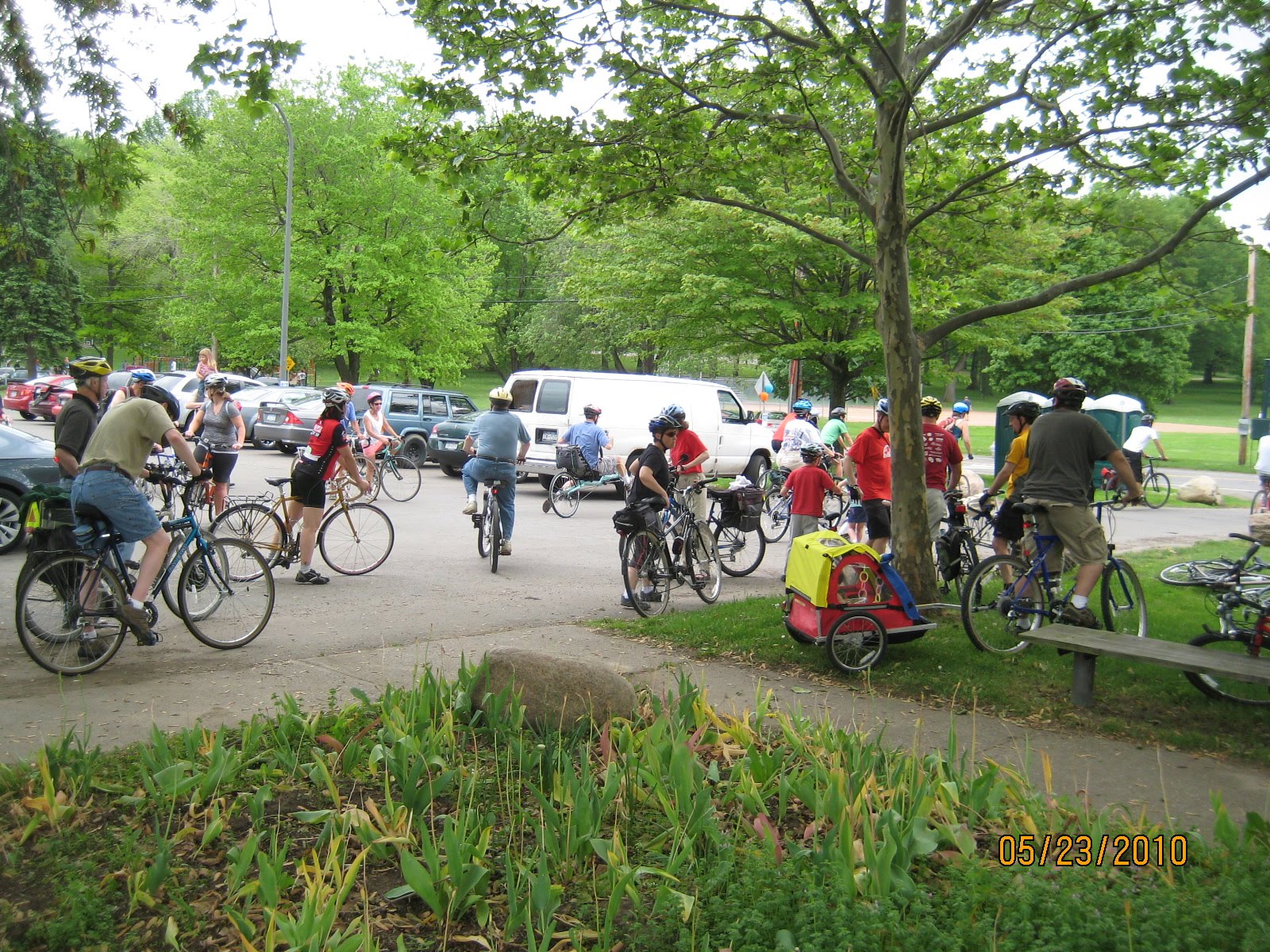
On Sunday, May 23 at 1 PM in Cobbs Hill Park, over forty bicyclists began a bicycle boulevard demonstration ride through the Upper Monroe neighborhood in Rochester, New York. They were not racers, or members of a single bicycling club, or recruits for a charity ride. They were just ordinary folks finding out what a bicycle boulevard would look and feel like in our area.

Maybe it is a harbinger of things to come. Portland, Oregon’s next generation bicycle boulevards is already achieving what we are attempting here: “A low traffic volume and low traffic speed street where bicycles, pedestrians and neighbors are given priority.” Already, this concept is being introduced as one of the choices for the Bicycle Master Plan being developed by the City of Rochester and the county of Monroe.

Preparation for this demonstration ride began almost a year ago by choosing a neighborhood properly situated near the heart of the city, en route to popular generators. A generator is a destination that attracts traffic, like a supermarket, a city center, a theatre district, or, in Rochester’s case, its wonderful network of trails (including the New York State Canal Trail) which come to a hub at Genesee Park.

For this specific demonstration ride, a route from the Upper Monroe neighborhood was mapped out and temporarily signed, pointing out each turn of the ride. When fully developed, this bicycle boulevard would not only have permanent signage, it might have many other features like auto speed reduction, auto traffic reduction, and various changes to make crossing busy streets easier and safer. (http://www.bta4bikes.org/) Ultimately, Upper Monroe bicycle boulevards would be linked to a series of other boulevard routes throughout all our neighborhoods providing safe and enjoyable routes that make our neighborhoods more neighborly. Not to mention fewer fossil-burning vehicles, fewer ozone alert days, and a lighter impact on climate change.

What might tip the community from one that views bicycles, walking, and public transportation as peripheral ways of getting around to a city that is designed specifically around these transportation options? Maybe we could take our lead from Portland, Oregon, pack up all our influential community leaders, and send them to Boulder, Colorado or The Netherlands and let them see how they do it. Don’t laugh, it’s been done—and it worked!

by No Comments

Rochester bicycle boulevard ride a success

On Sunday, May 23 at 1 PM in Cobbs Hill Park, over forty bicyclists began a bicycle boulevard demonstration ride through the Upper Monroe neighborhood in Rochester, New York. They were not racers, or members of a single bicycling club, or recruits for a charity ride. They were just ordinary folks finding out what a bicycle boulevard would look and feel like in our area.

Maybe it is a harbinger of things to come. Portland, Oregon’s next generation bicycle boulevards is already achieving what we are attempting here: “A low traffic volume and low traffic speed street where bicycles, pedestrians and neighbors are given priority.” Already, this concept is being introduced as one of the choices for the Bicycle Master Plan being developed by the City of Rochester and the county of Monroe.

Preparation for this demonstration ride began almost a year ago by choosing a neighborhood properly situated near the heart of the city, en route to popular generators. A generator is a destination that attracts traffic, like a supermarket, a city center, a theatre district, or, in Rochester’s case, its wonderful network of trails (including the New York State Canal Trail) which come to a hub at Genesee Park.

For this specific demonstration ride, a route from the Upper Monroe neighborhood was mapped out and temporarily signed, pointing out each turn of the ride. When fully developed, this bicycle boulevard would not only have permanent signage, it might have many other features like auto speed reduction, auto traffic reduction, and various changes to make crossing busy streets easier and safer. (http://www.bta4bikes.org/) Ultimately, Upper Monroe bicycle boulevards would be linked to a series of other boulevard routes throughout all our neighborhoods providing safe and enjoyable routes that make our neighborhoods more neighborly. Not to mention fewer fossil-burning vehicles, fewer ozone alert days, and a lighter impact on climate change.

What might tip the community from one that views bicycles, walking, and public transportation as peripheral ways of getting around to a city that is designed specifically around these transportation options? Maybe we could take our lead from Portland, Oregon, pack up all our influential community leaders, and send them to Boulder, Colorado or The Netherlands and let them see how they do it. Don’t laugh, it’s been done—and it worked!

by No Comments

John Robert Smith in Rochester

*Cross Posted by the Moderate Urban Champion

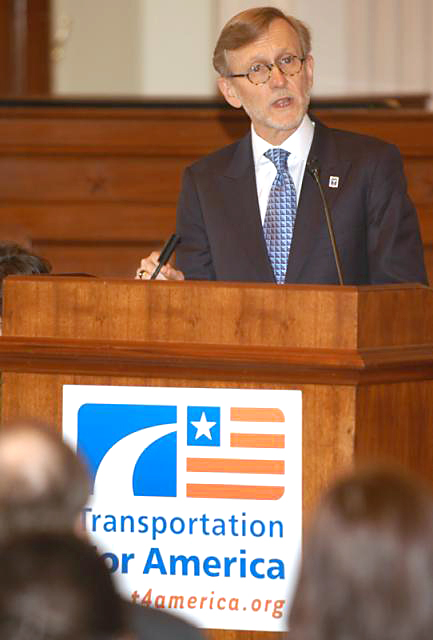
John Robert SmithMembers of Reconnect Rochester had a unique opportunity Monday afternoon.  We were invited to sit in and participate in a roundtable discussion featuring representation of the Genesee Transportation Council, the Empire State Passengers Association, the Rochester Rail Transit Committee, and the keynote speaker of that evening’s lecture, John Robert Smith.

Not all of the biggest statements came from Smith himself, but his insight into federal agencies and funding acquisition from said agencies was very valuable to our coalition. Also heartening was the recognition by all parties of potential energy realities. This acceptance set the imperative tone regarding the necessity for improved transit in the region.

Smith’s greatest criticism, one that was repeated during the public lecture, was a lack of obvious attraction marketing, and the associated transportation options, to downtown hotel guests and travelers who arrive by train. The implication is that we aren’t successfully steering travelers with money to spend to restaurants and other cultural amenities. A set of newer signage as part of an enhanced wayfinder system was installed recently, but it is proving to be geared toward motorized tourist travel.

Read more

by No Comments

RCA T-shirt Orders


Anyone interested in a limited edition RCA T-shirt please email us
with your name, T-shirt size, phone number, and email. T-shirt cost
will be $20 per shirt. This cost is based on buying 12 T-shirts to start. The more people who buy them the cheaper they will be. We need orders by 10AM tomorrow (5/11) in order to get the shirts by this Friday. Please pass this message along and let all RCA’ers know about the shirts.

Shirts will be Red 50/50 cotton shirts with a white RCA Chain ring /Cityscape logo on the front and white “ROCHESTER CYCLING ALLIANCE” lettering on the back across the shoulders. To place an order for your shirt click here.

by No Comments

RCA T-shirt Orders


Anyone interested in a limited edition RCA T-shirt please email us
with your name, T-shirt size, phone number, and email. T-shirt cost
will be $20 per shirt. This cost is based on buying 12 T-shirts to start. The more people who buy them the cheaper they will be. We need orders by 10AM tomorrow (5/11) in order to get the shirts by this Friday. Please pass this message along and let all RCA’ers know about the shirts.

Shirts will be Red 50/50 cotton shirts with a white RCA Chain ring /Cityscape logo on the front and white “ROCHESTER CYCLING ALLIANCE” lettering on the back across the shoulders. To place an order for your shirt click here.

by No Comments

Rochester Rated 18th of US Cities in Bicycle Commuting


In 2008 Rochester has the 18th highest of 51 cities over 1 million population based on US Census Data with a bicycle commute rate of 0.6%. The rate has grow substantially from it’s 0.2% rate in 2000 based on US Census Data.

I’ve been in contact with Steve Clark, who works for Transit for Livable Communities in Minneapolis and is highly respected in the Minneapolis cycling community. He notes that they are seeing an increase in all year bike commuting as well as an overall increase. One third of Minneapolis bike commuters are now cycling year round as born out by the bike counts. Minneapolis’s bike commuting rate is 4.2%, Ottawa’s is 1.9%, Toronto’s is 0.8%. Minneapolis built the lanes and trails and they cycled.

Steve also gave me two terrific links that are used to educate the public as well as maintenance personnel on winter street care. He recently completed an all day workshop with street maintenance workers and the have bought into the program as well and some are now cycling. These are enclosed below.

http://www.c-d-g.org/projects/TLC/WinterWalkBike/LeadershipBreakfast.htm

http://www.c-d-g.org/projects/TLC/WinterWalkBike/Dec4WinterWorkshop.htm

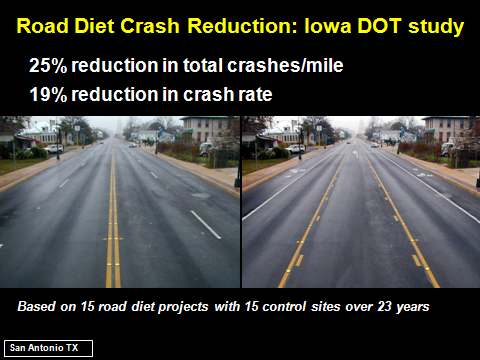
Steve also attached his research on winter riding. “What we have found is that winter riding is especially high on commuter routes. Not so high on paths that have high rates of recreational use during the summer months. Based on all of our counts, we conclude that nearly a third of regular bike commuters continue to bike during the winter.” He also sent us a nice 4-3 conversion image shown here. Scott

by No Comments

Rochester Rated 18th of US Cities in Bicycle Commuting


In 2008 Rochester has the 18th highest of 51 cities over 1 million population based on US Census Data with a bicycle commute rate of 0.6%. The rate has grow substantially from it’s 0.2% rate in 2000 based on US Census Data.

I’ve been in contact with Steve Clark, who works for Transit for Livable Communities in Minneapolis and is highly respected in the Minneapolis cycling community. He notes that they are seeing an increase in all year bike commuting as well as an overall increase. One third of Minneapolis bike commuters are now cycling year round as born out by the bike counts. Minneapolis’s bike commuting rate is 4.2%, Ottawa’s is 1.9%, Toronto’s is 0.8%. Minneapolis built the lanes and trails and they cycled.

Steve also gave me two terrific links that are used to educate the public as well as maintenance personnel on winter street care. He recently completed an all day workshop with street maintenance workers and the have bought into the program as well and some are now cycling. These are enclosed below.

http://www.c-d-g.org/projects/TLC/WinterWalkBike/LeadershipBreakfast.htm

http://www.c-d-g.org/projects/TLC/WinterWalkBike/Dec4WinterWorkshop.htm

Steve also attached his research on winter riding. “What we have found is that winter riding is especially high on commuter routes. Not so high on paths that have high rates of recreational use during the summer months. Based on all of our counts, we conclude that nearly a third of regular bike commuters continue to bike during the winter.” He also sent us a nice 4-3 conversion image shown here. Scott

by No Comments

Sustainability Mobility Fair

Sustainability Mobility Fair “Future Transportation Choices for Short Trips” Admission is free and open to the public. At the May 8th Sustainability Mobility Fair you can view over 20 full-size alternative vehicles in a casual setting.

WHEN & WHERE: When: Saturday, May 8, 2010 from 10:AM – 2 PM
Where: The Center for Student Innovation at RIT, 1 Lomb Memorial Dr Rochester, NY 14623-5698

Most of the trips we take are 6.5 miles from our homes. Either traveling to work, to school, to shop, or just for fun, you will have many transportation choices in the future. Whether your reasons for considering alternative transportation are to cut commuter costs, concern over greenhouse gas emissions, or to improve your health, get an idea of your choices by coming to our first Sustainability Mobility Fair. This event is sponsored by The Center for Student Innovation at RIT (CSI) at Rochester Institute of Technology (RIT) and the Center for Environmental information (CEI).

Our vision for creating this expo is to offer the public an opportunity to see and examine possible alternative transportation for those short distances.
Attendees will be exposed to what is new and now available on the markets and able to experience the latest choices in electric (bicycles, trikes, cars and motorcycles), hybrid electric, GEM car, Zip car, hydrogen, biodiesel, compressed natural gas, propane hybrid, plug-in electric, ethanol, Walking School Buses, bicycles, ‘veggie’ vehicles, and cycling transportation technologies.. All alternative fuel options will be on display. As more commuters become aware of travel choices, we expect to see more of them regularly choosing transportation alternatives because of the benefits. For more information, please check out: http://ceinfo.org/

by No Comments

Sustainability Mobility Fair

Sustainability Mobility Fair “Future Transportation Choices for Short Trips” Admission is free and open to the public. At the May 8th Sustainability Mobility Fair you can view over 20 full-size alternative vehicles in a casual setting.

WHEN & WHERE: When: Saturday, May 8, 2010 from 10:AM – 2 PM
Where: The Center for Student Innovation at RIT, 1 Lomb Memorial Dr Rochester, NY 14623-5698

Most of the trips we take are 6.5 miles from our homes. Either traveling to work, to school, to shop, or just for fun, you will have many transportation choices in the future. Whether your reasons for considering alternative transportation are to cut commuter costs, concern over greenhouse gas emissions, or to improve your health, get an idea of your choices by coming to our first Sustainability Mobility Fair. This event is sponsored by The Center for Student Innovation at RIT (CSI) at Rochester Institute of Technology (RIT) and the Center for Environmental information (CEI).

Our vision for creating this expo is to offer the public an opportunity to see and examine possible alternative transportation for those short distances.
Attendees will be exposed to what is new and now available on the markets and able to experience the latest choices in electric (bicycles, trikes, cars and motorcycles), hybrid electric, GEM car, Zip car, hydrogen, biodiesel, compressed natural gas, propane hybrid, plug-in electric, ethanol, Walking School Buses, bicycles, ‘veggie’ vehicles, and cycling transportation technologies.. All alternative fuel options will be on display. As more commuters become aware of travel choices, we expect to see more of them regularly choosing transportation alternatives because of the benefits. For more information, please check out: http://ceinfo.org/

by No Comments

Rochester Bicycle Master Plan

The first “pre kick off” meeting of the Advisory Committee met on Friday. RCA members Andrew Dollard, Bill Collins, Richard DeSarra also representing Rochester Bicycle Club and myself (representing U. of R.) as well as others, were there as well as city representatives Chuck Thomas, Steve Beauvaias, Pete Siegrest and Erik Frisch. Scott Leathersich represented Monroe County and a proxy GTC rep was there.

This meeting was to prepare for the outside national bicycle planning/consultanting group Sprinkle from Tampa, Fl. who will be coming the week of May 24-28th to do their preliminary assessment. This visit will overlap with bike week and we are planning to see if we can get Mayor Duffy and Sprinkle to participate in some of our Bike Week activities. The details of this need to be worked out but it looks encouraging that this will fall into place. Local firms ERD a landscape design and engineering company as well SRF, which offers expertise in transportation planning, pedestrian and bicycle safety, traffic calming ect. will be assisting Sprinkle. They want to do this plan expeditiously in 8 months since all parties are eager to move forward because of potential funding opportunities.

We discussed a variety of issues which need to be addressed by the master plan including how to meter progress, weather, representation of low income groups and the format of the upcoming meetings. Overall everyone involved seems committed to making a difference in making Rochester a more bike friendly town. More later.

Scott

by No Comments

Rochester Bicycle Master Plan

The first “pre kick off” meeting of the Advisory Committee met on Friday. RCA members Andrew Dollard, Bill Collins, Richard DeSarra also representing Rochester Bicycle Club and myself (representing U. of R.) as well as others, were there as well as city representatives Chuck Thomas, Steve Beauvaias, Pete Siegrest and Erik Frisch. Scott Leathersich represented Monroe County and a proxy GTC rep was there.

This meeting was to prepare for the outside national bicycle planning/consultanting group Sprinkle from Tampa, Fl. who will be coming the week of May 24-28th to do their preliminary assessment. This visit will overlap with bike week and we are planning to see if we can get Mayor Duffy and Sprinkle to participate in some of our Bike Week activities. The details of this need to be worked out but it looks encouraging that this will fall into place. Local firms ERD a landscape design and engineering company as well SRF, which offers expertise in transportation planning, pedestrian and bicycle safety, traffic calming ect. will be assisting Sprinkle. They want to do this plan expeditiously in 8 months since all parties are eager to move forward because of potential funding opportunities.

We discussed a variety of issues which need to be addressed by the master plan including how to meter progress, weather, representation of low income groups and the format of the upcoming meetings. Overall everyone involved seems committed to making a difference in making Rochester a more bike friendly town. More later.

Scott

by No Comments

Google Maps – Bikes Is Working & Responding To Route Recommendation

Google maps bikes is now up, working and responding to suggestins. It is in beta testing so they are continuously refining things and encourage us to critique thier suggested routes. I’d encourage you to use it and post your favorite cycling routes to work, schools shopping etc. This can be a powerful tool to direct cyclists to the safest routes. It automatically takes into consideration things like hills ect to make it easier for cyclists. Here is my experience as an example:

I checked out a route my wife wanted to take for a bike trip from Park Ave. to Pittsford and it suggested she go down Monroe Ave directly which was the most direct by car but not the safest.

I typed in an alternative route down Clover using the bike lane and then to the Erie Canal and East as a safer alternative. A week later Google responded with this message. Very cool!

Hi scott, Your Google Maps problem report has been reviewed, and you were right!
We’ll update the map soon and email you when you can see the change.

Report historyProblem ID: EDE2-41E3-816A-096AYour report: I would suggest that one continue South on Clover even though this is not the greatest road, it has a 4-5 foot bike lane and certainly better than Monroe Ave which is a 4 lane road with no bike lanes. I would continue south and then pick up the Erie Canal trail and take a left which would lead me into into the town of Pittsford without the danger of Monroe Ave which is a mess and dangerous especially south of Clover where it turns into 5 lanes, has lots of stores and cars turning without remotely considering cyclists or pedestrians. Scott MacRae Rochester Cycling Alliance

–Thanks for your help,The Google Maps team

Check it out by going to Google Maps and then click on the “More” icon in the upper right hand corner of the screen, then click “bicycling” and it will give you a preferred route. If enought of us refine the routes, it should be very handy for folks with time. The system learns by our direct feedback.

by No Comments

Google Maps – Bikes Is Working & Responding To Route Recommendation

Google maps bikes is now up, working and responding to suggestins. It is in beta testing so they are continuously refining things and encourage us to critique thier suggested routes. I’d encourage you to use it and post your favorite cycling routes to work, schools shopping etc. This can be a powerful tool to direct cyclists to the safest routes. It automatically takes into consideration things like hills ect to make it easier for cyclists. Here is my experience as an example:

I checked out a route my wife wanted to take for a bike trip from Park Ave. to Pittsford and it suggested she go down Monroe Ave directly which was the most direct by car but not the safest.

I typed in an alternative route down Clover using the bike lane and then to the Erie Canal and East as a safer alternative. A week later Google responded with this message. Very cool!

Hi scott, Your Google Maps problem report has been reviewed, and you were right!
We’ll update the map soon and email you when you can see the change.

Report historyProblem ID: EDE2-41E3-816A-096AYour report: I would suggest that one continue South on Clover even though this is not the greatest road, it has a 4-5 foot bike lane and certainly better than Monroe Ave which is a 4 lane road with no bike lanes. I would continue south and then pick up the Erie Canal trail and take a left which would lead me into into the town of Pittsford without the danger of Monroe Ave which is a mess and dangerous especially south of Clover where it turns into 5 lanes, has lots of stores and cars turning without remotely considering cyclists or pedestrians. Scott MacRae Rochester Cycling Alliance

–Thanks for your help,The Google Maps team

Check it out by going to Google Maps and then click on the “More” icon in the upper right hand corner of the screen, then click “bicycling” and it will give you a preferred route. If enought of us refine the routes, it should be very handy for folks with time. The system learns by our direct feedback.

by No Comments

Recent News on the PA side of the Rochester-Williamsport Greenway and the Headwaters of the Genesee River

Allen Kerkeslager reports…
The  North Central Pennsylvania Regional Planning and Development Commission, has  drafted plans for integrating Potter County into a state-wide program for developing greenways in all 67 counties in Pennsylvania.  Included in their ranking is about 40 miles of rail-trails to connect the famous Pine Creek Trail to trail systems along the Genesee River south to the NY/PA state line.  This will bring a fresh infusion of PA state, regional, and local resources to the completion of the Rochester-Williamsport Greenway. 
Most notably, regional planning commission officials have identified the number one priority for trail development in Potter County as the completion a new westward extension of the famous Pine Creek Trail to the sources of Pine Creek (west of Galeton, PA).  At its western terminus, this new Pine Creek Trail extension will connect with another new rail-trail (“the North Border Trail”) that will extend southward from the NY/PA border near Genesee, PA, to the source of the east branch of the Genesee River between Ulysses and Gold, PA.  

These two trails will connect near a special site marking the triple divide that embraces the sources of the Genesee River, the Allegheny River, and the Susquehanna River (West Branch and Pine Creek).  Together these two trails will link the current trailhead of the Pine Creek Trail at Ansonia, PA, with a rail-trail in NY that follows the Genesee River south from Wellsville, NY, to the NY/PA state line (the WAG Trail, which was recently acquired by NYSDEC).

The North Central Pennsylvania Regional Planning and Development Commission will hold a public meeting to collect final comments on its draft of the trail systems in Potter County, PA, in the Gunsberger Building in Coudersport, PA, at 1:00 pm on April 15.  

For additional details about developments in the Rochester-Williamsport greenway on the PA side and updates on the Genesee River Wilds Project (www.geneseeriverwilds.org), contact Allen Kerkeslager, Saint Joseph’s University, Philadelphia, at akerkesl@sju.edu or (610) 660-1121.
by No Comments

Sustainability Mobility Fair – May 8th Free expo

“Sustainability Mobility Fair – Future Transportation Choices for Short Trips”
Admission is free and open to the public.

When: Saturday, May 8, 2010 from 10:AM – 2 PM
Where: The Center for Student Innovation at RIT, 1 Lomb Memorial Dr Rochester, NY 14623-5698

Attendees will be exposed to what is new and now available on the market and able to experience the latest choices in Electric, Hydrogen, Biodiesel, Natural Gas, Propane, Hybrid, Plug-In, Ethanol, Walking School Buses, and cycling transportation technologies.

All alternative fuel options will be on display. As more commuters become aware of travel choices, we expect to see more of them regularly choosing transportation alternatives because of the benefits. Sponsored by Rochester Institute of Technology (RIT) and the Center for Environmental Information (CEI).

by No Comments

Sustainability Mobility Fair – May 8th FREE

“Sustainability Mobility Fair – Future Transportation Choices for Short Trips”
Admission is free and open to the public.

When: Saturday, May 8, 2010 from 10:AM – 2 PM
Where: The Center for Student Innovation at RIT, 1 Lomb Memorial Dr Rochester, NY 14623-5698

Attendees will be exposed to what is new and now available on the market and able to experience the latest choices in Electric, Hydrogen, Biodiesel, Natural Gas, Propane, Hybrid, Plug-In, Ethanol, Walking School Buses, and cycling transportation technologies.

All alternative fuel options will be on display. As more commuters become aware of travel choices, we expect to see more of them regularly choosing transportation alternatives because of the benefits. Sponsored by Rochester Institute of Technology (RIT) and the Center for Environmental Information (CEI).

For more information and directions, surf over to ceinfo.org or http://www.rochesterenvironment.com/SMF.html