Story By Susan Levin. Susan is a cycling advocate, board member at Reconnect Rochester and chair of the Rochester Cycling Alliance workgroup.
The Rochester Women’s Bike Festival is back for its second year in Corn Hill! The Festival will be at Adams Street Recreation Center, 85 Adams St. on Saturday, June 15 from 9 AM to 3 PM. The event is free! Registration is available here. Watch for updates at facebook.com/rochesterwomenbike
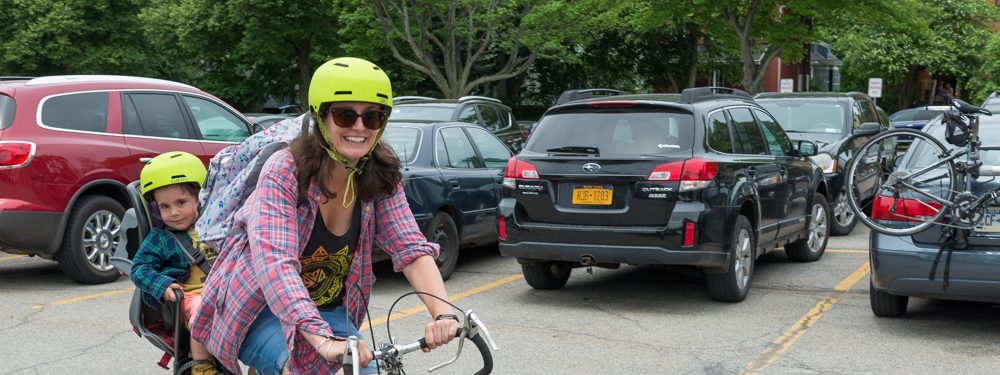
Why are we creating a bicycling-event focused on women? Studies have shown that women will use a bicycle for everyday transportation if it’s convenient, comfortable, and safe. When women ride, they teach and encourage their children to get around the same way. For some, it’s economical—for the cost of a few tanks of gas, she can have reliable two-wheeled transportation all the time. Cycling also promotes physical and mental health. In the end, her whole community is safer if she feels it’s safe to get around by bicycle at all.
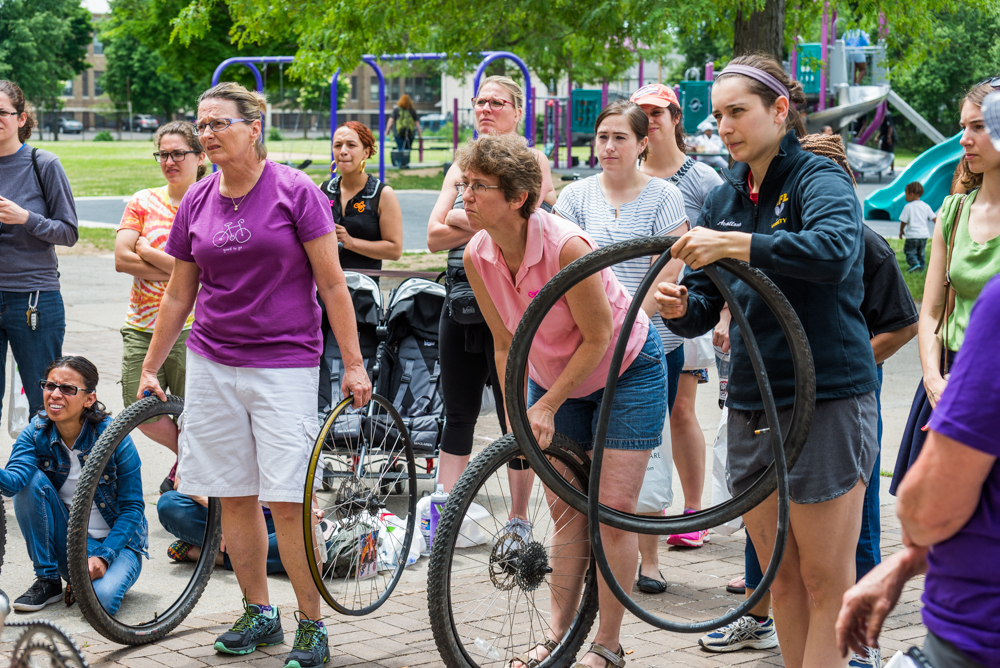
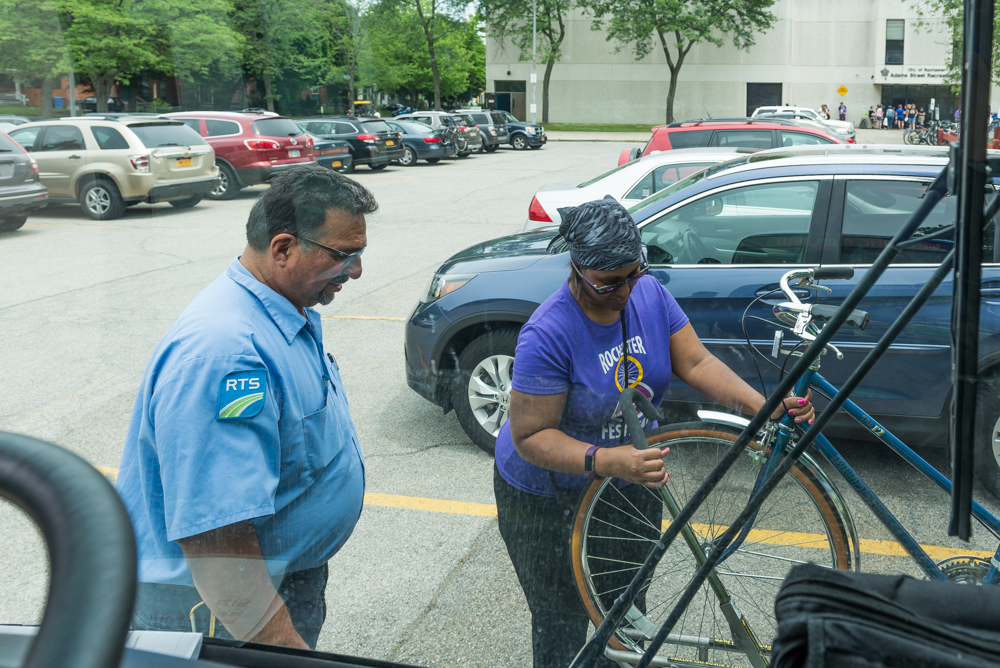
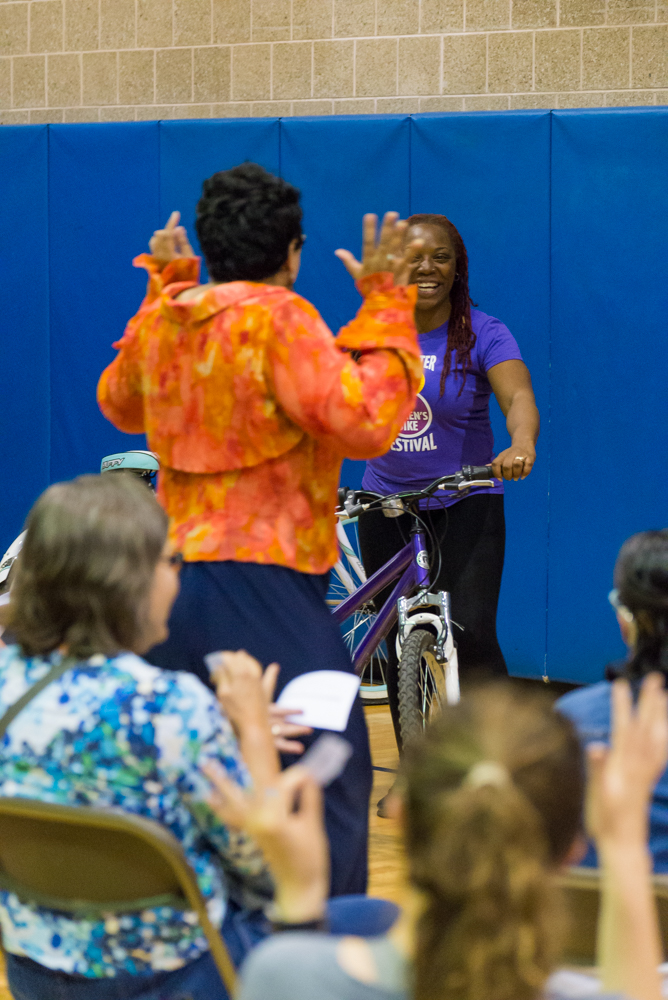
Over 130 women (and a few men) attended the event last year as participants, speakers, vendors, and volunteers. Three bicycles, donated by R Community Bikes, were given away as attendance prizes at the end of the day, along with gift baskets, salon certificates and bicycle accessories. There were ten breakout sessions throughout the day, and in between sessions, a complimentary breakfast and lunch were served. Four women were chosen to learn, hands-on, how to repair a flat tire and dozens of women practiced loading and unloading a bicycle on an RTS bus.
The Festival is offering space for women to ask questions, learn, and try out bikes in an understanding and non-intimidating atmosphere. Men are welcome to attend, as long as they are also there to encourage women to bike, but be prepared to discuss women-centered topics.
This year, RWBF organizers, including Corn Hill business owner Karen Rogers of Exercise Express, are planning an even bigger and better event.
Additions to this year’s festival include: on-street practice rides led by LCIs (League Cycling Instructors, a certification program from the League of American Bicyclists), healthier food options, more vendors in the Expo area, and more speakers. The RTS bus and Pace Bikes will both be back. Also returning is the bike zoo, where women will be able to test ride different kinds of bikes, such as cargo and e-bikes. REI and Tryon Bike, along with Bianchi Dama representatives, are scheduled to present short maintenance clinics. Breakout sessions will include: How and where to buy a bike; How to bike with children; How to grocery shop by bike; How to find a group ride and more.
Feel free to drop in and visit the vendor booths, the Bike Zoo and all the sessions. You can also sign up via that link to volunteer or request to host a vendor table. Volunteers will be needed for greeters, set up and break down, staffing info tables and general gophers. Vendors can be about bikes or any sort of organization who would be of interest to women who bike.
Story By Arian Horbovetz. Arian is a Rochester resident and creator of The Urban Phoenix, a blog that discusses urban and community design and topics as our cities transition to a better future.
The mind conjures the 7-year-old’s awkward stride as her kid legs push vigorously against the ground to gain speed as she holds on to the handlebars for dear life. Or maybe it’s the formidable mustache of Kevin James in the movie “Paul Blart, Mall Cop” as he patrols his local shopping center on a Segway. The fact is, since the scooter was invented, it’s been viewed almost exclusively as a children’s toy, or a middle-aged man’s vehicle toward social isolation. Or rather, those were the only definitions until just a few years ago, when venture-capital startup giants with names like Lime and Bird began dropping electric scooters down in US cities, almost overnight. Now with over 60 cities sporting these new motorized transportation marvels, the former adult stigma of riding a scooter has turned into a national movement.
And if you haven’t heard, we’re next.
A few weeks ago, the first news stories began reporting that Rochester will see these two-wheeled machines hit our streets as soon as this year. As no surprise, this announcement has been met with equal parts optimism and skepticism, with some excited to see a new transportation option in our city, and others worried about what hazards they could bring. In any event, e-scooters are a very divisive and at times heated topic, so let’s take a look at what we really know about them.
What Is E-Scooter Share?
Just like our Pace bike share network in Rochester, e-scooter sharing is a smartphone app-based system whereby you can easily locate an e-scooter near you, activate it with your phone, pilot the machine to your destination and end the ride on your phone when you’re done. Just like bike share, you’ll be charged based on the amount of time you use the e-scooter.
E-scooters are far more robust than the small kick scooters you see children riding. Equipped with formidable electric motors, these machines have a top speed of 15mph, allowing you to zip around the city at a respectable speed without breaking a sweat. Literally. No kicking, no pedaling, just hit the throttle and go.
While e-scooter share systems started on the streets of San Francisco in 2012, the phenomenon really exploded in 2017-2018. Large venture capital-based companies with names like Lime and Bird began distributing e-scooters in western cities with no warning, almost overnight, and typically, without the blessing of local government. In fact, electric scooters weren’t even legal in many of these municipalities.
In spite of this, e-scooters become instantly popular, garnering use from the curious urban fun-seeker to the daily commuter alike. By the time cities began to question the legal, safety and community impact of these micro-mobility machines, people had become so attached to them that they fought vigorously for their continued existence. The e-scooter startups had created such a strong public demand in such a short period of time, it almost forced local governments to grant licensing, change laws and accommodate for their continued use.
In 2018, e-scooter share trips topped 38.5 million across the country. For the first time, scooter share trips exceeded bike share trips (36.5 million) in the U.S., even though bike share has been established in US cities far longer. Like it or not, e-scooters are booming, and the trend shows no sign of slowing.
As of now, e-scooters are not legal in New York State. This will likely change sooner rather than later. Support from Governor Cuomo, and more recently a bill introduced by State Senator Jessica Ramos and Assembly Member Nily Rozic are putting the wheels in motion for municipalities to make their own laws regarding e-scooter operation. Cities and communities would be left to decide whether or not to allow e-scooters, as well as legal restrictions on their use.
What Are The Positives?
E-scooters can be tremendous “last mile” or short-to-medium distance transportation options for city residents and visitors. They can facilitate car-free travel without breaking a sweat, or be a fun activity on a warm summer night.
A national study by Qualtrics showed that 55% of Americans believe that e-scooters are a “lasting innovation.” This number was 72% for people that had already used an e-scooter share service. Seventy percent of commuters said they prefer e-scooter share to bike share. Two-thirds of all respondents said they believed that e-scooters had a “positive impact on the environment,” and were good for their city.
Surveys found that 62% of Portlanders viewed e-scooters positively. For respondents under 35 years of age, the support was 71%. Support from people of color was 74%, and support from residents with incomes below $30,000 was 66%. Seventy-one percent of Portland riders used scooters for transportation and 34% of residents and (as well as 48% of visitors) said they took an e-scooter instead of taking a car, using ride hailing services or taking a taxi.
In sum, the few studies that have been conducted on e-scooter use and community impact imply that a majority of people are in favor of their continued use. There is also evidence to show that residents and visitors use them in place of driving or using ride hailing services, which potentially decreases automobile congestion on city streets.
A Bird e-scooter waits for a user on the streets of Portland, Oregon. Photo by Jeremiah Parry-Hill
One of the biggest positives with regard to implementation in Rochester is the fact that Zagster, the trusted company that already operates our Pace bike share service, will be rolling out the new e-scooters. Unlike so many cities across the country in which tech startups have imposed scooter share programs without the blessing of local government, Zagster is working with the city to create a system that fits our needs and addresses major issues. Having an e-scooter operator that already has a positive working relationship with local government and the community is a tremendously positive first step toward a bright future for this service in Rochester.
It’s Not All Roses…
As you may have heard via countless news outlets, e-scooter programs have had their issues. Concerns over safety, “sidewalk litter” and pedestrian disruption are often very valid complaints with regard to these machines.
A safety study conducted by UCLA between September 1st 2017 and August 2018 tracked emergency room visits link to e-scooter share use in Los Angeles and Santa Monica hospitals. In all, e-scooters led to 249 emergency room visits, with no fatalities and two intensive care unit admissions. In the same time period, 195 ER visits for bicycle injuries and 181 visits for pedestrian injuries were reported, suggesting that e-scooters may be more dangerous than walking or biking.
A recent 87-day study conducted by the CDC in Austin, Texas showed similar concerns. The findings showed that, for every 100,000 rides, 20 injuries occurred, and 14% of these injuries led to hospitalization. Sixty percent of the reported injuries were suffered by riders who had used e-scooter share 9 times or less, suggesting a “learning curve” with regard to safe piloting of these machines.
Beyond safety, another concern with regard to these machines is that they tend to create “sidewalk clutter.” This occurs when riders reach their destination and finish their ride, lean the scooter against a tree or pole, only to have a slight wind or something else knock it over. The result is often the presence of e-scooters lying in sidewalks, obstructing pedestrians.
Lime E-Scooters lying in on the sidewalk in Detroit, Michigan. Photo by Chris Clemens from Exploring Upstate
Lastly, while these machines are intended for use in the road, sidewalk riding is a frequent complaint. Since e-scooters can reach 15 miles per hour, the zipping by people on foot at these high speeds can be a nuisance, and potentially dangerous.
Let’s Take A Step Back
Scooters, like cars and bikes, are amazing tools for getting around. But they can potentially be a health risk, especially for new and inexperienced riders. While many people have ridden bikes, it’s safe to say that electric scooters are a very new riding experience for most Americans. There will no doubt be a learning curve when using these machines in our city, as speed, riding position, turning radius and the overall feel will be new to virtually every Rochestarian. With this in mind, it’s important for potential riders to “take it slow” and enjoy these machines carefully when learning how they respond and maneuver.
Let’s also put e-scooters into context. Forty-thousand Americans died and 2.5 million were seriously injured in car crashes last year alone, and most of those were due to operator error. Yet most Americans don’t hesitate to climb into their cars and SUV’s each morning and head off to work. The difference, of course, is that a misstep behind the wheel can cause tremendous harm to the driver and others around them while a bad decision on a bike or scooter will likely only result in the rider being injured. While it’s vital to consider safety for everyone, it’s also important to remember that these are 45 pound machines that can travel 15mph, not 3000 pound SUV’s capable of triple digit speeds. The potential for injury, damage and death that a poorly piloted e-scooter can cause is no match for carelessly driven automobile.
As for the issue of sidewalk litter, e-scooter companies are already searching for creative ways to encourage people to park their machine after using it. Skip, an e-scooter share company that has branded itself on being friendly and compliant, is working on a tethering system in which a rider would use a retractable bike-style lock to secure the scooter to a pole or bike rack after riding. Their scooters are already armed with a sensor that can detect when a scooter parked upright, and when it is simply left on its side as a potential tripping hazard.
Lime has rolled out an in-app feature called “Parked-Or-Not,” which encourages users to take a picture of their properly parked scooter after their ride. Lime and other companies are also testing and considering “points systems,” in which riders would be incentivized to park their machines responsibly with discounts and/or coupons for local establishments.
When cars first hit the streets of American cities, they were heralded as a nuisance and a serious safety hazard. But in a short time they became by far and away the most popular form of transportation in our country. Every mode of transportation has had its growing pains, but kinks are worked out with time, infrastructure gets built, and standards, both legal and societal, naturally evolve. For all intents and purposes, e-scooter share programs have only been on the radar for 2-3 years. Just like the automobile a century ago, there are certainly issues to be addressed, but with time, these troubles will likely diminish. When public demand for these machines are as high as they are, their parent companies will find solutions that make their use safer and more convenient for everyone.
What Is Reconnect Rochester Recommending?
As a leading advocate for smart, safe transportation and mobility in our city, Reconnect Rochester has made the following recommendations to City Council based on extensive research into e-scooter share data and media reports:
Use the first year as a pilot program to collect data on scooter usage, impact and public perception to allow for more informed decisions about the e-scooter share in Rochester moving forward. This will allow for flexibility and innovation that is tailored to the Rochester experience. The City of Portland’s Shared Electric Scooter Pilot Program provides an excellent example of what might be carried out in the City of Rochester. Portland discovered so many challenges during its 2018 pilot that it decided to conduct a second pilot year in 2019.
Consider capping the speed at 12mph to start. Beginning with a lower speed may give the inexperienced rider (and there will be a lot of them) time to adjust to this new mode of transportation and provide more reaction time for road hazards and traffic conditions. Given that most e-scooter trips are 1 to 1.5 miles, this lower speed won’t impact the trip time for the rider, but may help reduce the likelihood of injuries.
Make education a top priority. Offer free classes and online information on how to ride, where to ride and how to operate a scooter safely. In partnership with community organizations and the e-scooter vender, provide frequent training sessions at R-Centers and throughout the City to help encourage safe operation and road sharing.
Establish a set of best practices for e-scooter users and others who share the road to follow. This will help reduce tensions between the different modes of transportation as our community learns how e-scooters fit in. It will also help reduce the potential of crashes and injuries.
Establish guidelines with vendor to help reduce clutter on sidewalks and public rights of way. For example, consider tethering/locking features and designated parking infrastructure.
The key to a positive e-scooter share service in Rochester is a blend between an open-minded approach, a well-structured set of standards and expectations, and a willingness to explore new ideas to make the service better for everyone.
My Personal Experience
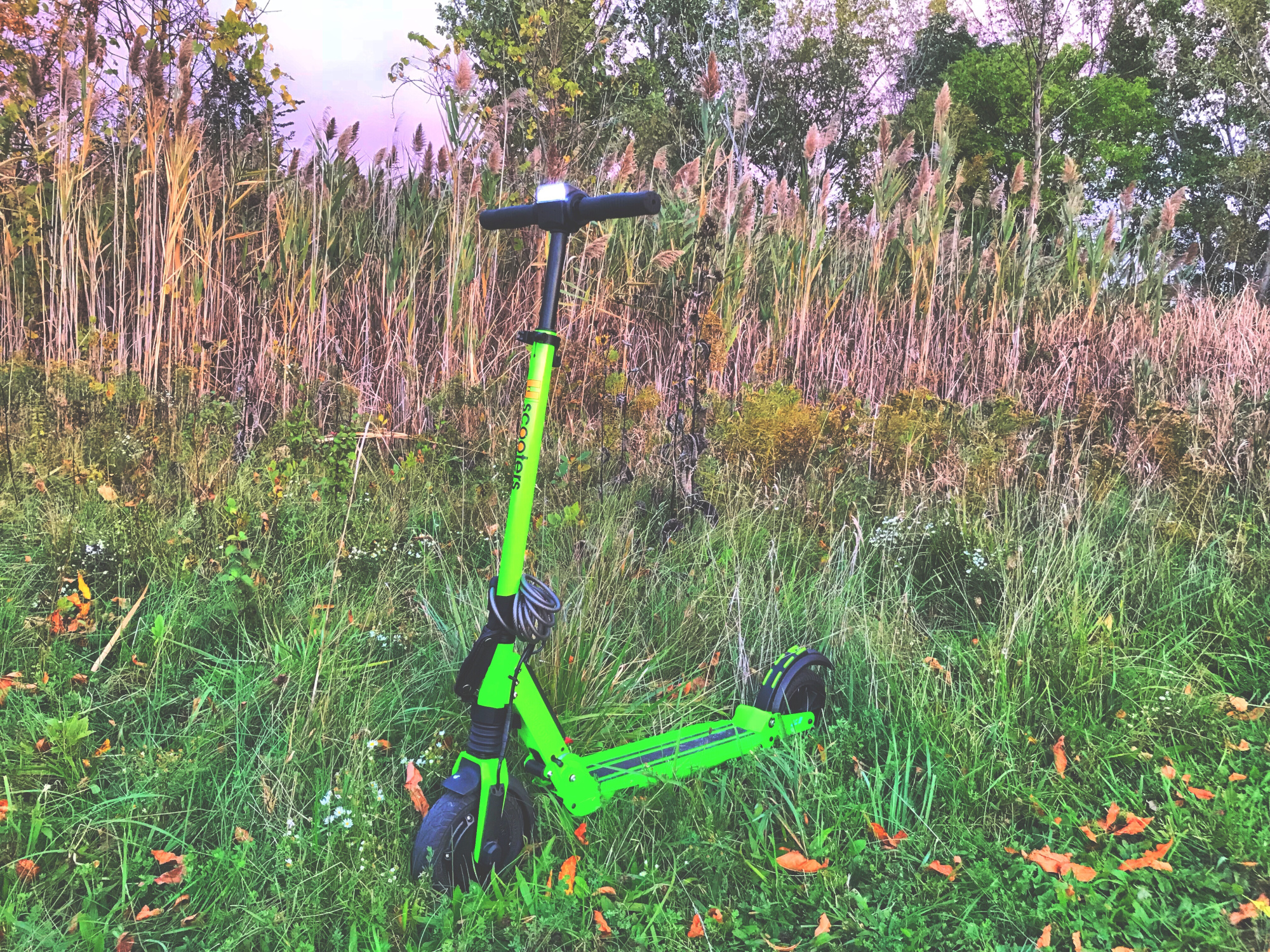
As an avid fan of alternative transportation, I already own an electric scooter, despite the fact that they are not legal in our state.
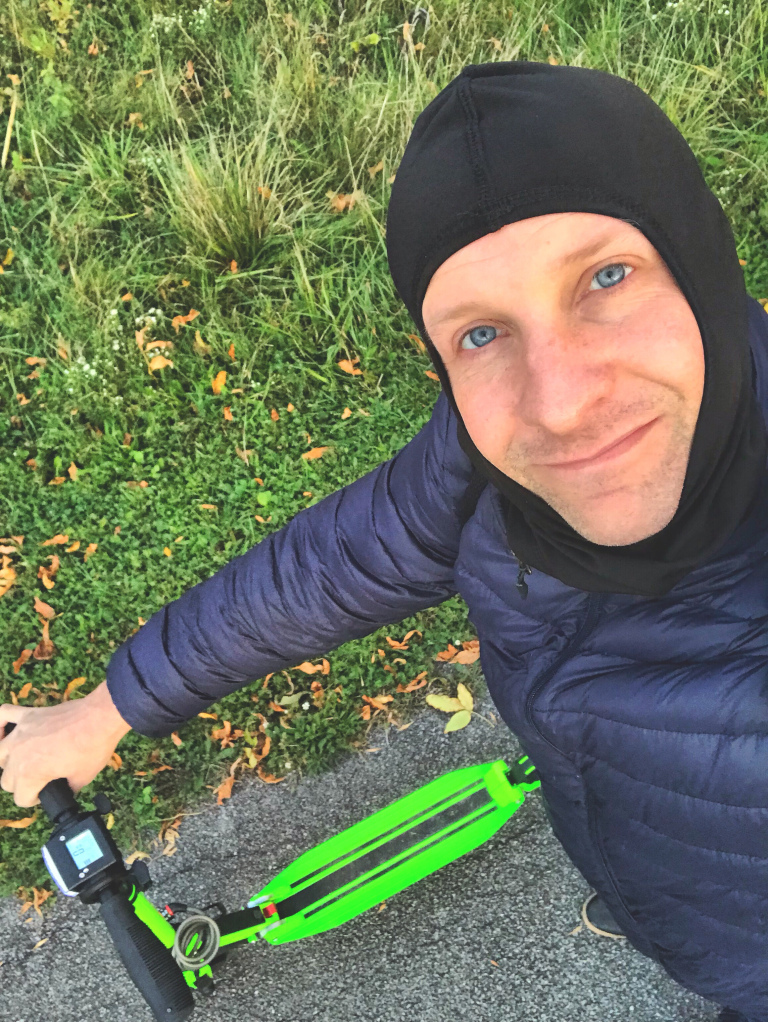
It’s fun to ride, even on a cold November day!
My experience with my e-scooter has been nothing but positive. At a maximum speed of approximately 17mph and a range of about 15 miles, my machine allows me to leave the car and bike behind in favor of a vehicle that gets me where I need to go without breaking a sweat. After hundreds of miles of e-scooter use, I can confidently consider myself an expert rider, and have never had an crash or fallen from the device. It is easy to operate, as long as I am alert and aware of my surroundings.
I will qualify that my positive opinion and safe navigation is likely due to the fact that I have biked nearly 10,000 miles over the last 5-7 years. This experience of traversing busy streets on two wheels, with balance, quick reaction time and precision likely eliminates much of the learning curve it might have taken a new e-scooter rider. With that said, I personally believe e-scooters are powerful, environmentally conscious and fun machines, and I welcome the day when e-scooters are legal across New York State.
In Conclusion
It’s not a matter of “if” electric scooters will hit the street of our city, it’s “when.” And when they do, there will likely be excitement and acceptance, mixed with growing pains and learning curves. These devices are environmentally friendly alternatives to short trips by car, as well as fun and interesting ways to see our great city. As Rochester continues to evolve, and young people continue to ask for more transportation options, our city is positioning itself to offer a greater network of mobility options. E-scooters are part of that vision, and while there will certainly be hurdles, there is tremendous potential for a positive result and a meaningful additive to Rochester’s ever-evolving fabric.
The community response was tremendous, and we thank all those who took the time to submit nominations! We received a total of 159 nominations for 31 locations in Monroe County.
The Steering Committee had a tough task to choose from so many quality submissions and deserving locations! A set of established judging criteria helped guide us through the selection process. Here we are, hard at work examining each and every submission:
So What’s the Good Word?
In the end, we selected the following locations for this year’s project:
N. Clinton Ave. in the El Camino neighborhood – WINNER
S. Clinton, S. Goodman & Henrietta St. – FINALIST
Monroe Ave. & Sutherland St. (Village of Pittsford) – FINALIST
The block of N. Clinton Ave. between Hoeltzer St. & Sullivan St. will be the project focus area
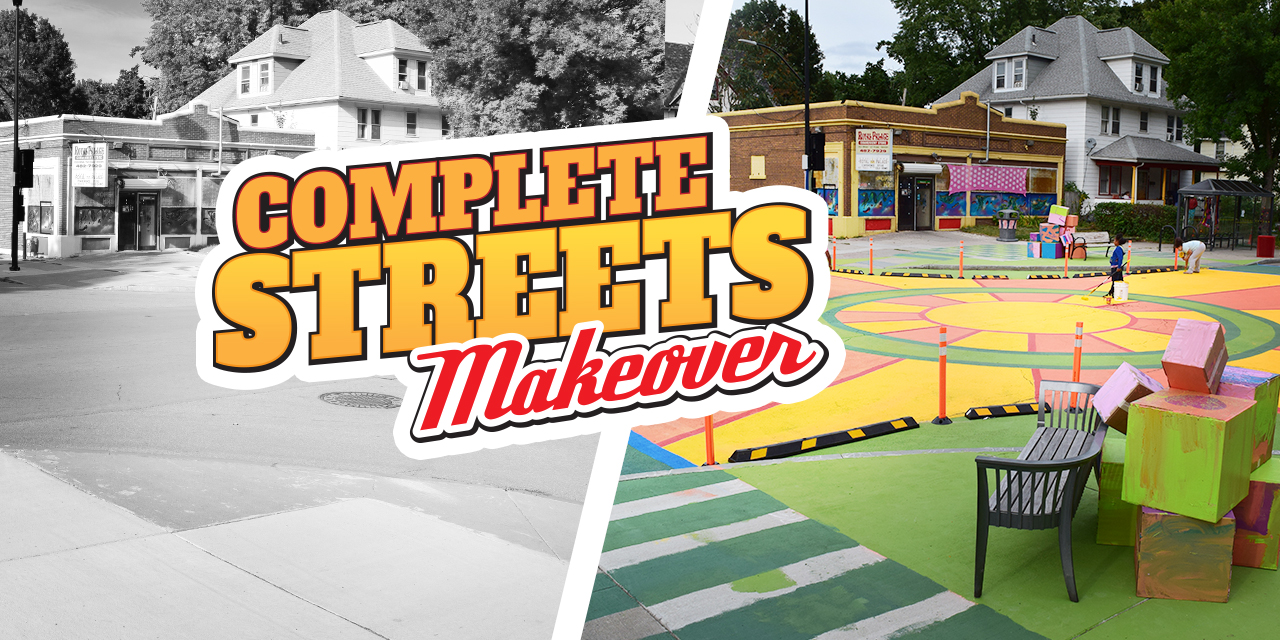
The North Clinton Ave. location presented the right mix of community support, evidence of safety concerns, and potential for a street re-design that would create real, transformative change for the community through our project. A Complete Streets Makeover will also be perfectly timed to dovetail with plans already underway for this corridor.
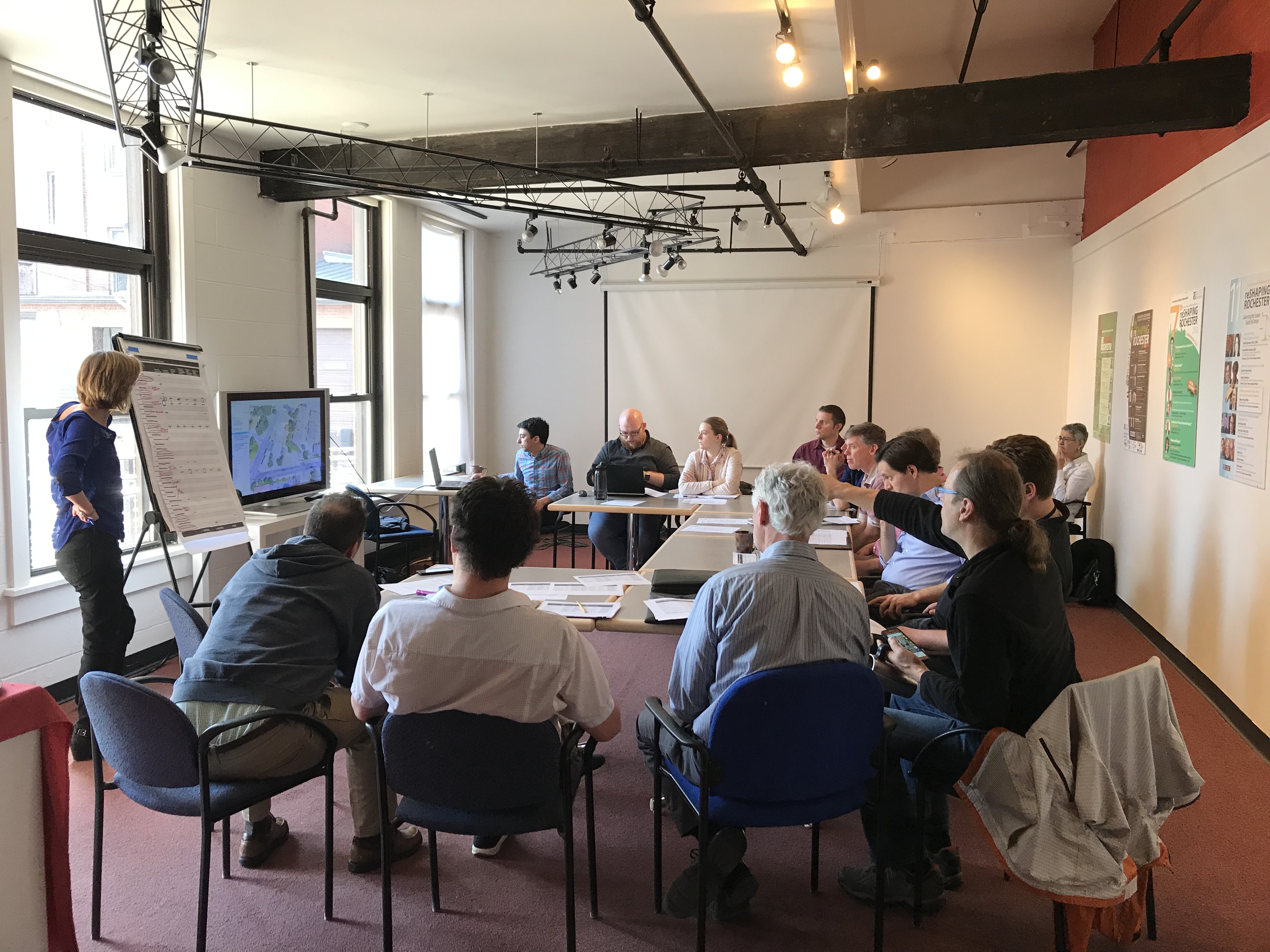
The Complete Streets Makeover will kick off with a community input session in June (facilitated by the Community Design Center) to hear from the residents of the El Camino neighborhood about their experiences and ideas. No one understands what it’s like to use our streets better than those who walk, bike, roll and ride along them everyday.
Last year’s community input session in the Beechwood neighborhood.
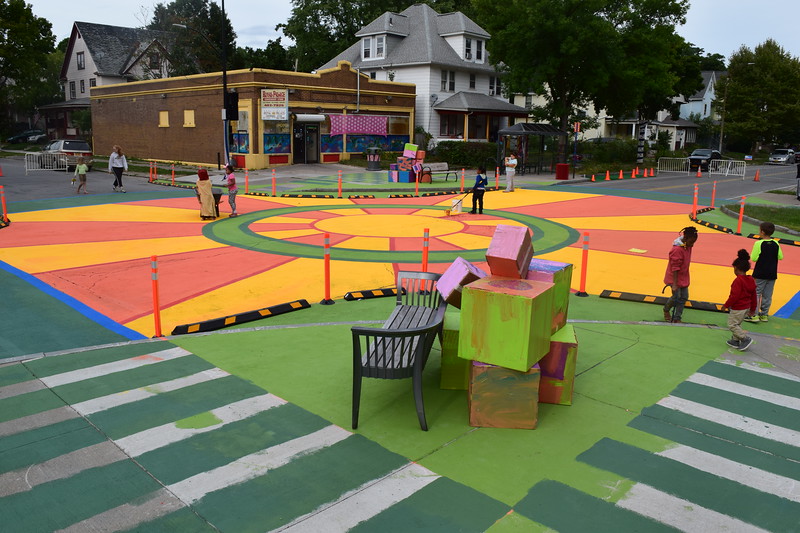
Based on feedback from this session, the complete streets design team at Stantec will draft conceptual design improvements of an improved streetscape. The design will be brought to life through a temporary on-street installation in September. We will rely on people power from the neighborhood community, and equipment from the Healthi Kids traffic calming library to lay down the temporary design on the street. Stay tuned for project updates as we go along!
What About the Finalists?
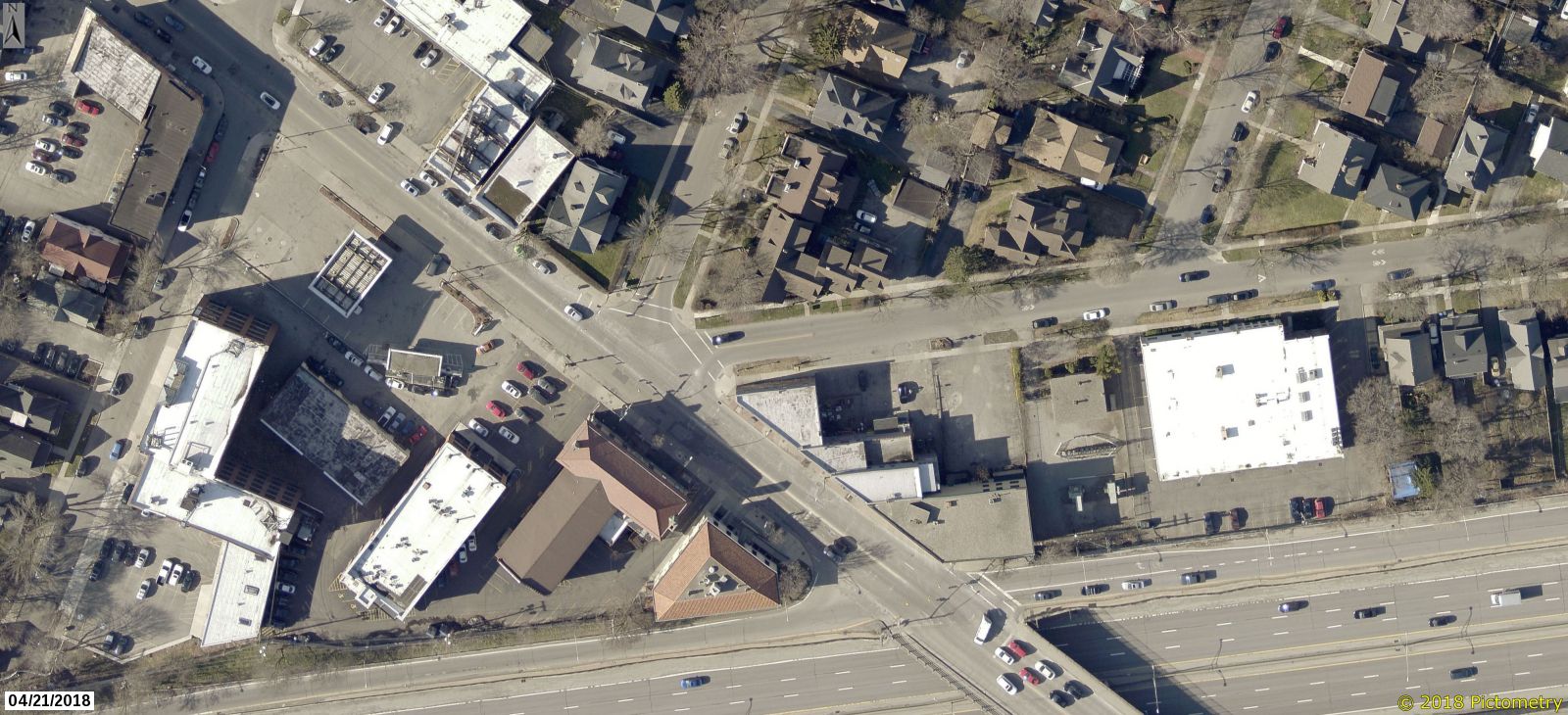
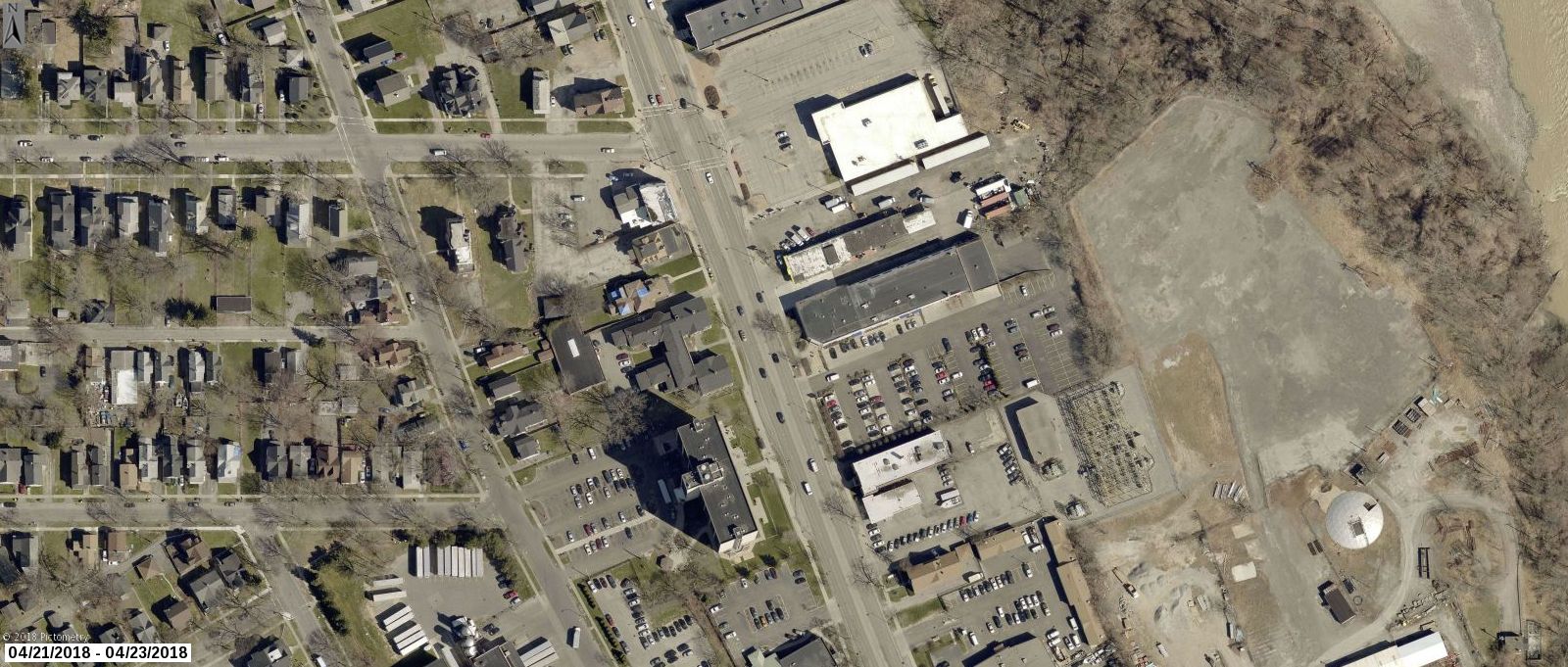
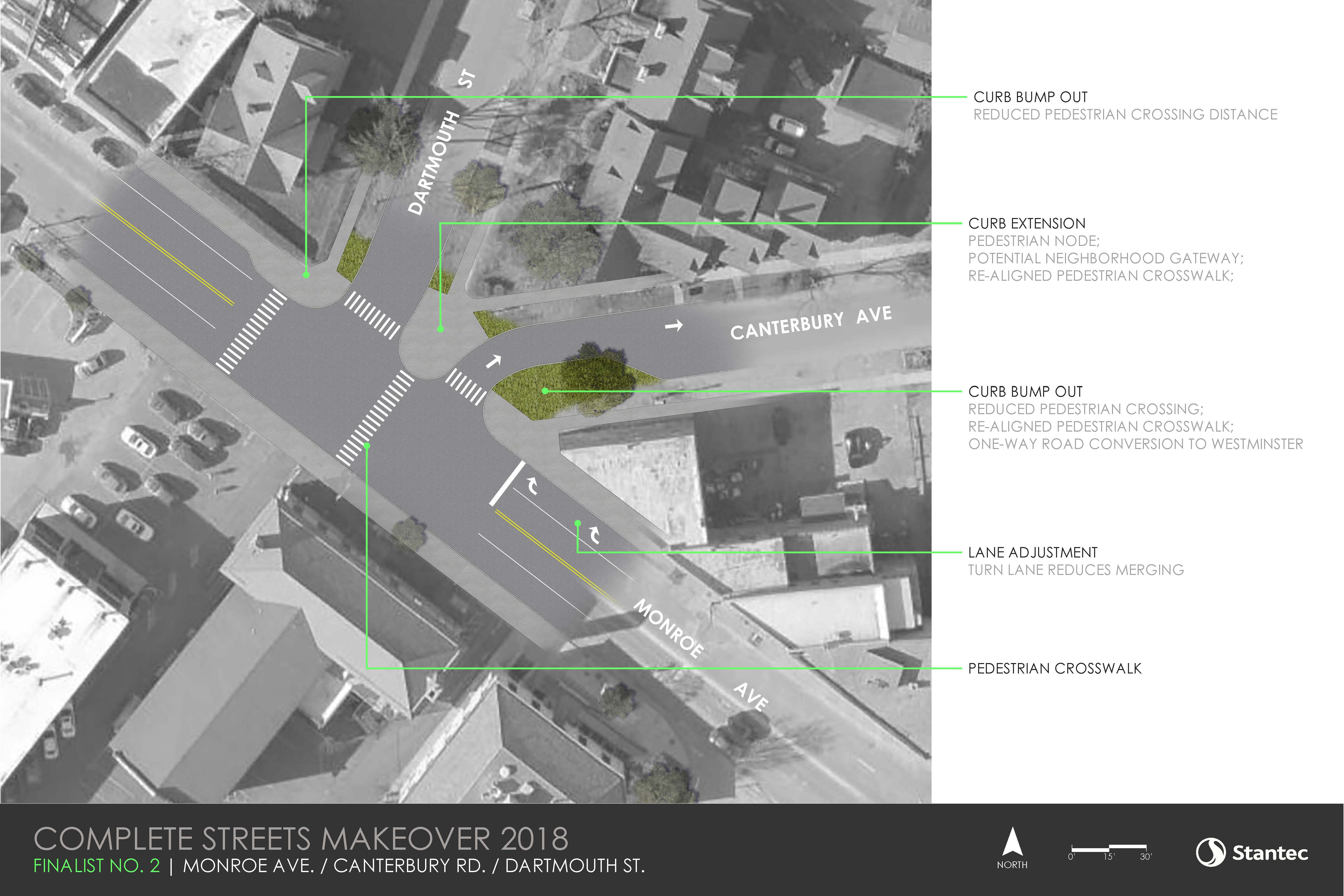
Our finalists won’t walk away empty-handed! The design team at Stantec will provide each of them with a conceptual drawing of street design improvements. The neighborhoods can use these illustrations as a launch pad for community discussion, and a tool to help advocate for changes that would make these streets safer for everyone
S. Clinton, S. Goodman & Henrietta St.Monroe Ave. & Sutherland St. (Village of Pittsford)
We are thrilled to welcome Jesse Peers, Cycling Coordinator and newest member of a growing staff team at Reconnect Rochester!
Jesse is hitting the ground running (or shall we say hitting the road biking) due to his already deep involvement in cycling advocacy and education. Learn more about his passion for the work in the message below.
Jesse can be reached by email at jesse@reconnectrochester.org, and will work out of our Hungerford building office (1115 East Main Street, Door 4) most afternoons. Next time you’re passing through the neighborhood, be sure to stop by The Hungerford and say hello!
Story By Arian Horbovetz. Arian is a Rochester resident and creator of The Urban Phoenix, a blog that discusses urban and community design and topics as our cities transition to a better future.
As I write this, the city of Rochester is passively preparing for yet another battle with a dreaded but familiar foe, lake effect snow. Winter boots and labored commutes will surely be the icebreaker (pun intended) conversation starters at the office water cooler today. But for the Urban Planner, as well as the casual observer, periods of light snow can be opportunities for great discovery.
In that time when the first whispers of a snow storm cover our streets and the plows are still dormant in their stalls, we navigate our vehicles on roadways by following the tracks left behind by the cars that recently came before us. To an Urban Planner, these tracks, especially with regard to their path through intersections, are of particular importance.
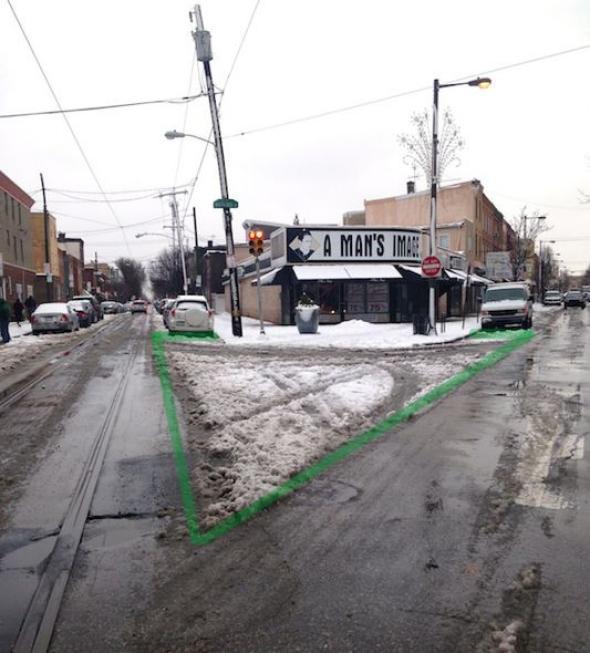
The ability to see the space that cars use (or rather don’t use) when traveling through an intersection by looking at these tracks through the snow gives us a golden opportunity to demonstrate how and where our streets can be narrowed. Think of it like an Urban Planner’s forensic blacklight, revealing the key unseen evidence of superfluous roadway.
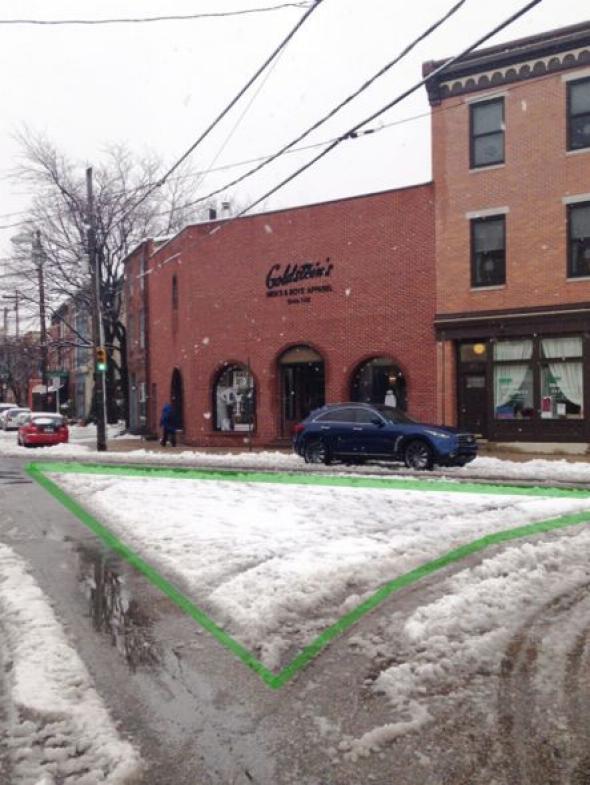
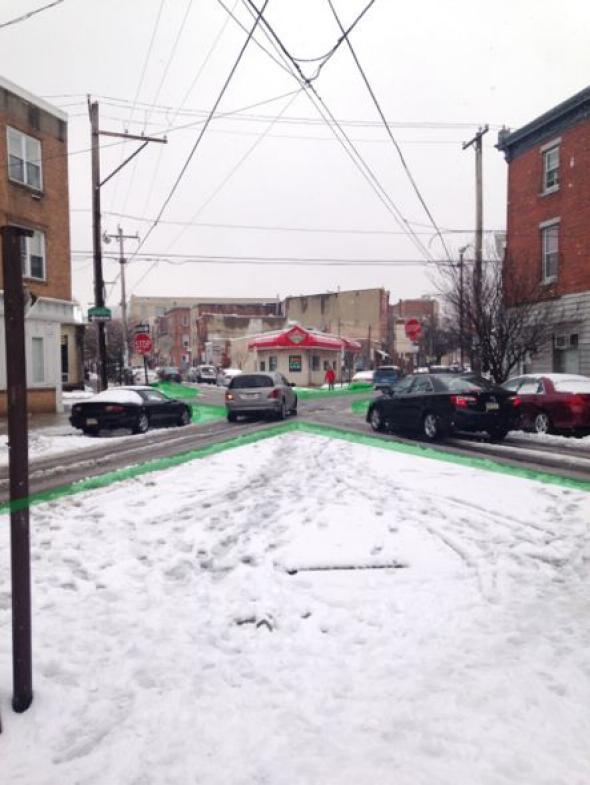
These visual clues created by snow and tire tracks through our intersections are called Sneckdowns. While the name might conjure the image of a Dr. Seuss character, it is actually derived from the combination of “snow” and “neckdown,” which is a term for sidewalk additives and extensions that reduce traffic speeds and increase pedestrian access.
Photo courtesy of Jon Geeting
Photo courtesy of Jon Geeting
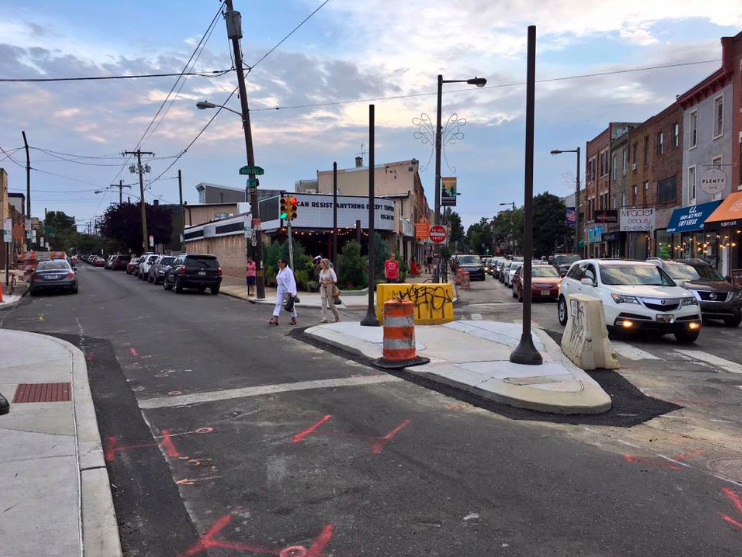
In 2014, urbanist Jon Geeting authored a Slate article in which he took simple photos of sneckdowns on Philadelphia streets. His efforts inspired walkability advocates around the world to do the same, but best of all, it led to real change in his own backyard.
Before Picture. Photo courtesy of Jon Geeting
Jon Geeting’s Sneckdown photo of this intersection paved the way for this concrete island which acts as a traffic calming measure and a pedestrian island for safer crossing. Photo courtesy of Jon Geeting
Clarence Eckerson’s famous STREETFILMS video shows some incredible examples of how overbuilt our streets really are. With a measuring device and some cold weather grit, Eckerson puts the power of sneckdowns right in front of the viewer, showing how snowbanks that accumulate on city streets can give us a clearer understanding of how to construct and reconstruct our streets going forward.
Sneckdowns also give the average citizen the ability to see where change can be enacted. It doesn’t take a traffic engineer to spot tracks in the snow, it takes a conscious observer who is genuinely concerned about safety and walkability in their environments.
Hey Rochester! Next time it snows, take to the streets and see if you can spot overbuilt space on our roads and intersections. It can be a fun, interesting and positive way to start the conversation about safer streets in your neighborhood, and may even lead to the change we want to see!
Do you get excited by the sight of cycle tracks and trails? Do abruptly ending bike lanes and hazardous intersections make you crazy? Are you organized, resourceful, self-motivated and flexible?
Reconnect Rochester is searching for an individual to spearhead all cycling related events, advocacy, education, and outreach activities for our organization. This person will work closely with our volunteer Cycling Work Group in running all aspects of our cycling efforts, and will work out of our office in the Hungerford building on E. Main St.
The job may be part-time, but the benefits are endless.
In this final installment of our Complete Streets Blog Series, guest author David Riley will highlight a sampling of intersections and trouble spots that were nominated for theComplete Streets Makeover project, and share his ideas for how they might be made safer for cyclists and pedestrians.
Back in May, we launched our Complete Streets Makeover project by asking the general public to help identify theintersections and trouble-spots where you live, work and play that could be redesigned to make them safer for everyone. We received over 90 nominations, and after a careful process to examine each and every submission, we selected the following locations:
Tuesday, April 30, 2013 from 8am – 5pm! Click here to register!
We envision a future in which every community has transportation options that are healthy, fun, safe, and environmentally friendly.
The purpose of the Genesee-Finger Lakes Active Transportation Summit (G-FLATS) is to help educate, inspire, and mobilize our nine-county region to achieve that vision by making walking, biking, and transit easier, safer, and more available to all.
Join us for an exciting full-day program: To view the current working agenda, click here.
– Innovative and influential speakers
– Dynamic morning educational sessions
– Networking with national and local leaders
– Afternoon working groups to share best practices and mobilize for action (Group descriptions found here)
Keynotes & Discussion with trailblazers:
– Earl Blumenauer, U.S. Representative, 3rd District, Oregon
– Jeff Olson, Author “The Third Mode”
Registration Cost: $50, includes breakfast, lunch, and snacks
Save the Date!
Genesee-Finger Lakes Active Transportation Summit
Tuesday, April 30th
We envision a future in which every community has transportation options that are healthy, fun, safe, and environmentally friendly. The purpose of the Genesee-Finger Lakes Active Transportation Summit is to help educate, inspire, and mobilize our 9-county region to achieve that vision by making walking, biking, and transit easier, safer, and more available to all.
Join us for an exciting day-long program that includes:
• Innovative and influential speakers
• Dynamic educational sessions
• Networking with national and local leaders
• Working groups to share best practices and mobilize for action
Keynote addresses by two of the most important active transportation leaders in the US:
• Earl Blumenauer, U.S. Representative, 3rd District Oregon
• Jeff Olsen, former New York State DOT Bike/Pedestrian Program Manager and author of The Third Mode
When: Tuesday, April 30, 2013 from 8am-5pm
Where: Rochester Riverside Radisson Hotel (120 East Main St) Registration Cost: $50 (includes breakfast, lunch, and snacks)
More details and registration information available soon.
Contact: elizabethmurphy@flhsa.org for more information.
It is a great pleasure to announce that Elizabeth Murphy has joined our Healthi Kids Team – effective Monday, January 28th. Elizabeth assumes the position of Active Transportation Specialist funded by our community’s H.E.A.R.T. Grant (CDC Community Transformation Grant).
This position focuses on engaging, organizing, and educating the community to achieve public-policy and practice changes that promote active transportation in Monroe County. Ms. Murphy will serve as project manager, focusing on four key areas to best attain systems changes:
1. Increase decision-maker’s awareness of the benefits of active transportation by facilitating educational and informational public workshops, meetings, including an Active Transportation Symposium;
2. Offer technical support and assistance to communities that wish to develop and implement active transportation plans;
3. Give technical support and assistance to schools to develop and implement Safe Routes to School programs and practices; and
4. Provide support to businesses, organizations and municipalities in planning and executing events, to increase community awareness of and support for active transportation.
We are really pleased to have Elizabeth join us – Here’s a little bit more about her:
· Elizabeth is a Rochester native and a graduate of the City School District. Elizabeth completed her undergraduate studies at Bard College with a major in Economics and her Masters in City and Regional Planning from Cornell University.
· Elizabeth started her career in Sacramento, California co-managing a joint project with the California Department of Health Services to conduct “walkability workshops,” with a focus on Safe Routes to School and “Safe Routes to Transit.” Elizabeth organized, trained, and certified California-based “walkability experts” to lead future workshops and build internal capacity on walkability issues statewide.
· For the past five years, Elizabeth worked with US Department of Transportation/Volpe Center, Policy and Planning in Cambridge, Massachusetts. Strategic planning, project management and implementation of the FHWA-FTA’s jointly funded Transportation Planning Capacity Building (TPCB) program were key elements of the position. The TPCB Program provided education, professional development, information dissemination, and exploratory research on issues of primary concern for transportation planning agencies nationwide (state, regional, local, tribal).
· Elizabeth brings a wealth of experience in project management and budget development; peer exchange workshop coordination; research, analysis, and report writing; meeting facilitation; communication and outreach.
Rachel A. Pickering
Associate Director of Community Engagement
Finger Lakes Health Systems Agency
www.flhsa.org
The next counts for the National Bicycle and Pedestrian Documentation Project are scheduled for January 8th, 9th, and 10th. If you’re interested in helping out, please see this site: http://trails.zgroks.com/index.html which lets you view all of the sites and easily sign up, if you wish. Several of the sites are identified as “priority sites” because they need more counts to be made before they’ll be statistically useful (for extrapolation). I realize the weather could be a challenge for the winter count, but I wanted to offer the opportunity to assist with the counts nonetheless.
Data from the previously-taken counts can be viewed here: https://docs.google.com/folder/d/0BwL5SwyNJMgSVDZsSEs4N0NhODg/edit
If you’d like to participate during warmer weather, the next counts following the January counts will be May 7th, 8th, and 9th. We’ll use a similar sign-up page which will be posted in Mid-January 2013.
Please feel free to contact me at your convenience if you have any questions or comments. Also, feel free to share this email if you know of anyone that may wish to participate in the project.
Richard
rdscomm@rochester.rr.com
NYBC Press Release Objects to NYS DOT draft Capital Plan
Posted on November 29, 2012 by brkehoe
Media Release:
NYS Dept. of Transportation’s Draft Capital Plan misses 1/4 of traffic deaths/injuries
Complete Streets Law mandates also ignored in draft Plan
Upon careful review of the recently released New York State Department of Transportation’s (NYSDOT) Two-year Capital Plan, the New York Bicycling Coalition (NYBC) is dismayed to report that this critical planning document entirely excludes walkers and bicyclists. In fact, while all other transportation modes (automobile, transit, plane, etc.) are accounted for throughout the draft Plan, bicycling and walking are never mentioned. The Capital Plan is available at http://esd.ny.gov/PublicMeetings_Notices/NYWorks/10092012_DOT_TwoYearCapitalPlan.pdf
NYBC Board President Paul Winkeller stated, “To say we are puzzled thatNew York’s Transportation Department could develop a capital program omitting bicycling and walking, two critical and increasingly popular modes of travel would be a huge understatement. Bicycling and walking are primary transportation modes for many state residents – including the young, the elderly, people with disabilities, and low-income populations. Official statistics show that citizens biking and walking are involved in a quarter or more of traffic related injuries and fatalities. These accidents are tragic and collectively represent a tremendous, ongoing societal expense in terms of health care and legal costs.”
The NY Bicycling Coalition web page briefly describes the very high return-on-investment of providing equal safety and access to bicyclists and pedestrians. These infrastructure enhancements are critical for the health of New York’s citizens and in creating a 21st century work and lifestyle environment that are key to fostering economic development throughout the state. http://www.nybc.net/a-few-quantitative-reasons-why-bike-ped-infrastructure-has-high-roi
Brian Kehoe, NYBC Executive Director, added, “NYSDOT’s Draft Capital Plan is frightening in its complete neglect of critical transportation modes and NYBC has expressed these concerns to the Governor’s Office. Many citizens, including children and the elderly, rely solely upon walking and bicycling. People around the state consistently cite safety concerns as the biggest reason they don’t walk and bicycle more often. NYSDOT has a responsibility to at least attempt to address the serious safety concerns these citizens face every day. DOT should amend the draft Plan to explicitly address walking and bicycling safety concerns.”
The purpose of the New York Bicycling Coalition (NYBC) is to serve the State of New York and its residents by promoting the safe use of the bicycle and walking as modes of transportation, sport, recreation, health, environmental protection, energy conservation, tourism and economic development. For twenty years, NYBC has advocated for the rights of all bicyclists and pedestrians throughout New York State by supporting safety, education, and access for road and trail users.
For additional information contact: Brian Kehoe, NYBC Executive Director 518-436-0889 brian@nybc.net
The Genesee Community Charter School’s 6th graders are raising funds to help support their travel to learn directly about four great bicycing cities in the USA. The four cities selected are, Austin TX, Portland OR, Boulder CO and Madison/Milwaukee WI.
The class will split up into four groups. Each group will travel to one of the selected cities to study their bicycling infrastructure. The class will present their findings to the Rochester Community at a public meeting in 2013. Several members of the RCA are advisers for the year-long class project.
To support the fund raising effort, anyone shopping at the Pittsford Plaza’s Barnes & Noble store on Friday November 16, from 6 -9 PM can simple identify themselves as helping the school fundraiser. All food, drink and store products purchased are part of the program. Up to 20% of total sales identified will be donated to the fundraiser. Look for the entertainment provided by the school’s 6th grade class.
The Finger Lakes Health Systems Agency Job Posting:
Transportation Specialist
This position focuses on engaging, organizing, and educating the community to achieve public-policy and practice changes that promote active transportation in Monroe County.
Active transportation describes human-powered methods of transportation, like walking and cycling. http://www.flhsa.org/Employment.html
Several years ago, members of the Rochester Bicycling Club (RBC) helped to rate selected roads in the City of Rochester, surrounding Monroe County, and nearby towns in Wayne, Ontario, and Livingston Counties. These road ratings were used by the Genesee Transportation Council (GTC) to develop the 2009 Edition of the Greater Rochester Area Bicycling Map. 20,000 copies of the map were printed by the GTC and distributed throughout the bicycling community by members of the RBC and others. Read more
We need your help for the next round of Bicycle and Pedestrian Traffic Count
On September 11, September 12, and September 13, 2012, members of the Rochester Cycling Alliance, the Active Transportation Working Group, and other interested parties are invited to participate in the National Bicycle and Pedestrian Documentation Project counts for the Rochester Area. This will be the second series of counts for the region (the first was completed in May of this year). Read more
Summer is here in Rochester, and with this summer there is a noticeable change in our community. As I ride my bicycle around town, I see hundreds of people enjoying our city’s new bicycle paths, bike lanes, and shared roadways. We cannot yet compare to Amsterdam, or even to Portland, but Rochester is quickly becoming a bicycle town!
The Rochester Cycling Alliance would like to invite you to join a new bicycling incentive being started in our community called Bicycle Benefits (http://www.bicyclebenefits.org). Bicycle Benefits forges links between bicycle-friendly businesses and cycling customers, promoting safe bicycle transportation by offering incentives to cyclists. The program is already successfully deployed in Buffalo, Ithaca, Syracuse, and communities in over 20 states, and is now being launched in Rochester.
As a participating business, you provide an incentive or benefit of your choice to participating cyclist customers. It may be a product discount, a free item with a purchase, or an enhanced service. The incentive is offered to cyclists who arrive on their bicycle wearing a helmet with a reflective Bicycle Benefits sticker attached.
For more detail about the program contact Scott Wagner at 585-880-7643 or BicycleBenefitsRochester@gmail.com.