by 1 Comment

Three Years Car Lite in Rochester

Three Years Car Lite in Rochester

By: Yamini Karandikar

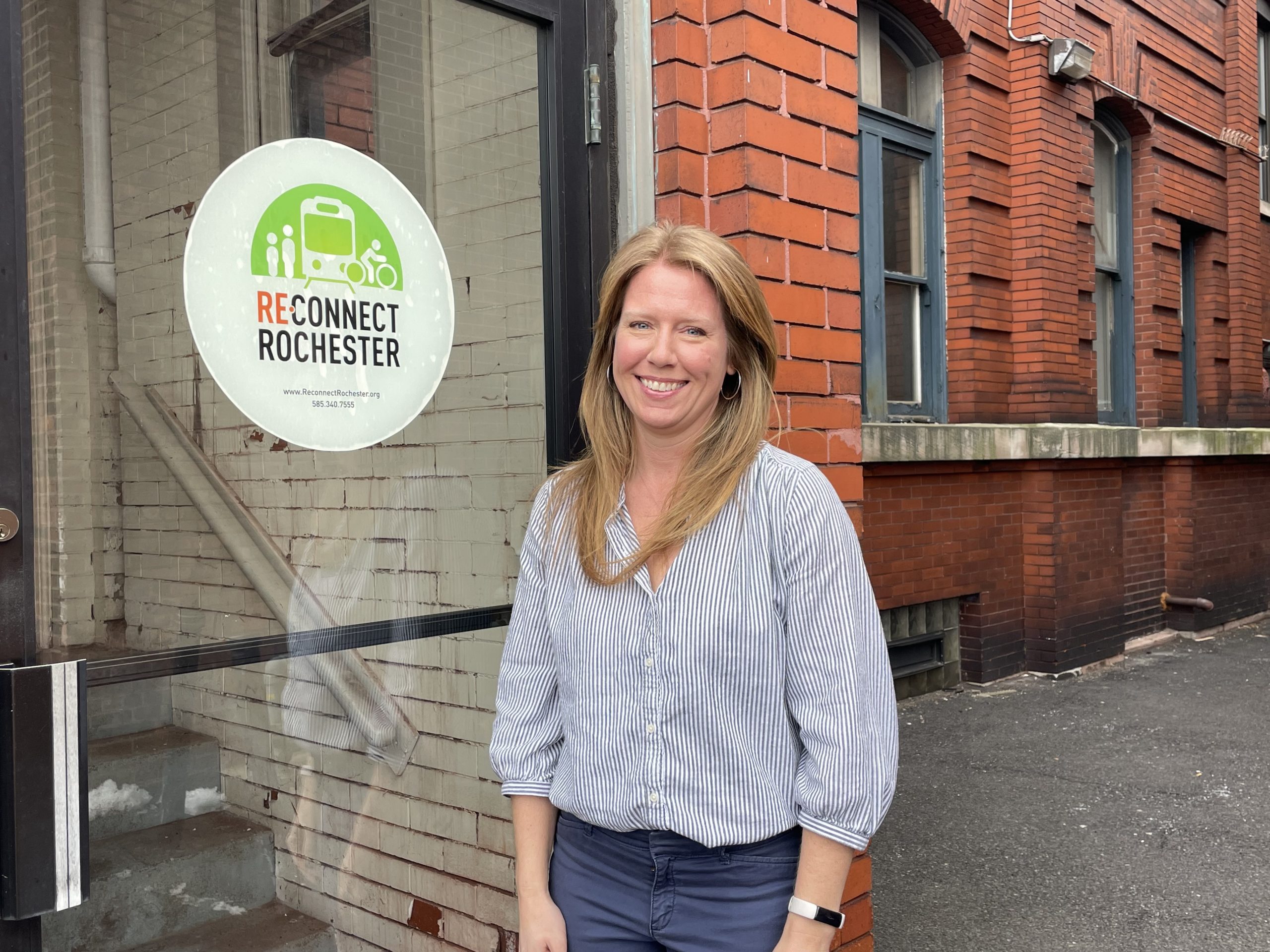
In May 2020, my husband and I moved from Saint Paul, MN to Rochester, NY.  We owned two sedans, but as we had heard so many stories about the abundant snowfall experienced in Western NY, my husband and I decided to sell the Toyota Yaris since it did not have anti-lock braking (terrifying!) and it had a recent airbag recall (even more terrifying!).  Once the pandemic ended, we figured we would buy an SUV with all-wheel-drive so that we could fearlessly drive through the snow.

We chose the beautiful Neighborhood of the Arts (NOTA) to call our home and instantly loved the area.  As time passed and as we adjusted to life with one car for two people, the prospect of spending $20-30k on an SUV became quite unappealing and unnecessary. 

To get to work, my husband has priority for the car because he works at the hospital.  If I absolutely have to go to work and the car is not available, I drop him off before heading to my job, or I do a multimodal bike + bus trip if the weather is nice.  Driving in the snow with a sedan is perfectly fine as long as we don’t drive recklessly. 

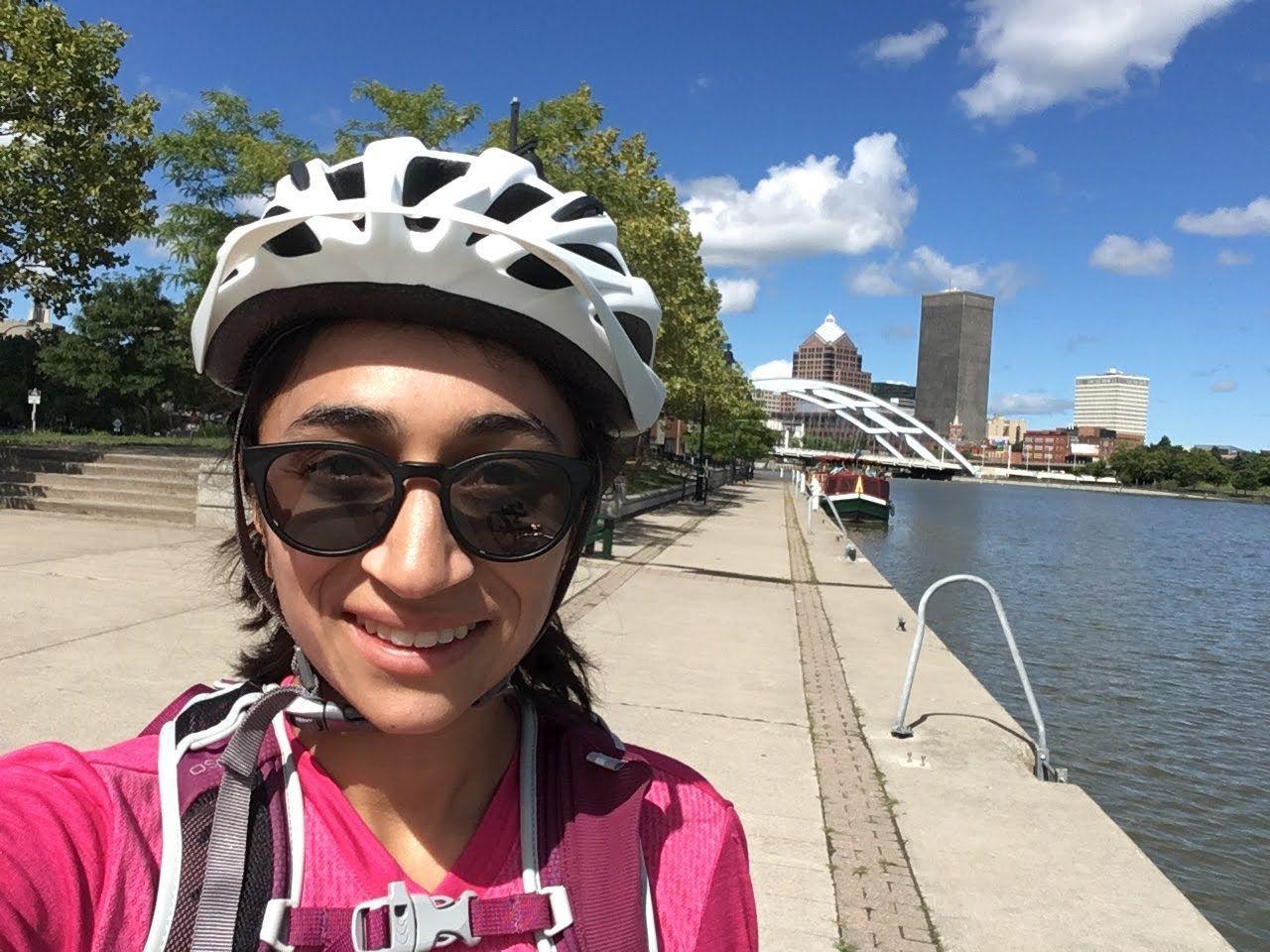
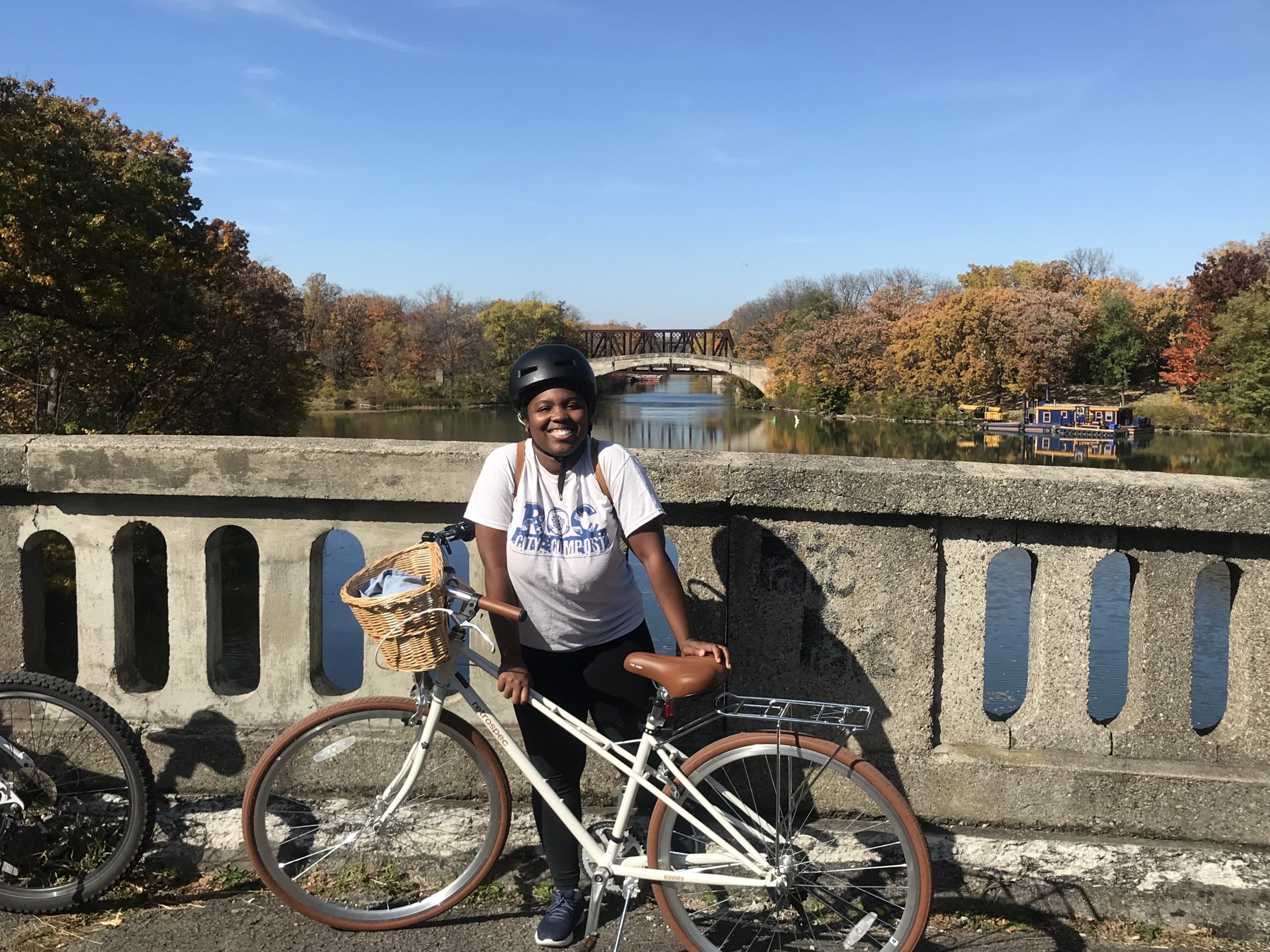
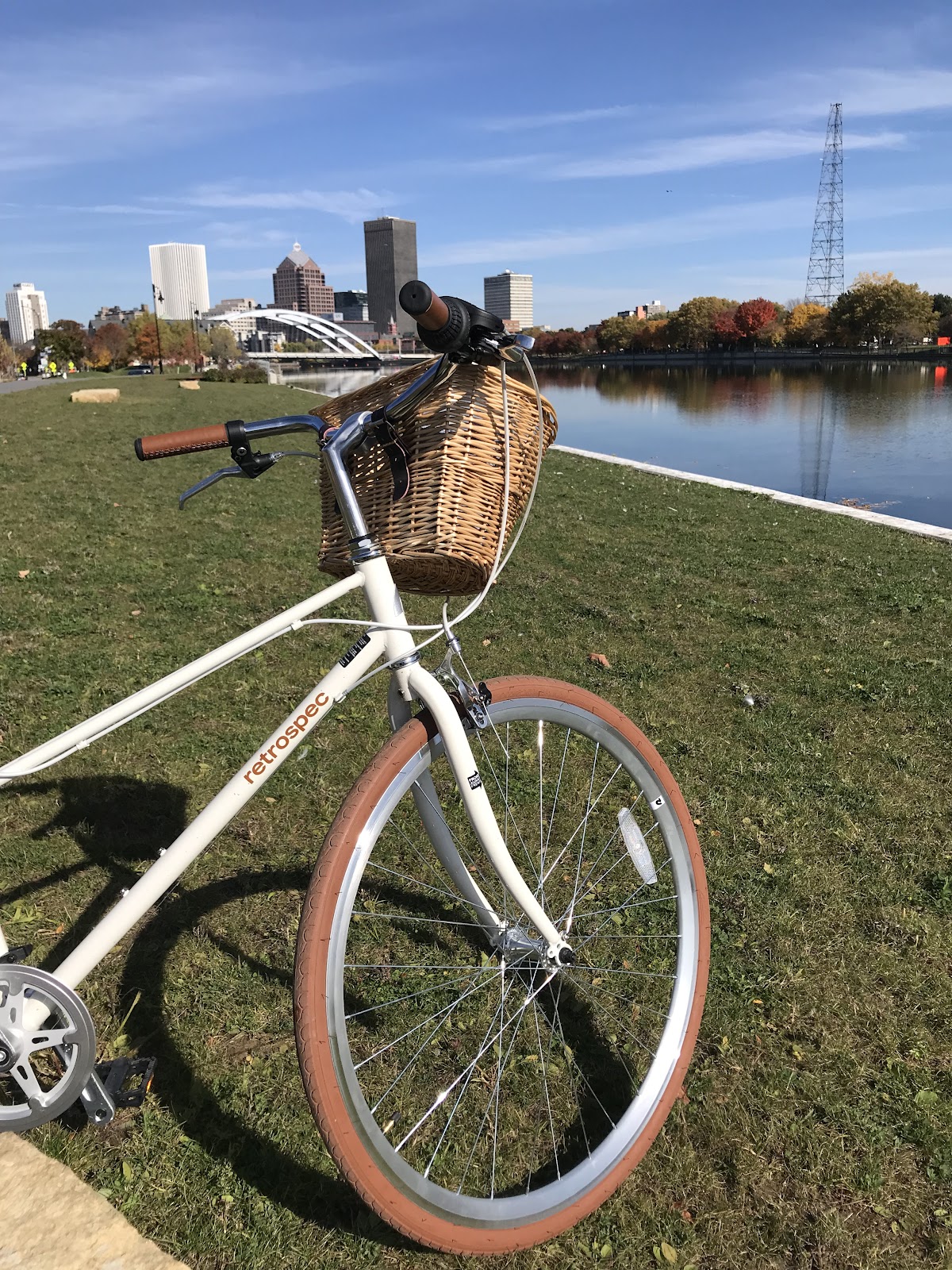
Enjoying the river & skyline views while biking home from work

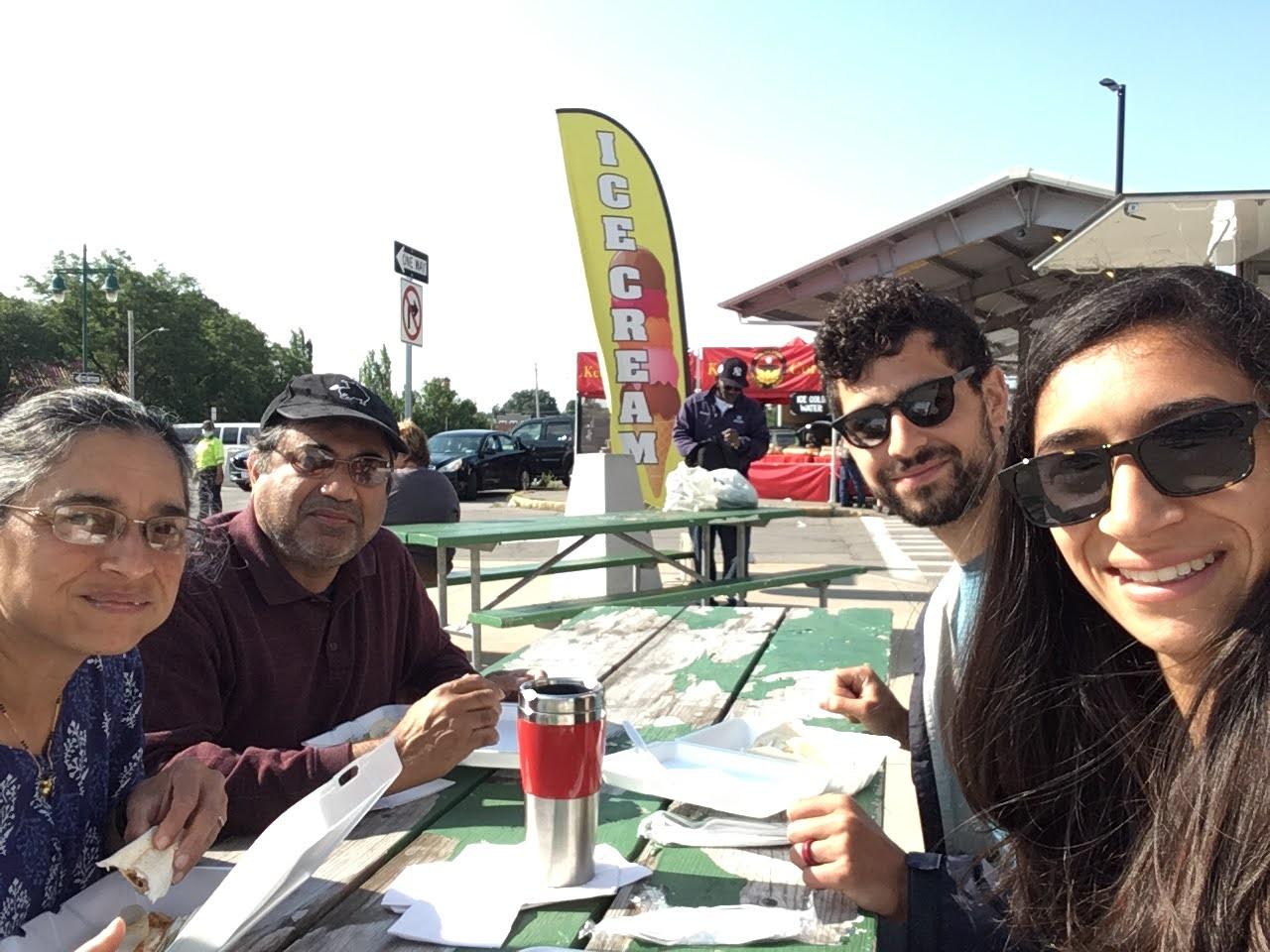
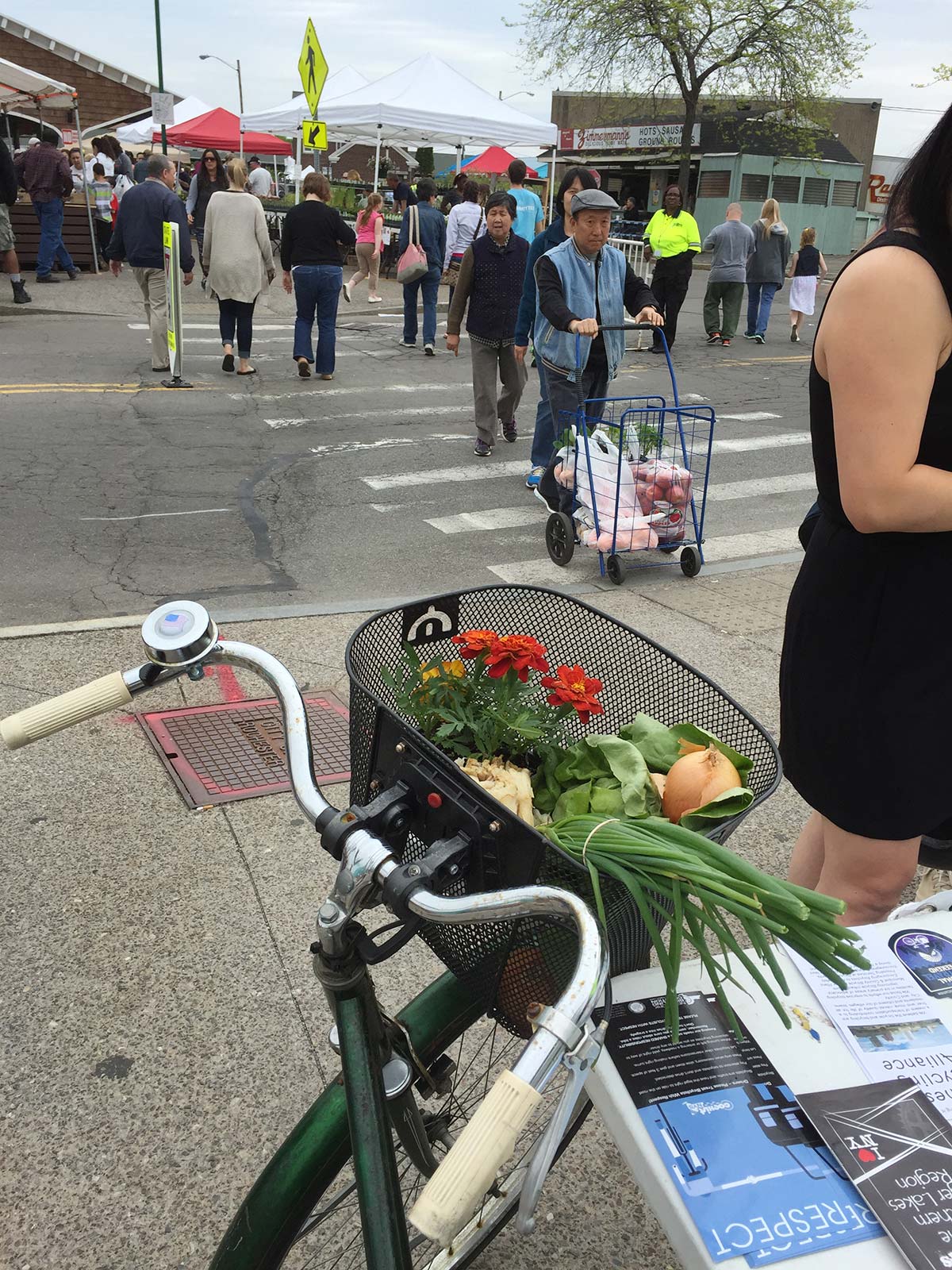
This is all feasible because of NOTA neighborhood’s walkability.  Within a ~15 minute walking and biking range, I can do all my favorite activities: walk to the Public Market on Saturday mornings for groceries, rock climb at Central Rock Gym, play volleyball at Hot Shots, take a yoga class, and get coffee, food, or drinks with friends. 

Excited to see fellow bike riders at Central Rock Gym

I don’t really consider myself a ‘cyclist’.  I don’t have a fancy bike, wear super tight bright spandex outfits, travel in packs of 20, or go faster than a casual 10 mph pace.  I consider biking a means to get from one place to another and a way to get fresh air and sunshine while getting to where I want to go.  There are wonderful shops and eateries I would never have known about if I was zooming past them in a car.

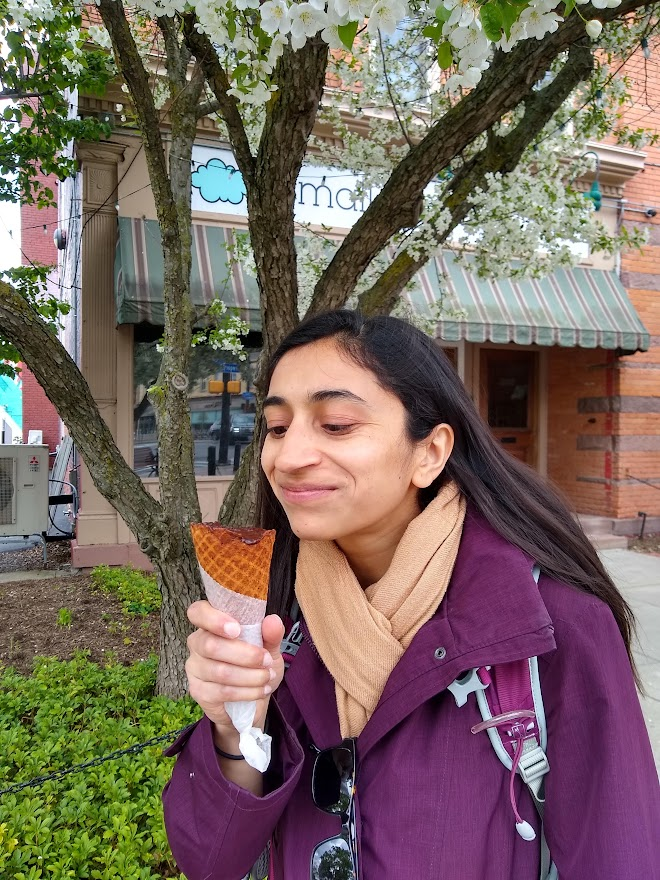
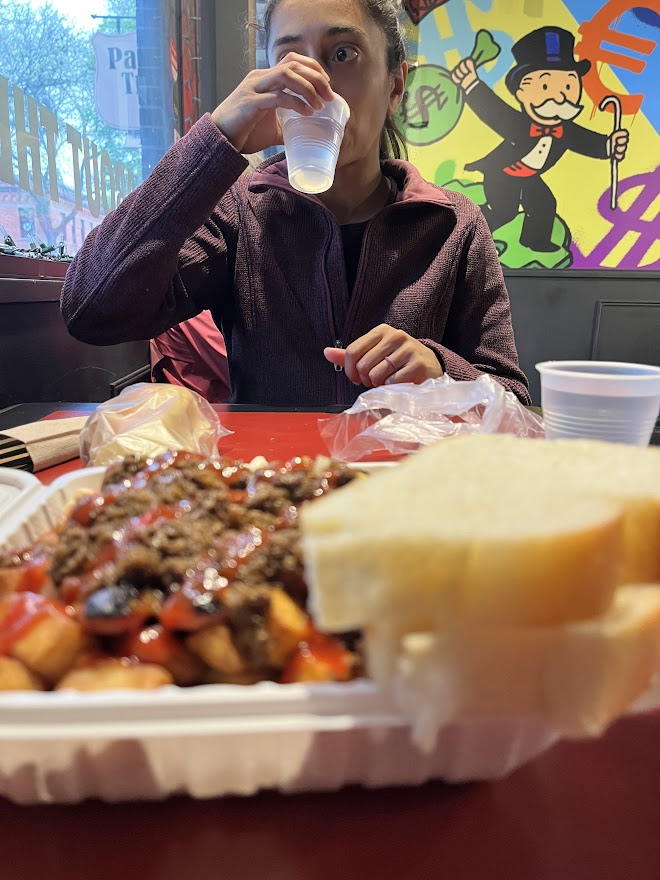
I LOVE eating – here are some neighborhood favorites: Garbage plate at Vasko’s, Brews and Food truck at Three Heads Brewing, ice cream from Hedonist, and coffee at Melo’s.

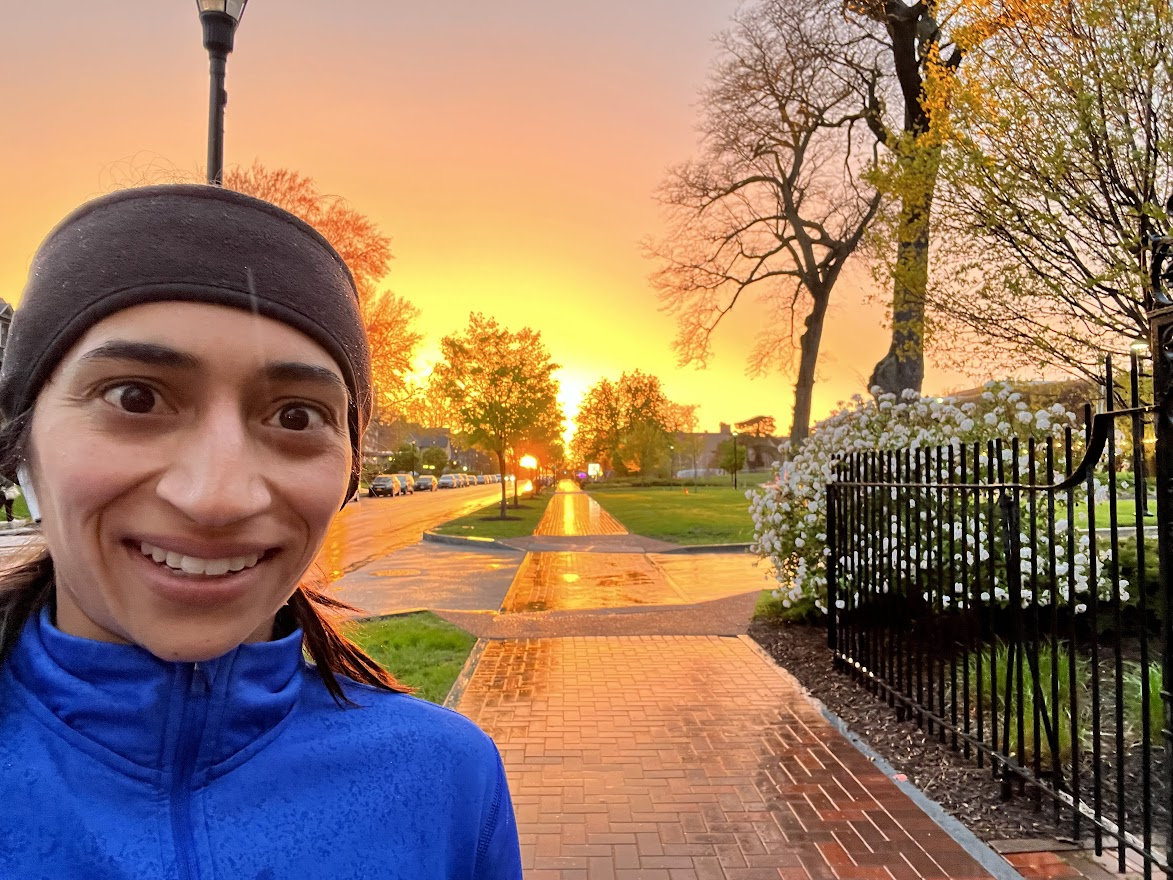
My favorite part about being car-lite is the connection to the earth and the sense of community I feel with my neighborhood and the city.  As I walk to the gym, my favorite coffee shop, or local restaurants, I get to observe the daily change of flower buds forming, starting to open, then fully blooming in a beautiful array of colors, and then gently falling to the earth when their time has come. I love spontaneously running into friends, recognizing people as I walk or bike around town, or pausing to take in the beautiful sunset.

Pausing to soak in the sunset (and take a selfie) while walking home from the gym on University Ave

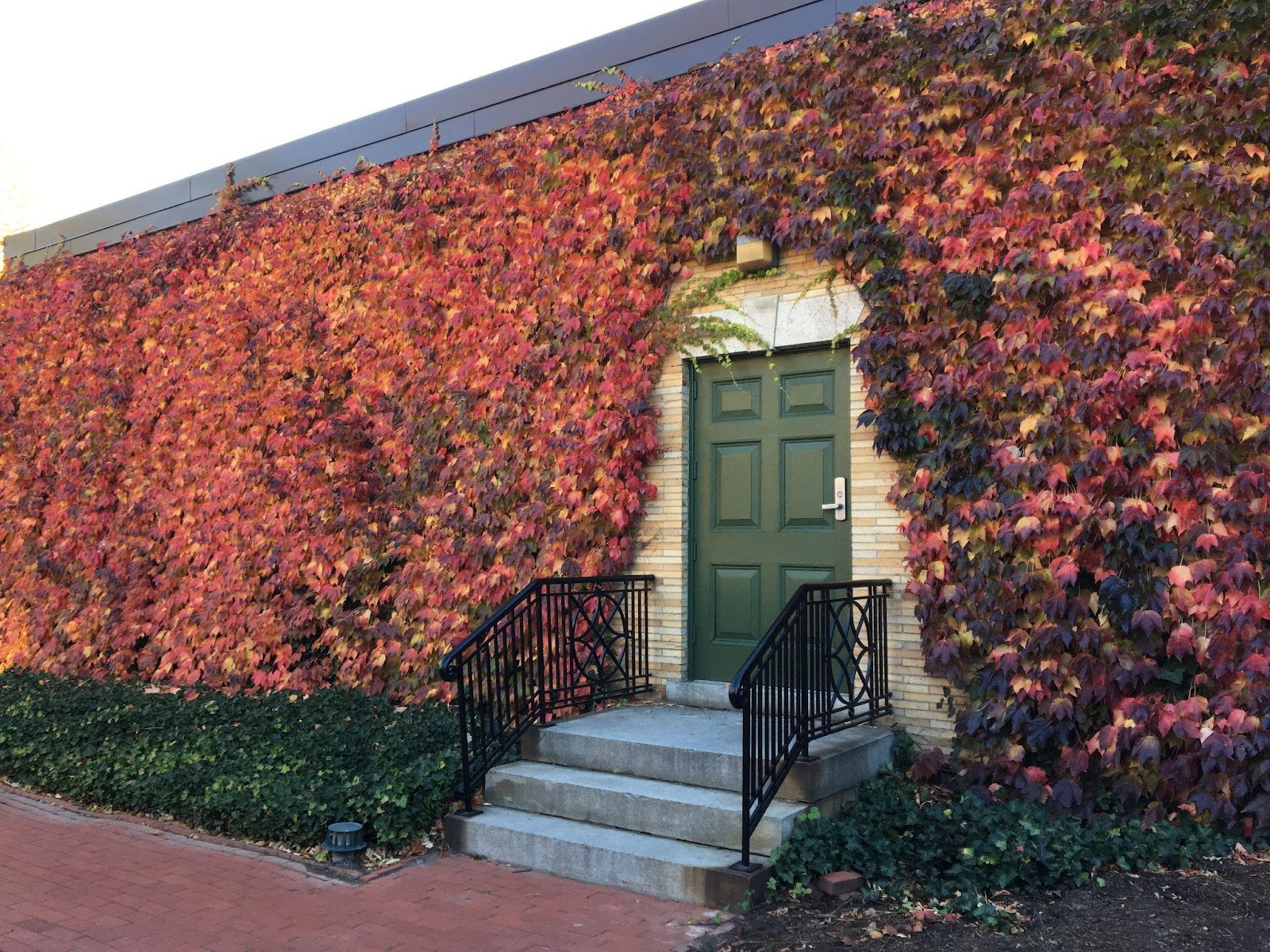
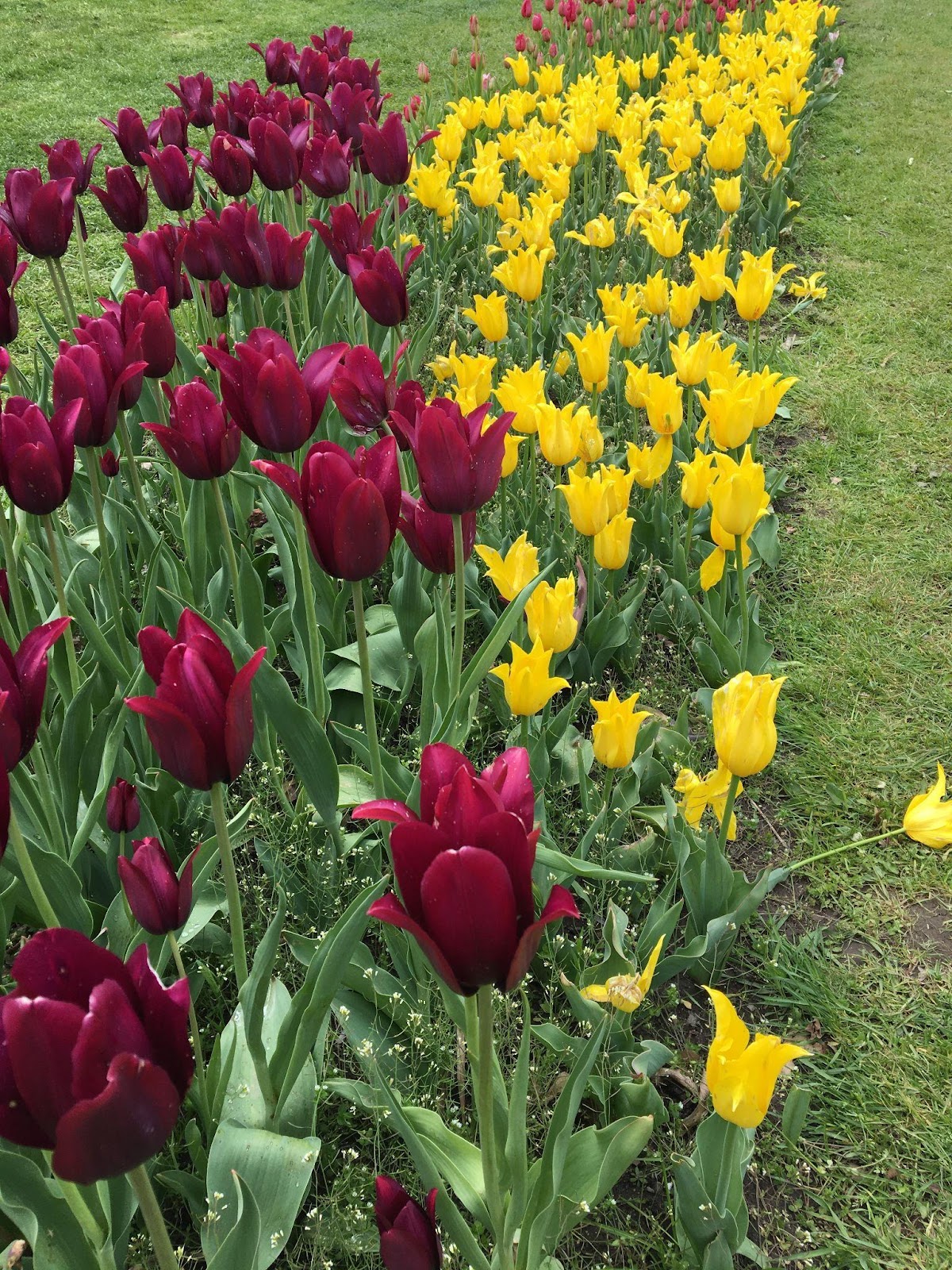
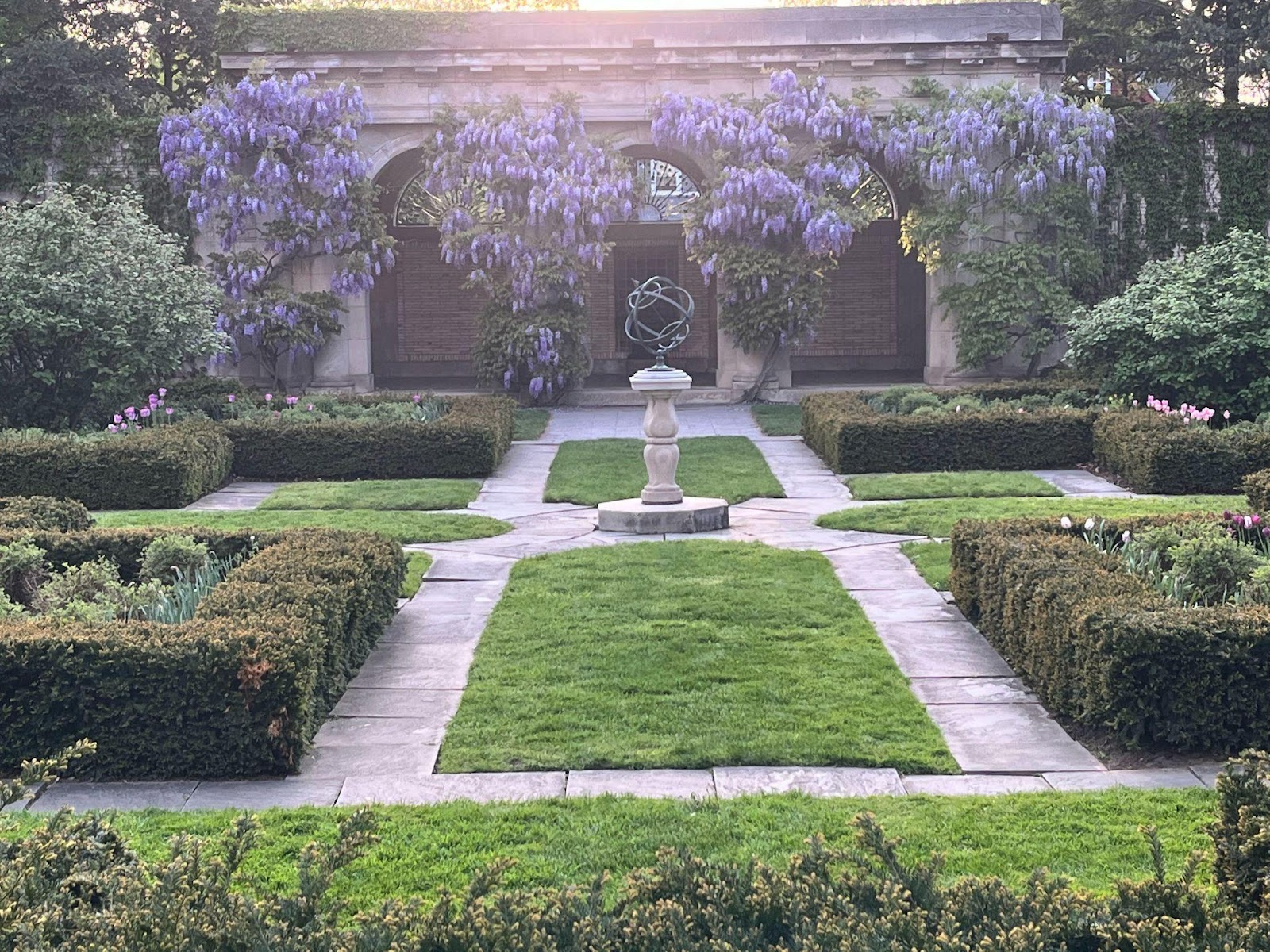
I know which streets have the best tulips, daffodils, and magnolia blossoms in the spring, and what streets to walk down for the best fall colors.  Rochester has beautiful trees and flowers lining the streets of the city, and I do think it is best experienced outside a car.

Vibrant spring and fall colors at George Eastman Museum & the Lilac Festival (I highly recommend biking to the Lilac Festival!)

This lifestyle is not without its challenges. Rochester doesn’t have protected bike lanes on most busy streets.  When I feel unsafe, I ride on the sidewalk, which puts me in the way of pedestrians. When on a bike, I often feel like I don’t belong anywhere because there is not enough bicycle infrastructure. However, I began to notice which streets felt safe to bike on and which didn’t. For example, I find Goodman and Alexander unpleasant for biking due to higher car traffic, but Averill and Meigs are great to bike on because they are more peaceful and have speed bumps to slow down cars.

I rode Meigs Street all the way down to the Lilac festival.  The bike ride was very pleasant and I did not have to deal with the crazy festival parking!

As I spoke to friends, family, and coworkers about my experience, I began to realize that this kind of lifestyle was only possible in very limited neighborhoods.  I didn’t understand why more neighborhoods were not built in this way and I began to ask myself why cars became so necessary.  Don’t get me wrong – cars are useful tools, but in most communities, why are we essentially forced to drive a car, an expensive, depreciating asset, to participate in society?

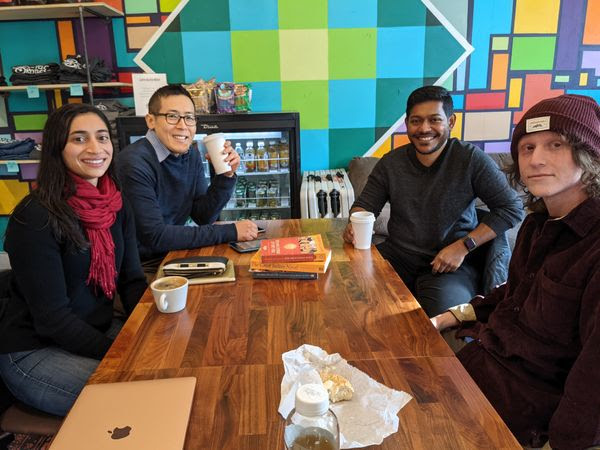
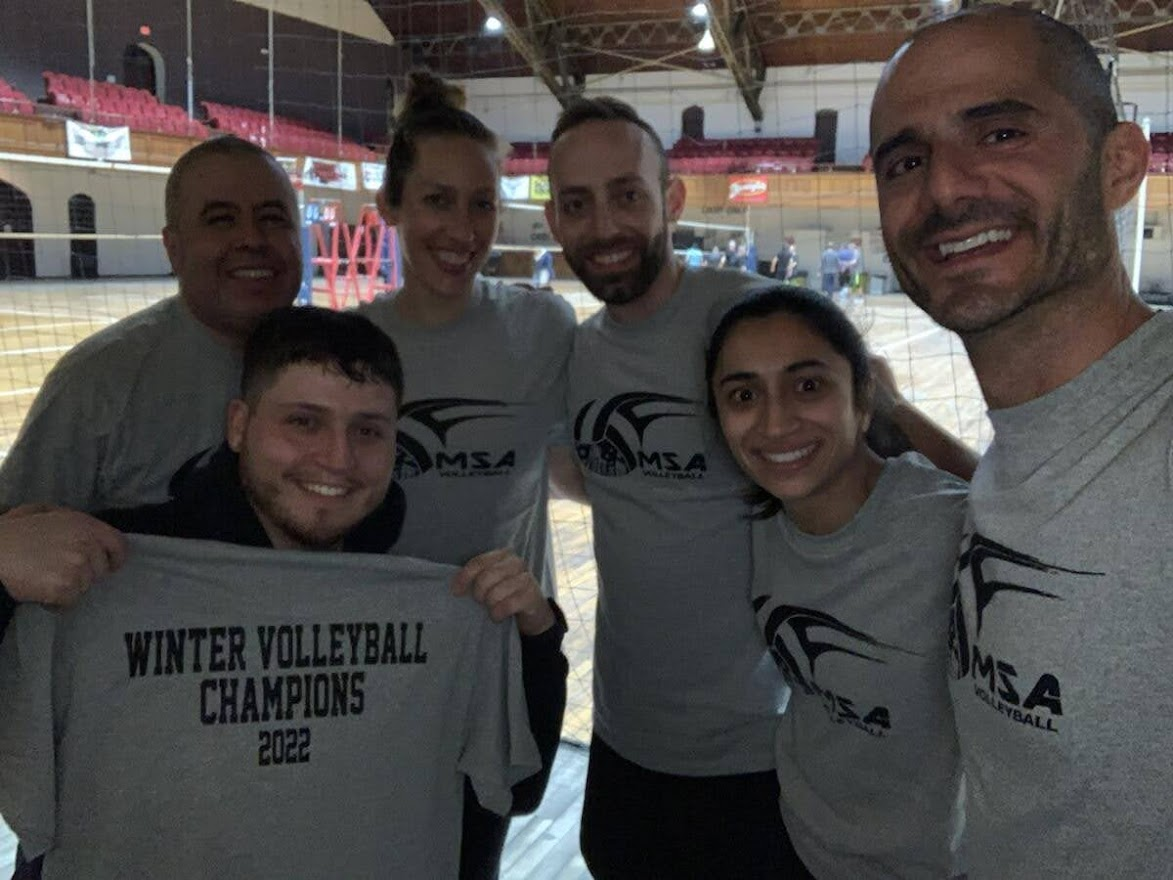
Volleyball at the Armory, Book Club at Bicycle Brothers, and tacos at the Public Market.  Living car-lite did not stop me from having lots of social activities as I am able to walk or bike to a lot of places.  This was possible due to my neighborhood’s proximity to many activities.

Questions like these and a lot of Googling, YouTube, and Reddit rabbit holes led me to discover Not Just Bikes and Strong Towns where I found answers on why walkable neighborhoods are so rare. As my husband and I plan to continue to live car-lite, we plan to support efforts that make walking, biking, and transit safer and more convenient.  You can also help make a car-lite lifestyle more possible and enjoyable by communicating its importance to public officials.  A great way to start is by giving input for the City of Rochester’s new Active Transportation Plan and for Monroe County’s new Countywide Active Transportation Plan.  Don’t feel like you need a degree in Urban Planning to be able to give input! You are the one that understands your neighborhood and streets and what changes can help your community thrive.


Interested in sharing your story on the Reconnect blog? Reach out to Community Engagement Manager, Jahasia Esgdaille (jahasia@reconnectrochester.org) to get started!

by 3 Comments

Mind the Gap, Season Two!

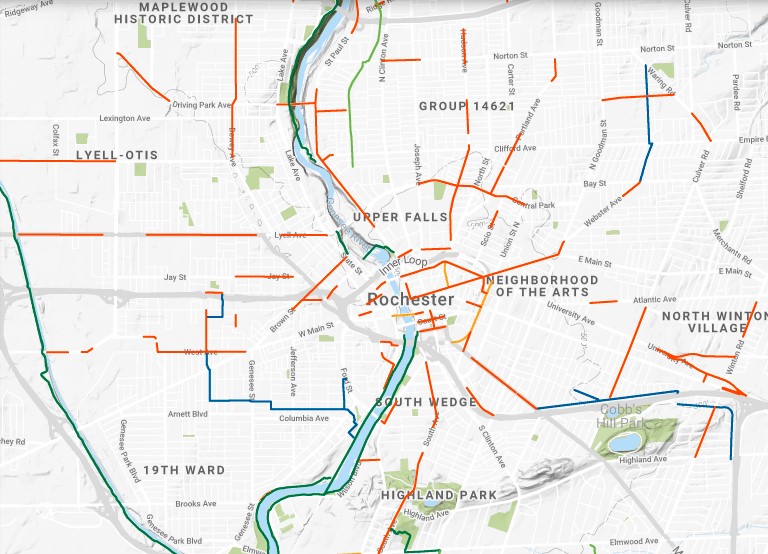
Last Spring, in an effort to get leaders to think about the biggest impediment to bikeability in our community – the lack of connectivity and coherence in our bike network – we organized our first annual Mind the Gap vote campaign.

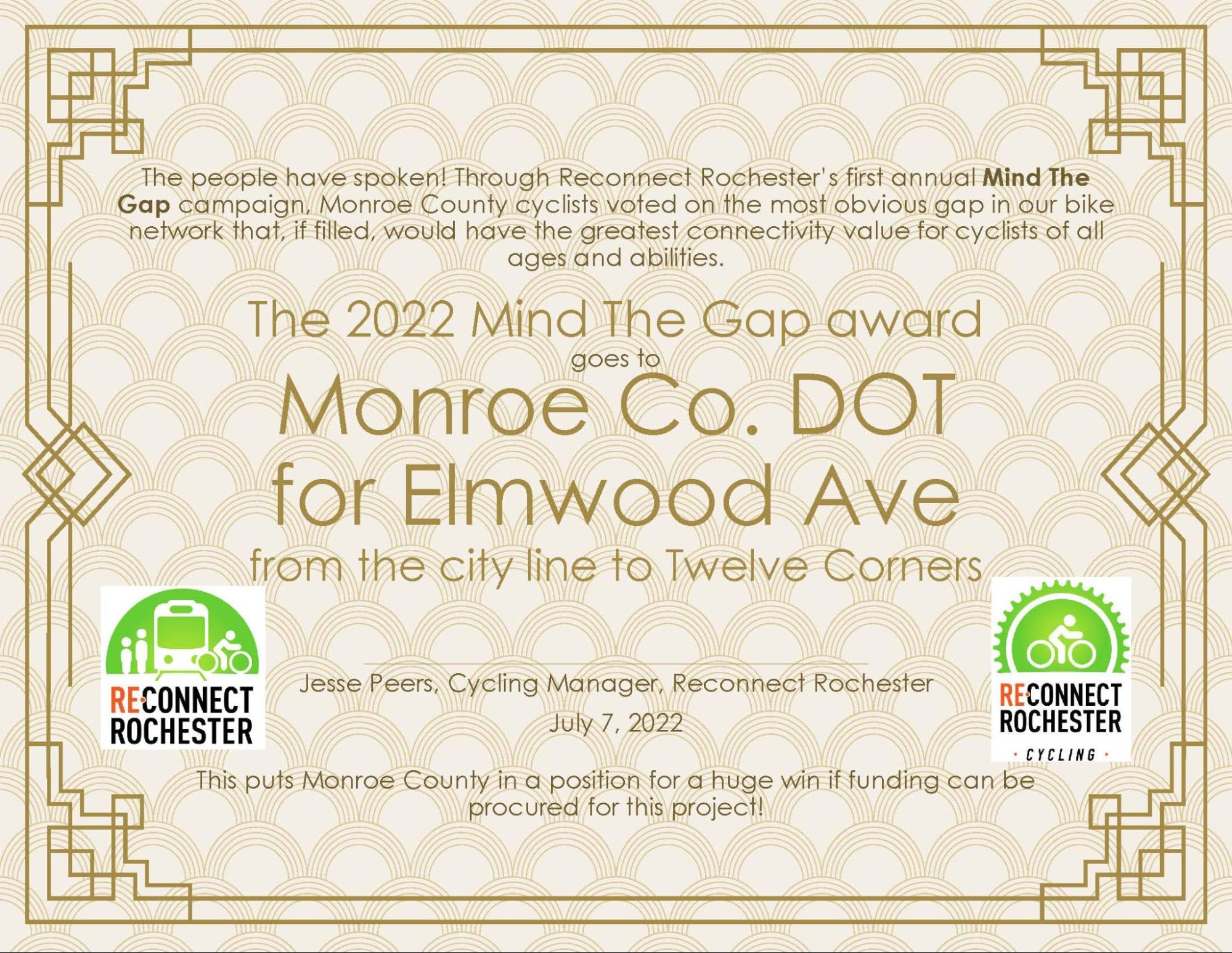
We took a look at the bike network and identified ten obvious gaps that, if filled, would have huge connectivity benefits for cyclists of all ages and abilities. 2022’s clear winner was #10: Elmwood Avenue from the City line to 12 Corners in Brighton. We presented Monroe County DOT with the following certificate and copied in County Legislators, State Senators, State Assembly Members and Brighton Officials. It seems to have done some good: It was announced yesterday that the plan for an upcoming resurfacing project later this year will implement a 4:3 conversion “road diet” (single lane traffic with a center turning lane), along with bike lanes in both directions. This will be the first time bike lanes will be installed on a road under the jurisdiction of Monroe County!

Now it’s time for 2023’s voting campaign! Some nominations from last year remain. But many of them are new and came from you, the voters!

We want your vote! Take a look below at the nominated locations and tell us which THREE gaps you think are the most important to fill.

Think we missed something? We’ll have a fill-in-the-blank that will help us with nominations for future years’ contests.

The gap that receives the most votes will be declared the winner! Reconnect Rochester will give this segment special attention in our advocacy efforts. We’ll approach the municipality with our community support evidence in hand to help make the case that this is a crucial gap to fill.

In deciding which locations to nominate, we looked for places that  have somewhat comfortable biking on each end with a relatively short, awkward or uncomfortable gap in the middle, that if filled in with comfortable bike infrastructure, would  have a positive impact for a great number of riders.

Without further ado, we present to you the nominees for the 2023 Mind the Gap award:

1. EAST MAIN STREET BETWEEN UNION AND GOODMAN

Rochester boasts three cycletracks at the moment: Elmwood, Union Street and East Main from Goodman to Culver. Many people want to see the latter two connected. There are conventional bike lanes on East Main between Union and Goodman, but much more for this corridor was envisioned during the 2015 E. Main & Market District Plan. Unfortunately it puttered out. East Main is very wide and with so many traffic lanes, motorist speeds are incredibly fast, making the bike lanes intimidating to ride in. Plus, blockages in the bike lanes are routine, either from parked cars or signage and cones put out by the Auditorium Theatre. Though installing a new cycletrack is outside the realm of feasibility, this stretch, which is only 6/10 of a mile, is a great candidate for a road diet and some protected bike lanes. Easy, transformative fix. Jurisdiction: City of Rochester

2. EMPIRE BOULEVARD

It’s one of the most common complaints we receive: Cyclists east of Irondequoit Bay are completely cut off from the City. It’s actually quite possible to bike through Penfield to Webster comfortably via a series of neighborhoods. But traversing Irondequoit Creek by bike is very unpleasant, whether by Empire, Browncroft, or Blossom. There’s probably the most space for bike accommodations on Empire, where separation would definitely be necessary from that fast moving traffic. How about a cycletrack? Jurisdiction: NYS DOT

3. RIDGEWAY AVE 

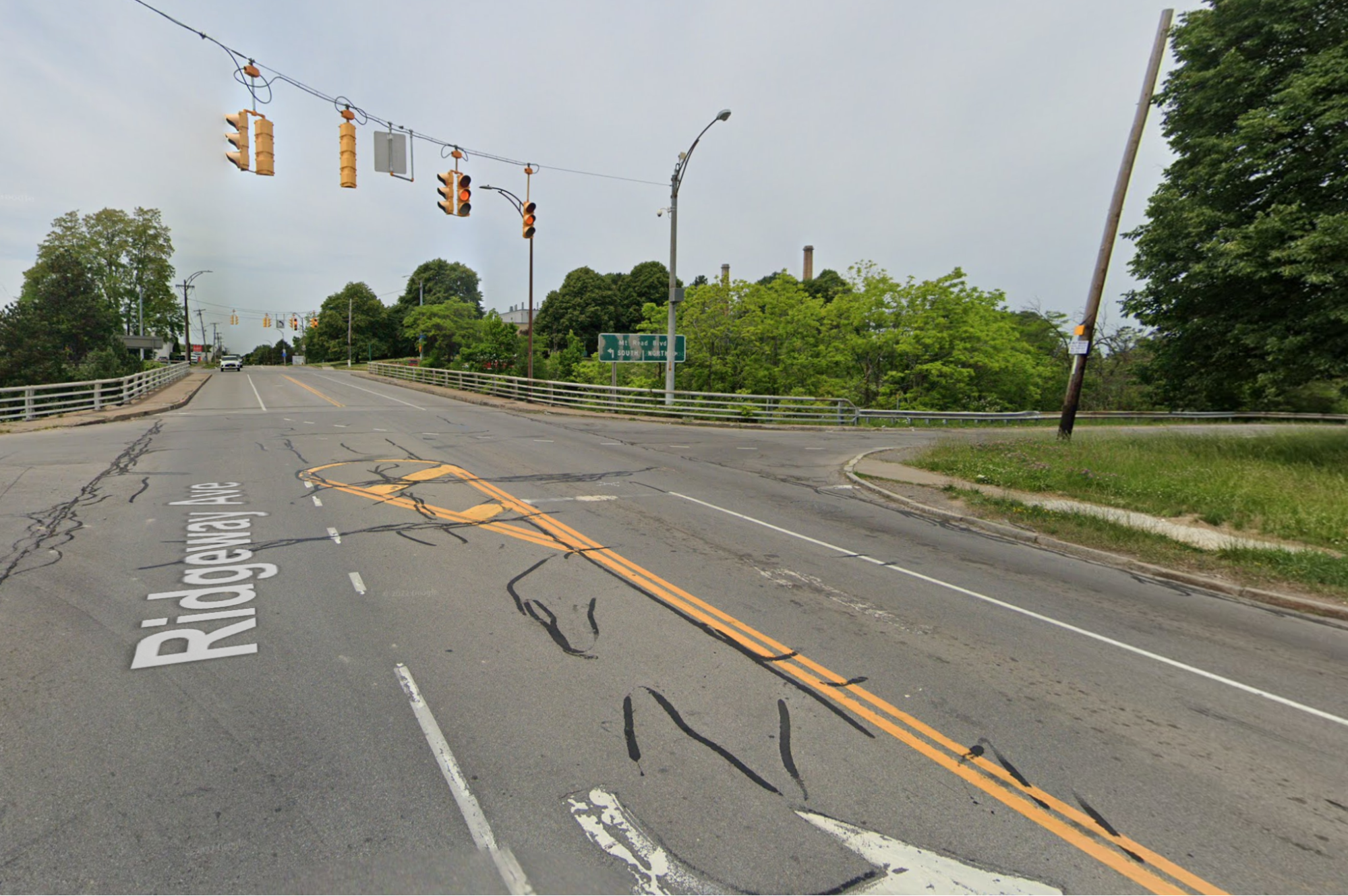
If you haven’t biked the new Eastman Trail and 390 Trail extension yet, we highly recommend it! Greece and Rochester are now connected via a network of trails and comfortable Bike Boulevards through Maplewood. But there’s an uncomfortable gap on Ridgeway between Lily Street and Mt Read, where the Eastman Trail starts. We understand that the City envisioned a second phase of the Eastman Trail but that effort has stalled. At the very minimum, cyclists would benefit from bike lanes on Ridgeway along this half-mile stretch. Jurisdiction: City of Rochester

4. SCOTTSVILLE ROAD TO THE GREENWAY

For over a century, Rochester cyclists have reveled in biking around Genesee Valley Park and its environs. Many riders these days drive to the Genesee Valley Sports Complex on Elmwood, park their car and bike around. Heading southwest on the Genesee Valley Greenway is a treat. You’ll pass the Rochester Fire Academy, where you might see firefighters practicing their skills on old planes. But to reach the newly resurfaced portion of the Greenway, you have to bike on Scottsville and Ballantyne Roads for a bit. There is a separated shoulder on the southbound side of Scottsville Road, but it disappears at the railroad tracks. If it continued south and west on Ballantyne and was available in both directions, or if a trail paralleled the tracks west so cyclists didn’t have to bike on Ballantyne at all, the Greenway would be much more accessible. Jurisdiction: NYS DOT

5. THE APPROACH TO MONROE COMMUNITY COLLEGE

Monroe Community College, our area’s largest institute of learning, is very uncomfortable to get to by bike. Though bike lanes have been installed on East Henrietta Road from Westfall south to 390, the bridge over 390 is quite scary. Students, faculty and staff approaching MCC from the north deserve a more comfortable approach. Jurisdiction: NYS DOT

6. CROSSING 104 INTO IRONDEQUOIT

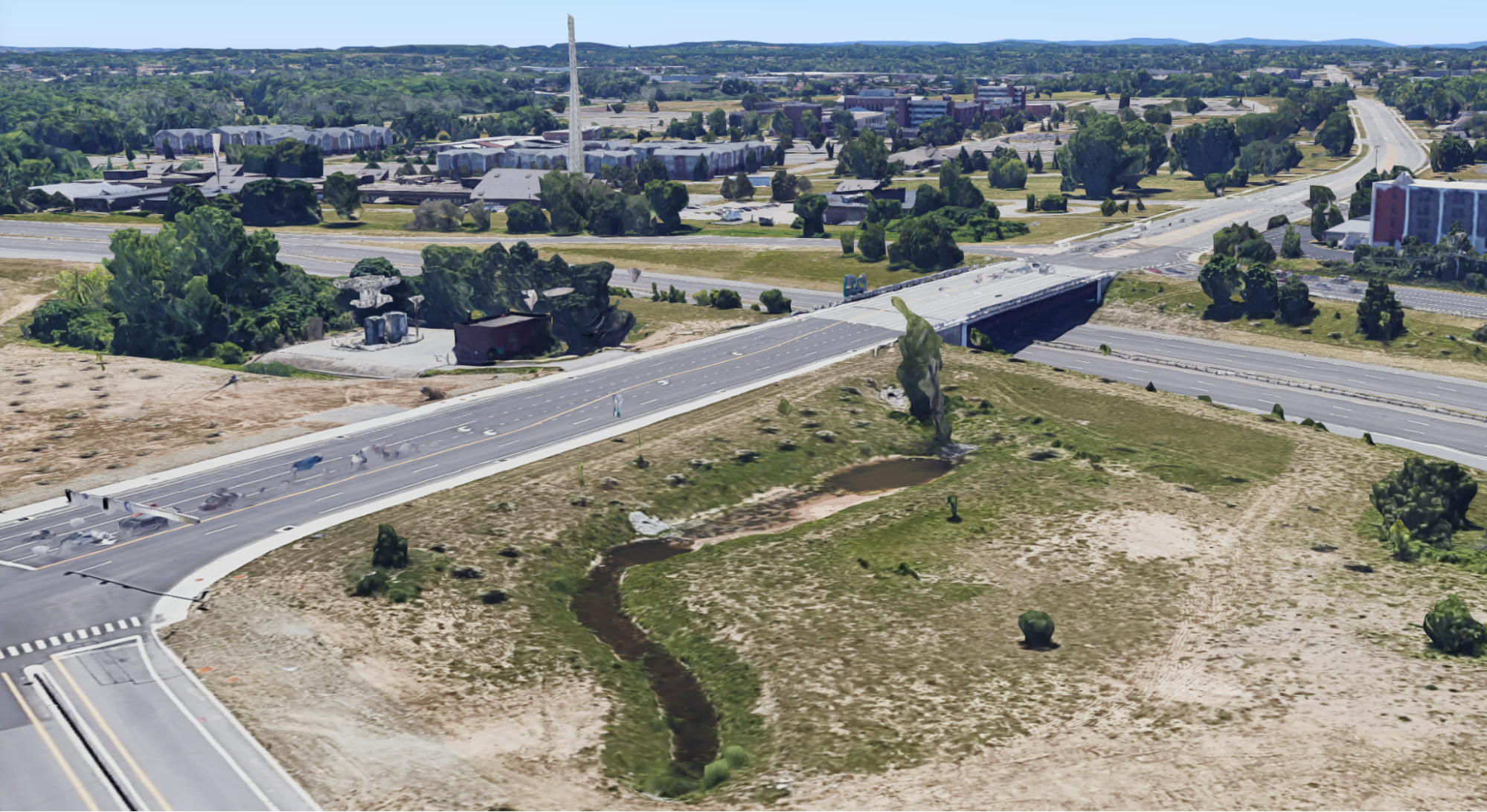
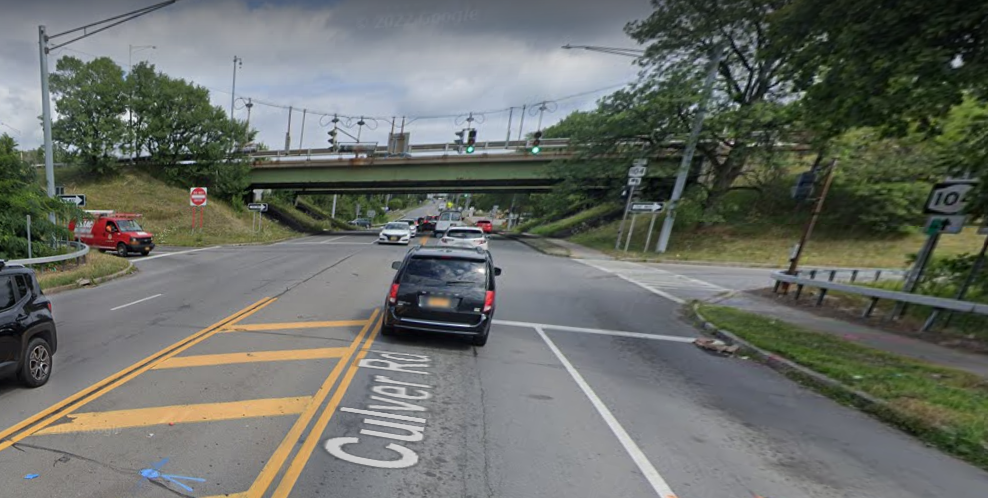
The easiest way to cross Route 104 by bike is via the El Camino Trail. But another low-stress route is needed between Rochester and Irondequoit. Goodman and Culver are not friendly for cyclists. We see two options: Monroe County DOT  makes the 104 underpass on Culver more bike-friendly, or the Town of Irondequoit explores this great trail idea put forth by Jack Rinaldo last year. Such a trail would only need to be half a mile long (!) and it would be transformative. Jurisdiction: Monroe Co. DOT / Town of Irondequoit

7. BROOKS AVE TO THE AIRPORT

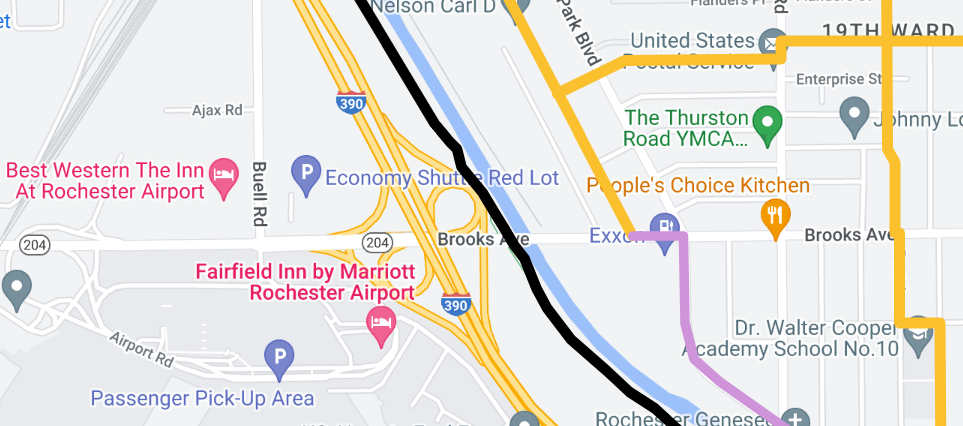
Unlike many airports, Rochester’s isn’t terribly far from downtown. The Frederick Douglass Greater Rochester International Airport is quite bikeable since it’s right next to the Erie Canal Trail and a stone’s throw from the Genesee Riverway Trail. The main entrance is also just half a mile from the 19th Ward’s comfortable Bike Boulevards. We think Brooks Avenue is the perfect candidate for a road diet and bike infrastructure to make the ride to the airport a seamless one. Jurisdiction: NYS DOT and City of Rochester

8. PITTSFORD CONNECTION TO EAST ROCHESTER

This might be fanciful since the separation of these streets was intentional, but if Brightford Heights Road, Linden Oaks, and Gleason Circle were connected in Pittsford, East Rochester could be quite accessible by bike (anyone up for some Pinball? 😉). The 490 foot bridge from Allen Creek Elementary allows you to go over 490 without biking on Linden Ave, which can be scary. From there, the ride would be a breeze. Jurisdiction: Town of Pittsford

9. GENESEE RIVERWAY TRAIL AT DRIVING PARK AVE

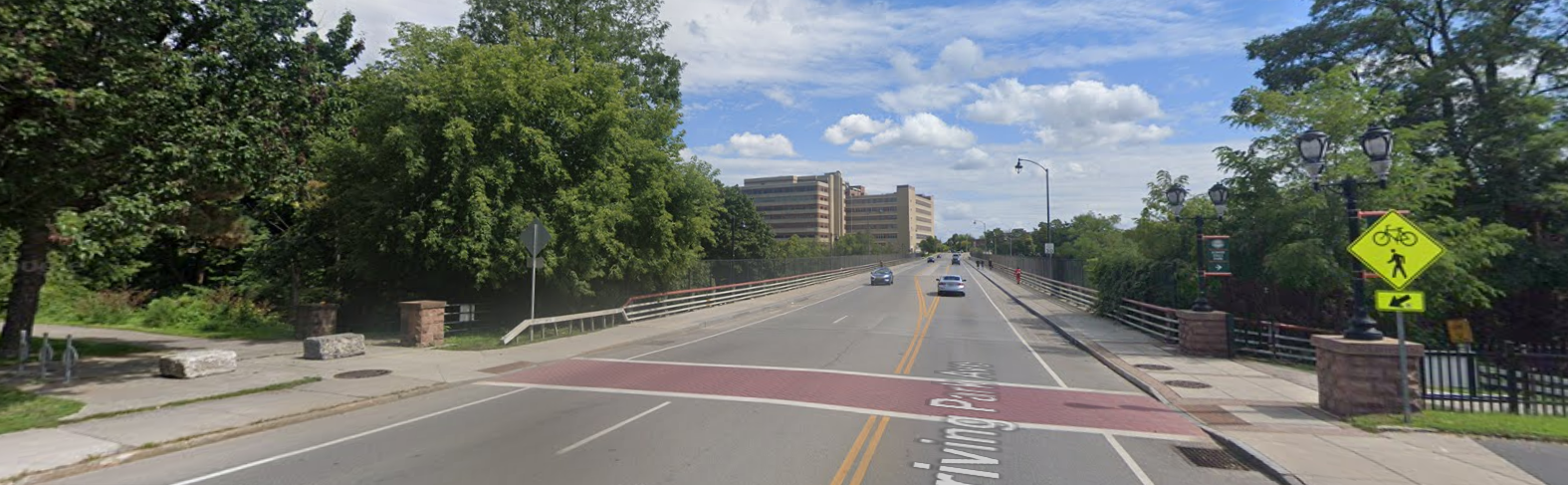
Just as the Genesee River is the heart of Rochester, so is the Genesee Riverway Trail the heart of the City’s bike network. Since it’s not seamless and currently requires you to bike on St. Paul, it’s not comfortable for all yet. But we’re proud to report the City is receiving funding for a plan to complete a seamless Genesee Riverway Trail north of downtown. In the meantime, we’d like to see the intimidating crosswalk on Driving Park Ave addressed with a Rectangular Rapid Flashing Beacon (RRFB), or better yet, a raised crosswalk. Motorist speeds are fast and as a cyclist or pedestrian, crossing here shouldn’t take the courage that it does today. Jurisdiction: City of Rochester

10. JEFFERSON ROAD TO MARKETPLACE MALL

Did you know there’s a comfortable, fun, scenic Bicycle Superhighway between the University of Rochester and RIT? Check out the Lehigh Valley Trail’s north branch! The former railroad bed gets you south to Brighton Henrietta Town Line Road, which curves and becomes John Street next to RIT (where Barnes & Noble and Lovin’ Cup are). At that point, the trail becomes a separated cycle path on the west side of John Street all the way to Bailey Road, where the comfort ends. Presently, this trail is the least stressful way to bike from Rochester to Henrietta, home to many job opportunities. But to get to those destinations, one must contend with Jefferson Road, which is a scary place to be on two wheels. Jefferson Road is being recommended for the proposed Countywide Active Transportation Network, so perhaps someday we could see changes to this corridor. The changes we’d like to see are narrower travel lanes, which could make space for buffered bike lanes between the trail and Marketplace Mall (one mile!). Jurisdiction: NYS DOT

So, what do you think?

Note: You might notice we didn’t nominate the Genesee Riverway Trail through downtown. The City is well aware of this obvious gap and through the ROC The Riverway initiative, is addressing it segment-by-segment as funding becomes available. (Someday we will have a seamless riverway trail through downtown!)

p.s. Here are some other promising bike connection developments if you’re interested:

  • Things are looking good for a road diet on Monroe Avenue to 12 Corners in 2024.
  • We know how popular the idea is of extending the Union Street cycletrack north to the Public Market. But since Union is so skinny and there isn’t space north of Main Street, we understand the City is considering extending the cycletrack northwest as part of the Inner Loop North project, and perhaps having a high-comfort bike connection on Scio to the Public Market.
  • West Main Street is getting resurfaced in the not-too-distant future and we expect a road diet and buffered or protected bike lanes will be part of the plan.
by 2 Comments

An Open Letter to Greater Rochester Media: Why Language Matters When Reporting on Pedestrian and Cyclist Crashes

Dear Members of the Local Media,

The media plays a critical, leading role in educating and engaging the public.  We appreciate the hard, nonstop work required to provide this essential community service.

As you know, our community struggles with violence, and that violence often leads the news. Yet a particular violence crisis is flying under the radar of the local media and the community – road violence. Tremendous harm is being inflicted on our community as a result of the wildly increasing number of pedestrian and bicycle injuries and deaths on our streets, which disproportionately affects our neighbors of color.

It is becoming more dangerous to walk here in our community and across the country. In the U.S., pedestrian fatalities have skyrocketed, increasing by 62% from 2009-2020, and another 13% in 2021 alone. Bicyclist deaths are also at the highest point since 1975. In Monroe County, 5,498 crashes from 2012-2021 involved bicyclists and pedestrians, with 4,466 resulting in injury or death. On average, 10 people die on our local streets every year as a result of these crashes (a majority of them pedestrians).

Recent incidents include the death of Edgar SantaCruz and his dog Rosie, struck by a driver in the crosswalk at North Goodman and Park Avenue; the death of octogenarian Madeleine Schreiber in Brighton, who was backed over by a driver on Oakdale Street; the death of Ernest Martin, a cyclist hit by two drivers on North Street; the death of pedestrian Khadijah Stanley, hit by a driver while on the sidewalk on Hudson Avenue; and the death of Jarod Jones, a teenager killed by a driver in a hit-and-run on Lake Avenue. These are only a few of the many reported and unreported cases of precious lives lost in our community just the last few years.

We have observed that the media can do more to accurately and adequately report on these incidents of road violence. While driver-pedestrian or driver-bicyclist crashes often receive media coverage, the coverage tends to misattribute the causes and consequences of the crashes. Going forward, we encourage  you to report on these crashes – and the preventability of them – more thoughtfully.

Below is a compilation of ways the media often misrepresents these incidents, and some suggestions for more balanced reporting.

Blaming the victim and absolving the driver.  Media coverage often highlights that the person injured or killed “wasn’t in a crosswalk,”  “was wearing dark clothes,” or “was out walking at 3 a.m.” Meanwhile, drivers are often recognized in a positive light with commentary such as  “the driver stayed at the scene” and “no charges were filed.”

Blaming the vehicle and absolving the driver.  Crashes are often described as pedestrians or cyclists being “hit by a car”, rather than being hit by a driver operating a car. Language matters!

Calling crashes “accidents.”  Again, language matters. The word “accident” implies that the crash couldn’t be avoided, and has the effect of normalizing them as unavoidable and acceptable since “accidents happen”.

These crashes often occur because of driver behavior, as well as poor street design that fails to protect those outside a vehicle. In many cases, the driver could have prevented the crash by paying attention, slowing down, and driving responsibly. While driver behavior is relevant to crash causes and consequences, as important are street design, conditions and policies that enable and encourage dangerous driver behavior, namely:

  • Streets and roads that are too wide, which encourages motorists speeding and distractibility at the expense of pedestrian, cyclist *and* driver/passenger safety. Landscape architect Ian McHarg once said that “if you design a road like a gun barrel, people are going to drive like bullets.”
  • Poorly designed infrastructure and poor maintenance of existing infrastructure: signal crossings that don’t give pedestrians sufficient time to cross, insufficient street lighting, lack of crosswalks or worn out crosswalk paint are some examples. At Reconnect Rochester, we advocate for complete streets design that accommodates and protects ALL users of the road.
  • Unsafe speed limits: The citywide and village 30 mph speed limits seem slow and safe to our speed-desensitized experience, but 30 can easily be a lethal speed for a vehicle, and many people regularly drive at 40 mph or more in those zones. Speed kills. The chance of a pedestrian surviving a hit from a 3,000-7,000-pound machine plummets from 95% if hit at 20 mph, to 55% at 30 mph, to 15 percent at 40 mph.
  • The build-up of snow and ice covering sidewalks and curb cuts, conditions that force pedestrians, cyclists, and transit users into the streets. Compounding this problem:  plows that bury or block sidewalks with the snow they throw aside to ensure the streets and driveways are clear for drivers.

To help with greater mindfulness and accuracy about the ways you report on pedestrian-driver and bicycle-driver crashes, we suggest investigating the following questions when preparing your reporting.

Road Design/Conditions:

  • Was the road where the crash occurred designed to promote vehicle speed with wide open lanes and few markings on the road? Does it have safe, dedicated space for cyclists and pedestrians, and protective design features such as crossings, bike lanes, pedestrian medians, and other complete streets features?
  • If the crash happened at night, was a lack of street lighting a factor?  The majority of vehicle-pedestrian crashes happen at night.
  • If the crash happened during winter, was the sidewalk clear of snow and ice?

Drivers:

  • Was the driver driving over the legal speed limit, or did the driver disregard a different traffic control device (e.g. light, stop sign)?
  • Was the driver distracted or impaired by a cell phone, alcohol or drugs or other distraction? Driver inattention is a leading cause of crashes.
  • Was the driver properly licensed, and did they have a history of crashes or traffic infractions (i.e. “chronic bad driver”)?  We often hear of crash perpetrators who are unlicensed and/or have had their licenses revoked dozens of times, and are still driving.

Vehicles:

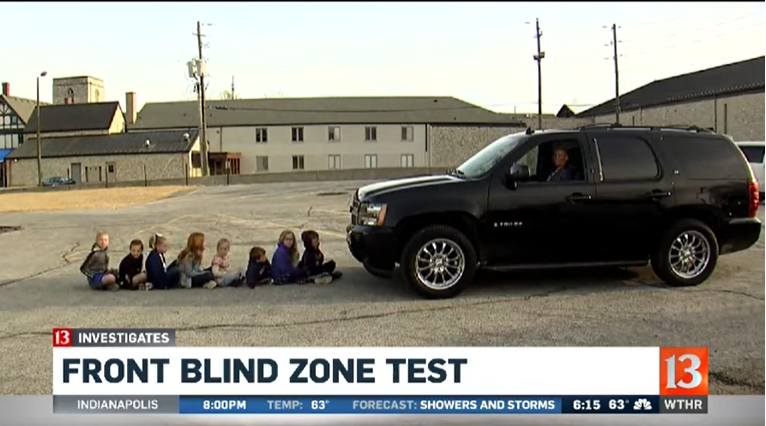
  • Did the vehicle have limited front, side or rear visibility? This is the case with many of the most popular SUVs and pickup trucks. For example, studies have shown that front blind zones on SUVs lead to deadly crashes and especially endanger children.

We appreciate your time and consideration. Reconnect Rochester is standing by as a resource and willing partner to improve your media outlet’s approach to crash reporting, as well as helping to educate the public and policy makers about the crisis of rising road violence.  We would welcome an opportunity to meet with your team if you wish to have further dialogue on this subject.

Best,

Reconnect Rochester


Special thanks to Evan Lowenstein, a passionate advocate for better mobility in the Rochester community, who collaborated with us to write this piece.

Header Image Source: Man will appear in court in January in connection to death of pedestrian on Park Ave by Evan Bourtis News10NBC

by No Comments

Hey Albany! 2023

Reconnect’s Virtual Trip to Albany – 2023

Last week, Reconnect Rochester went on a (virtual) trip to Albany to champion public transit and safe streets for Rochester residents (and all New Yorkers). We spent the day meeting with state legislators and their staff and having great conversations about what needs to be done to move towards our vision of a robust and equitable transportation network. We’re fortunate to have many allies in our State delegation to push for better multi-modal transportation across New York.

Reconnect team meeting with Assemblymember Harry Bronson’s Legislative Assistant, Aaron Pilgrim


We’d like to shout out Reconnect Rochester Board members Victor Sanchez, Bill Collins, Jason Partyka, Erick Stephens and John Lam for devoting their time to the effort, and a huge thank you to all the legislative offices who took the time to meet with us: Assemblymembers Demond Meeks, Harry Bronson, Jennifer Lunsford, Sarah Clark, Josh Jensen, and William Magnarelli, and Senators Samra Brouk, Jeremy Cooney, and Tim Kennedy. Check out more screenshots from the day!

In the coming months we will continue to advocate at the state level for this crucial legislation to be passed this year. Wondering how you can help? Check out our platform and the links below to find out how you can help us advocate for better transit and safer streets for all! 


New York Public Transit Association
NYS S.A.F.E. Streets Act Climate, Jobs & Justice Package


New York State 2023-24 Transportation Priorities

Public Transit:

Public transportation is a vital service for residents of our region, especially for Rochester. Twenty-six percent of households in Rochester do not have access to a car. They rely on public transportation to access jobs and vital services. While increases to upstate transit systems last year were helpful, many agencies like RTS still need robust, long-term funding to grow and sustain our system. Please consider supporting the following budget priorities:

  1. Develop a statewide funding package that provides additional and sustainable dedicated revenue into the future to address growing structural operating deficits for all upstate and downstate transit systems. There is an immediate need in FY 2023-24 to grow STOA funding by $134 million for Upstate systems.
  2. Fully fund the 2nd year of the Non-MTA 5-Year Transit Capital Program at $159.5 million.
  3. Continue the STOA program hold-harmless provision to avoid reductions in operating aid to smaller transit systems, as ridership has not returned to pre-pandemic levels.
  4. Release the $60 million in currently available Non-MTA capital appropriations for electric vehicles and infrastructure to allow projects to move forward.

Bicycle and Pedestrian (Active Transportation):

Pedestrian and cyclist injuries and fatalities are on the rise. Reconnect Rochester is working with the NYS Safe Streets Coalition to prioritize legislation to address this silent epidemic. Consider sponsoring or co sponsoring the S.A.F.E. Streets Act which includes the following legislation:

  1. Complete Streets Application (S100/A3180) – Expands the state’s current complete street design principles policy to include all state, county and local transportation projects that are undertaken by the DOT or receive federal, state or both federal and state funding.
  2. Complete Streets Maintenance (S2714/A1280) – Includes, when possible, complete street design features in resurfacing, maintenance and pavement recycling projects and further enables safe access to public roads for all users.
  3. Vehicle Safety Standards (S1952/A4057) – Mandates standards in new vehicles including intelligent speed assistance and other features.
  4. Crash Victims Bill of Rights (A1901) – Guarantees rights & a voice for crash victims and their loved ones in legal proceedings
  5. Sammy’s Law (S2422) – Allows for lower life-saving speed limits in NYC
  6. Safe Passage (S1724/A4346) – Requires that drivers pass bicyclists at a safe distance of min. 3 feet.

In addition to the S.A.F.E. Streets Act package, these are additional bills related to bicyclists that we would encourage you to sponsor or co-sponsor:

  1. Idaho Stop Law (S2643/A3986) – Allows cyclists to treat a stop sign as a yield sign, and a red light as a stop sign.
  2. Ebike Rebate (S314/A275) – Directs the New York state energy and development authority to establish a ride clean rebate program for electric assist bicycles and electric scooters.
  3. Ebike Access (S1123/A2627) – Repeal certain provisions of the vehicle and traffic law and would allow ebikes to be ridden anywhere regular bikes can.

Train and Long-Distance Bus:

Inter-city bus and train passengers tend to be lower income and people of color. They deserve equitable funding for their long-distance transportation that is comparable to the investments made in airline travel. Consider including funding for a new long distance bus terminal (Phase II of the Intermodal Station) in next year’s NYS budget or when Federal funding becomes available.

EV Carsharing:

Nonprofit carshares like Floshare, an electric carshare system in the City of Rochester, provide a valuable service to many in our community who lack access to public transportation or cannot afford to own a personal vehicle which is about a quarter of Rochester households who don’t have access to a vehicle. Many people rely on carshare systems like Floshare to access basic necessities like getting groceries or going to medical appointments. Currently, the most reliable and economical way for nonprofits in New York to acquire auto insurance is through an RRG or a Risk Retention Group. Unfortunately, the Department of Financial Services disallows Risk Retention Groups to insure vehicles in the state which prevents many nonprofit carshares from operating due to the inability to either find insurance or because of the high cost of insurance. We would like to see support for a regulatory change to allow Risk Retention Groups (RRGs) to write auto insurance for carshare nonprofits in New York State, thereby removing a costly barrier to nonprofit carshare operations.

All Modes: 

Please support the Climate, Jobs & Justice package, which includes the following:

  1. Climate and Community Protection Fund to implement the NY Climate Act
  2. Build Public Renewables Act (S4134/A279)
  3. Just Energy Transition Act (S2935/A9881)
by 2 Comments

Welcoming Lindsay Crandall!

We are thrilled to welcome Lindsay Crandall, Fundraising and Development Manager, and newest member of a growing staff team at Reconnect Rochester!

We’re so glad that Lindsay has joined our dynamic staff team that works day-in and day-out to improve mobility in our community. In her role, Lindsay will play an integral role in our efforts by helping to attract the financial and in-kind resources that fuel Reconnect Rochester’s work in the community.  Find out how Lindsay landed here and what inspires her to advocate for mobility in the message below.

Lindsay Crandall

It is an honor for me to join Reconnect Rochester as Fundraising and Development Manager. The energy and enthusiasm of the staff is contagious, and I’m excited to learn more about mobility justice and transit equity while helping support the organization through fundraising. 

When I was a kid, my dad walked across town every day to work at the post office where everyone in the community knew him. Even then, people in our town were highly car-dependent, but my dad’s choice showed me the value of living small in a tight-knit community. Now, my interest in mobility comes primarily from a sustainability perspective, wanting to reduce my environmental footprint and car dependency. Over the years, when it’s been possible, I’ve chosen to walk or bike to work, the library, my kids’ school, and to run errands. Not only does it give me a chance to leave the car at home, but I love the added health benefits and the chance to be outdoors (even in the frigid winter). 

My hope is that the fundraising work I do for Reconnect Rochester provides more opportunities to impact and improve mobility throughout the Rochester area and create a community that’s not just interconnected but thriving.

by 1 Comment

The Bike Guy Walks!

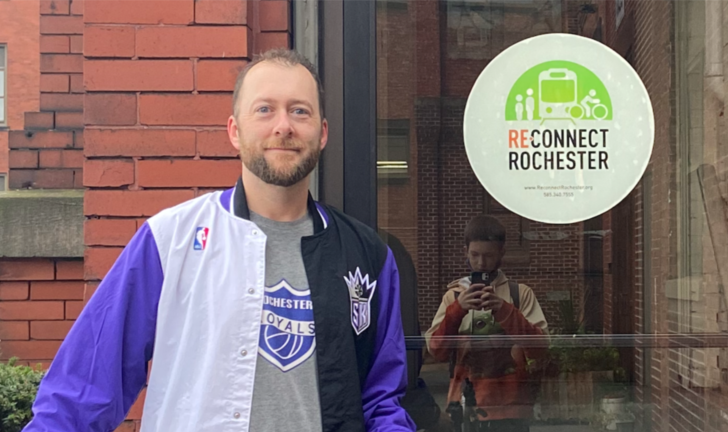
Jesse Peers (white man) stands in front of Reconnect Rochester door at the Hungerford Building.

By Jesse Peers, Cycling Manager at Reconnect Rochester

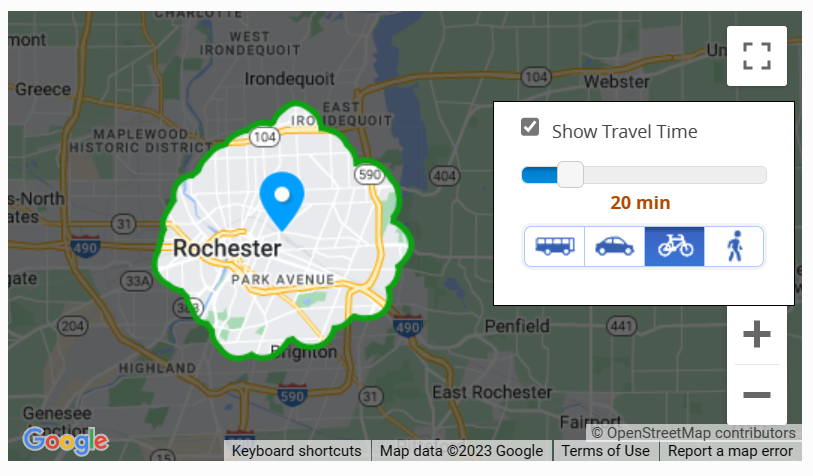
One of the things I love about Rochester is its size. Joseph Floreano said it well: “New York City was too big. Binghamton was too small. Rochester was just right.” Partly because of Rochester’s size, and partly because I’m very intentional about it, I have quite a small radius, or orbit, in everyday life. I rarely have to bike outside the space below. My workplace is 1.4 miles away. The stellar Public Market and Wegmans are less than 2 miles away. We’re 3 miles from our church and from downtown. This makes bicycling-as-transportation and being a one-car household quite easy.

Walk Score’s Time Travel Map shows how far out in every direction you
can bike in a given amount of time, in this case 20 minutes.

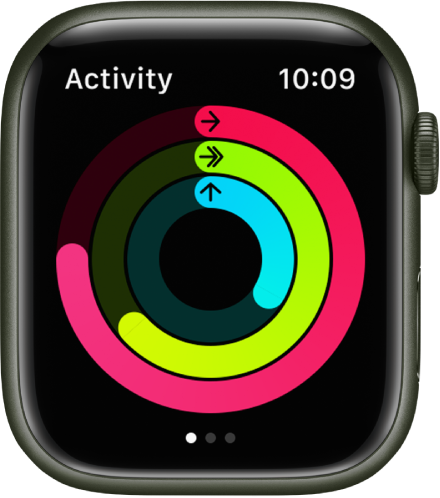
Now that I’m over 40 and I have some cardiac history in the family to guard against, I give increasing thought to my health. I changed my diet and lost almost 60 pounds in 2021. Now that I have an Apple Watch, I’m conscious of my exercise and how many calories I burn each day from being active. (The watch’s Move ring is pretty neat: “Closing” it comes in part from exercise, yes, but mostly from other activities such as going up and down stairs, folding laundry, taking the dog out, and in my case sometimes: by playing the drums!)

An Apple Watch showing Fitness Rings

As convenient as my 1.4-mile commute is (I wouldn’t trade it for the world!), it’s only 7 minutes by bike each way at a moderate, easy pace. So I barely burn any calories and won’t close my Exercise and Move rings with 14 minutes of biking alone. Something else is required. For years I had a treadmill in the basement, and in 2021, I actually started using it – jogging most days for 30 minutes or so before dinner as I caught up on podcasts. If I attended or led a group bike ride on a particular evening, I could skip the treadmill, knowing I’d close my Move rings twice from my commutes, biking to the group ride, doing the ride itself, and biking home afterwards. As you can imagine, the treadmill in the Winter especially came in handy.

But this October, my old treadmill broke! So I started an experiment: walking to work rather than biking. I like it so much that I might continue it this Winter! Here’s why: If I previously had two 7-minutes-each-way bike commutes + 30 minutes of treadmill time, and walking to work is 22 minutes, my schedule really doesn’t change at all: that’s still 45 minutes a day of activity, no treadmill needed. I still have the same amount of time to devote to other stuff.

What was most interesting to me was how much more calories I burn from a 22-minute walk commute, compared with my 7-minute bike commute. Obviously it varies based on intensity and time of the year, but that 7-minute bike commute really only burns me 35 calories, if Strava can be trusted. That same commute by walking burns me about 145 calories. So the exercise ring closes everyday and as long as I do everyday stuff like laundry and take the dog for a walk, the Move ring closes as well.

I love winter bicycling. It’s easier and more fun than most people realize. But without a doubt, the worst part of biking in the winter is what the road salt can do to your bike. Keeping the corrosion at bay is a pain! If I walk to work this winter much of the time rather than biking, I lose no time, close my rings, alleviate the need for a treadmill, and save my bikes from that brutal road salt, therefore saving money on tune-ups.

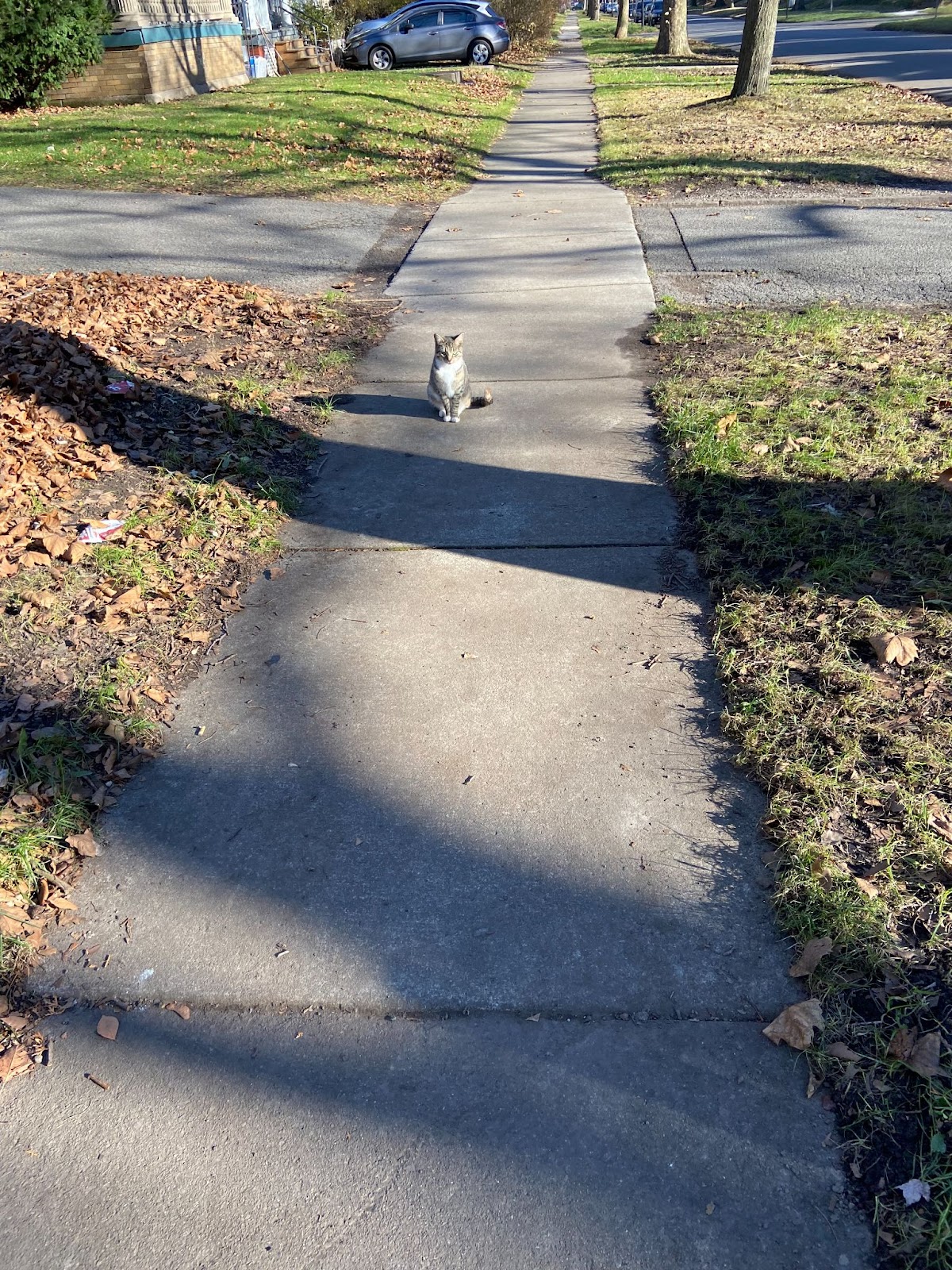
Another perk of walking everyday: The cats of Beechwood! I could seriously start a #CatsofBeechwood montage of all the adorable cats I see wandering about. Sometimes they’ll show interest in me and let me pet them.

A photo of a community cat in the Beechwood neighborhood

I’ve been car-free for 9.5 years now. My first few years of that lifestyle were composed of biking for virtually every trip. As I get older, I appreciate being able to rely on transit and walking some of the time. If you’re intrigued by the health benefits tied to walking, biking and ordinary activity, I highly recommend Peter Walker’s The Miracle Pill. It’s a stellar follow-up to his first book, How Cycling Can Save The World. Also check out this recent clip from NPR’s Up First, examining how important it is to get up and walk around every hour if you have a desk job.

by No Comments

A Journey Through My Multimodal Week in Rochester

By Jahasia Esgdaille, Community Engagement Manager at Reconnect Rochester

Author’s note: “Happy New Year! In Fall 2022, I decided to log what a multi-modal week looks like for me and, not so surprisingly, I rely A LOT less on my car than I thought. What does a multi-modal week look like for you?– Jahasia


Throughout the week I try to leave my car at home as much as possible and use other options of getting around the Flower City, so this was quite a fun experiment to see that I actually rely much less on my car than I thought and really only use it for running errands or to get outside of the city. 

I will say that I am privileged to have options to be multi-modal throughout the week. I live in the city on two major bus lines (cheers to the #41 and the #9) so I am very lucky to have these options available to me. But, I do realize that this is something that needs to be improved in our city. In my opinion, everyone should have the option to have a multi-modal week, whether you decide to take the bus, bike or walk to your destination.

Monday

Walk to work (13 mins)

I got very lucky that my commute to work is only a 13 minute walk each way. As long as I have the energy to climb the steep hill that is the Circle Street bridge, I hoof it to work!

Biked to CVS on Park Avenue (7 mins)

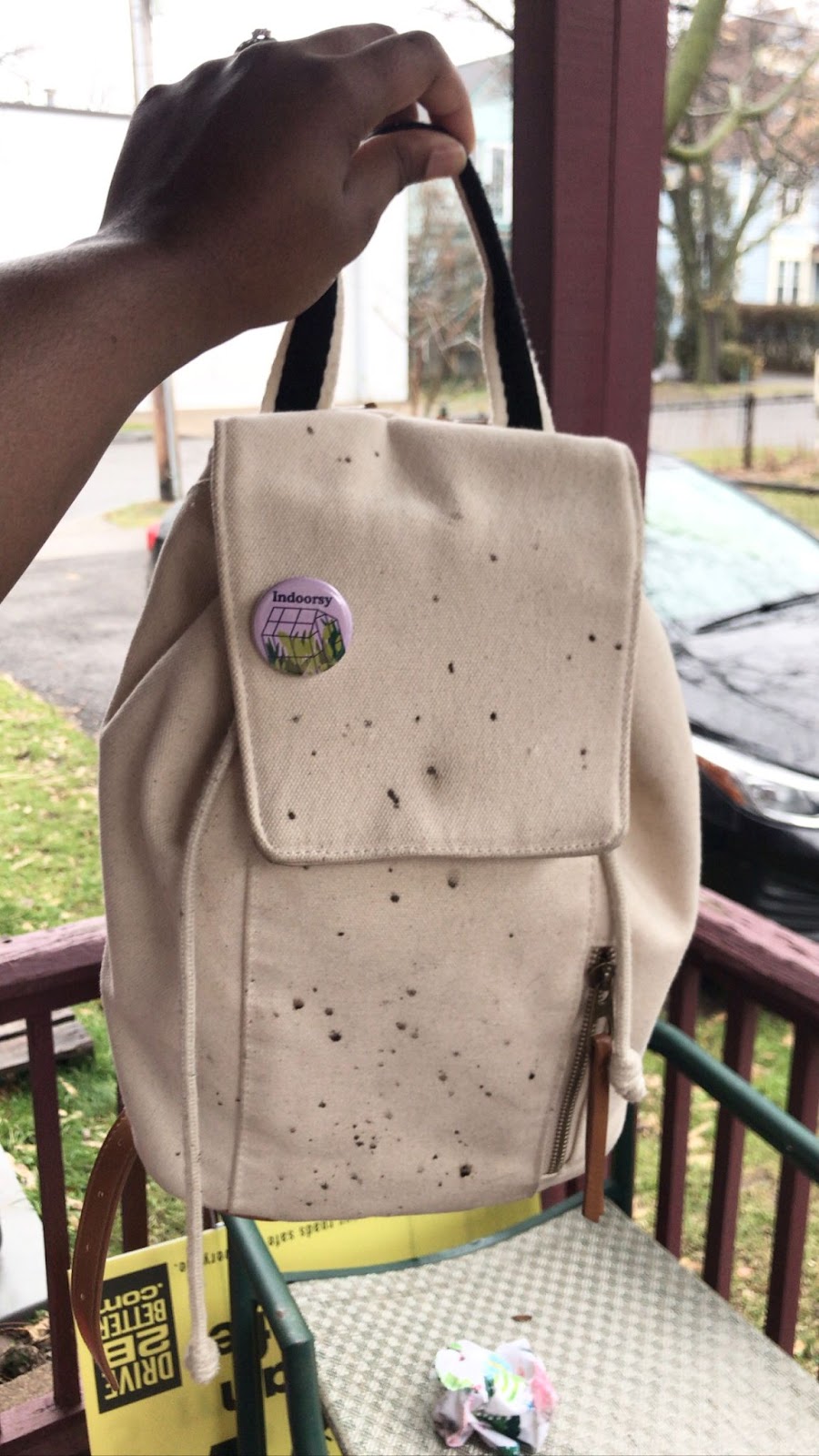
I avoid driving anywhere on Park Avenue like the plague. It’s not convenient for driving or parking…which is good. This is what a people-first street design should be like. So, when I need to run to the pharmacy, I ride my bike, and thankfully there’s a bike rack right outside of CVS where I can safely lock my bike. It happened to be a little rainy this day and I completely forgot that my bike doesn’t have fenders, so enjoy the photo of glorious mud splatter on my bag.

Tuesday

Walk to work (13 mins)

Biked to Abundance Co-op to pick up a compost bin for the office (13 mins)

At Reconnect Rochester, we champion transportation choices that have a positive impact on the environment. We encourage people to swap car trips for other modes of transportation whether you decide to take the bus, bike or walk. So, it only made sense for us to continue our sustainability efforts and start composting at the office so that our food scraps and other biodegradable materials don’t make their way into Monroe County Landfills!

Took the 8 bus to Drive2bBetter conference (20 mins)

The Reconnect Rochester staff took a multi-modal trip to the Drive2bBetter Conference. James and I took the 8 and walked 13 minutes the rest of the way. Mary, Monika and Jesse rode their bikes to meet us there. 

We were so excited to see that the Drive2bBetter campaign was relaunched thanks to the hard work of the coalition group led by HealthiKids. To show your support for the campaign, you can request a free lawn sign here!

Wednesday

Walked to work (13 mins)

Biked to Full Moon Vista to grab bike lights (10 mins)

It’s getting darker earlier in the day, so my husband and I rode our bikes to Full Moon Vista to grab a snazzy set of lights to see and be seen when biking at night.

Bike to Cobbs Hill Park to swap out my compost bin with Roc City Compost (7 mins)

I am sadly starting to clear out my balcony garden for the season, so I chucked dead plant material in my Roc City Compost bin, sat it in my milk crate and biked to Cobbs Hill to meet the friendly faces at Roc City Compost.

Biked to Price Rite to some groceries for dinner (10 mins)

Once again, I am very lucky to have grocery stores close enough to bike, walk or take the bus to. I decided to bike a straight line down to Price Rite and grab a few groceries for dinner. We decided to make shrimp alfredo that night, yum!

Thursday

Drove to an appointment with my husband in Gates (13 mins)

This was where I broke my streak and drove with my husband to an appointment in Gates. We were tight on time and decided to drive 13 mins from home to the doctor’s office. We thought about taking the bus but that would’ve been 2 hours and 10 mins round trip and after getting off of the bus, we would have to traverse the 6-lane road onto a street with minimal sidewalks, so it was more convenient to drive.

Friday

Drove over to Wegmans to pick up groceries (5 mins)

Something I’ve been considering when I decide to drive over to Wegmans is to carpool with a few friends to make the drive more sustainable and inevitably make the East Avenue Wegmans parking lot less congested. If you know, you know!

Biking along the Erie Canal Trail (1 hour)

Back when we had warm and sunny Fall days, my husband and I biked part of the Erie Canal Trail and stopped at the Genesee River in Corn Hill to enjoy the sun and the view. 

Writing this blog, I was hesitant to admit the times in my week where I do jump in my car to run errands or to get to an appointment. But I wanted to be honest about what a multi-modal week looks like in a city that is still very much car-centric. As much as I hate to list that I drove to an appointment, the reality is that a 13-minute drive is a lot more convenient than a 1 hr 8-minute bus ride, and this is just one example among many people in Rochester who experience the same thing. On the other hand, this made me realize that there are so many things you can do around Rochester using alternative modes of transportation, especially by bike within a 20-minute ride!

Happy busing, biking and walking!

by No Comments

The Good, The Bad, and The Ugly: Utica’s Genesee Street Transformation

Written by Arian Horbovetz and originally published on The Urban Phoenix blog

For 6 years, I’ve been dreaming of the day when Genesee street in downtown Utica, NY might be reduced from four lanes to two with a turning lane and bike lanes. To be perfectly frank, this was a reality I feared would never materialize. Despite the fact that countless cities and towns across the country have successfully executed a “road diet,” thus making a street safer for pedestrians, cyclists AND drivers with zero-to-minimal impact on travel time, so many Uticans had abrasively rejected my vision every time I brought it up.

Thanks to the vision of Utica Common Council member Katie Aiello, that formally unrealized hope for Utica’s historic Genesee Street was re-striped a little over a month ago with two travel lanes, a left-hand turning lane and bike lanes, just like I’ve imagined so many times.

This was done as part of a 90-day trial period to assess the impact of the project. But as is typical when a city is introduced to the concept of Complete Streets and road diets for the first time, many people responded with a flurry of dissent.

Hot tip… if you ever want to sit back and watch a relentless flow of verbal bile and fire-scorched sense of logic, suggest a road diet in a downtown to a city and metro population for the first time. Just grab a substantial bag of buttery, salted popcorn and watch the horror unfold.

I’ve spent a significant amount of time assuring the people of Utica that projects like this make our streets safer for everyone, as well as helping to elicit private investment and provide greater accessibility of community resources for the population. A big part of this assurance is telling people that if this kind of project worked on the Main Street of my home city of Rochester with a population of over 200,000 people, it will work for a city with a population of just over 60,000 people. Genesee Street in Utica and Rochester’s Main Street downtown each have similar daily traffic counts (approximately 9,000 vehicles per day, well below the 15,000-20,000 that begin the four-lane road conversation).

But, as usual with these sorts of projects, my fact-backed urgings and invitations to references and resources in support of road diets were often met with a “no thanks,” as many community leaders choose their own opinions over actual data that has been repeated hundreds, if not thousands of times. My favorite comments from leading members of a prestigious local organization implied that bike lanes and greater walkability would make the area more accessible for “crack dealers.”

The irony of the above social media take is that the opposite is far more often true… that walkability, traffic calming, and bike access complement and enhance small business and local arts culture.

What it all boils down to is this… many residents still have an insulated “out my front door” view that their city or community is unique. And while to some extent this is true, for the most part, Rust Belt (or as I like to call them, Robust Belt) cities are all dealing with, and recovering from, the same barriers. And again, as much as we struggle to admit the solutions of de-prioritizing the automobile, creating small business-friendly environments, solving issues of equity and access and laying the fertile soil for human-centered economic growth are the broad but key lenses of change for all communities, it’s the proven truth. Despite the aforementioned opposition by many of Utica’s community leaders, the road diet that has taken place on Genesee Street is a small but significant puzzle piece with regard to the solution.

Maybe you’re still not comfortable thinking that your city isn’t as unique as you think it is. OK, I’ll concede that for a moment… but what I will not waiver on is that, as soon as we Americans get in our cars, we act more predictably than ever.

We all make subjective statements like “Massachusetts drivers are the worst,” or “Indiana drivers always pass on the right.” The truth is, people don’t drive differently because they’re from a different locale. Real world data shows that there are scores of given principles that determine the behavior of drivers. If the roads are wide, people will drive faster. If there are no vertical points of reference (trees for example) people will drive faster. If there is parallel parking, people will drive slower. If the lane is 9 feet wide instead of 11 feet wide, people will drive slower. And why is automobile speed so important when blended with walkability? Because of the shocking data from the National Traffic Safety Board…

A pedestrian hit by a car traveling 40 miles per hour is nearly twice as likely to be killed than if the car was traveling 30 miles per hour. Building infrastructure that reduces speeds, even by a few miles per hour, has the potential to save lives. But in order to do this, we must accept that traffic in our community doesn’t behave differently than traffic in other locales. We must accept that the drivers in Utica behave the same way as they do anywhere else… it’s the infrastructure that determines how safely or unsafely people pilot their vehicles.

This is typically where people will stand up and point out that cyclists and pedestrians break the law as well. My answer is always the same… sure, just like drivers, those who walk, bike and scooter break the law… the difference is that they are not piloting a 3,000-6,000 pound vehicle capable of 100mph that doesn’t just threaten their own life, it threatens the life of other people and property as well. Car crashes are the close #2 killer of children and teens, after gun violence. The NHTSA states that car crashes in the United States cost nearly a trillion dollars annually. And much of this burden is directly shouldered by the taxpayer. Why, then, would anyone rally against a mobility strategy that had the potential to save lives, lessen the chance of personal injury AND save taxpayer money?

The answer is entitlement that is always thoroughly-veiled in the word “freedom.” Drivers often view projects like this as yet another assault on their personal freedom. The irony, of course, is that transportation infrastructure that prioritizes the most expensive modality (automobiles) means that one doesn’t have a choice in how to access jobs and resources in their community. Because driving is subsidized so heavily in the US, there is no equitable alternative that is feasible or practical. Because of far higher gas taxes, gasoline in Europe costs twice as much… but the average American spends four times as much on transportation as the average European. This has led to the antithesis of transportation freedom for the American, replacing it with a blatant “pay-to-play” scenario. You must own a car to have the opportunity to succeed.

No, simply re-striping Utica’s Genesee Street won’t, on its own, invigorate a pedestrian and bike-friendly culture in the city’s downtown. No, it won’t single-handedly increase sales at local stores, restaurants, museums and theaters. It should be seen, instead, as a social and economic fulcrum, or a sort of fertilized soil that can help grow the seeds of prosperity for Utica’s future. It’s a small step, but one that so many cities have taken toward a more socially and economically prosperous community.

by No Comments

What we accomplished together in 2018

As we look back on 2018, we’re pretty darn proud of what we’ve accomplished together this year. The highlights below are just a snapshot of all the good work we’ve been able to do, thanks to the financial support of Reconnect members, the passionate volunteers that made our programs and initiatives run, and so many others that engaged in our work in countless ways. Thanks to each and every one of you.

If you haven’t yet made a membership donation, we hope you’ll consider doing so to help fuel our work in 2019!  View the membership levels and gift options here. And don’t forget, we have a matching gift in effect from Jason Partyka for NEW members that join by Dec 31st!

Things we’re most proud of in 2018:

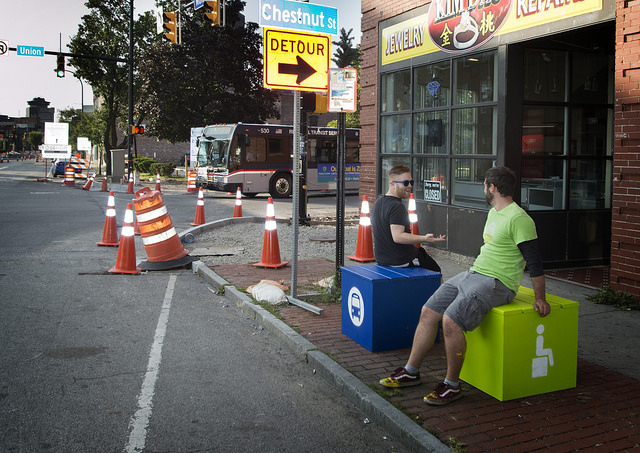
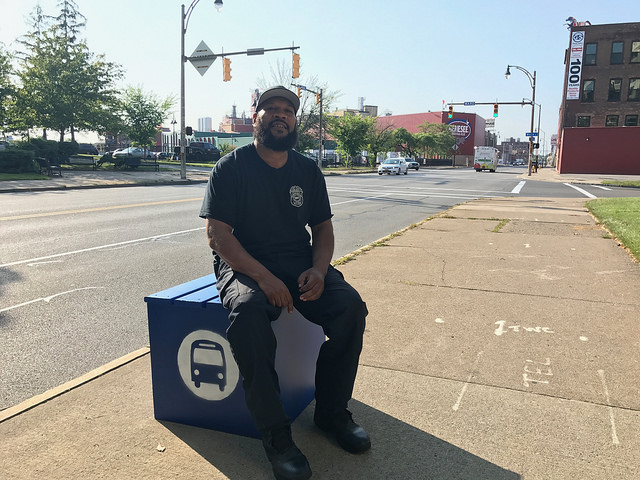
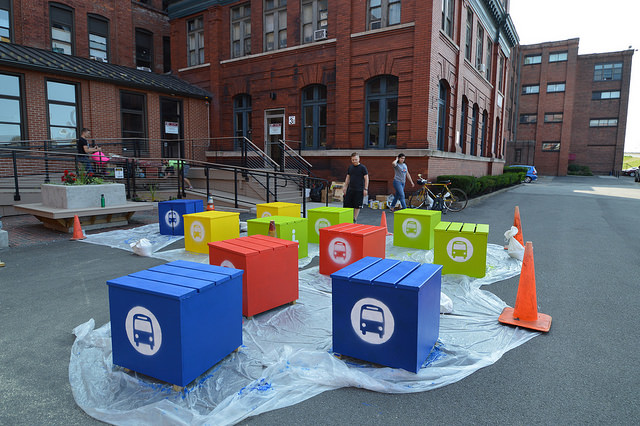
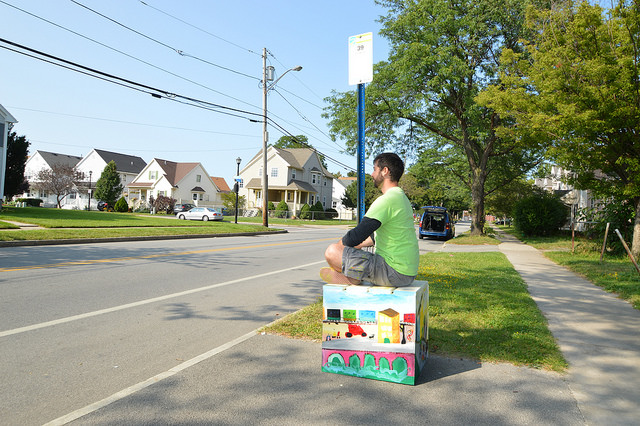
Giving transit riders a respectable place to sit at 33 bus stops around the city. We were thrilled to see our bus stop cubes replicated by our neighbor to the west, and we made some progress exploring a permanent fiberglass cube design as a year-round solution… stay tuned in 2019!

Releasing an in-depth report we commissioned on Transportation & Poverty in Monroe County, and working within the Rochester-Monroe Anti-Poverty Initiative transportation work group to translate the data into proposed policy solutions.

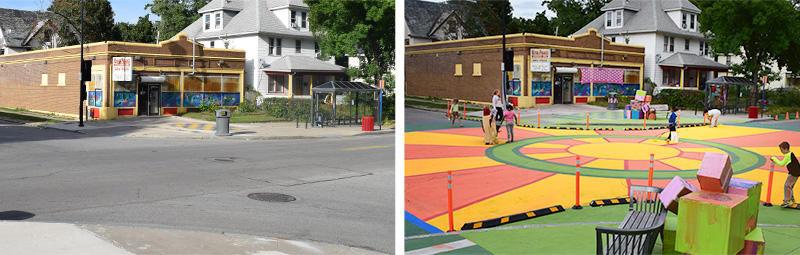
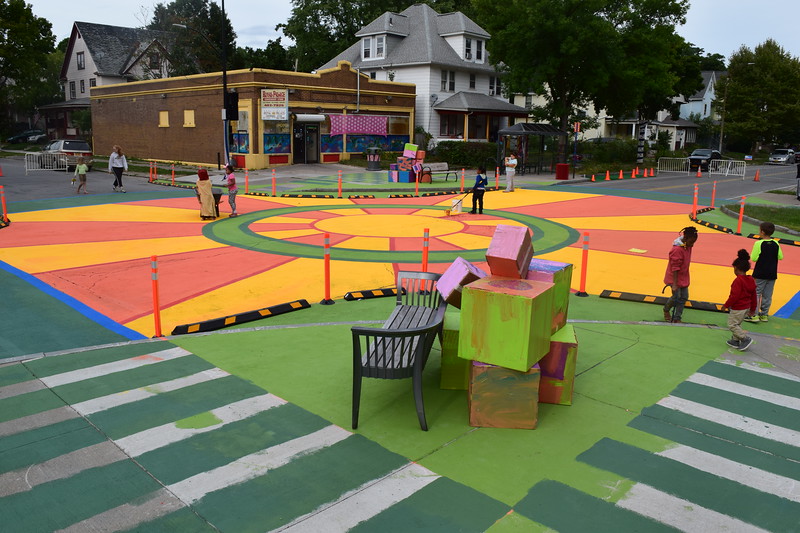
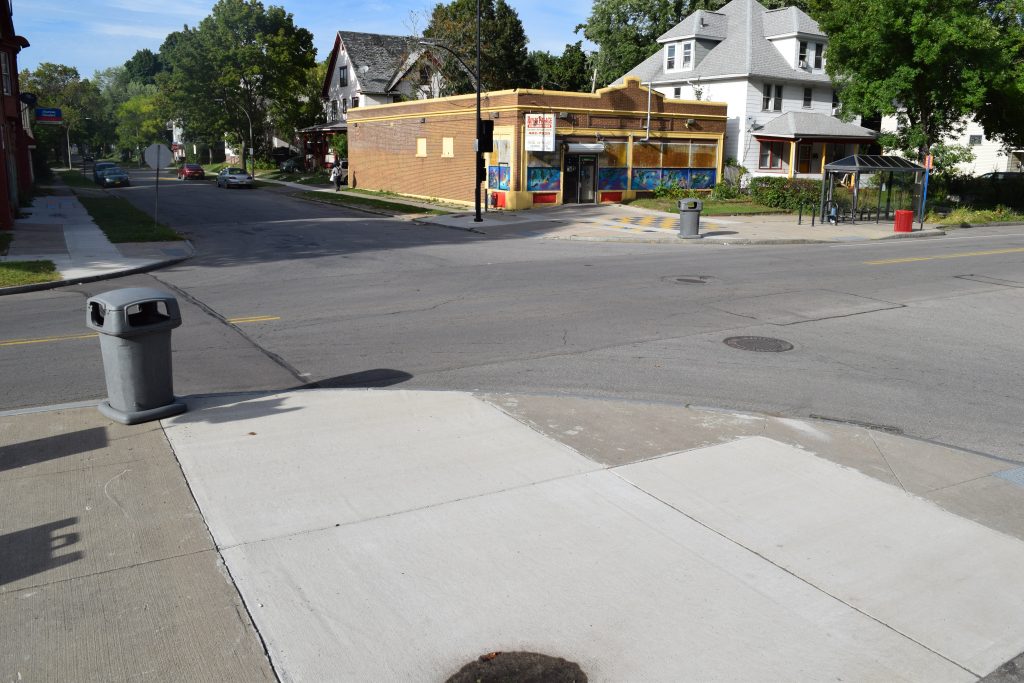
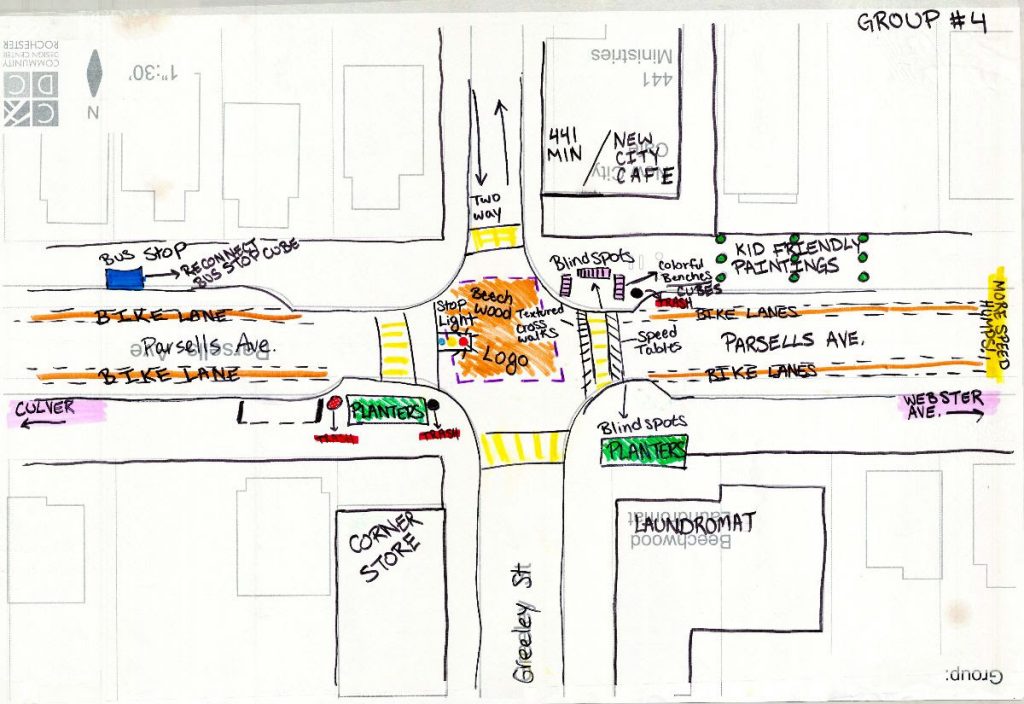
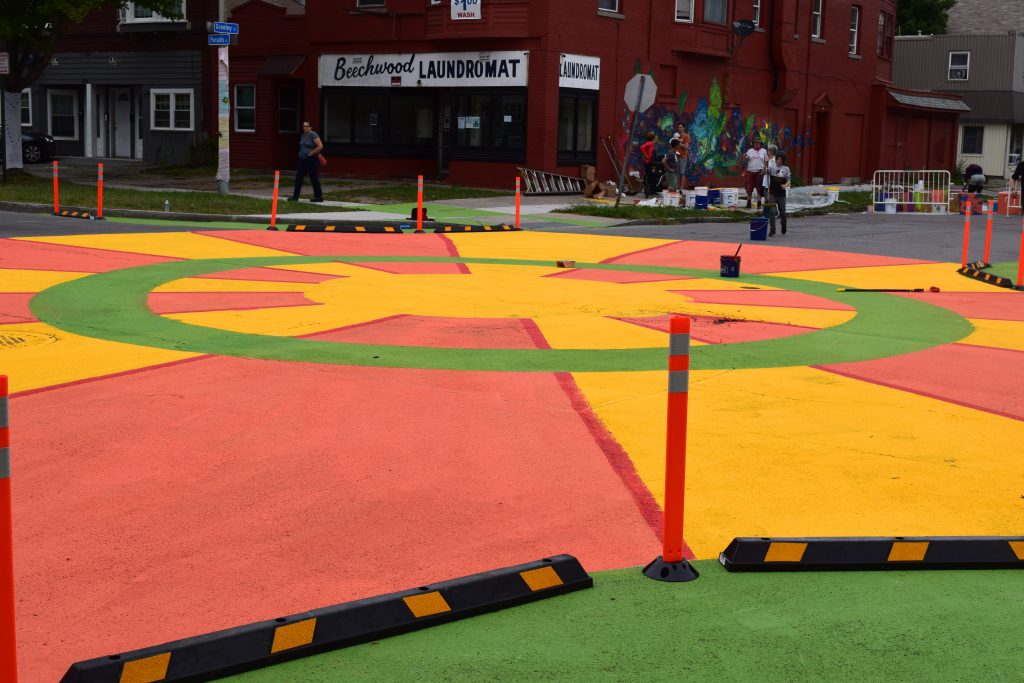
Transforming an intersection in the Beechwood neighborhood through our Complete Streets Makeover project, and applying complete streets design to other trouble spots around the city to show how they could be made safer for pedestrians and cyclists.

Rochester's Bike Share

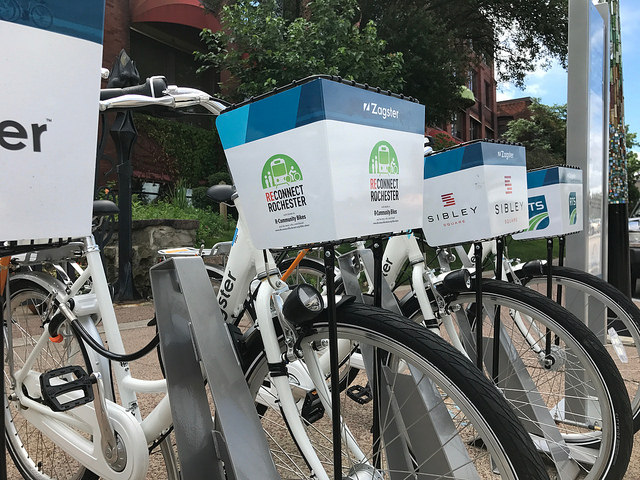
Raising funds to continue sponsoring our two bike share stations on Hudson Avenue & Adams Street. This fall, we hosted a live online presentation to give people a chance to hear from Pace about how Rochester’s 2018 bike share season went (watch a recording here).

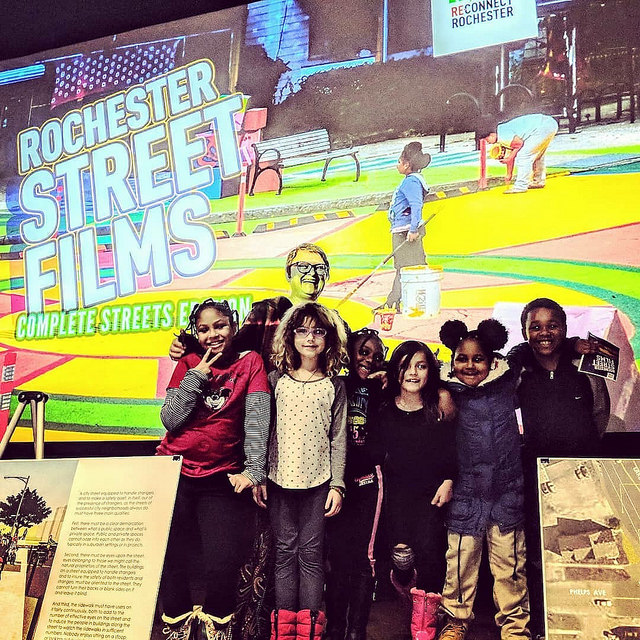
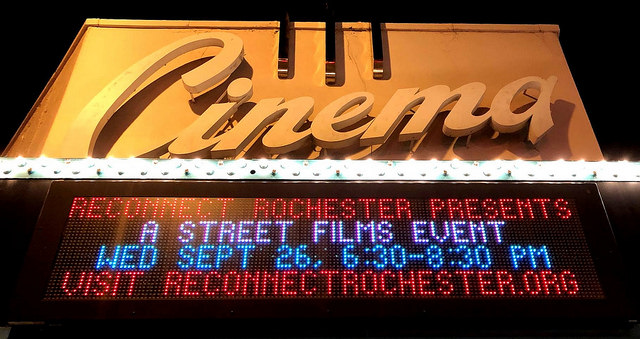
Producing three (3) Street Films events that stimulated community conversation about transportation infrastructure investment, the era of highway construction, and designing streets for people. We added two original films to our growing collection (watch them on our YouTube channel).

Reconnect Rochester at Parcel 5

Engaging with the public every day via live events, community outreach tabling, speaking engagementsmedia interviews, social media sharing, and blog posts about things like sidewalk snow removal and transit-supportive development.

Reimagine RTS Community Outreach

Encouraging public engagement, lending support and giving input into local planning initiatives like Reimagine RTS system re-design, and the City of Rochester’s Comprehensive Access & Mobility Plan, Comprehensive Plan & Roc the Riverway.

Advocating for Better Public Transit

Fighting for the transit dependent in our community through countless advocacy actions, like traveling to Albany on Transit Awareness Day, hosting a joint press conference with Our Streets Transit Coalition partners, and joining the New Yorkers for Better Public Transit campaign.

And after two years of conceiving and planning with a powerful coalition of partnerswe helped launch the Drive 2B Better public awareness campaign to make our streets safer to walk and bike. Look out for a second phase of the campaign in 2019!

by 14 Comments

What we like about Reimagine RTS plan. And a few things we’d change.

As you are probably aware, RGRTA is exploring changes to the RTS fixed-route transit system in an effort to “better meet the evolving needs of the region.” The project, called Reimagine RTS, aims to improve transit service in Monroe County, including the City of Rochester. Over 11,000 individuals have participated in the process by sharing ideas with RTS via an online survey and many public meetings and the first draft was released last month.

[ Read the Draft Recommendations here. ]

After reviewing the draft and hearing input from many of you, Reconnect Rochester would like to formally share our assessment – including the parts we like, and a few things we’d like to see improved upon… Read more

by 10 Comments

Reimagine RTS Draft Recommendations

If you recall, last fall RTS asked for the community’s help to reimagine our public transit system. Reconnect Rochester shared many of our recommendations and over 11,000 of you participated by sharing your own ideas with RTS via online survey or at one of countless public meetings. Well, today we’re dizzy with excitement as the first “Draft” proposal has finally been revealed…

Read more

by No Comments

Be Prepared To Stop

The American Society of Civil Engineers grades the condition and performance of America’s transportation infrastructure as a ‘D’ or worse. Our roads and bridges are crumbling; Over 35,000 people are killed on our highways every year; Our transit systems are unable to keep up with demand. And the U.S. lags behind the rest of the developed world in infrastructure investment.

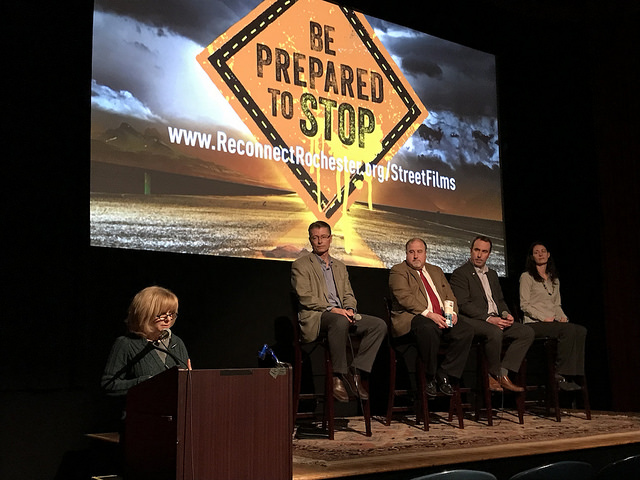
This week Reconnect Rochester hosted a screening of Be Prepared To Stop, a documentary film that talks about these challenges from the perspective of the freight transportation industry. We asked a panel of local experts in infrastructure policy and sustainability for their views on what America needs to do to put ourselves on the road to sustainability.

Watch the trailer and panel discussion below…

Moderator: 

Elissa Orlando
Senior VP for Television & News
WXXI Public Broadcasting

Panelists:

Enid Cardinal
Senior Sustainability Advisor
Rochester Institute of Technology

Jim Hofmann
Principal & Office Leader
Stantec

Richard Perrin
Director of Planning (eastern U.S.)
T.Y. Lin International

James Stack
Executive Director
Genesee Transportation Council

by 3 Comments

Sidewalk Snow Removal: How Are We Doing in Monroe County?

Story by: David Riley
A Rochester resident and a former journalist, David is completing a master’s degree in urban planning at the University at Buffalo…

Winter sidewalk. Rochester NY.

For tens of thousands of Monroe County residents, a sidewalk isn’t just a convenience. It’s a vital connection to the world.

Nearly 12,000 people here walk to their jobs, U.S. Census data shows. Another 13,000 walk to and from bus stops in order to take public transportation to work, including as many as 1 in 3 workers in some city neighborhoods. Many people also rely on sidewalks to get to and from school, medical appointments or grocery stores, much less to go for a jog or walk the dog.

So for many people, it isn’t simply an annoyance if part of a sidewalk turns into a snowdrift during the winter. It’s a disruption that forces people going about daily routines to wade through snow or take a dangerous chance and walk in the street. For people with disabilities, a snowy sidewalk can make a usually simple outing impossible.

Yet keeping sidewalks clear is not always a priority for municipalities in the Northeast and Midwest. The City of Rochester does more than many other Snow Belt cities. While property owners here are responsible for clearing adjacent sidewalks of snow and ice, the city also provides supplemental sidewalk plowing anytime it snows at least 4 inches. The program has drawn some interest in recent years from Buffalo and Syracuse, neither of which generally plow sidewalks beyond public buildings. A handful of local suburbs also provide some municipal sidewalk plowing, including Greece and Irondequoit. Read more

by 3 Comments

The City of Rochester Public Market: An Important Example and Experiment in Our Community

Guest essay submitted by: Evan Lowenstein, Reconnect Rochester Member and Assistant Market Supervisor for Communications and Special Events/Projects, City of Rochester Public Market… 

Rochester Public MarketThe City of Rochester Public Market is an endearing, fascinating example of the many things planners value and work for:  successful public places and spaces; sense of place; mixed use; real and working diversity; pedestrian-focused; linkage of city, suburbs, and rural areas; supportive of the local economy.  

While the Market has made strides in multi-modal transportation access by creating a pedestrian, bicycle, and transit-friendly Market, there is a lot of work to do. The Market can and should be a true leader in moving the community forward in its transportation mindsets and methods.

Read more

by 1 Comment

What Should Transit-Supportive Development Look Like in Rochester?

As part of its new Comprehensive Plan, Rochester 2034, the City of Rochester is studying which major streets have the best potential for “transit supportive development” in Rochester.  Transit supportive development encourages a mix of complementary activities and destinations (e.g., housing, work, shopping, services, and entertainment) along major streets and centers. This kind of development helps create compact, vibrant communities where it’s easier for people to walk, bike, and use public transit to get around. Read more

by 1 Comment

How to Bike in Winter… with Mona Seghatoleslami

For Rochester Street Films this year we asked local filmmakers and ordinary citizens to share their perspective on what it’s like to get around Rochester without a car. No rules; No restrictions; No filter.

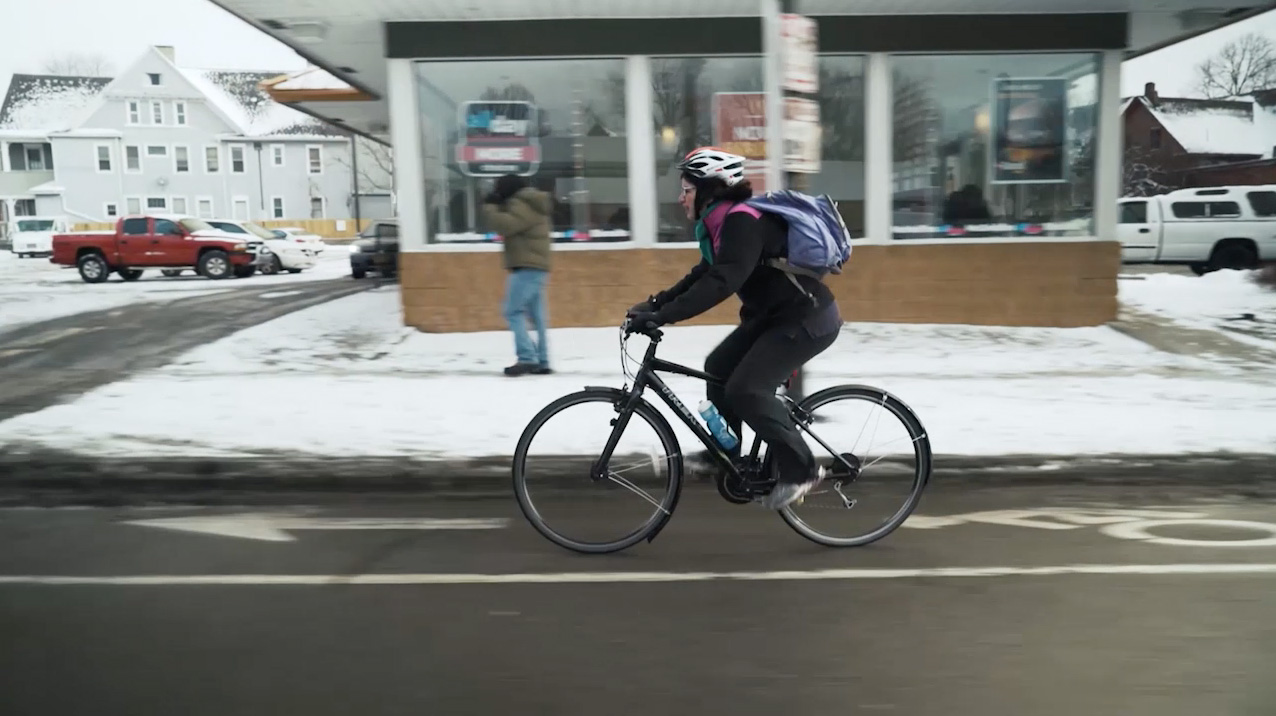
Rochester NY in February. It’s 19ºF and the ground is slick with snow and ice. But Mona Seghatoleslami, host of WXXI Classical 91.5 FM will brave the cold attempting to ride her bike from her home in Brighton to her job in downtown Rochester (about 4 miles). Afterwards, Mona heads to Tryon Bike shop to find out what type of gear she’ll need for serious winter cycling…

We’d like to ask for your help getting these films in front of as many people as we can. If you would like to host a mini screening of Rochester Street Films in your neighborhood, please contact us.

by 1 Comment

Top 10 Things We’re Most Proud of in 2017

If you’ve recently made a contribution to Reconnect Rochester thank you for reaffirming your commitment to our mission. But even if you haven’t contributed dollars, we want to take a moment to thank you for all you’ve given this year in other ways.

Maybe you’ve given to one of our programs or another similar cause. Maybe you tried riding your bike or taking the bus to work for the first time and encouraged your friends to try it too. We know many of you have helped to educate others by writing, making phone calls, speaking out publicly and even running for public office. And some of you right now are leading efforts to improve people’s lives by serving from a position within local government or at RGRTA.

We thank YOU!

Now is the perfect time of year to take pause and recognize our collective efforts (large and small) because frankly, the results have been nothing shy of astounding. And imagine, we still have next year to do even more!

Top 10 things we're most proud of in 2017

#10…

Fighting for our community through countless advocacy actions including: Traveling to Albany on Transit Awareness Day to help make a compelling case for local transportation funding; Rallying support for traffic calming measures (most recently on East Avenue); continuing to promote the Pace Car driver pledge program; Pushing for lower speed limits in City neighborhoods; Opposing Federal cuts to public transportation; AND lending support and input into local planning initiatives like Rochester’s Comprehensive Access & Mobility Plan, Climate Action Plan, Mobility & Enhancement Study, and the Shared Mobility Program. We also love engaging with the public EVERY DAY via live events, speaking opportunities, media interviews, social media and our blog… but that’s already like 11 things right there, so moving on…

#9…

Helping voters stay on top of the races for Rochester Mayor and City Council with our Transportation & Mobility Questionnaire which invited the candidates to communicate their position & understanding of mobility issues.

#8…

The loooong awaited opening of Rochester’s new train station which we celebrated with a “behind the scenes” tour guided by representatives from Amtrak and hosted by our Rail Transit Workgroup.

#7…

Our volunteers who built and placed 20 new Bus Stop “Cube” seats in and around Corn Hill, Union Street, Saint Paul Street and Monroe Avenue. Since 2016 we’ve more than doubled the number of cubes out there to give bus riders a respectable place to sit at 34 bus stops. And with plans underway for a permanent fiberglass cube, we’re also within reach of a year-round solution.

#6…

All of you who came out for SIX Rochester Snow Downs on commercial avenues in all four city quadrants, drawing attention to the need for clear sidewalks & bus stops.

#5…

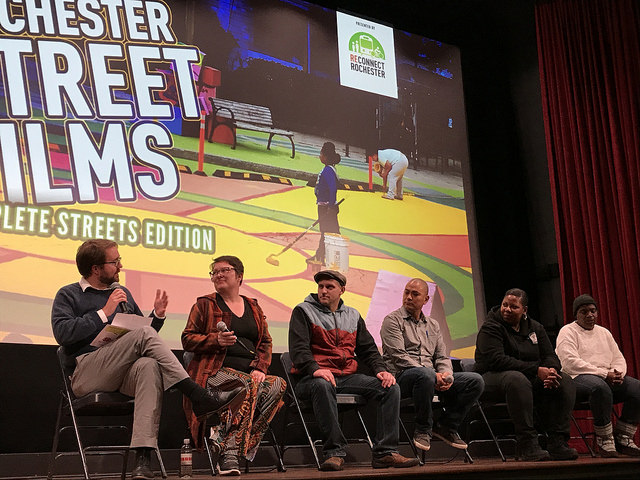
Our Rochester Street Films which drew hundreds of people to The Little Theatre for inspiration and thought-provoking discussion on a broad range of topics including the relationship between transportation and poverty, getting around with a disability, “car culture”, sustainability and community design. These films will continue to inspire people online and at future neighborhood gatherings.

#4…

Our Complete Streets Workgroup team who participated in the planning of a Traffic Safety Public Education Campaign convened by Common Ground Health. Watch for the campaign in 2018!

#3…

The wild success of Rochester’s new bike share system and our partners at Zagster and the City of Rochester. And all of YOU who helped us raise over $18,000 to sponsor bike share stations in less affluent neighborhoods (on Hudson Avenue in Upper Falls and Adams Street in Corn Hill). We’re gearing up to do it again in 2018!

#2…

The launch of our Transportation & Poverty initiative to place focus on transportation as a key barrier for people living in poverty and to inform community action. We produced a 30 minute documentary film on the subject and recently commissioned an in-depth report by Center for Governmental Research which will feed into the Rochester and Monroe County Anti-Poverty Initiative. Look for that in early 2018.

And the #1 thing
we’re most proud of in 2017…

Helping our community to Reimagine RTS!
We don’t think it’s hyperbole to say that this may be a once-in-a-life-time opportunity to reposition our public transit system for a very bright future. If you haven’t already, we invite you to read our suggestions for a better transit system compiled by our Bus Innovation Workgroup. Reconnect Rochester is one of many groups serving on the project’s Community Advisory Committee and we’d like to remind you to share YOUR input on this important project. If you missed the public input session we co-hosted, there is still time for you to take the Reimagine RTS Survey.

But most of all,
we’re proud to be partners with YOU and all of our new members this year.


by 12 Comments

Our Suggestions for a Reimagined RTS

[ Make your voice heard. Take the Reimagine RTS survey. ]

Last week RGRTA announced a plan to “Reimagine RTS.” Reconnect Rochester believes this is a once-in-a-lifetime opportunity for our community to get mass transportation right. We all have a stake in the success of our public transportation system and it is critical that RGRTA and its project team have access to thoughts and ideas from every demographic and every corner of our community. To help, we have compiled our ideas and recommendations, and we are asking you all to do the same.

But first, we need to understand how we got here.

Rochester’s public transportation network was originally designed to carry people between downtown and densely populated surrounding neighborhoods. As our residential population, commerce, and jobs spread outward with the adoption of the automobile, RGRTA attempted to follow this migration by extending service outward. With lower population densities in the suburbs, the stretched transit company found itself facing an impossible choice: expand service to reach fewer customers, or maintain its existing service area for a dwindling urban population.

After decades of attempting to do both, the quality of service in Monroe County has suffered. Those who rely on transit are underserved, and those who might choose to ride rather than drive do not. We hear complaints from riders about infrequent service, long trip times, perceived safety issues, and the need to walk great distances to reach their bus stop or final destination. Clearly, we need systemic changes to improve service and increase the viability of our public transit network.

RGRTA recognizes these issues and is now taking a bold step to design “a new transit system from the ground up.”

Our Top 5 Recommendations to Make Rochester Transit Great (again)

Reconnect Rochester has surveyed its members on how to improve Rochester’s public transit system to serve the greatest number of people. Our recommendations are prioritized below.

1. Make service more frequent and consistent.

Reimagine RTS

Current routes and schedules are too complex and inconsistent. To build confidence and make people believe they will have a ride available when they need it:

  1. Vehicles should run every 30 minutes or less throughout the entire system.
  2. Vehicles should run every 15 minutes or less on key routes during peak hours.
  3. Routes, schedules and frequencies should be consistent throughout the weekday and on weekends.
  4. Vehicles should depart from the terminal on time.
  5. Even spacing should be maintained between buses.
  6. The number and placement of new bus stops should follow the recommendations outlined previously in the RTS Bus Stop Optimization Study (2014) to strike a balance between pedestrian accessibility and system performance.
  7. Outlying routes or segments that cannot support 30 minute frequency (either with ridership or private sector funding) may need to be eliminated, or serious consideration should be given to servicing these areas by other means.

2. Make routes more direct.

Bus Rapid Transit

Many routes currently have unnecessary turns and deviations, meaning most trips take much longer than they should. The current hub and spoke layout also makes it difficult to transfer between routes without going downtown. To improve efficiency and provide the fastest possible trip time:

  1. Routes should be designed to take the most direct path between major destinations. Twists, turns and “zig-zags” should be eliminated.
    • Buses should not run into and through office complexes and strip mall parking lots. Instead, municipalities need to work to make sure transit access is provided by direct and convenient pedestrian access through a site to the edge of the public right of way.
  2. It should be possible to switch (or transfer) between routes from any point in the network.
    • Adjacent routes should be placed within walking distance from each other and service staggered to make it easier for riders to switch from one bus to another on a nearby route.
    • Provisions should be made for other modes of travel at major bus stops or satellite hubs (i.e., ridesharing and bike share stations, safe and accessible pedestrian infrastructure, information/signage, etc.).
  3. It should be possible to travel between the county’s four quadrants without transferring downtown.
    • Crosstown or orbital routes should be added near the perimeter of the city where radial routes diverge.
    • Work with other transit providers to make existing crosstown routes (e.g., U of R’s Orange Line) available for riders.
  4. Work with the City and DOT to design streets that prioritize transit (as well as pedestrians and cyclists) over private motor vehicles.
    • Install curb extensions at transit stops (as opposed to curb cutouts) to eliminate time spent weaving in and out of traffic.
    • Optimize traffic signals to improve reliability by allowing buses to maintain a constant speed, and reducing time spent at red lights.
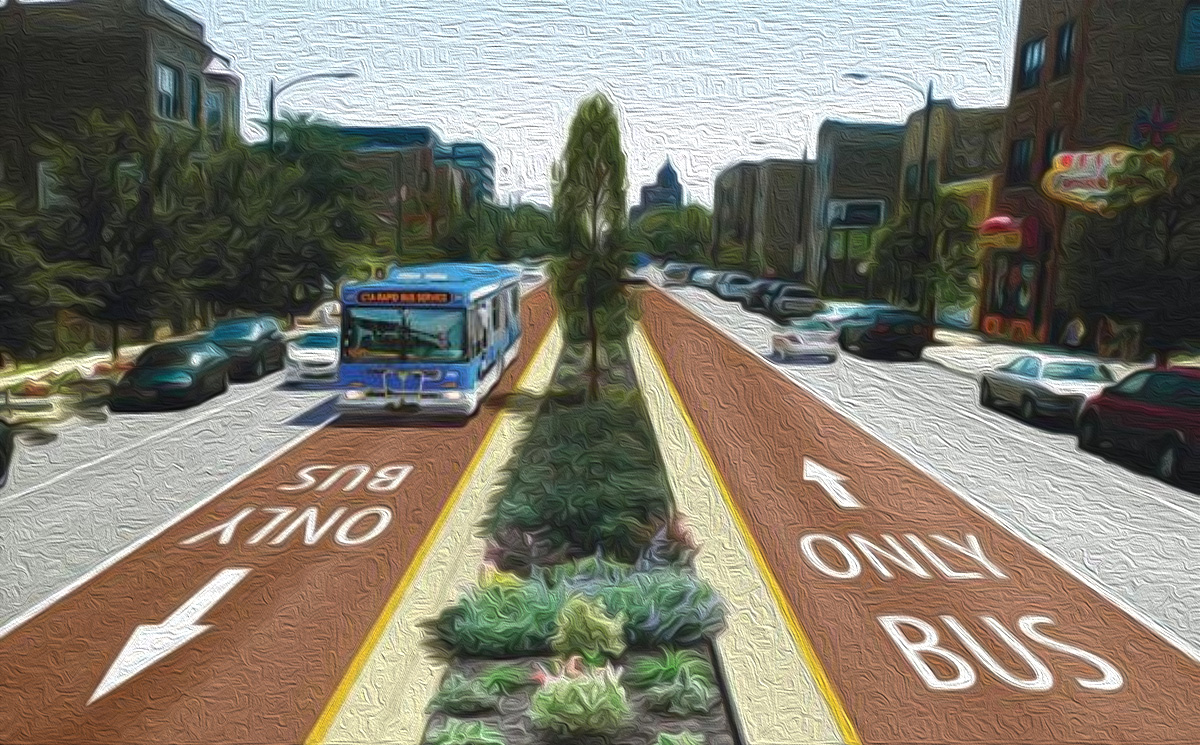
    • Utilize dedicated lanes to move buses more quickly through crowded streets.

3. Right-size the service.

Comfortable Bus

Many routes receive high ridership near the core of the network, resulting in overcrowded, slow moving buses there and nearly empty buses for the remainder of the routes. To relieve overcrowding and improve service in high demand areas:

  1. Some routes may require express and local access service.
  2. Consider eliminating outlying routes or segments where demand is low.
  3. Vehicles should be selected according to demand.
    • Heavily used routes within the core of Monroe County should be serviced by 40’ or larger vehicles, while lesser used routes could be serviced by vans or other systems altogether (i.e., ride-sharing).
  4. Where necessary, transit vehicles should be outfitted to accommodate more bicycles.

4. Make transit accessible and easy to use.

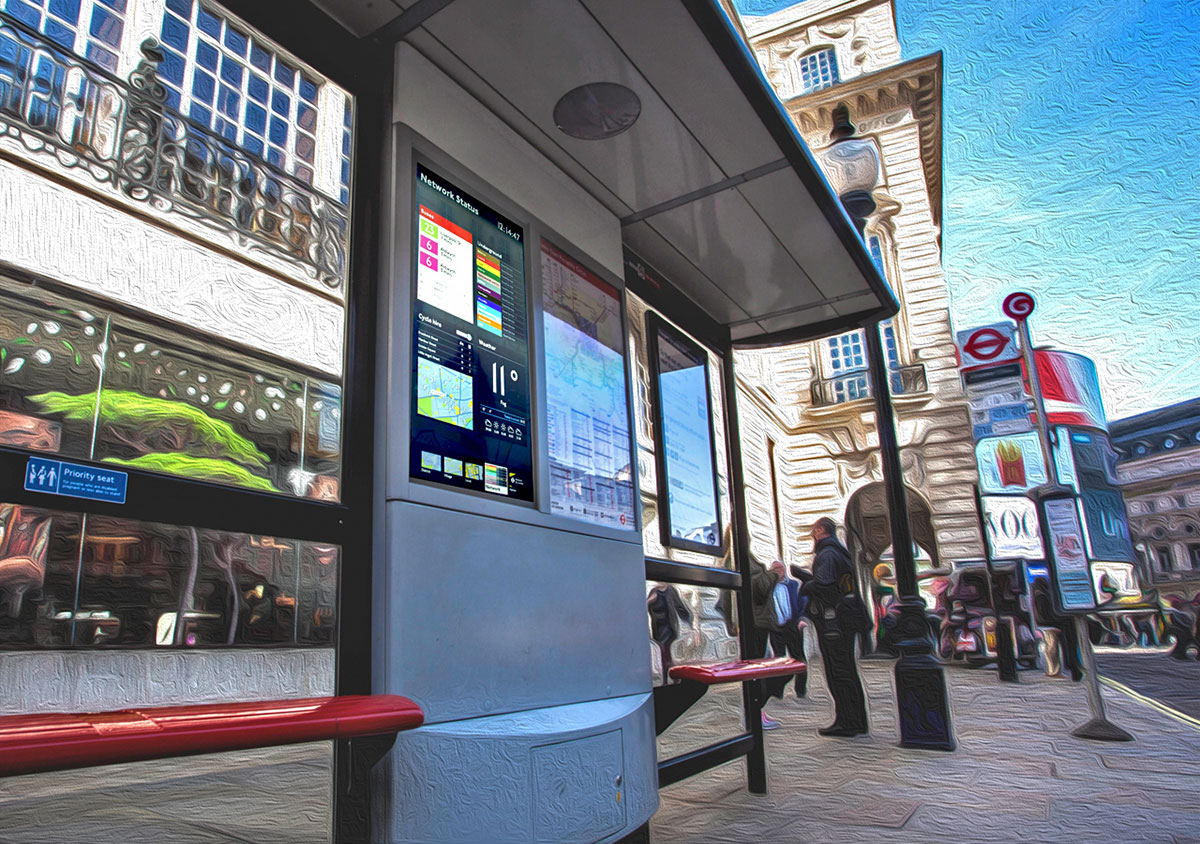
Bus Stop with real-time information

In recent years RGRTA has added several systems and technologies that have made it easier and more enjoyable to use transit. These include the fully enclosed RTS Transit Center, fare kiosks, Tap & Go fare cards, digital signage, and a mobile trip planning app. The following recommendations would make RTS even easier to use and more welcoming to new customers:

  1. Improve integration with other modes and transit systems.
    • Institute an integrated payment solution so that one “currency” can be used across a variety of transportation systems (i.e., one stored-value pass to pay for bus fare, rideshare, taxi, or bike share that could be replenished online or at a kiosk).
    • Include data from other transportation companies within the RTS mobile app.
    • Share data and synchronize service between other transit providers such as college bus systems, Amtrak, and intercity buses.
  2. Work with municipal staff and land use boards in development review and site design. Employment locations, services, retail, and higher density residential development should occur within a half mile of transit corridors. The details of site design such as building placement and internal pedestrian circulation networks are critical in supporting transit.
    • A dynamic transit frequency map should be published for municipalities to evaluate whether transit is a realistic mobility option for a given development or not. There’s a huge difference in a site served by buses every 2 hours versus one served by buses every 20 minutes. Frequency information is not captured on a typical system route map (see for example these maps by Reconnect Rochester and this article by Jarrett Walker).
  3. School routes (currently designated with an X) should not add complexity to the published schedules.
  4. Provide basic amenities for transit riders at all bus stops.
    • Safe and accessible sidewalk connection from curb pick-up
    • Route map and information
    • Seating
  5. Provide enhanced amenities for transit riders at heavily used stops and hubs.
    • Shelter
    • Trash receptacle
    • Bike rack
    • Heat
    • WiFi
  6. Work with municipalities to enact a maintenance plan for all bus stops.
    • Trash pickup
    • Snow removal
    • Accountability
  7. Provide riders with real-time information
    • Countdown clocks with real-time information should be installed at all major transit stops and hubs (i.e., URMC, colleges, Airport, Rochester Intermodal Station, Irondequoit Plaza, etc.).
    • Work with municipalities and property owners to display real-time information screens at highly visible locations such as schools, shopping centers, arenas, office and apartment buildings (i.e., TransitScreen).
  8. Provide additional off-board and cash-free fare payment methods (i.e., kiosks at major transit stops where passengers can buy Tap & Go cards, mobile ticketing via the RTS app or a 3rd party app such as Token Transit, etc.).
  9. Explore ways to allow boarding at both front and rear doors.

5. Stay competitive through innovation.

RTS Streetcar

A business succeeds by staying ahead of the competition. Beyond the recommendations outlined in sections 1-4, it will be imperative for RTS to:

  1. Continually monitor customer needs and local market conditions in order to identify areas for improvement, industry trends and opportunities to attract new customers.
    • Offer classes or seminars on “how to ride the bus.” Many people are reluctant to try the bus, in part, because they are unfamiliar with it.
    • Have a bike rack mock-up device so people can practice loading a bike into the rack without the pressure of a bus full of people watching.
  2. Expand offerings by studying the feasibility of new systems and upgrades such as:
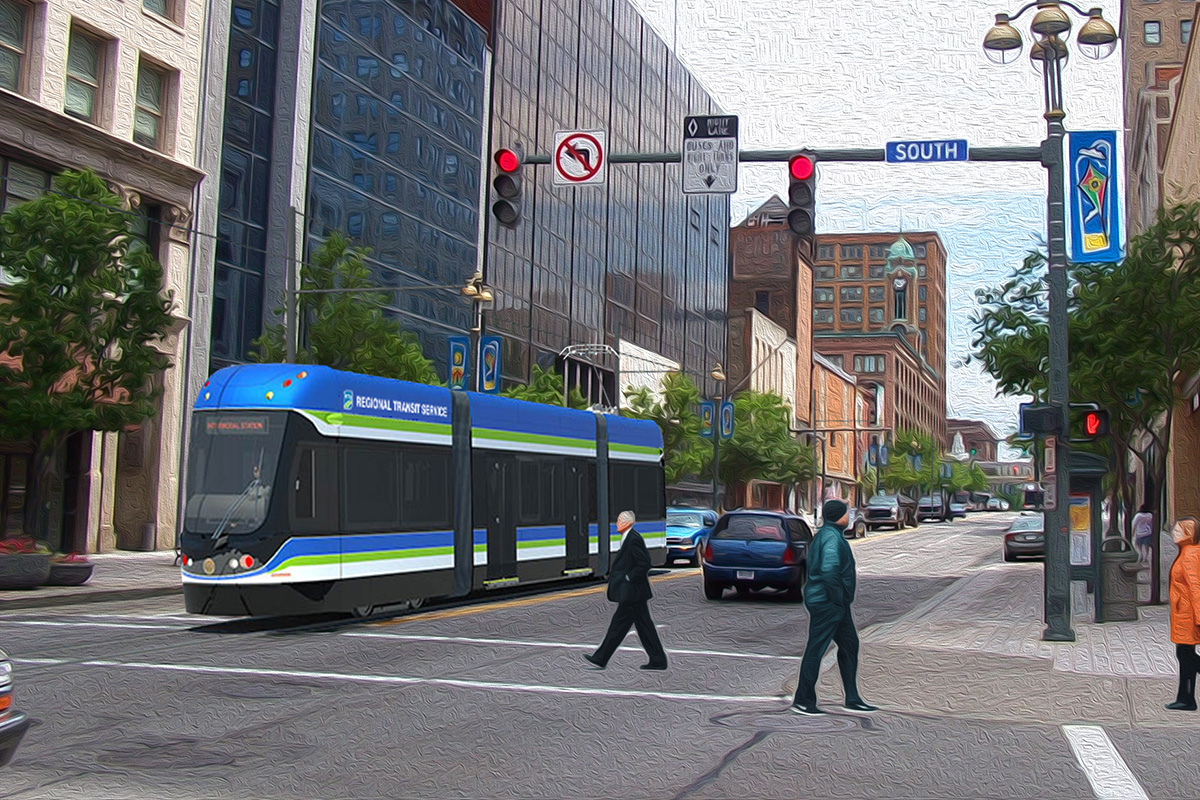
    • Fixed guideway and/or bus rapid transit on core routes
    • Smaller self-driving vehicles for local or on-demand service
  3. Work with the City and County to manage land use in a way that complements service patterns. Future service can then be planned based on land use decisions.
  4. Work with municipalities, key neighborhood groups, and large employers to establish Transportation Demand Management entities and co-promote public transit as a solution to congestion and costly parking.
  5. Step up marketing efforts and always maintain a fresh image reflecting the unique selling points of RTS.
    • Develop example language/assistance for municipalities, event planners, retailers, employers etc. that highlight the ability to use transit to access the event. Too often events or meeting notices provide parking information without information about public transit. Rochester International Jazz Festival does a good job of this.

Share Your Suggestions

We hope our suggestions will give you a framework from which to craft your own thoughts for RTS. Please feel free to steal our list straight away. Or if you have ideas not mentioned above, we’d love to hear them in the comments section below.

We also urge you to attend the first public meeting for this project on October 25th from 6:00-7:30PM at the Brockport Metro Center. And don’t forget to visit www.myRTS.com/reimagine to submit your comments and stay updated on this important project over the next 12 months.

by 6 Comments

“Reimagine RTS” – A fresh start for Rochester’s Transit System?

Moments ago RGRTA announced plans to study sweeping changes to the RTS (Monroe County) transit system. The effort is being called Reimagine RTS and the goal is to develop a set of recommendations to address the community’s mobility needs, increase transit ridership, and position RTS for long-term financial sustainability.

Read more

by 6 Comments

Where They Stand: 2017 Candidates for Rochester

Reconnect Rochester surveyed all candidates for Rochester’s Mayor and City Council to learn where they stand on issues related to transportation and mobility.

Questions were designed to give the candidates the opportunity to share their opinions, ideas and vision for a well-connected and accessible community. Surveys were sent to all campaign teams on August 2. We did our best to make contact with all of the candidates. After several follow up attempts, the responses we have received are posted below.

We hope this information will help you make an informed decision when you head to the polls this November – and/or next Tuesday (9/12) for the Democratic primary. Don’t want to wait until election day? Take our Voter Poll right now (just for fun).

Click on the candidate names below to read their full, unedited responses. Candidates are listed in alphabetical order…

Candidates for Mayor:

Rachel Barnhart

Rachel BarnhartCandidate Email: Rachel@rachelformayor.com


Website: RachelForMayor.com


What is your vision for Rochester’s transportation network? How do you plan to achieve that vision?

Our current public transit system is not set up to address the needs of our residents, many of whom are forced to work and shop in the suburbs. We need a network that better connects people to jobs and services. We need a network with various hubs. We need a network that accommodates pedestrians and cyclists. We need a network enjoyed by all.


We must introduce planning and transit into discussions about awarding incentives to companies relocating or expanding. We need a mayor who will advocate for locating jobs and services in the city, near transit lines and population centers.


What are Rochester’s greatest challenges in regards to transportation?

Our greatest challenge is that we have a community that prioritizes the automobile. This has had enormous economic, social and environmental costs.


What role do you see City government playing in building a more robust and equitable transportation network?

We must fight for Rochester’s share of transportation funding from the state and federal government. We must prioritize pedestrians and cyclists when building infrastructure.


What steps can the City take to improve accessibility to jobs for residents who do not own cars? And, what steps can the City take to encourage residents who own cars to increase their use of alternative modes of transportation?

In addition to building infrastructure, the city has to advocate to locate jobs in the city, on transit lines and near where people live.


The city should encourage the University of Rochester, Wegmans and other employers to give workers free bus passes. By adding infrastructure, such as protected bike lanes, more people will feel safe to ride bicycles.


Broadly, what is your vision for improving the parking situation downtown?

I don’t think downtown has a parking problem. It has a walking problem. People think nothing of parking at Eastview Mall and walking the equivalent of a half mile to get to a store. We need a mental reset about what it means to visit a downtown. That said, it’s worth exploring a downtown circular to transport people among venues and garages.


How do you think the City should prioritize traffic enforcement relative to other issues?

Traffic deaths are not “accidents.” They’re preventable tragedies. They’re unacceptable. They’re not inevitable. That’s how the city will treat fatal and serious injury crashes under Vision Zero Rochester. The first Vision Zero program started in Sweden in the late 1990s. Now there are Vision Zero programs in many cities. The aim of Vision Zero is to have zero deaths and serious injuries in road traffic. Vision Zero takes a multi-disciplinary approach to traffic safety. It recognizes that people make mistakes. Instead of blaming victims, we will improve the system to mitigate human error. Using education, enforcement, design, technology and policies, we can make our streets safe for everyone – while not impeding mobility.


Do you support studying the feasibility of modern streetcars, downtown circulators, and various rapid transit options for Rochester? Why or why not?

Yes.


Reducing reliance on cars makes for a healthier, more equitable city.


Do you support a “Vision Zero” style approach to road safety, which includes a 25 mph speed limit on residential streets in the City and other traffic calming practices and policies? Why or why not?

Yes.


See above.


Do you support the continued expansion of a bicycle lane network throughout the City? Why or why not?

Yes.


Adding bike infrastructure promotes activity, social equity, cleaner air and vibrant street life.


Do you support road diets or significant changes to road configurations to improve safety on any major roadways in the City? Why or why not? If yes, which ones?

Yes.


Road diets slow traffic, making us safer, and they improve property values and walkability. East Main Street desperately needs a road diet.


What steps (if any) do you think we can take to encourage employees (especially City employees) to commute using transportation options other than single occupant automobiles (walk/bike/bus/carpool/etc.)?

As noted above, we should encourage employers to spring for bus passes. We can also ask them to include facilities for bikes and provide incentives for carpooling.


Are there any other comments or thoughts you’d like to share?

Tony Micciche

Tony MiccicheCandidate Email: TonyForMayor.us


Website: TonyForMayor.us


Unfortunately we did not receive a response from Tony Micciche.

James Sheppard

James SheppardCandidate Email: info@sheppardforrochester.com


Website: www.SheppardForRochester.com


What is your vision for Rochester’s transportation network? How do you plan to achieve that vision?

Rochester’s transportation network must address the needs of all of our citizens with an eye toward dramatically reducing carbon emissions (see my environmental platform, “Green Rochester Inside and Out,” available on www.sheppardformayor.com). My vision for the City is that all of our residents will have inexpensive and accessible choices for getting where they need to go, for work and play.


We are fortunate to have a community of smart, creative and engaged citizens who are passionate about this issue, the members of Reconnect Rochester among them. Within the first six months of taking office, I will hold a Transportation Roundtable to bring stakeholders together, including RR, RGRTA, Genesee Transportation Council, residents, business owners, transportation experts and others to evaluate our current transport network, review the plans that are in the works, and determine an action plan for moving forward. I don’t have all the answers but there are people right here in this community who have a lot of expertise and interest and are willing to share it.


What are Rochester’s greatest challenges in regards to transportation?

An aging infrastructure and high poverty. We have significant capital needs that are difficult to address when our tax base is shrinking, which often forces us to prioritize emergency repairs. That being said, other communities have gotten creative with their financing of transportation projects and aggressive with their State and federal funding requests, and we can too.


What role do you see City government playing in building a more robust and equitable transportation network?

The City needs to play a leadership role as transportation directly impacts the quality of life of our residents and the long-term environmental health of our community. The City in particular must demand equity in regional transportation planning efforts, as our residents are often the least served and most in need. We must ensure our residents are at the table, whether they want to put roads on a ‘diet’ and increase bike lanes, or increased bus service and updated shelters. We need to ensure that our residents are empowered and actively involved in solving Rochester’s transportation needs.


What steps can the City take to improve accessibility to jobs for residents who do not own cars? And, what steps can the City take to encourage residents who own cars to increase their use of alternative modes of transportation?

We need to do a better job of working with major employers and the business community to identify the current and future needs of their employees. They know as well as we do the challenges their employees face in getting to work on time and on budget; employees who can get to work easily are more likely to show up and stay employed. Once we have a more thorough understanding of what our current and future needs are, we can plan accordingly, working with RTS, and using van pools, car sharing and bike sharing alternatives.


The City can be an active leader in promoting alternative modes of transportation through events such as “Bike to Work” days, free public transportation periods, and “Celebrity Van Pools,” as has been done in other communities. In promoting our own special events, information can be shared on the availability of bike sharing stations, bus and circulator routes, and openly encouraging attendees to leave their cars at home. Often the biggest barrier to using alternative transportation is the fear of the unknown – once people know others are using different options, and they try them for themselves, they become our most regular and vocal users!


Broadly, what is your vision for improving the parking situation downtown?

Our downtown should be a place where people feel comfortable, and indeed enjoy, walking around. When they do, it will not be a problem for them to park farther away and walk; take the bus downtown and walk from a stop; or bicycle around as much as possible. Creating any new parking lots or garages will be a last resort as we promote alternative transportation and reduce our dependence on parking downtown.


How do you think the City should prioritize traffic enforcement relative to other issues?

Parking enforcement should be prioritized as a quality of life issue. It must be enforced fairly, appropriately, and consistently.


Do you support studying the feasibility of modern streetcars, downtown circulators, and various rapid transit options for Rochester? Why or why not?

Yes.


It just makes sense as downtown continues to grow.


Do you support a “Vision Zero” style approach to road safety, which includes a 25 mph speed limit on residential streets in the City and other traffic calming practices and policies? Why or why not?

Yes.


We need to make a serious commitment to neighborhood safety and this is one important way to do it.


Do you support the continued expansion of a bicycle lane network throughout the City? Why or why not?

Yes.


We need to encourage bicycling as a viable transportation alternative and make sure cyclists are safe.


Do you support road diets or significant changes to road configurations to improve safety on any major roadways in the City? Why or why not? If yes, which ones?

Yes.


It will both improve safety and encourage alternative forms of transportation. We need to prioritize our major corridors using safety data.


What steps (if any) do you think we can take to encourage employees (especially City employees) to commute using transportation options other than single occupant automobiles (walk/bike/bus/carpool/etc.)?

We should pursue incentives for employees who use alternative forms of transportation – “dress down” days; restaurant coupons; Mayoral recognition, etc.


Are there any other comments or thoughts you’d like to share?

Thank you for all of the good work that you do keeping transportation issues at the forefront and supporting neighborhood safety!

Lori F. Thomas

Lori F. ThomasCandidate Email: thomas4mayor@rochester.rr.com


Website: www.Thomas4Mayor.wordpress.com


What is your vision for Rochester’s transportation network? How do you plan to achieve that vision?

Fewer cars, more public transportation, cleaner streets during winter months and pothole elimination.


Ride sharing, working with RTS to committ busses to larger areas with more work accomodating schedules, making sure street plows clear streets curb to curb, and patching potholes during winter months and creating a rotating maintenance schedule of repair during spring and summer months.


What are Rochester’s greatest challenges in regards to transportation?

The extensive traffic coming in and going out of Rochester from suburban neighborhoods, excessive speeds on neighborhood streets and the excessive use of school buses during peak travel hours.


What role do you see City government playing in building a more robust and equitable transportation network?

Advocating in Albany for a change in speed limits for neighborhood streets and appropriating enough funding to improve and maintain city streets.


What steps can the City take to improve accessibility to jobs for residents who do not own cars? And, what steps can the City take to encourage residents who own cars to increase their use of alternative modes of transportation?

Working with RTS to committ to better scheduling of times and routes.


Providing incentives for ride sharing and the use of public transportation.


Broadly, what is your vision for improving the parking situation downtown?

Increasing public transportation and ride sharing opportunities will decrease the need for downtown parking.


How do you think the City should prioritize traffic enforcement relative to other issues?

Traffic enforcement is key to reducing accidents and creating safer neighborhoods. This is a top priority.


Do you support studying the feasibility of modern streetcars, downtown circulators, and various rapid transit options for Rochester? Why or why not?

No.


Currently our population would not support these venues.


Do you support a “Vision Zero” style approach to road safety, which includes a 25 mph speed limit on residential streets in the City and other traffic calming practices and policies? Why or why not?

Yes.


This will decrease accidents and insure the safety of neighborhood children.


Do you support the continued expansion of a bicycle lane network throughout the City? Why or why not?

Yes.


Bicycle traffic has increased over the years and with the current cooperation with Zagster, bicycle lane expansion is a necessity.


Do you support road diets or significant changes to road configurations to improve safety on any major roadways in the City? Why or why not? If yes, which ones?

Yes.


Rochester has undergone significant changes in road design that have impeded the effective and efficient travel of citizens and visitors. I believe that a more effective and efficient system needs to be considered in order to improve the safety of our citizens and reduce traffic accidents and tie-ups.


That would depend on the street and the traffic conditions. Both would be considerations.


What steps (if any) do you think we can take to encourage employees (especially City employees) to commute using transportation options other than single occupant automobiles (walk/bike/bus/carpool/etc.)?

Creating ride sharing opportunities and benefits for individuals who carpool and use public transportation. Working with the UofR, one of Rochester’s largest employers and RTA to create a more employee friendly public transportation schedules along with incentives such as reduced bus passes for city residents and Park&Rides for suburban residents.


Are there any other comments or thoughts you’d like to share?

We can also reduce the number of school buses by re-instituting neighborhood schools which would reduce traffic congestion and save money.

Mayor Lovely Warren

Mayor Lovely WarrenCandidate Email: Lovely@MayorLovelyWarren.com


Website: MayorLovelyWarren.com


What is your vision for Rochester’s transportation network? How do you plan to achieve that vision?

I envision a Rochester that is walkable and bikeable. A city with robust usage of the sharing economy. A city with an accessible public transportation network. I envision a city where single-occupancy car trips are all but unnecessary. And I envision a city that is ahead of the times in preparing its infrastructure for green – and eventually driverless – vehicles. I want our streets to be safe and accessible for not just cars but bikes, pedestrians and public transit, something we are well on the way to accomplishing with our “complete streets” policy.


We are well on our way. As we reinvent our city, we are doing so with the future in mind. Our complete streets policy means that whenever we build or rebuild a road, it must be accessible not just for cars but for pedestrians, bikes and public transit. We are constantly improving our city for cyclists by creating more miles of bike lanes, a bicycle boulevard network, and bicycle safety measures in all corners of our city. We brought ride sharing and bike sharing to Rochester, and are working to raise awareness about the benefits of green vehicles. We created a vanpool program to make it easier for citizens to reach job sites not on the bus line.


What are Rochester’s greatest challenges in regards to transportation?

As our city and our economy builds and improves, our transportation options must keep pace. My administration is working actively with RGRTA and our community partners to review our bus routes to make sure they meet the needs of our citizens.


What role do you see City government playing in building a more robust and equitable transportation network?

We must lead the way, and bring all community partners to the table. We must ensure that our transportation network works for everyone, and decrease our dependence on cars.


What steps can the City take to improve accessibility to jobs for residents who do not own cars? And, what steps can the City take to encourage residents who own cars to increase their use of alternative modes of transportation?

We created a vanpool program to help our citizens access jobs in areas underserved by public transportation. We are also working with RGRTA to identify these underserved areas, and increase service. Our bike sharing program has improved accessibility for hundreds of residents, as does ride sharing.


The Downtown Transit Center was a crucial step toward this goal, as it made taking the bus easier and sheltered from Rochester’s winters. We are also seeing more residents use ride sharing and bike sharing to get to their destinations. We can encourage bike commuting by continuing to build bike lanes and installing safety measures to protect our citizens.


Broadly, what is your vision for improving the parking situation downtown?

We want to be a “park once” city, meaning that residents, workers and visitors only need to park once Downtown, then be able to walk, bike or take public transit to their destinations.


How do you think the City should prioritize traffic enforcement relative to other issues?

Parking enforcement is necessary to both support businesses, and keep the streets safe for all. No one likes getting a parking ticket, but by enforcing our parking laws, we can ensure a more vibrant and active city.


Do you support studying the feasibility of modern streetcars, downtown circulators, and various rapid transit options for Rochester? Why or why not?

Yes.


We must continue to look at all options.


Do you support a “Vision Zero” style approach to road safety, which includes a 25 mph speed limit on residential streets in the City and other traffic calming practices and policies? Why or why not?

Yes.


This is something that is already well underway. We have been putting many of our streets on a “road diet”, replacing traffic lanes with bike lanes, street parking, and traffic calming measures. We are exploring a lower speed limit.


Do you support the continued expansion of a bicycle lane network throughout the City? Why or why not?

Yes.


Because we love bikes! (And want to keep our growing number of cyclists safe.)


Do you support road diets or significant changes to road configurations to improve safety on any major roadways in the City? Why or why not? If yes, which ones?

Yes.


We are building a city that is less reliant on cars, so we must adjust our streetscapes to ensure the safety of our cyclists and pedestrians. Exchange, South and Mount Hope are just three examples of streets that we have improved, with many more to come.


All of the above.


What steps (if any) do you think we can take to encourage employees (especially City employees) to commute using transportation options other than single occupant automobiles (walk/bike/bus/carpool/etc.)?

The bike sharing program was a huge step in this direction, as was the Downtown transit center. We will continue to take measures to make Downtown safer for pedestrians and cyclists.


The filling in of the Inner Loop plays an important role in this as well. When complete, the Inner Loop East site will connect our eastern neighborhoods to Downtown, and we hope to do the same with the northern section of the Inner Loop.


Are there any other comments or thoughts you’d like to share?

I would just like to thank Reconnect Rochester for all they do in raising awareness, and helping us prepare our city for the next generation.

Alex White

Alex WhiteCandidate Email: alexwhiteforrochester@gmail.com


Website: AlexWhiteForRochester.org


What is your vision for Rochester’s transportation network? How do you plan to achieve that vision?

A comprehensive public transportation system which incorporates bus, light rail and active transportation.


It is important for the city to work with all the elected officials to try to obtain federal funding to start building this comprehensive system. In particular we need to start securing funding to start designing and building an effective light rail system which can provide the backbone for this system.


What are Rochester’s greatest challenges in regards to transportation?

Rochester, though densely populated is surrounded by a suburban zone which was built to resist public transportation. Further the dispersion of retail has further complicated the development of comprehensive public transportation.


What role do you see City government playing in building a more robust and equitable transportation network?

Due to the way the federal government funds public transportation the city will need to take the lead on any attempt to obtain additional transportation money to help transform our system.


What steps can the City take to improve accessibility to jobs for residents who do not own cars? And, what steps can the City take to encourage residents who own cars to increase their use of alternative modes of transportation?

The fact that RGRTA refuses to provide routes to large employers who do not pay for additional coverage is absurd. They to become more flexible with perhaps some smaller vehicles and more specialized routes. If RGRTA can not be changed than the city needs to recover funding and provide the needed services.


Improve public transportation.


Broadly, what is your vision for improving the parking situation downtown?

The solution is to increase public transportation and one of the way to do this is to create more attractive transportation options like light rail. This will help decrease the need for parking but in the long run this problem will solve itself as increasing fuel costs will decrease the need for parking.


How do you think the City should prioritize traffic enforcement relative to other issues?

Though traffic enforcement is important is should be a low priority compared to other public safety issues.


Do you support studying the feasibility of modern streetcars, downtown circulators, and various rapid transit options for Rochester? Why or why not?

Yes.


First it would decrease congestion and parking problems downtown and would help familiarize people with public transit.


Do you support a “Vision Zero” style approach to road safety, which includes a 25 mph speed limit on residential streets in the City and other traffic calming practices and policies? Why or why not?

Yes.


Decreasing the vehicle speed would help make streets safer for youth in our city and decrease active transportation accidents.


Do you support the continued expansion of a bicycle lane network throughout the City? Why or why not?

Yes.


Bicycling is an ever increasing part of the transportation network and should be encourage when ever possible.


Do you support road diets or significant changes to road configurations to improve safety on any major roadways in the City? Why or why not? If yes, which ones?

Yes.


It is time that we stopped favoring cars in our transportation network and started to put public safety about driver convenience.


I do like providing bike lanes both in the road and adjacent to the sidewalk.


What steps (if any) do you think we can take to encourage employees (especially City employees) to commute using transportation options other than single occupant automobiles (walk/bike/bus/carpool/etc.)?

Perhaps the best way to do this is the encourage more employees to live in the city with homeowner incentives and tax credits. Further the health care options can use active transportation incentives to encourage other means of transportation other than cars.


Are there any other comments or thoughts you’d like to share?

Candidates for City Council:

Pam Davis

Pam DavisCandidate Email: pam4cc@mail.com


Website: www.facebook.com/pg/PamforCityCouncil


What is your vision for Rochester’s transportation network? How do you plan to achieve that vision?

I would like our network to actually WORK for the residents of the City of Rochester! Currently, the bus system is very time-consuming, and not convenient for riders. More folks would use public transportation if it made logistical sense.


I would like to collaborate with the RTS bus company and a large and varied sample of its regular riders. I would arrange informative brain-storming sessions to help iron out the trouble spots in the current system. Once such sessions have been held, I would like to work on the trouble spots, and find solutions to those challenges. The people who ride the bus each day know where the problems are, and will most likely be able to offer astute suggestions.


What are Rochester’s greatest challenges in regards to transportation?

I believe the greatest challenges to Rochester’s transportation stem from the sprawl that was allowed to occur decades ago. The majority of jobs are now located in our county’s suburbs, rather than in the heart of our county, also known as Rochester’s Center City. Because of the very large area that needs to be covered in Monroe County, our public transportation needs are not being met by the current system. The spoke and wheel design is not efficient for the average traveler’s daily needs.


What role do you see City government playing in building a more robust and equitable transportation network?

I see our City government supporting various transportation methods, to build a system that works for the people of the City of Rochester. From carpooling, to rerouting and rescheduling the RTS buses, I believe that the public transportation *could* be a million times better than it is right now. I also know that this will not happen unless the people who actually ride the buses are an integral part of the planning process.


What steps can the City take to improve accessibility to jobs for residents who do not own cars? What steps can the City take to encourage residents who own cars to increase their use of alternative modes of transportation?

I would like the City to take a good look at the many great suggestions that we came up with on the Rochester 4.0 Planning Committees. There were many meetings held across the city, and ours in the NW District touched on public transportation as an area that needed improvement. We also noted the under-use of our city’s waterways. We made the suggestion to create a water taxi service (weather permitting, of course), as well as installing a light-rail system that could make access to and from Charlotte faster (for example), and be able to connect to a bus route, or another trolley line(s), that would serve more areas across our county. These, in partnership with carpool lanes on larger roadways, and offering free parking to carpool vehicles in the city might help reduce our city’s carbon footprint. Carpooling would be a great way to help get city residents to suburban job locations. As a council member, I will also do my best to try to get as many businesses to relocate to our inner city, as this would bring the jobs back to the people who need them the most. I especially want to see Rochester be a leader in the clean energy and renewable resource field, so I want to see manufacturing of solar panels and wind turbines (and their components) to be made in the city by city residents, and placed on city homes to help city homeowners with energy costs. Then, to help finance the whole program/initiative, the city can sell the extra energy generated to other municipalities, and can sell the panels and turbines, as we could be a world leader in this global economy.


I believe that the current bus system is inefficient, and this is a key reason most people do not leave their cars at home. It should not take two hours to go somewhere that is 20 minutes away. We need a better route for buses to travel, as well as increasing the frequency of the bus runs. When I visit NYC, the bus stop showed a schedule and route, and basically the time was listed as, “The bus will be here shortly.”, and it was! I don’t think we waited five minutes. Now, I completely understand that Rochester does not have the same dense population that NYC has, but our residents deserve to have that type of quality service. If you miss a bus after work in the evening, you are going to wait about an hour for the next bus. That is just not feasible for families and students, or for anyone. We need to get where we are going, and not be waiting for a ride everywhere. That is the main reason people drive their cars, rather than take the bus. There should also be ADA compliant public restrooms available across the city, and more bus stops along the routes rather than removing stop locations. There should also be simple shelters and benches available at bus stops. These could be paid for via sponsorships and advertising opportunities. The top 20 people who run the bus company, based upon salary rate, should use their own service. If they aren’t doing so, the question to ask is “Why not?” as the residents of the City of Rochester and the rest of Monroe County deserve to be treated with the same level of respect that they would expect to receive.


Broadly, what is your vision for improving the parking situation downtown?

I would like the downtown parking to be free, as the fee to park is prohibitive and unwelcoming to customers of our local businesses. Also, as a part-time worker when I was in college, paying to park a vehicle downtown was a larger percentage of my paycheck than I really could afford to pay. This doesn’t help hard-working people get out of poverty. I would like to see underground parking garages utilized, so that we can conserve our valuable green spaces, while using all space efficiently. I think that garages are better than parking lots, as a lot is taking up an area of space that could be used for social interactions with people, and with small businesses to support our local economy. A garage can be built onto a building, and could also have an ecological component, where solar panels and wind turbines could be mounted onto them, as well as green plants/trees could be grown on the side, to help improve the air quality around the building.


How do you think the City should prioritize traffic enforcement relative to other issues?

Unfortunately, from my perspective and experience, I believe the City should prioritize traffic enforcement lower on the scale of urgency. The other issues facing the City of Rochester are on a life and death scale, the highest being the insidious drug use epidemic, and the violence that destroys our neighbors’ quality of life. I certainly encourage everyone to follow the current traffic laws, and to be mindful and courteous to others using our roadways. If these road rules were followed, our streets would be safer for all travelers, and our police could be deployed to more serious and timely matters, like getting guns and drugs off our streets and making better community connections between officers and city residents.


Do you support studying the feasibility of modern streetcars, downtown circulators, and various rapid transit options for Rochester? Why or why not?

Yes.


I absolutely support studying these options! If public transportation was faster and convenient, most people would use it willingly, rather than out of necessity. These options could also bring more jobs to our city residents, which would lift more people out of poverty. The environmental benefits of using public transportation more often would also help our overall ecological health.


Do you support a “Vision Zero” style approach to road safety, which includes a 25 mph speed limit on residential streets in the City and other traffic calming practices and policies? Why or why not?


No.


I do not currently support a “Vision Zero” style approach to road safety, as 25 mph speed limits do not seem reasonable. I believe the current 30 mph limit suits our community. However, as a councilmember, I would ask my constituents what they want, and would support their desire. If a majority of our city residents wanted this “Vision Zero” style, then I would help create legislation to make it become a reality. My own personal opinion would not override the needs of the people I am elected to serve. Other traffic calming practices and policies would be investigated, and again, brought to the people to make the decision, as they would be directly affected by these changes. In some cases, narrowing of roads, or using round-abouts would make perfect sense, and be a benefit to specific areas; in others, not so much. Overall, I encourage educating the public on the current traffic laws and rules, and would expect people to take personal responsibility for their actions. When I rode my bike, I rode with traffic, near the curb, wearing a helmet and reflective clothing with lights on my wheels. I did not pull out into traffic from between two vehicles, or ride on the wrong side of the road. When committing these acts, people are putting their personal safety in jeopardy, as well as creating a hazard for others who are also using the road. Common sense and education is the key to saving lives.


Do you support the continued expansion of a bicycle lane network throughout the City? Why or why not?


No.


I feel that there are many streets that are simply too narrow to add a bike lane, and keep the vehicle traffic moving safely. I have seen bike lanes that disappear, and bicyclists be put in danger as cars narrowly miss them. On larger, main thoroughfares, yes, bike lanes make sense, and are a wise investment, such as on Lake Avenue, where the bike lane is up next to the sidewalk, and well out of the way of motorized traffic.


Do you support road diets or significant changes to road configurations to improve safety on any major roadways in the City? Why or why not? If yes, which ones?

Yes.


I do support road changes that are making travel safer for people in our City, but not across the board. I believe we need to act purposefully, and take care not to change something drastically that only needs a minor alteration.


I think the people of Rochester would be the perfect resource and sounding board for this question. From my experience, there are locations where crossing Monroe Avenue, Genesee Street, Lyell Avenue, and East and West Ridge Roads is harrowing, and these should be re-evaluated. In some cases, traffic lights might be the best solution, in others, stop signs. In others still, speed bumps or dips might be the best solution. Some other locations might benefit from a pedestrian island, or from a better timed crossing light. Each location has specific challenges, and a carefully thought out plan will make our city more inviting for all.


What steps do you think we can take to encourage employees (especially City employees) to commute using transportation options other than single occupant automobiles (walk/bike/bus/carpool/etc.)?

I will lead by example, as I intend to carpool to City Hall with Andrew Hollister (Republican candidate), as he is a neighbor who is also running for a seat on our City Council! For other downtown employees, I would think that offering free parking for carpool vehicles would make a huge difference to many employees in our downtown area. Again, I would like the RTS buses to have more effective and efficient routes, and to run with greater frequency. I would also like shuttle services enlisted, as that might entice more people to use the main forms of transportation, while getting around quickly between established bus locations/different routes. I would also offer enclosed bike parking, and not charge for these spaces. The bike locker I used when I worked downtown was secure, but it should not have cost the rate that it did, as the maintenance of a locker for a bicycle is not commensurate with the amount being charged. There also weren’t enough of them, at the time, and that didn’t encourage people to use that method of transportation as an option.


Are there any other comments or thoughts you’d like to share?

As a council member, I will always keep the focus on what is in the best interests of the residents of the City of Rochester. I will encourage the study of different options and new ideas, and not dismiss out of hand any serious proposals to improve citizens’ quality of life.
Shawn Dunwoody

Shawn DunwoodyCandidate Email: ShawnDunwoody.com/contact


Website: ShawnDunwoody.com


What is your vision for Rochester’s transportation network? How do you plan to achieve that vision?

My vision for Rochester’s transportation network really needs to take a look at transportation design. This would require a neighborhood study to determine the walk, bike, and public transportation patterns in each quadrant. For example, some areas of our city biking is used as a major means of transportation and delivery. I have seen and have been part of moving large objects about town using shopping carts, balancing beams on the handle bars, and ghost riding another bike while pulling a trash toter or lawnmower. Let’s observe our streets. Talk to those we see riding and walking in our neighborhoods and ask what/how do you use transportation? What would help you to better achieve your day-to-day goals using Rochester’s transportation network? With these questions, we can help to build a network that fits and grows with its community.


I will work with our City Planners, Urban design Centers, area colleges to assist in mobilizing the community members in developing ride, bike, and walking charrettes.


What are Rochester’s greatest challenges in regards to transportation?


What role do you see City government playing in building a more robust and equitable transportation network?

Well, how about supporting entrepreneurs and local businesses along transportation routes and the smaller (at first) neighborhood businesses that can hire small numbers from the area within walking distance.


What steps can the City take to improve accessibility to jobs for residents who do not own cars? What steps can the City take to encourage residents who own cars to increase their use of alternative modes of transportation?


Broadly, what is your vision for improving the parking situation downtown?


How do you think the City should prioritize traffic enforcement relative to other issues?


Do you support studying the feasibility of modern streetcars, downtown circulators, and various rapid transit options for Rochester? Why or why not?


Do you support a “Vision Zero” style approach to road safety, which includes a 25 mph speed limit on residential streets in the City and other traffic calming practices and policies? Why or why not?


Do you support the continued expansion of a bicycle lane network throughout the City? Why or why not?


Do you support road diets or significant changes to road configurations to improve safety on any major roadways in the City? Why or why not? If yes, which ones?


What steps do you think we can take to encourage employees (especially City employees) to commute using transportation options other than single occupant automobiles (walk/bike/bus/carpool/etc.)?


Are there any other comments or thoughts you’d like to share?

Malik Evans

Malik EvansCandidate Email: Malik@malikevans.org


Website: www.MalikEvans.org


What is your vision for Rochester’s transportation network? How do you plan to achieve that vision?

A network that includes buses, bikes, ride sharing that breaks down barriers so that everyone in the community can have the opportunity for prosperity.


Regularly working with like minded community organizations like reconnect Rochester and ensuring that our public transportation system is responsive and innovative. I will also advocate policies that encourage whenever possible that pedestrian zones get the highest priority.


What are Rochester’s greatest challenges in regards to transportation?

Buses that don’t route to where jobs often are in the far flung suburbs. This is a challenge for poor working families.


What role do you see City government playing in building a more robust and equitable transportation network?

The city has the ability to advocate and push for pedestrian friendly policies and advocate for things like car sharing, bike sharing and zoning policies that put an emphasis on pedestrian friendly streets.


What steps can the City take to improve accessibility to jobs for residents who do not own cars? What steps can the City take to encourage residents who own cars to increase their use of alternative modes of transportation?

Van pooling and working to attract jobs that are in neighborhoods, so people can walk when possible. We also need to ensure public transit is accessible to everyone.


We need more public awareness about the benefits. We also need to make it fun in encouraging different modes of ransportation.


Broadly, what is your vision for improving the parking situation downtown?

Broadly we need to make it possible for people not to have to drive and park downtown. We need more options for a shuttle that travels downtown from areas where people can leave there car. The long term solution is a more robust transit system that can provide timely service to all areas.


How do you think the City should prioritize traffic enforcement relative to other issues?

Traffic enforcement should be a major priority.


Do you support studying the feasibility of modern streetcars, downtown circulators, and various rapid transit options for Rochester? Why or why not?

Yes.


This will cut down on downtown congestion, parking in particular. This will also encourage exploring downtown and can attract new businesses.


Do you support a “Vision Zero” style approach to road safety, which includes a 25 mph speed limit on residential streets in the City and other traffic calming practices and policies? Why or why not?

Yes.


This will make Rochester more pedestrian friendly.


Do you support the continued expansion of a bicycle lane network throughout the City? Why or why not?

Yes.


Bikes are a great form of transportation and promotes good health.


Do you support road diets or significant changes to road configurations to improve safety on any major roadways in the City? Why or why not? If yes, which ones?

Yes.


This will help pedestrians.


East Main St., North Goodman, West Main St.


What steps do you think we can take to encourage employees (especially City employees) to commute using transportation options other than single occupant automobiles (walk/bike/bus/carpool/etc.)?

Rewards for using other forms of transportation.


Are there any other comments or thoughts you’d like to share?

Scotty Ginett

Scotty GinettCandidate Email: ScottyGinett.com/contact


Website: ScottyGinett.com


Unfortunately we did not receive a response from Scotty Ginett.

Mitch Gruber

Mitch Gruber

Candidate Email: MitchForCityCouncil@gmail.com


Website: MitchGruber.com


What is your vision for Rochester’s transportation network? How do you plan to achieve that vision?

I envision a #HealthyRochester, where kids can play actively, families can eat healthy, and anyone can get from here to there with diverse transportation options. We must have active, affordable, and convenient transportation options.


I will push for an Active Transportation Council/Committee, with representatives from many key local organizations: Reconnect Rochester, Conkey Cruisers, Rochester Cycling Alliance, HealthiKids, and more. This political body will liaise with City Council to develop effective legislation to improve our transportation system. In addition, I would recommend that the City hires someone dedicated to active transportation.


What are Rochester’s greatest challenges in regards to transportation?

I see two main challenges. First, our main transportation system (RGRTA) is controlled by the County, and they do not spend adequate resources in the City. Second, Rochester is neither a particularly bikeable or walkable city. We need to make some significant improvements in our bicycling infrastructure, and increase the walkability of our streets.


What role do you see City government playing in building a more robust and equitable transportation network?

Addressing the above challenges will require two different strategies. First, we must begin to elect officials that can bridge the relationship between City and County. RGRTA will continue to be run by the County for the foreseeable future, but we can continue to improve the working relationship between RGRTA and the people of Rochester that depend on public transit. Second, we can begin to build the right infrastructure in City Hall to improve our transportation infrastructure. I would start by advocating for a full-time active transportation specialist in City Hall, and an Active Transportation Committee/Council.


What steps can the City take to improve accessibility to jobs for residents who do not own cars? What steps can the City take to encourage residents who own cars to increase their use of alternative modes of transportation?

My website (mitchgruber.com) includes a lot of information about Middle Skills job training. I believe that we have available jobs in our community, but we must be able to train people for those jobs. As part of that process, we must ensure that major employers are on the RGRTA bus line and encourage biking to work. We have done this at Foodlink, where many employees do not own cars. In addition, when possible employers should provide bus passes to workers instead of parking passes.


This city is clearly interested in biking, as evidenced by the apparent success of Zagster in the last month. We must invest in better biking infrastructure (bike lanes and blvds). I’d like to create a bike “highway” like in bike-friendly cities like Portland and Minneapolis. In addition, we must continue to work with RGRTA to make this a more viable form of transportation for people with cars by creating new, strategic routes.


Broadly, what is your vision for improving the parking situation downtown?

We need to stop investing in surface-level parking, and encourage the use of public/active transportation. Beyond that, I strongly believe that we need to have data and strategy to create a vision for parking downtown. That’s why I would use my voice as a councilmember to encourage the hiring of a full-time active transportation specialist and the creation of an Active Transportation Committee/Council.


How do you think the City should prioritize traffic enforcement relative to other issues?

There needs to be a strategy when it comes to traffic enforcement. Currently, it feels like different authorities prioritize traffic enforcement in very different ways. We need to make sure that as a City and County, we understand the purpose and goals of traffic enforcement. Again, this is an opportunity for a Transportation Committee/Council.


Do you support studying the feasibility of modern streetcars, downtown circulators, and various rapid transit options for Rochester? Why or why not?

Yes.


These are innovative solutions that must be addressed by City Hall.


Do you support a “Vision Zero” style approach to road safety, which includes a 25 mph speed limit on residential streets in the City and other traffic calming practices and policies? Why or why not?

Yes.


I support data-driven approaches that show evidence of creating safer roads and more sustainable transportation usages. I would want any legislation about transportation in Rochester to be data-driven and evidence-based.


Do you support the continued expansion of a bicycle lane network throughout the City? Why or why not?

Yes.


This is a critical form of transportation, and we need to do a lot of work to improve our bikability. I think this issue is significant in low-income communities, like where I live. Many people use bicycles to get to work and otherwise, but there are insufficient lanes in these communities.


Do you support road diets or significant changes to road configurations to improve safety on any major roadways in the City? Why or why not? If yes, which ones?

Yes.


We need innovative, data-driven approaches to transportation planning.


I don’t have one particular version of the road diet that I am interested in, because I am not an active transportation specialist. I would listen to transportation specialists, and encourage the creation of a Committee/Council to help develop this type of legislation.


What steps do you think we can take to encourage employees (especially City employees) to commute using transportation options other than single occupant automobiles (walk/bike/bus/carpool/etc.)?

Improving commuter bus routes and bike lanes, and incentivizing the use of public/active transportation. This shouldn’t be difficult with City employees, since parking near City Hall is incredibly difficult.


Are there any other comments or thoughts you’d like to share?

I don’t have all the answers to these questions, because I am not a transportation specialist. However, I will be the type of legislators that Reconnect Rochester wants. I have a track record of innovation at Foodlink, and I am data-driven as evidenced by my PhD in urban history. Most importantly, I know how to ask the right questions of the right people; that is why most of my answers alluded to the creation of an Active Transportation Committee/Council, which would include representation from Reconnect Rochester.

Dorian L. Hall

Dorian L. Hall

Candidate Email: Dorian@dorianleanderhall.com


Website: www.DorianLeanderHall.com


What is your vision for Rochester’s transportation network? How do you plan to achieve that vision?

I have always like railways. i would like to see a rail system.


I think we should look at transportation in international city’s as they seem to have more experience.


What are Rochester’s greatest challenges in regards to transportation?

Having people willing to think out of the box and do something different.


What role do you see City government playing in building a more robust and equitable transportation network?

I think Rochester is tied to RTS and will not makes changes because of thier financial interest.


What steps can the City take to improve accessibility to jobs for residents who do not own cars? What steps can the City take to encourage residents who own cars to increase their use of alternative modes of transportation?

The City can focus on added manufacturing business to neighborhoods which help them become walk able neighborhoods.


The city should create a rail system where people feel safe and spend less time in than if they had to drive a car.


Broadly, what is your vision for improving the parking situation downtown?

I think they should make parcel 5 green space .


How do you think the City should prioritize traffic enforcement relative to other issues?

I think city should focus on issues or intersection communities say are not safe because of accidents.


Do you support studying the feasibility of modern streetcars, downtown circulators, and various rapid transit options for Rochester? Why or why not?

Yes.


An order to stop my from driving we need other transportation than bus, taxi, lift, and uber.


Do you support a “Vision Zero” style approach to road safety, which includes a 25 mph speed limit on residential streets in the City and other traffic calming practices and policies? Why or why not?

Yes.


I have seen speed bumps work in my neighborhood.


Do you support the continued expansion of a bicycle lane network throughout the City? Why or why not?

No.


I have seen people almost hit by cars.


Do you support road diets or significant changes to road configurations to improve safety on any major roadways in the City? Why or why not? If yes, which ones?

Yes.


If its for safety and saves lives it makes sense. Speed bumps seem to work well.


What steps do you think we can take to encourage employees (especially City employees) to commute using transportation options other than single occupant automobiles (walk/bike/bus/carpool/etc.)?

I would gives Bus tokens to employees.


Are there any other comments or thoughts you’d like to share?

Safety and kids at play enriches a kids life.

Ronald Hall

Ronald HallCandidate Email: www.facebook.com/ronald.hall.1213


Website: www.facebook.com/ronald.hall.1213


Unfortunately we did not receive a response from Ronald Hall.

Tom Hasman

Tom Hassman

Candidate Email: Tom.Hasman@gmail.com


Website: TomHasman.com


What is your vision for Rochester’s transportation network? How do you plan to achieve that vision?

Rochester needs to adapt our transportation network to meet the needs of its citizens. Many millennials are embracing public transportation over cars. Empty nesters moving into the city are also looking for transportation options that do not involve cars. Buses are the principal public transit method for many city residents and will remain that way for the foreseeable future. However, Rochester should consider bringing back street cars as another public transportation method. Bus lines can be started and stopped at will and thus can be a barrier to development. Having dedicated tracks serve a neighborhood shows a permanent commitment to that neighborhood and increases the chances that development will take place. Look no further than Washington, DC for a real example of how “dedicated tracks” can spur development. The DC metro system has spurred growth near each metro stop. They are also historical and can add to the visual landscape of Rochester. We also need to continue adding bike lanes to our streets, and maintain the bike sharing program.


The city could not solely fund a street car line. We would need help from the state and federal government. Buffalo received funding to build their metro system so there is no reason why Rochester could not receive state and federal funds to build a street car network. As for the bike lanes, I would work with city planners and group such as Reconnect Rochester to ensure that we choose the right streets to make dedicated bike lanes.


What are Rochester’s greatest challenges in regards to transportation?

Rochester’s greatest challenge is our sheer size. It can be difficult to get from one side of the city to the other without a car. Our bus system is also not particularly well-designed to move people around the city. It is also hard to convince people to give up their car, especially when they are limited public alternatives.


What role do you see City government playing in building a more robust and equitable transportation network?

City Council and the mayor’s office must reach out to the community to see what the residents are looking for in a transportation system. The city should also consult stakeholder groups such as Reconnect Rochester. Based on this input, a transportation plan should be created and carried out.


What steps can the City take to improve accessibility to jobs for residents who do not own cars? What steps can the City take to encourage residents who own cars to increase their use of alternative modes of transportation?

The new bike-sharing program is great. It would be great to see this program expanded beyond where they are currently located. We have a bus system that is not effective at moving people around the city. Me must make RTS buses more usable for city residents.


We need bus routes that make sense. For instance, my wife happily took the 52 bus from our neighborhood to her place of work (Strong Memorial Hospital). This bus route was abandoned after less than a year. The City can also incentivize more ride-sharing. Lastly, the City can continue to create more and safer bicycle routes.


Broadly, what is your vision for improving the parking situation downtown?

Research has shown that as much as 30% of downtown traffic in some cities can be attributed to people looking for cheaper street parking. To combat this, some cities have implemented Right-pricing parking. According to Donald Shoup: “The right prices are the lowest prices that will leave one or two open spaces on each block, so there will be no parking shortages. Prices will balance the demand and supply for on-street parking spaces.” The city could also implement a “downtown circulator” to move people around downtown while alleviating the need for parking. Long term, creating a street car line that also serves downtown Rochester could encourage people to leave their car at home and take public transit instead.


How do you think the City should prioritize traffic enforcement relative to other issues?

This is a tough question to answer (nice job!). While the easy answer is “of course we should prioritize traffic enforcement,” I understand that it is not that simple. The police force is stretched thin. When I was President of the ABC Streets Neighborhood, I worked with the police department to increase enforcement of the stop sign at Park and Colby (many cars weren’t stopping for the 4-way stop sign). The police increased the patrols and did what they could, but the reality is that they often had more pressing issues to handle and couldn’t be there was much as the neighborhood wanted. The city should look into creating a traffic enforcement division that could be a “wing” of the police department and have them focus on traffic enforcement.


Do you support studying the feasibility of modern streetcars, downtown circulators, and various rapid transit options for Rochester? Why or why not?

Yes.


I think these are all great ideas. New Orleans and San Francisco utilize street cars/cable cars. These are not only practical ways of public transit but they also add to the downtown landscape. Rochester needs think “beyond the bus” for other methods of public transit that could work with a bus system.


Do you support a “Vision Zero” style approach to road safety, which includes a 25 mph speed limit on residential streets in the City and other traffic calming practices and policies? Why or why not?

Yes.


As the father of two young children, I cannot emphasize enough the need to lower the city speed-limit. On my street, which has a large number of children and dogs, it is discouraging to watch cars speed down our street. Speed bumps were added a few years ago and that has helped somewhat, but 30 mph is still too fast for our residential streets.


Do you support the continued expansion of a bicycle lane network throughout the City? Why or why not?

Yes.


It would encourage more residents to use their bicycles and also make bike riding safer by giving bicyclists their own dedicated lane to ride in.


Do you support road diets or significant changes to road configurations to improve safety on any major roadways in the City? Why or why not? If yes, which ones?

Yes.


It is a common sense approach that doesn’t cost much money to implement and helps reduce accidents and save lives.


There was a lot of complaining when East Ave was reduced to two lanes (from four) several years ago but traffic runs smoothly and there is now room for bikes and dedicated left hand turn lanes for cars. I would like to see more of this type of change on other thoroughfare streets in the city where feasible.


What steps do you think we can take to encourage employees (especially City employees) to commute using transportation options other than single occupant automobiles (walk/bike/bus/carpool/etc.)?

Again, my wife lives and works in the city. Her bus route was dismantled less than a year after it began. The bus was packed during the AM and PM commutes but was mostly empty during the other times. Many residents who took the bus asked RTS to make the 52 bus a “commuter bus” providing service only during rush hour times but RTS refused and discontinued the route. We need much smarter bus routes for residents who also work in the city. We also need to work with employers to further incentivize ride-sharing.


Are there any other comments or thoughts you’d like to share?

For my final comment, I would like to address driverless cars. This is not abstract idea. Some carmakers — Ford, GM, Honda, Nissan, Volvo, Toyota are all predicting fully driverless cars by 2020-2021. I would like Rochester to be a leader in this area. We need to begin to envision how our cities will change with this new technology, we must imagine and foster this new landscape.

Andrew Hollister

Andrew HollisterCandidate Email: Hollister4Council.com/#contact


Website: www.Hollister4Council.com


What is your vision for Rochester’s transportation network? How do you plan to achieve that vision?

It’s tragic that a lack of affordable transportation options make it difficult for so many Rochesterians to find or keep a job. We’re a city where personal vehicle ownership has become essential for career success. Many voters have shared with me that our bus network fails to meet the needs of everyday commuters. But it does not have to be that way. By implementing new technology, our bus system can get the user data, route responsiveness, and convenience that modern consumers demand. We must embrace a plethora of affordable transportation options from bicycle networks to innovative ride sharing technology on a mass transit scale


We need to start with reforming our archaic city code in a number of areas to foster transportation innovation, smart development, and business growth. First, we must remove barriers to innovation that prevent transportation entrepreneurs from expanding and experimenting with ride sharing technology on a larger scale. City council must encourage RTS to embrace this technology as well and use the data collected to improve routes and meet consumer needs. Second, we can reform our zoning laws to allow for more mixed use development in neighborhoods. This will encourage the growth of office space, restaurants, retail, and other business opportunities in walkable settings. Third, removing burdensome requirements will encourage businesses to take advantage of mixed use development opportunities in the city, further incentivizing people to use alternative transportation options to access goods and services in their neighborhood.


What are Rochester’s greatest challenges in regards to transportation?

Decades of transportation policy at the federal, state, and local level have made owning a car essential for economic opportunity. We’ve invested billions in infrastructure that ensures this mode of transit. It will take a very long time to change that. In addition to this, public transportation has often been viewed as a service strictly for poor people (I hear this constantly). Public transportation must be built, viewed, and developed as a viable alternative to automobile transportation by people of all walks of life. It needs to be built with the goal of bringing people to and from work.
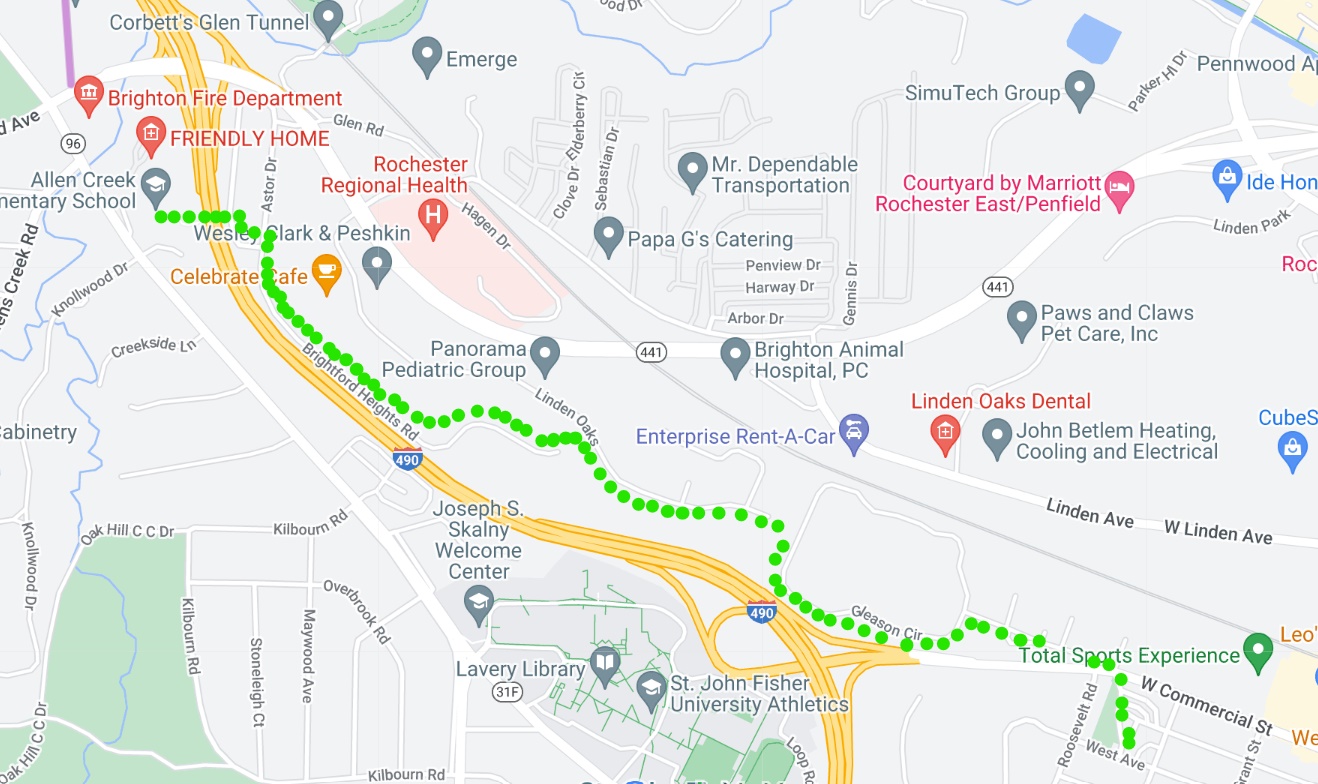
 

What role do you see City government playing in building a more robust and equitable transportation network?

Removing barriers to transportation innovation in the private sector will allow entrepreneurs to create unique and inexpensive options for everyone, including low-income residents. In the long term, working with city planners to create a infrastructure policy that encourages multiple modes of transportation will be essential for an equitable transportation network in the future.
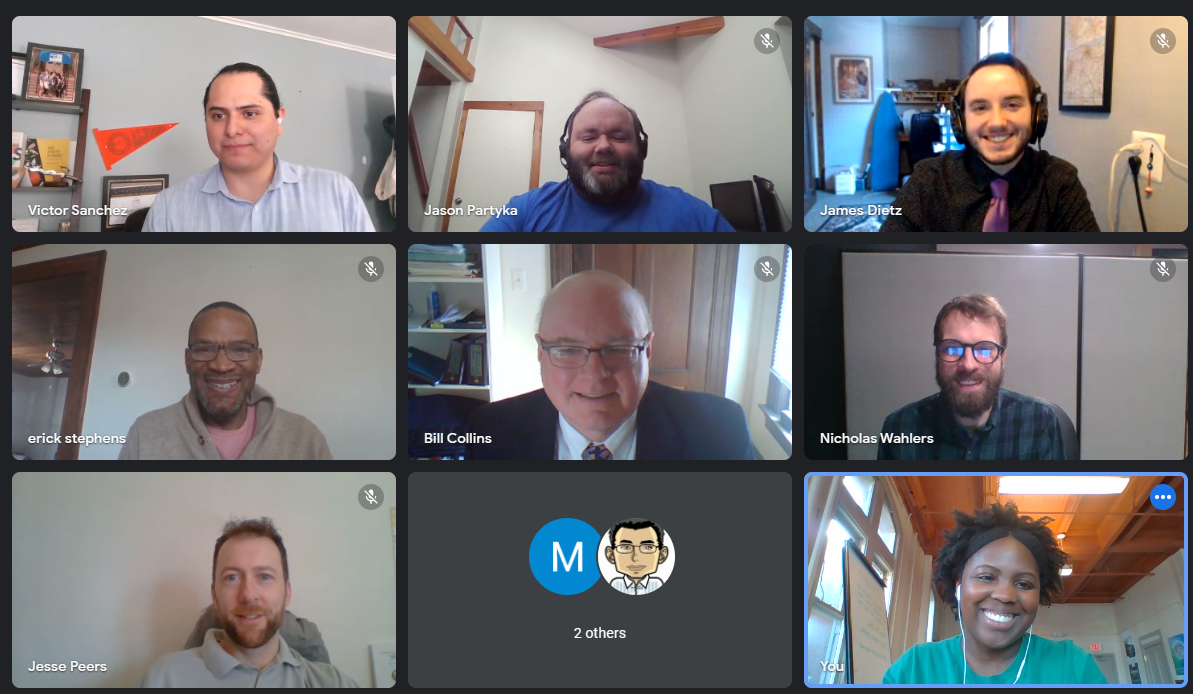
 

What steps can the City take to improve accessibility to jobs for residents who do not own cars? What steps can the City take to encourage residents who own cars to increase their use of alternative modes of transportation?

Allowing for mixed used development and removing barriers to job growth will create jobs right in our Rochester neighborhoods where they will be in walking distance from their jobs. Think of the neighborhoods that this is already possible. Very successful areas such as East Ave, Park Ave, Monroe, Alexander. All of these are zoned for mixed use and they allow for people in the neighborhoods to also work in the neighborhoods. The areas of the city that are Zoned R1 (most strictly) don’t allow for jobs to come into the neighborhoods. Instead you need to rely on transportation out of your neighborhood to find a job. City Council can and should revise our zoning so that it doesn’t prevent jobs from coming into our neighborhoods.
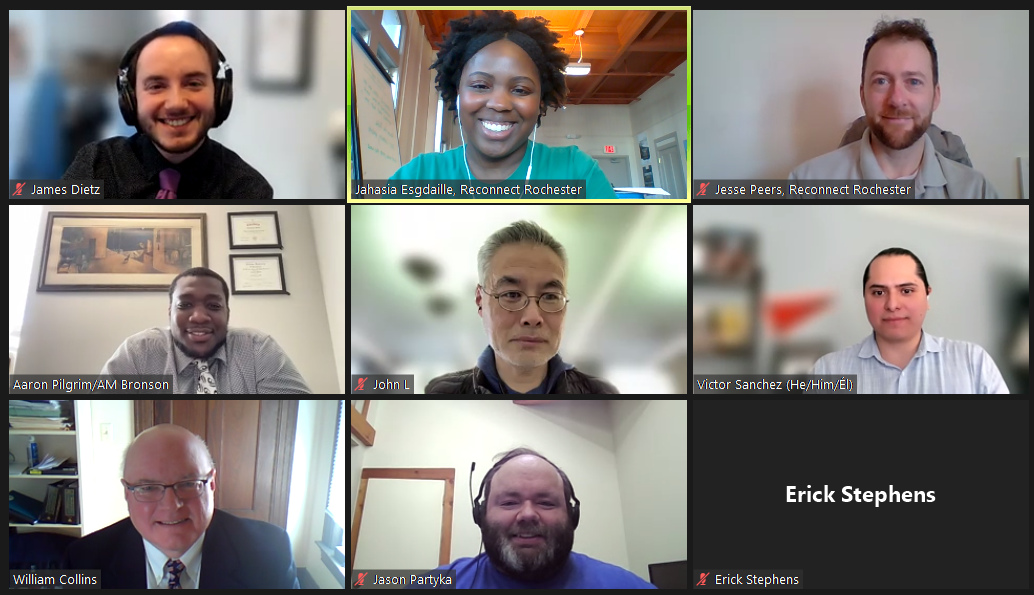
 

City residents will use alternative modes of transportation when it’s available, useful, and affordable. Although many people are willing to take the extra steps of biking, walking, or using mass transit for moral or environmental reasons, most people will continue to use personal vehicles as long as it’s convenient and makes financial sense. Big changes to transportation behavior require cultural and technical changes. By making the changes to mass transit approach, regulations, and city code recommended above, there will be situations where city residents are more likely to have access to alternative transportation options in their neighborhoods and throughout the city. There will be more situations where it will make more sense to walk, bike, or use a service than to take a personal vehicle.


Broadly, what is your vision for improving the parking situation downtown?

There has been a very diverse outlook on parking downtown. Some people (especially business owners) feel as if there isn’t enough parking for their customers, or parking that is convenient enough. While others believe there is an abundance of parking and that there should be less of it. Downtown is already extremely crowded when it comes to development. Adding more parking lots and parking areas isn’t feasible without more development and a significant cost to the Rochester community.


As I think about this issue I think both sides need to be considered for a solution. How do you provide the convenience of driving and owning your own vehicle while thinning out traffic and dense parking? Although the easy answer is we should have better public transportation so people don’t need to rely on their vehicles for convenience I don’t foresee that as an overnight or immediately available change. I do believe there is an opportunity for the private sector to create a park and ride option outside of downtown that provides ample parking services and shuttles you downtown to where you want to be, or to a zagster spot. Businesses can offer vouchers to their customers to cover the parking and they can maintain the convenience. If done right you could pay the same as you do for downtown parking without actually needing to find a spot while maintaining the convenience.


Another option would be to leverage technology and build an app that will track open parking spots, so that people can quickly find the closest available parking spot. Other cities have done this successfully. We need to be more innovative with our city government so we aren’t continuously behind the times.


How do you think the City should prioritize traffic enforcement relative to other issues?

Aggressive traffic enforcement does not necessarily solve safety problems for the people of Rochester. We some traffic enforcement for a few reckless individuals, but it’s often used to generate revenue and it can lead to unnecessary conflicts between police and citizens. Traffic safety could be improved with better design. By designing our streets to slow down cars, respect cyclists, and draw attention to pedestrians, we’ll improve safety outcomes without needing to resort to ineffective punitive measures.


Do you support studying the feasibility of modern streetcars, downtown circulators, and various rapid transit options for Rochester? Why or why not?

No.


Building a mass transit network that is financially sustainable is incredibly difficult. When building a fixed route streetcar system, getting it right is critical. Studies aren’t conclusive but we can look to market behavior as our guide. City Council should reduce regulatory barriers to allow the private sector innovative rapid transition options in Rochester (think Uber, Lyft, and Zagster all of these are private sector solutions to problems that local government have failed to solve). These solutions may fill the need for mass transit solutions or demonstrate the need for public investment in costlier transit infrastructure in popular travel corridors.


Do you support a “Vision Zero” style approach to road safety, which includes a 25 mph speed limit on residential streets in the City and other traffic calming practices and policies? Why or why not?

Yes.


As mentioned in the answer on traffic enforcement, structural changes to our streets play a critical role in improving safety for our citizens.


Do you support the continued expansion of a bicycle lane network throughout the City? Why or why not?

Yes.


As someone who grew up riding my bike on the streets of Rochester and using my bike as a commuter, I know how important bike infrastructure is. My bike was my first mode of transportation to my first job, and I was hit by cars not once but twice while riding my bike. There’s a growing trend of people cycling in Rochester for commuting and recreation. The city should continue looking for affordable options to improve bicycle safety through defined lanes, protected lanes, and measures to encourage safe road sharing with vehicles.


Do you support road diets or significant changes to road configurations to improve safety on any major roadways in the City? Why or why not? If yes, which ones?

Yes.


Every time a cyclist or pedestrian is injured or even killed by a driver, it’s heartbreaking. As I mentioned, I’ve been struck while riding my bike too. Many of these accidents are preventable. Our streets must be built for an urban environment where people live, work, walk, and play. Streets designed to slow drivers down and invite them to recognize potential conflicts will do far more to improve safety and livability in Rochester than traffic enforcement on roads that invite drivers to speed and drive recklessly. That’s why I would support road diets and changes to road configurations for select problem areas in the city.


There are so many busy streets to name off it would probably be easier to name the streets that don’t need it. Lake Ave and Main street are some of the first that come to mind, but there are so many more in every neighborhood in our city. Many of these streets are busy and dangerous for pedestrians simply do not have any space at all to be on the street with a bicycle.


What steps do you think we can take to encourage employees (especially City employees) to commute using transportation options other than single occupant automobiles (walk/bike/bus/carpool/etc.)?

I’m not a fan of handing out taxpayer dollars as incentives. I’d much rather use them on our residents and neighborhoods. If we remove any subsidies for parking and allow prices to reflect the actual cost of maintaining parking lots we will see people do this on their own. They will look to carpooling and ask for better transportation options themselves. They may even collaborate and come up with an amazing idea that hasn’t been thought of yet as a solution.


Are there any other comments or thoughts you’d like to share?

Our government is constantly looking to reinvent the wheel with our public transportation. I have visited cities that we never once used a car in. We were able to get from one end of the city to another conveniently at very little cost in the same amount of time that we would have in a car. We must look to those cities and their infrastructure instead of trying to make new solutions that do not work. We’ve done that time and time again. It is consistently failing. Sometimes it is better to acknowledge that the solution has already been found and adopt it. An example of this is our downtown transit center. We spent a lot of money, lost service areas, and don’t have better transportation, why did our local government choose this over a model that has been proven to work in cities our size?

Matt Juda

Matt Juda

Candidate Email: Matt@mattjuda.com


Website: www.MattJuda.com


What is your vision for Rochester’s transportation network? How do you plan to achieve that vision?

I would like to see Rochester’s transportation network include more alternatives to single occupant vehicles, while empowering and protecting cyclists and pedestrians.


While ride sharing services like Lyft and Uber are helpful in reducing the number of vehicles on the road, increased investment in bicycle infrastructure would further reduce automobile reliance. As a member of City Council I would push to continue expanding the number of bicycle rental kiosks and make sure they are distributed evenly among all our cities neighborhoods. I would also asses areas where speed humps, stop signs, and other traffic control devices could be deployed to increase compliance with speed limits.


What are Rochester’s greatest challenges in regards to transportation?

Rochester’s greatest transportation challenge is overcoming a highway system that was built to accommodate America’s reliance on automobiles. Filling in the Inner Loop was a vital first step towards reconnecting our neighborhoods and increasing pedestrian mobility throughout the East End/Down corridor which is vital to the economic success of our city. Prioritizing people over automobiles is the key to revitalizing our City and overcoming the legacy transportation system designed specifically for automobiles.


What role do you see City government playing in building a more robust and equitable transportation network?

Advocacy and providing some funding for programs that increase access to alternate forms of transportation.


What steps can the City take to improve accessibility to jobs for residents who do not own cars? What steps can the City take to encourage residents who own cars to increase their use of alternative modes of transportation?

As a routine part of the City’s economic development efforts, businesses which seek tax credits and other financing assistance should be required to either demonstrate their location is accessible by existing public transportation options, or contribute to the cost of expanding public transportation. This would incentivize density, while preventing urban sprawl, and make jobs more accessible to city residents.


Increasing the number of bike rental kiosks is a great way to encourage people to move around without relying on vehicles. Similarly, partnering with local business to provide coupons and gift cards as incentives for residents to ride buses several times a month would both reduce traffic congestion and emissions, but it would also provide publicity for new businesses. Most importantly, incentivizing ridership on existing public transportations options increases familiarity and helps eliminate the psychological barrier of trying something new for the first time.


Broadly, what is your vision for improving the parking situation downtown?

My broad vision for improving the traffic situation downtown is to facilitate policies and planning decisions that ultimately reduce the total number of cars downtown at any given time. We should not be trying to make parking easier and encouraging vehicle dependence, we should be creating a more robust and holistic public transportation system that allows people to get where they want to be without taking a car.


How do you think the City should prioritize traffic enforcement relative to other issues?

While traffic enforcement is critical to improving the safety of our families, pedestrians and bicyclists, I believe that the question of prioritization of enforcement is best left to the career professionals of the Rochester Police Department. I do however believe that by having one week every several months were RPD officers aggressively monitor traffic violations would go a long way towards changing motorist’s driving behaviors, especially in residential neighborhoods


Do you support studying the feasibility of modern streetcars, downtown circulators, and various rapid transit options for Rochester? Why or why not?

Yes.


Reducing the number of vehicles that are on city streets would make walkers and bikers more comfortable sharing the road and sidewalks. I support a feasibility study for transportation alternatives as a way to jump start the potential virtuous cycle that could result from the use of street cars, circulators, etc.


Do you support a “Vision Zero” style approach to road safety, which includes a 25 mph speed limit on residential streets in the City and other traffic calming practices and policies? Why or why not?

Yes.


Yes. I support a 25mph speed limit and the implementation of traffic calming practices because we need to ensure that pedestrians and cyclists feel safe sharing the road. By making roads narrower and building protected bike lanes, we can both protect our residents who already ride bicycles and encourage new riders to leave their car at home.


Do you support the continued expansion of a bicycle lane network throughout the City? Why or why not?

Yes.


The bicycle lanes provide a safer space for the use of bicycles to transit around our city. I believe we should work to provide more lanes like those alone lake ave in Charlotte where there is a path next to the sidewalk.


Do you support road diets or significant changes to road configurations to improve safety on any major roadways in the City? Why or why not? If yes, which ones?

Yes.


The road diet or change in road ways will greatly increase the safety for all commuters.


Lake Ave, Main Street near culver, West Main Street, reconfigure Mt. Hope at Elmwood


What steps do you think we can take to encourage employees (especially City employees) to commute using transportation options other than single occupant automobiles (walk/bike/bus/carpool/etc.)?

Incentivize carpool through preferred parking and reduced rates. Stipend for alternate vehicles. Bus passes for commuters or reduced rate.


Are there any other comments or thoughts you’d like to share?


Ann Lewis

Ann LewisCandidate Email: www.facebook.com/ann.c.lewis.12


Website: www.facebook.com/ann.c.lewis.12


Unfortunately we did not receive a response from Ann Lewis.

Willie Joe Lightfoot

Willie Joe Lightfoot

Candidate Email: WillieLightfoot4CityCouncil@gmail.com


Website: www.WillieLightfoot.com


What is your vision for Rochester’s transportation network? How do you plan to achieve that vision?

My vision for Rochester’s transportation network is that every citizen will have adequate access to affordable transportation.


I plan to achieve this by working within my governmental capacities to work with our Federal , State, County and local leaders to make this a reality.


What are Rochester’s greatest challenges in regards to transportation?

Making sure transportation is convenient and affordable.


What role do you see City government playing in building a more robust and equitable transportation network?

I feel City government plays a major role in leading the way to helping to assure adequate transportation for all citizens such as recent roll that City played in Zagster bikes.


What steps can the City take to improve accessibility to jobs for residents who do not own cars? What steps can the City take to encourage residents who own cars to increase their use of alternative modes of transportation?

I like the ride sharing program that the Mayor started with casino. I think more ride sharing programs can work in our community.

Encourage ride sharing.


Broadly, what is your vision for improving the parking situation downtown?

I think we have to look at how other cities our size are dealing with this situation and implement ideas that work.


How do you think the City should prioritize traffic enforcement relative to other issues?

Look at whats working in other Cities our size.


Do you support studying the feasibility of modern streetcars, downtown circulators, and various rapid transit options for Rochester? Why or why not?

No.


I support surveying the community as to what the community wants to study so we don’t spend unnecessary public dollars on studies.


Do you support a “Vision Zero” style approach to road safety, which includes a 25 mph speed limit on residential streets in the City and other traffic calming practices and policies? Why or why not?

Yes.


For public safety I think it a good idea.


Do you support the continued expansion of a bicycle lane network throughout the City? Why or why not?

Yes.


Do you support road diets or significant changes to road configurations to improve safety on any major roadways in the City? Why or why not? If yes, which ones?

Yes.

I like whats been done on Jefferson , Thurston, Ford street.


What steps do you think we can take to encourage employees (especially City employees) to commute using transportation options other than single occupant automobiles (walk/bike/bus/carpool/etc.)?

Maybe some types of incentives would work?


Are there any other comments or thoughts you’d like to share?


Mary Lupien

Mary Lupien

Candidate Email: mlupien@gmail.com


Website: MaryLupien.com


What is your vision for Rochester’s transportation network? How do you plan to achieve that vision?

My vision for Rochester’s transportation network is a system that is so accessible, user friendly, and intuitive that everybody uses it, not just those who don’t have other options. I also dream of a transportation system that creates equity of access for those same people without options so that they don’t spend hours away from their homes and children just to get to a job that barely pays the bills. I dream of a transportation system that is uplifting and brings people together, something that we can take pride in.


I plan to achieve this vision for Rochester by working with RTS and organizations like Reconnect Rochester as a city councilperson to re-imagine our transportation system and develop proposals that fit our city and our needs. We can also use van pools to save money where it makes sense and work to appoint people to the transit authority that are invested in and passionate about public transportation so that more dollars can be directed towards these projects.


What are Rochester’s greatest challenges in regards to transportation?
What role do you see City government playing in building a more robust and equitable transportation network?

Rochester’s greatest obstacles are budget, system design, lack of transit oriented design and lack of comprehensive walking and biking infrastructure. Our transportation system also has an image problem where there is a negative connotation around using public transportation because it has been inefficient, hard to use, and poorly maintained for so long. Branding can go a long way in encouraging millennials and folks who have cars to use public transit and feel a greater sense of social responsibility in their transportation choices.


I think it is important for members of city government to actively advocate for improvements in our transportation network and not just wait for proposals to come across their desks. I will be a strong voice for transportation on city council as a climate and social justice activist and will work to educate my peers and other city leaders on the exponential benefits to a community like ours of having a robust and equitable network. Whether it is reducing segregation, lifting people out of poverty, taking care of the environment, or contributing to overall quality of life, there is something almost anyone can relate to and get behind in the list of benefits of a healthy, accessible public transportation system.


What steps can the City take to improve accessibility to jobs for residents who do not own cars? What steps can the City take to encourage residents who own cars to increase their use of alternative modes of transportation?

Aside from expanding and improving access to public transportation, the city can incentivize businesses to build and develop along transportation routes that already exist. The new Zagster system is a great way of improving accessibility because the bikes can be locked at any bike rack, and I would like to see that program expanded. I would be thrilled to see the use of cooperative ride share and car sharing ventures.


First, it has to be accessible and intuitive enough for it to make sense to use for people who have busy schedules and limited capital in the areas of time and energy. Second, by rebranding our busses and running public advertising campaigns about the social and environmental benefits of using public transportation we can attract and capitalize on the desire for and understanding of public transportation that is already there in our community. I believe there are lots of people in Rochester who want to use public transportation and believe in the benefits for whom it is not yet a viable option. If we can give them a system that makes sense to use and fits into their lives, I believe they will make an effort to take advantage.


Broadly, what is your vision for improving the parking situation downtown?

By improving our transportation system and increasing multi-modal transportation options, we can reduce the number of cars descending on downtown. I’d also like to see more park and rides in the suburbs with regular service so that it is convenient for people to leave their cars and take public transportation downtown. I do not support building more parking garages.


How do you think the City should prioritize traffic enforcement relative to other issues?

I believe that consistency in traffic enforcement is important – it affects people’s lives – but we can also reduce the need for enforcement by enacting traffic calming measures that free up human resources and energy, creating less conflict between citizens and police and sustaining a system that manages itself.


Do you support studying the feasibility of modern streetcars, downtown circulators, and various rapid transit options for Rochester? Why or why not?

Yes.


These strategies have worked in other cities and are effective in bringing people together and connecting high traffic areas while increasing economic development, quality of life, and improving access to our most valuable assets.


Do you support a “Vision Zero” style approach to road safety, which includes a 25 mph speed limit on residential streets in the City and other traffic calming practices and policies? Why or why not?

Yes.


I agree with the Vision Zero initiative in that “no loss of life is acceptable” and that we can design our streets and city to be so safe and friendly to walkers and bikers that severe injuries and fatalities can be a thing of the past. Whether it is speed limits, speed bumps, road dieting, road painting projects, roundabouts, or protected bike lanes, there are so many thoughtful and strategic ways to plan our city for safety and we can learn a lot from other cities who have taken the lead on these initiatives.


Do you support the continued expansion of a bicycle lane network throughout the City? Why or why not?

Yes.


A bicycle lane network doesn’t just benefit the people who are already using bikes instead of cars, it will encourage people to bike and do so even more while reducing the negative effects of cars on the environment and getting people out of their cars and into their communities, interacting with and lifting the spirit of the town. There are definitely folks in the community who would bike to work if it was reliably safer to do so.


Do you support road diets or significant changes to road configurations to improve safety on any major roadways in the City? Why or why not? If yes, which ones?

Yes.


The safety of our roads for everyone, especially pedestrians and bikers, is extremely valuable and we will reap the benefits for generations.


Main Street, Lake Avenue.


What steps do you think we can take to encourage employees (especially City employees) to commute using transportation options other than single occupant automobiles (walk/bike/bus/carpool/etc.)?

The city can incentivize public transportation for its employees by providing bus or Zagster passes to city workers who live in areas where transportation is already accessible.


Are there any other comments or thoughts you’d like to share?

I think Reconnect Rochester is doing an incredible job of championing these changes and strategies and educating the public on why this matters and I look forward to working with them and elevating their voices and ideas in our city conversations.

Dana K. Miller

Dana K. Miller

Candidate Email: Dana@DanaMillerForCouncil.com


Website: www.facebook.com/dkmiller26


What is your vision for Rochester’s transportation network? How do you plan to achieve that vision?

Series of transportation options that includes walking, biking, ride-sharing, public transit and private vehicles. Available at all times to all people.


Have supported legislation to introduce uber/lyft, reduce regulations on taxis, increase bike lanes, improve public transit, introduce bike sharing.


What are Rochester’s greatest challenges in regards to transportation?

Transportation options for people with disabilities, transportation at all hours, transportation at all destinations.


What role do you see City government playing in building a more robust and equitable transportation network?

We are responsible for bike lanes, street construction, oversight for public transit.


What steps can the City take to improve accessibility to jobs for residents who do not own cars? What steps can the City take to encourage residents who own cars to increase their use of alternative modes of transportation?

We have implemented van pools, and supported ride-sharing/bike sharing. I will continue to lobby RGRTA to provide more off-hours service to non-city work destinations.


We can right-size parking, and possibly offer incentives (financial, or other) to residents who alter their transportation methods.


Broadly, what is your vision for improving the parking situation downtown?

We have more spaces now than are needed, but not in the right places. I will advocate for a circulator (bus/trolley) that can move people as required. We must be careful not to overbuild parking as options to private vehicles increase.


How do you think the City should prioritize traffic enforcement relative to other issues?

I would like to see traffic enforcement given higher prioriy.


Do you support studying the feasibility of modern streetcars, downtown circulators, and various rapid transit options for Rochester? Why or why not?

Yes.


Circulator, and streetcar optons could help resolve the parking concerns.


Do you support a “Vision Zero” style approach to road safety, which includes a 25 mph speed limit on residential streets in the City and other traffic calming practices and policies? Why or why not?

Yes.


A Vision Zero approach could help improve road safety and help eliminate deaths due to road design problems.


Do you support the continued expansion of a bicycle lane network throughout the City? Why or why not?

Yes.


Bicycles are among the most democratic transportation options. They don’t require a license, insurance or inspections. I will continue to advocate for bike based transportation options.


Do you support road diets or significant changes to road configurations to improve safety on any major roadways in the City? Why or why not? If yes, which ones?

Yes.


Lane reduction measures such as bumpouts, roundabouts, and bike lanes have proven to increase traffic, bike, and pedestrian safety.


We are currently working on Main St, and I would like to see more work done on Lake Ave, Mt. Hope and Mt. Read.


What steps do you think we can take to encourage employees (especially City employees) to commute using transportation options other than single occupant automobiles (walk/bike/bus/carpool/etc.)?

We can look at providing subsidies or other economic support to employees who decide to commute using alternative methods.


Are there any other comments or thoughts you’d like to share?

We need to reduce the “stigma” of non-car transportation options. Our city, like most, is car centric and anyone not using a car is seen as “less than”.

Jackie Ortiz

Jackie OrtizCandidate Email: OrtizForCouncil@gmail.com


Website: OrtizForCityCouncil.com


Unfortunately we did not receive a response from Jackie Ortiz.

Loretta Scott

Loretta ScottCandidate Email: Loretta.Scott@cityofrochester.gov


Website: www.facebook.com/CouncilmemberLorettaScott


Unfortunately we did not receive a response from Loretta Scott.

Marcus Williams

Website: www.Marcus4Rochester.com

Unfortunately we did not receive a response from Marcus Williams.

Reconnect Rochester would like to thank all of the candidates (and their teams) for the time and effort they’ve dedicated to our community, and for taking the time to answer our questions. We look forward to working with them very soon.

Cast Your Vote (just for funsies):

[democracy id=”2″]

[democracy id=”3″]