According to the Democrat and Chronicle, the Canal Trail will be closed near I-390 in Gates from 22 April until Memorial Day or later. Cyclists are advised to find an alternate route. You can read more here.

Support the Active Transportation Summit
The Rochester Cycling Alliance is co-sponsoring the 2019 Active Transportation Summit, organized by Common Ground Health. Scheduled for May 23, 8:30-4 at the Rochester Riverside Hotel, the summit is themed “Ideas into Motion”. It will feature consultant and activist Mark Fenton as the keynote speaker, New York State Department of State Director of Smart Growth and Planning Paul Beyer as the plenary speaker, and sixteen breakout sessions. You can learn more and get tickets here. And you can support the summit with a donation using the button below. Hope to see you on 23 May!

The Power of the Sneckdown
Story By Arian Horbovetz. Arian is a Rochester resident and creator of The Urban Phoenix, a blog that discusses urban and community design and topics as our cities transition to a better future.
As I write this, the city of Rochester is passively preparing for yet another battle with a dreaded but familiar foe, lake effect snow. Winter boots and labored commutes will surely be the icebreaker (pun intended) conversation starters at the office water cooler today. But for the Urban Planner, as well as the casual observer, periods of light snow can be opportunities for great discovery.
In that time when the first whispers of a snow storm cover our streets and the plows are still dormant in their stalls, we navigate our vehicles on roadways by following the tracks left behind by the cars that recently came before us. To an Urban Planner, these tracks, especially with regard to their path through intersections, are of particular importance.
The ability to see the space that cars use (or rather don’t use) when traveling through an intersection by looking at these tracks through the snow gives us a golden opportunity to demonstrate how and where our streets can be narrowed. Think of it like an Urban Planner’s forensic blacklight, revealing the key unseen evidence of superfluous roadway.
These visual clues created by snow and tire tracks through our intersections are called Sneckdowns. While the name might conjure the image of a Dr. Seuss character, it is actually derived from the combination of “snow” and “neckdown,” which is a term for sidewalk additives and extensions that reduce traffic speeds and increase pedestrian access.
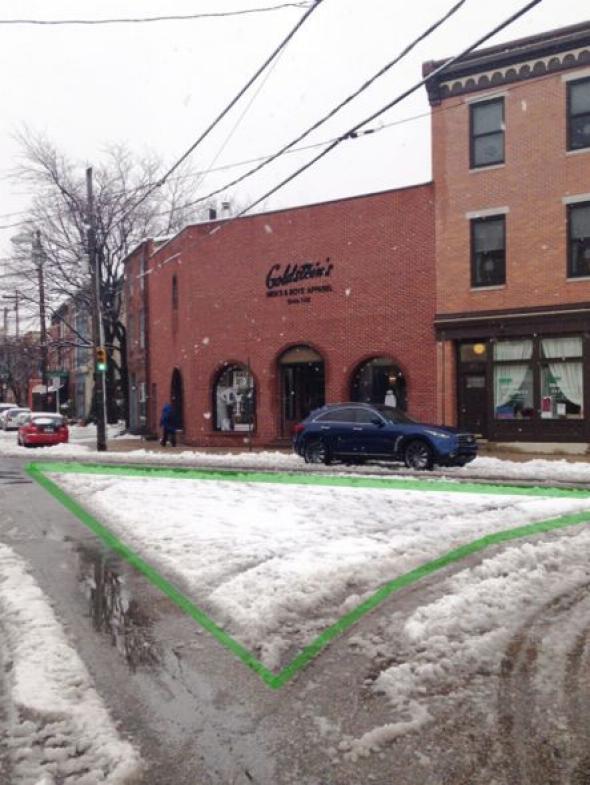
Photo courtesy of Jon Geeting
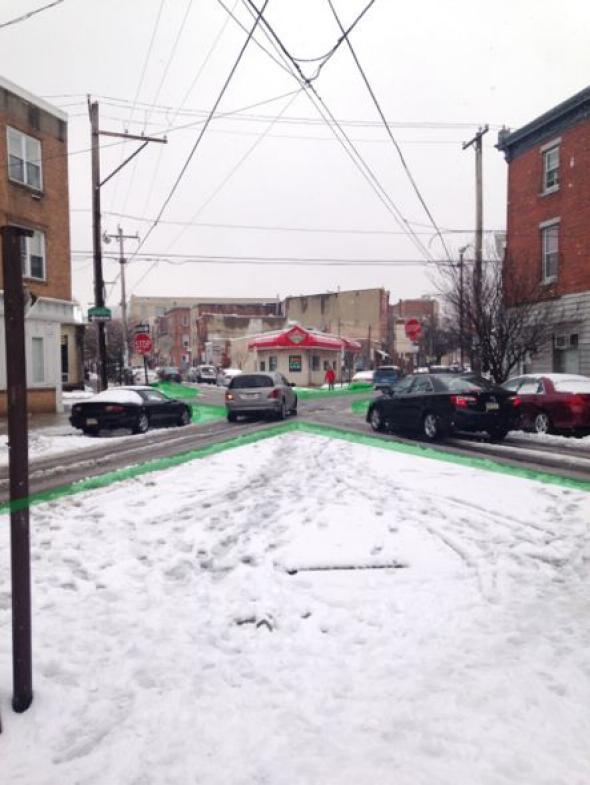
Photo courtesy of Jon Geeting
In 2014, urbanist Jon Geeting authored a Slate article in which he took simple photos of sneckdowns on Philadelphia streets. His efforts inspired walkability advocates around the world to do the same, but best of all, it led to real change in his own backyard.
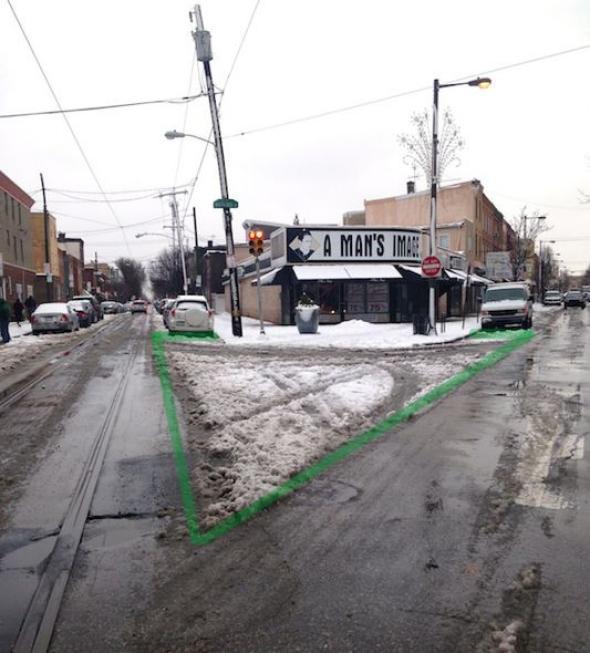
Before Picture. Photo courtesy of Jon Geeting
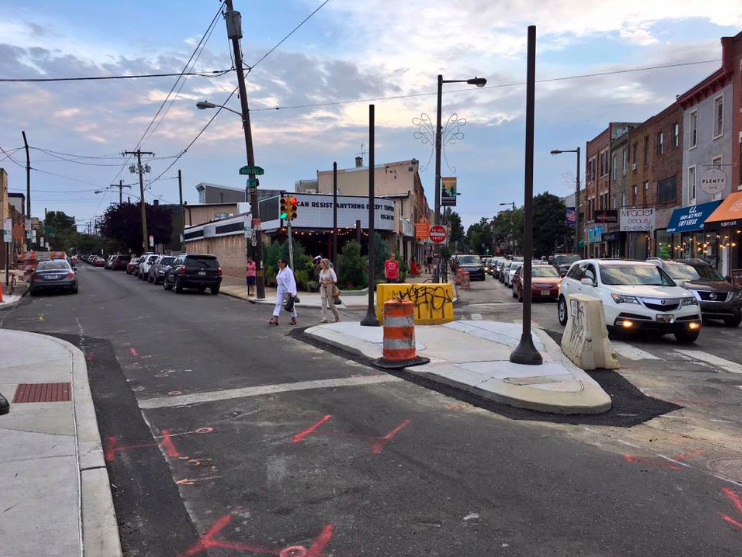
Jon Geeting’s Sneckdown photo of this intersection paved the way for this concrete island which acts as a traffic calming measure and a pedestrian island for safer crossing. Photo courtesy of Jon Geeting
Clarence Eckerson’s famous STREETFILMS video shows some incredible examples of how overbuilt our streets really are. With a measuring device and some cold weather grit, Eckerson puts the power of sneckdowns right in front of the viewer, showing how snowbanks that accumulate on city streets can give us a clearer understanding of how to construct and reconstruct our streets going forward.
Why all this fuss about narrowing streets and slowing traffic? Because decreasing automobile speeds by narrowing lanes and intersections, as well as prioritizing pedestrians, lead to safer, healthier communities. Furthermore, promoting walkability and pedestrian comfort has been shown to feed economic growth and stability.
Sneckdowns also give the average citizen the ability to see where change can be enacted. It doesn’t take a traffic engineer to spot tracks in the snow, it takes a conscious observer who is genuinely concerned about safety and walkability in their environments.
Hey Rochester! Next time it snows, take to the streets and see if you can spot overbuilt space on our roads and intersections. It can be a fun, interesting and positive way to start the conversation about safer streets in your neighborhood, and may even lead to the change we want to see!
Join Our Team!

Part-time Cycling Coordinator Position Available
Do you get excited by the sight of cycle tracks and trails? Do abruptly ending bike lanes and hazardous intersections make you crazy? Are you organized, resourceful, self-motivated and flexible?
Your dream job awaits.
Reconnect Rochester is searching for an individual to spearhead all cycling related events, advocacy, education, and outreach activities for our organization. This person will work closely with our volunteer Cycling Work Group in running all aspects of our cycling efforts, and will work out of our office in the Hungerford building on E. Main St.
The job may be part-time, but the benefits are endless.
To apply, email a cover letter and resume to info@ReconnectRochester.org by March 15th.
Speak up for cycle tracks on Main Street
The City of Rochester is planning work on two sections of Main St.: from St. Paul St. to State St., and from Goodman St. to Culver Rd. Cycle tracks (bike lanes separated from motor traffic by a curb) are included in one of the design options for each section. The Rochester Cycling Alliance supports cycle tracks for these projects! Cycle tracks promote the highest level of safety for pedestrians, bicyclists, and motor vehicles including buses.
We hope you will take just a minute, right now, to send letters expressing your support of cycle tracks. We’ve written this draft letter about St. Paul to State, and this draft letter about Goodman to Culver, which you can use as templates to get started. Be sure to insert your own name and address where appropriate, and send both letters to the Hon. Norman Jones, the City’s Commissioner of the Department of Environmental Services, who is overseeing the design process. You could also send copies to Mayor Lovely A. Warren, Deputy Mayor James P. Smith, Councilman Malik Evans, and Project Manager Jeff Mroczek. Happy letter writing! Happy citizenship!
What we accomplished together in 2018
As we look back on 2018, we’re pretty darn proud of what we’ve accomplished together this year. The highlights below are just a snapshot of all the good work we’ve been able to do, thanks to the financial support of Reconnect members, the passionate volunteers that made our programs and initiatives run, and so many others that engaged in our work in countless ways. Thanks to each and every one of you.
If you haven’t yet made a membership donation, we hope you’ll consider doing so to help fuel our work in 2019! View the membership levels and gift options here. And don’t forget, we have a matching gift in effect from Jason Partyka for NEW members that join by Dec 31st!
Things we’re most proud of in 2018:
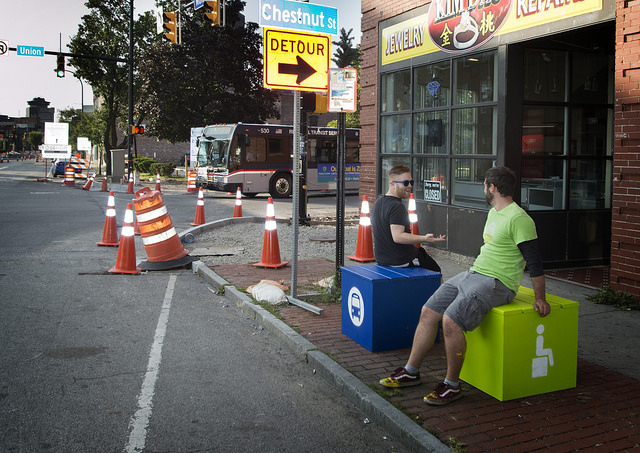

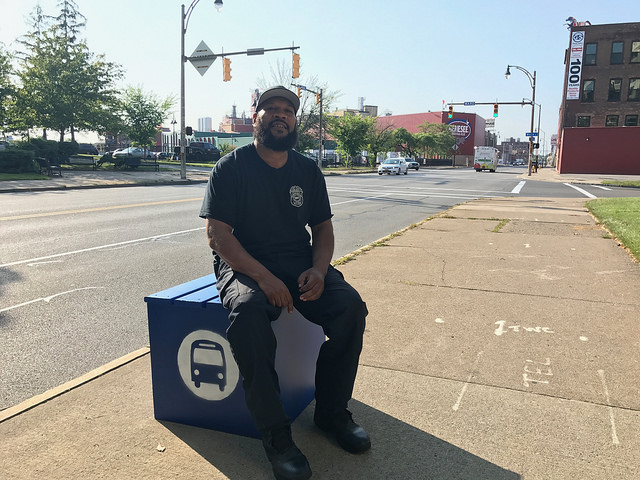
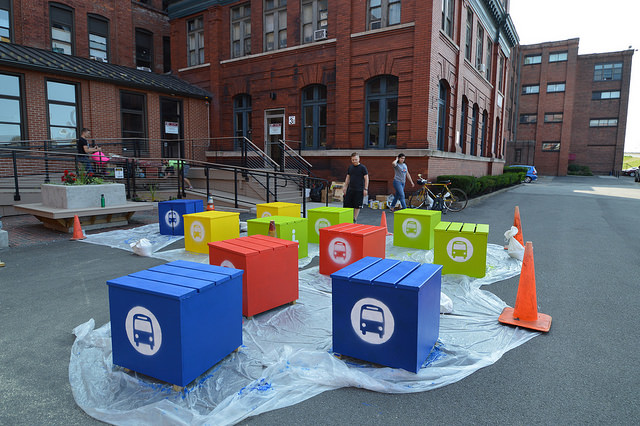
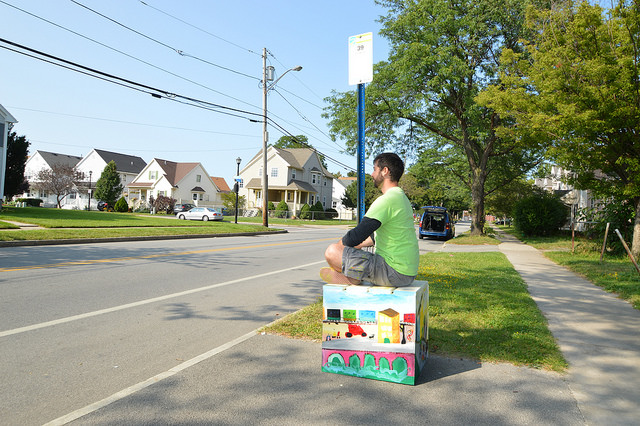
Giving transit riders a respectable place to sit at 33 bus stops around the city. We were thrilled to see our bus stop cubes replicated by our neighbor to the west, and we made some progress exploring a permanent fiberglass cube design as a year-round solution… stay tuned in 2019!
Releasing an in-depth report we commissioned on Transportation & Poverty in Monroe County, and working within the Rochester-Monroe Anti-Poverty Initiative transportation work group to translate the data into proposed policy solutions.
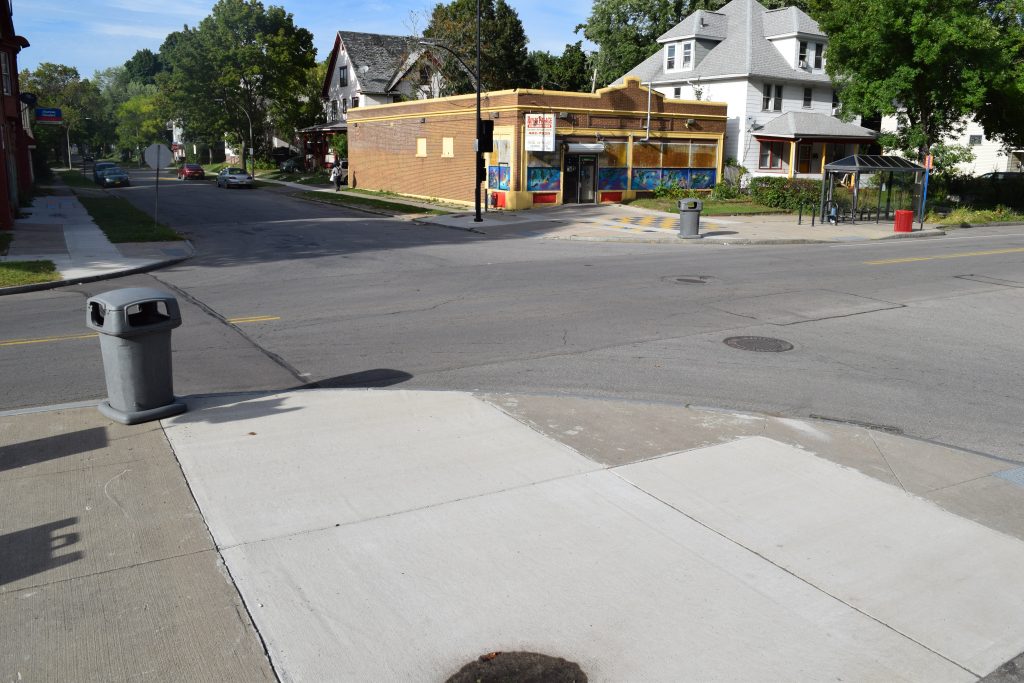
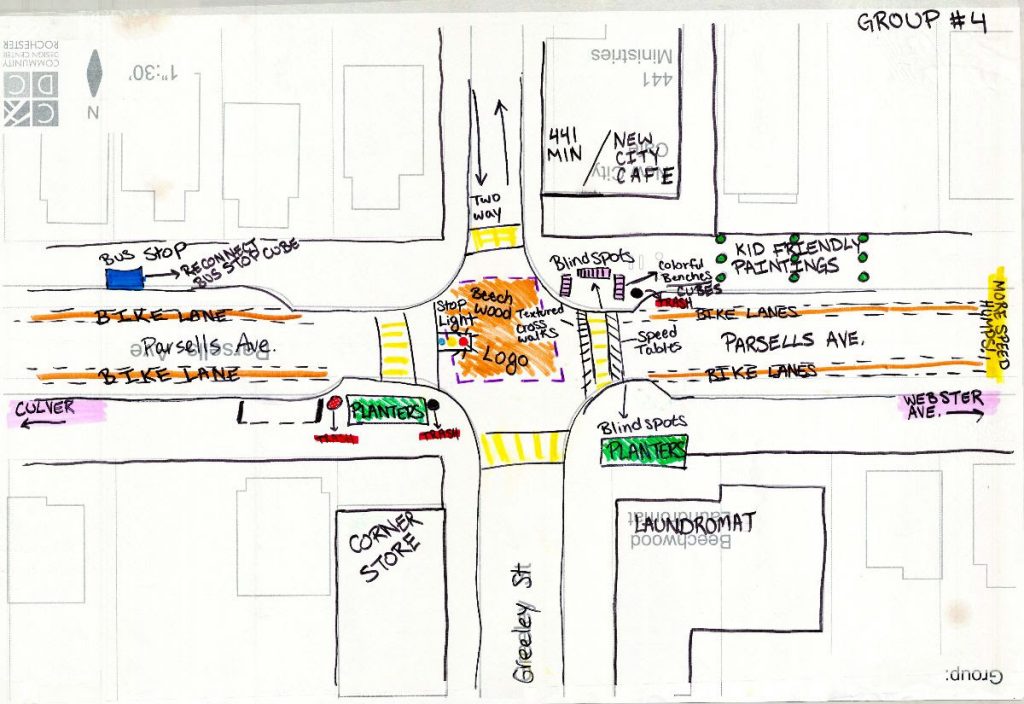
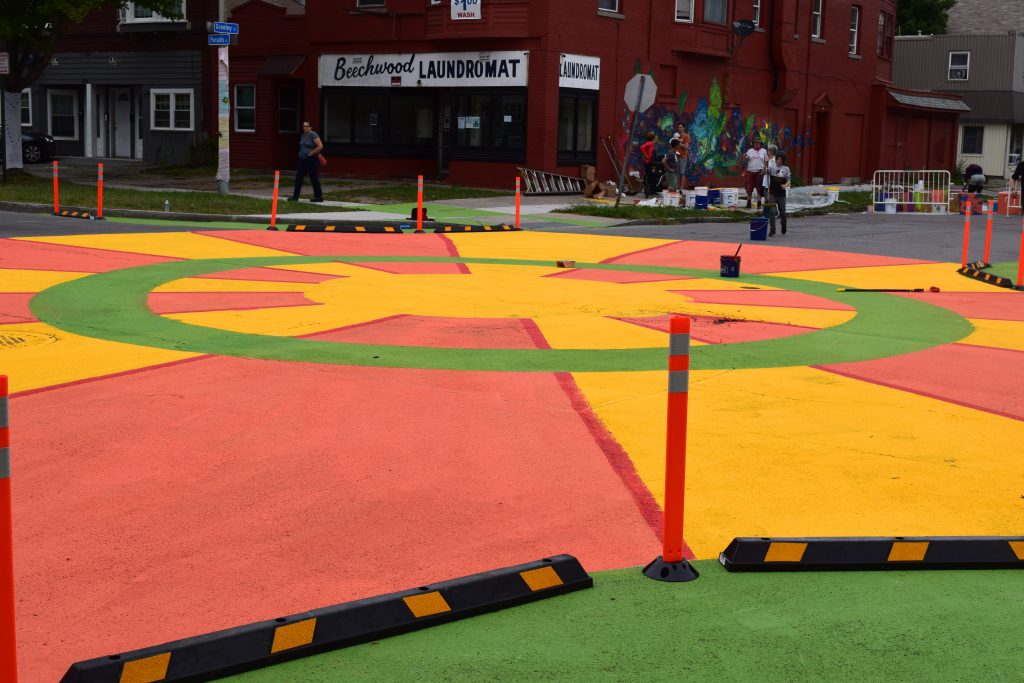
Transforming an intersection in the Beechwood neighborhood through our Complete Streets Makeover project, and applying complete streets design to other trouble spots around the city to show how they could be made safer for pedestrians and cyclists.
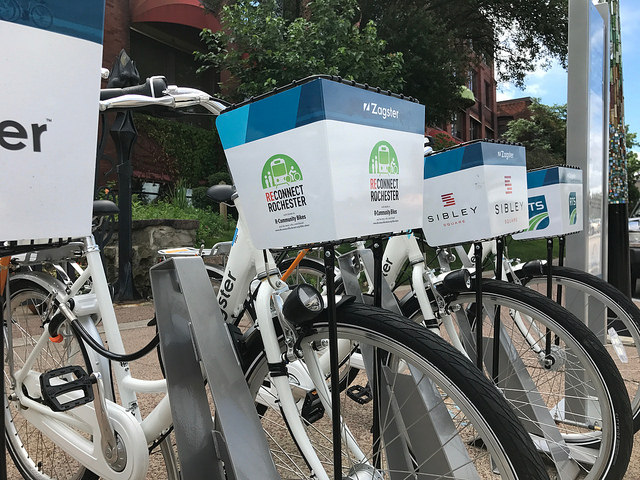
Raising funds to continue sponsoring our two bike share stations on Hudson Avenue & Adams Street. This fall, we hosted a live online presentation to give people a chance to hear from Pace about how Rochester’s 2018 bike share season went (watch a recording here).
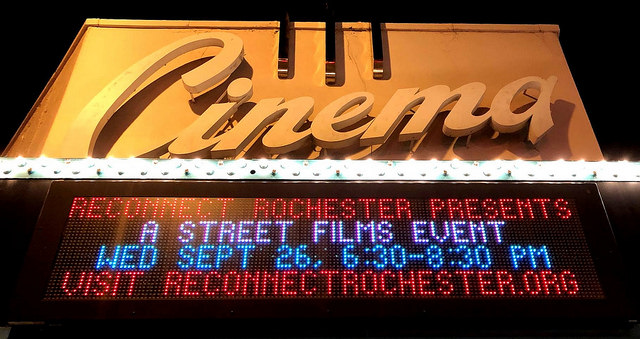
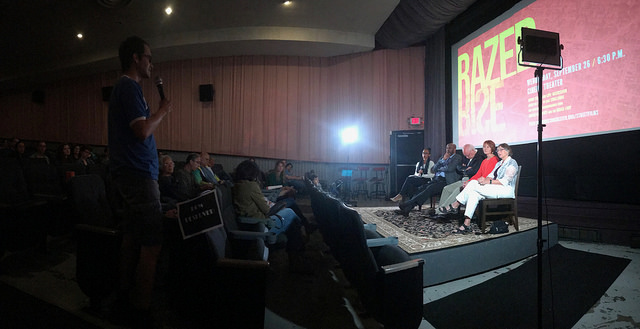
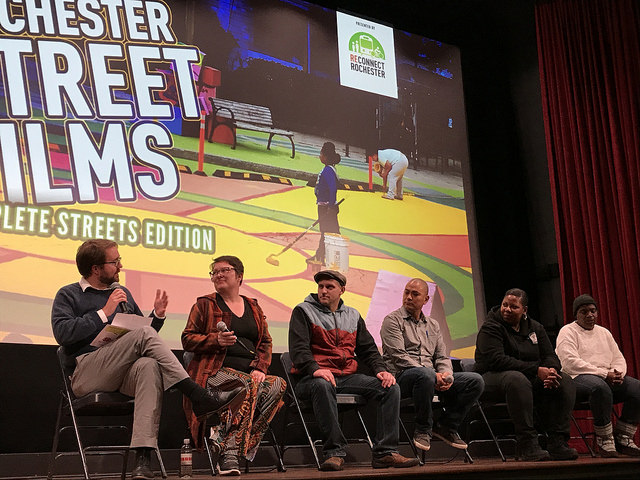
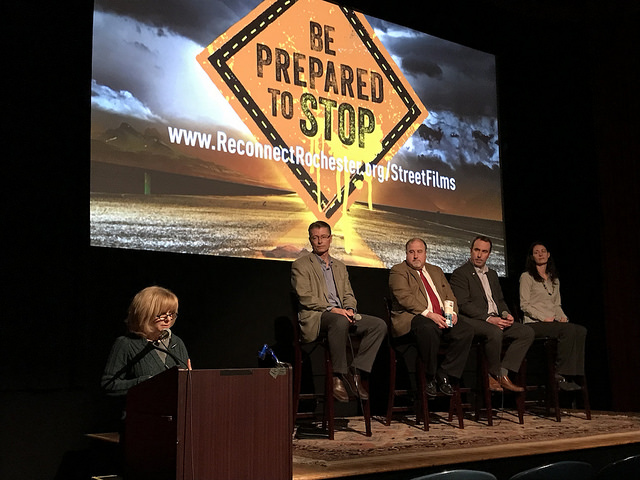
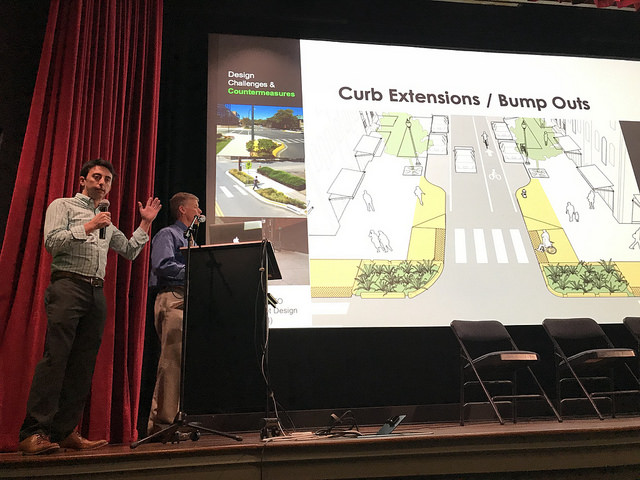
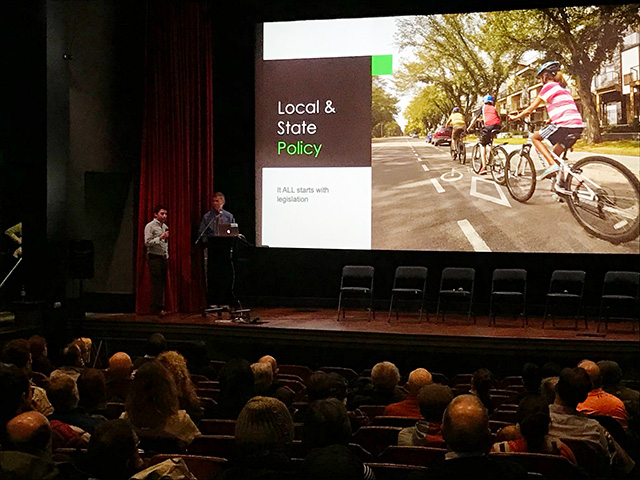
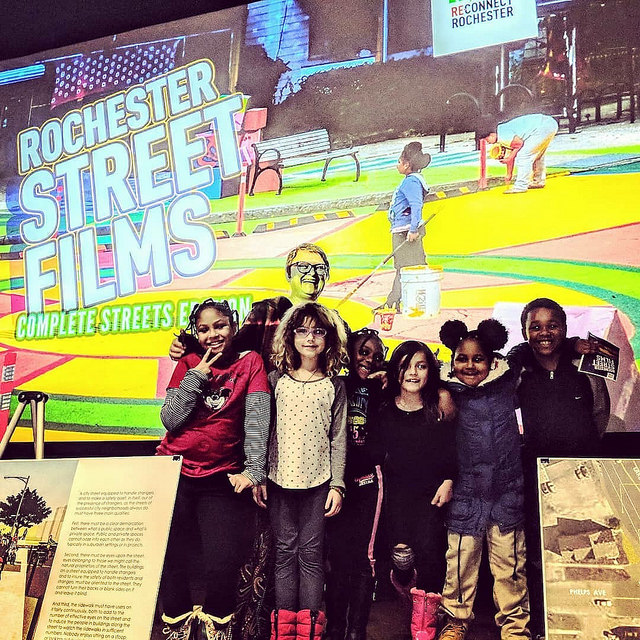
Producing three (3) Street Films events that stimulated community conversation about transportation infrastructure investment, the era of highway construction, and designing streets for people. We added two original films to our growing collection (watch them on our YouTube channel).
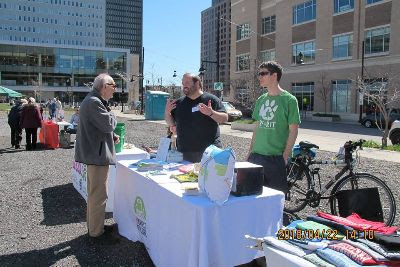
Engaging with the public every day via live events, community outreach tabling, speaking engagements, media interviews, social media sharing, and blog posts about things like sidewalk snow removal and transit-supportive development.
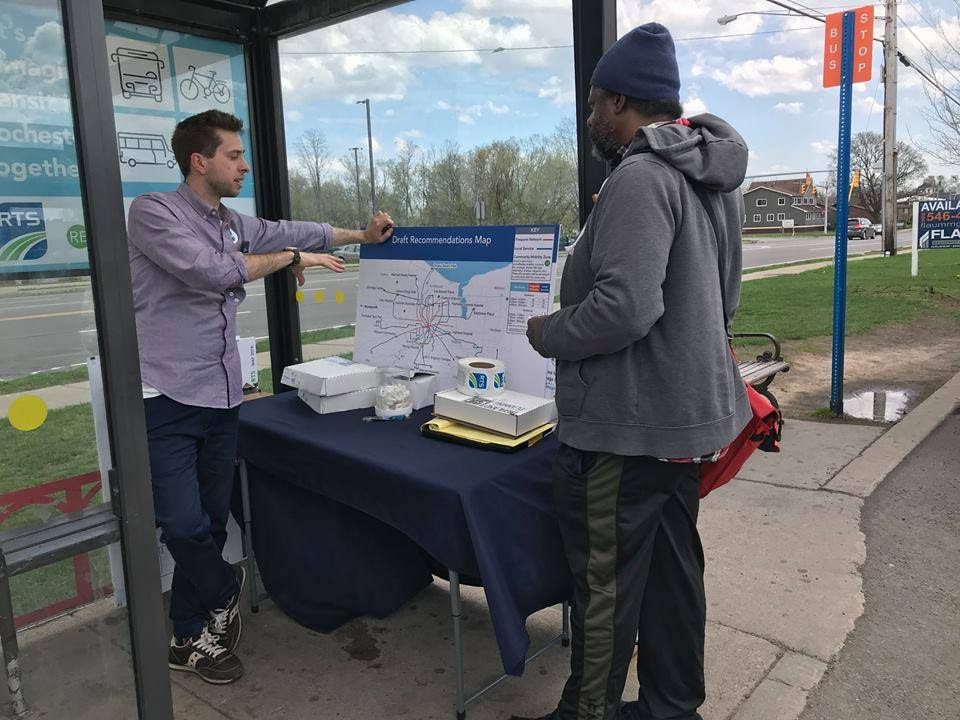
Encouraging public engagement, lending support and giving input into local planning initiatives like Reimagine RTS system re-design, and the City of Rochester’s Comprehensive Access & Mobility Plan, Comprehensive Plan & Roc the Riverway.
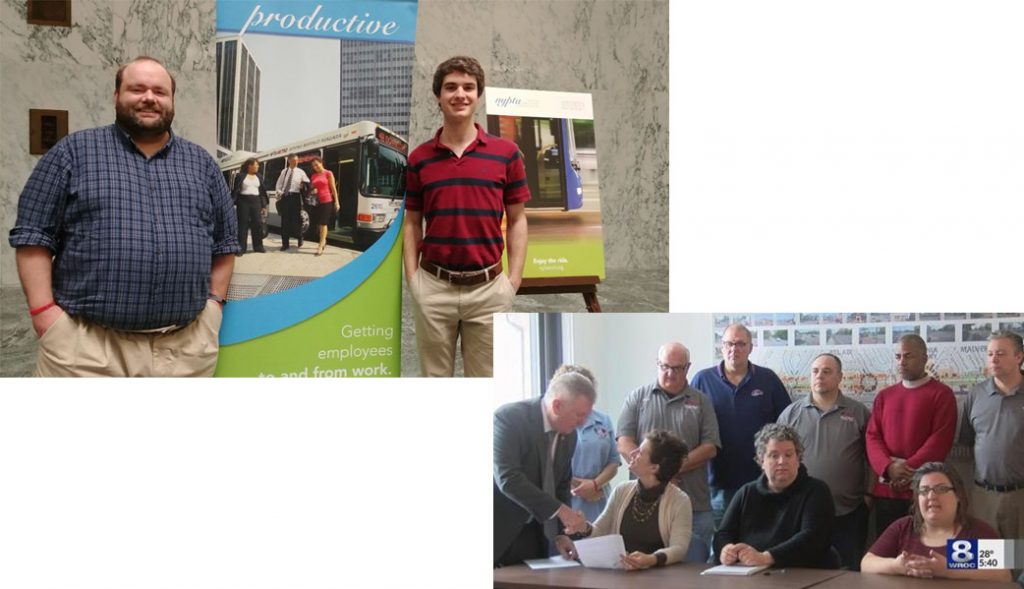
Fighting for the transit dependent in our community through countless advocacy actions, like traveling to Albany on Transit Awareness Day, hosting a joint press conference with Our Streets Transit Coalition partners, and joining the New Yorkers for Better Public Transit campaign.
And after two years of conceiving and planning with a powerful coalition of partners, we helped launch the Drive 2B Better public awareness campaign to make our streets safer to walk and bike. Look out for a second phase of the campaign in 2019!

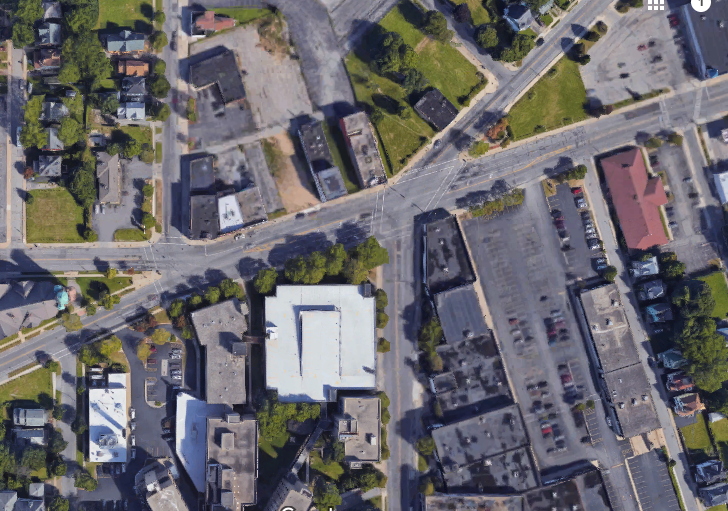
Complete Streets Series (Part 3 of 3): Safer Rochester Streets, An Intersection at a Time
In this final installment of our Complete Streets Blog Series, guest author David Riley will highlight a sampling of intersections and trouble spots that were nominated for the Complete Streets Makeover project, and share his ideas for how they might be made safer for cyclists and pedestrians.
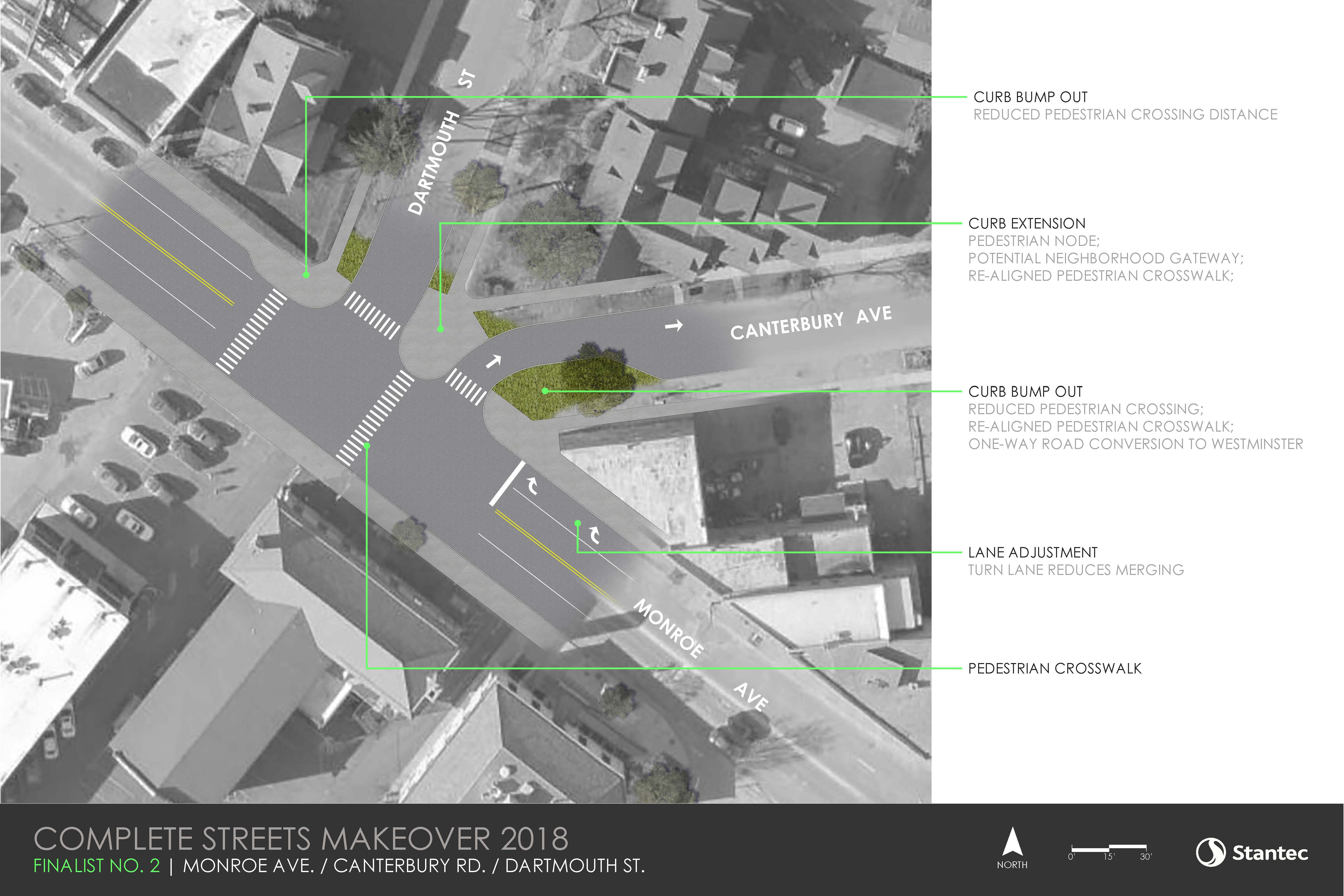
Complete Streets Series (Part 2 of 3): Re-Designing Our “Finalist” Streets for People
Back in May, we launched our Complete Streets Makeover project by asking the general public to help identify the intersections and trouble-spots where you live, work and play that could be redesigned to make them safer for everyone. We received over 90 nominations, and after a careful process to examine each and every submission, we selected the following locations:
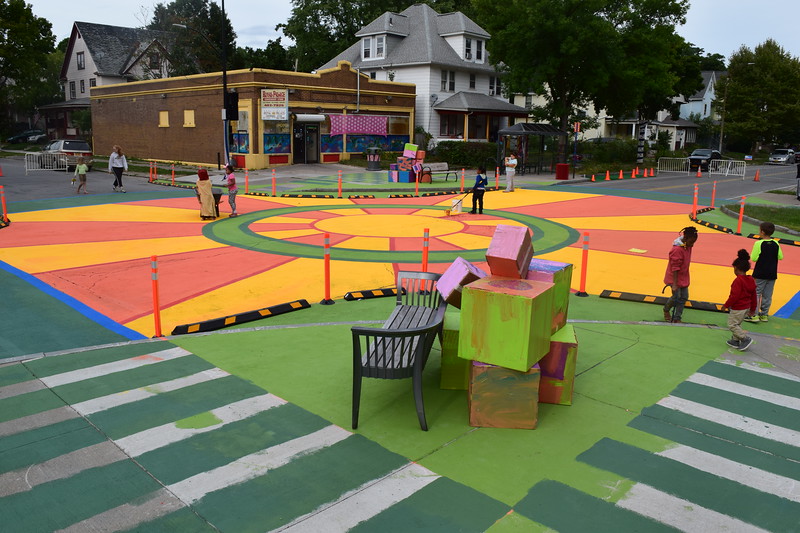
Complete Streets Series (Part 1 of 3): A Neighborhood Intersection Transformed
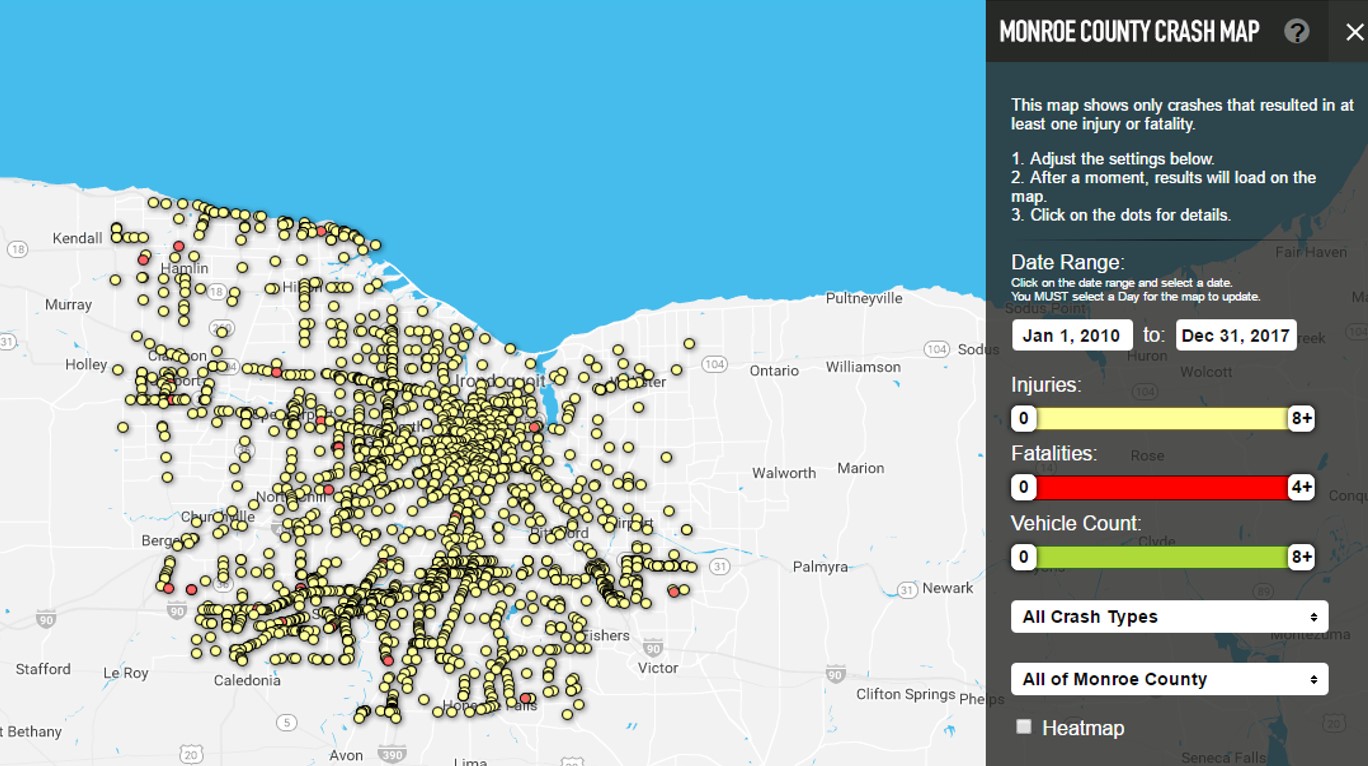
In the U.S., pedestrian fatalities have skyrocketed, increasing by 46% from 2009-2016. According to our Crash Map, over 4,000 crashes in Monroe County from 2010-2017 involved bicyclists and pedestrians. Eight people die on our streets every year as a result of these crashes.
Canal Path + Riverway Trail = 10,000 users weekly
We posted a few weeks ago about great new data from the Genesee Transportation Council showing just how much the Riverway Trail gets used–a lot! Now we can share preliminary data, also from GTC, about usage of the Erie Canal Path. During the week of 1 September, more than 4000 people used the Canal Path at the NY-15A bridge. Add that to the Riverway Trail numbers, and you find more than 10,000 users of these great community resources. Let’s make sure they are supported and expanded!
For all you wonks, here’s the data:
Sat, Sep 1, 2018: 800
Sun, Sep 2, 2018: 603
Mon, Sep 3, 2018: 683
Tue, Sep 4, 2018: 519
Wed, Sep 5, 2018: 400
Thu, Sep 6, 2018: 478
Fri, Sep 7, 2018: 653
Teaching English and Cycling in Kazan

Karen shows a student in Kazan the finer points of bicycle maintenance.
An update from Karen Lankeshofer, longtime Cycling Alliance member and Henrietta resident who is teaching in Kazan, Russia:
In July 2017, I got an email from a former ESL student of mine asking me if I wanted to teach English at her friend’s private school in Kazan, Russia. I jumped at the chance and was here within 7 weeks. If any of you are soccer fans, you will know that Kazan hosted many of the World Cup matches during last summer. The city lies about 500 miles east of Moscow and is the capital of the Republic of Tatarstan, a state in the Russian Federation.
The population is about half Tatar and half ethnic Russian. Signs are written in the Tatar and Russian languages, sometimes also in English. The city is dotted with mosques and orthodox churches and without a doubt is the most tolerant city I have ever experienced.
Tatarstan is a very wealthy area with oil and chemical production. Being so far from Europe, it has been mainly influenced by Persia, Mongolia, China, and other eastern parts of the world throughout its history. Genghis Khan controlled the area for many years.
With its considerable wealth, Tatarstan realizes it needs to have more people who are proficient in English to function better in European marketplaces. That’s why my school has me teaching a group of 3- and 4-year-olds English. It is a total immersion program; my aides and I only speak English with these children. It was difficult at the beginning last September because the kids knew no English and were used to getting their own way. Parents were also skeptical until they started seeing results about this time last year. Now they are true believers. The older kids use full sentences which are sometimes grammatically incorrect, but still perfectly understandable. Even the younger ones understand everything and repeat individual words or phrases. It’s been a rewarding one and a half years in the classroom, but it’s also strenuous.
My first purchase in Kazan was a folding bike, which I take on the subway when I’m headed downtown and use to get all over the city, except in winter. The weather is extreme here and, even if I could ride through the deep snow, I don’t relish slipping on the ever-present ice and breaking a leg.
Last February I attended the Winter Cycling Conference in Moscow and met some officials from Kazan who are really motivated to improve the cycling scene here in the city. I thought, “If they can do something, so can I!”, and convinced my school to let me start a bike club.
It’s been a huge success. The mountain biking champion of Russia gives bike lesson to the littlest kids on small bikes without pedals, and I give lessons to the first graders, mostly talking about safety but also taking excursions on trails in the woods. We involve all the kids and have had a family riding day; plus, the head of the Rotary Club here, who just completed a bike trip around the world, has come to talk to our kids. He and I are now working together to spread my school’s program to other schools. And the parents are ecstatic that their kids are leaving their bikes at school all fall to ride on the track we painted on the school courtyard. One parent told us his kid’s bike usually sits in the cellar all summer.
All in all, this has been a great experience for me. I have friends from around the world with whom I undertake a lot of different adventures here in Russia, and I see that they bike revolution is truly an international phenomenon.
I’ll be home in August to start patching inner tubes again. Keep up all your good work and I’ll see you then.
Karen L.
Riverway Trail getting lots of use
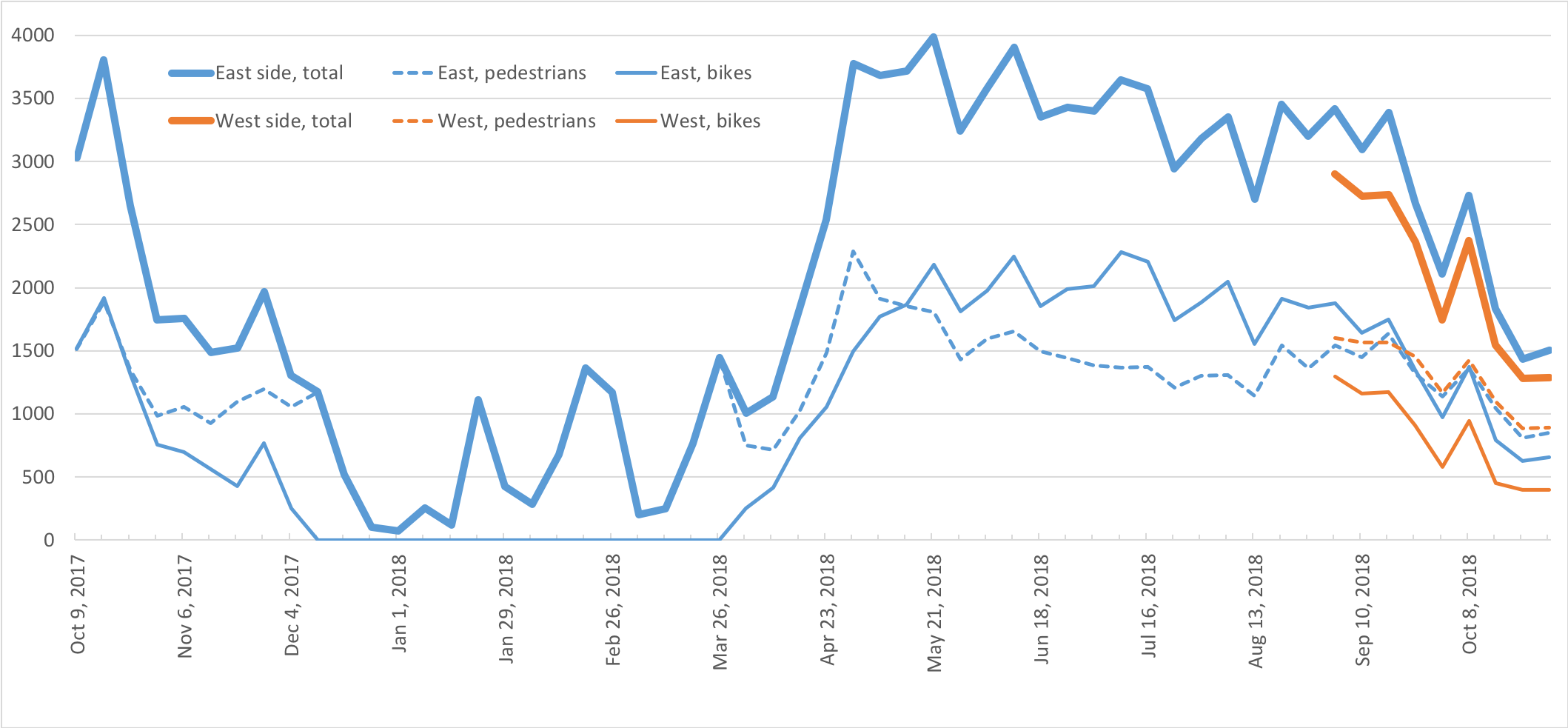
The Genesee Riverway Trail is getting lots of use, as shown by new data from the Genesee Transportation Council. Check out the chart: at the Ford Street Bridge, the east and west branches of the trail together support as many as 6000 pedestrians and cyclists each week! In a city of 210,000, that’s a tremendous number of people. We at the Rochester Cycling Alliance are cheering that the Rochester community has these great trails for pedestrians and cyclists, and we’re cheering that so many are making good use of them. Keep it in mind next time you talk to elected officials and city/county/state employees: people use these trails, and expanding the trail network will bring even more users.

Weekly counts of pedestrians and cyclists using the Genesee River Trail near the Ford Street Bridge since October 2017. The total count (pedestrians + cyclists) is also plotted. A counter on the west branch was installed in September 2018.
This rich set of data tells many stories about the Riverway Trail. Usage varies with the weather, as you’d expect: many more people are on the trail in the summer months than in the winter. (But the count can’t be entirely accurate, because I personally biked the trail on the east side twice a day all winter, on my daily commute.) The east side supports more cyclists than pedestrians, except in winter, whereas the west side supports more pedestrians than cyclists.
To gather this data, GTC installed counters on both branches of the trail. As you can tell, the counter on the east branch was installed months before the counter on the west branch. The counters have infrared beams that are interrupted whenever anybody passes, indicating a trail user. The counters also have hollow rubber tubes across the trail, so that when passing cyclists run over the tubes, the counters can sense puffs of air. These counters are great for urban planning because they give us real information about trail use, so we can plan and advocate accordingly. Big thanks go to GTC for gathering the data–the counters are still there, and the counts are still running. We at RCA will be glad to share the data as it comes in.
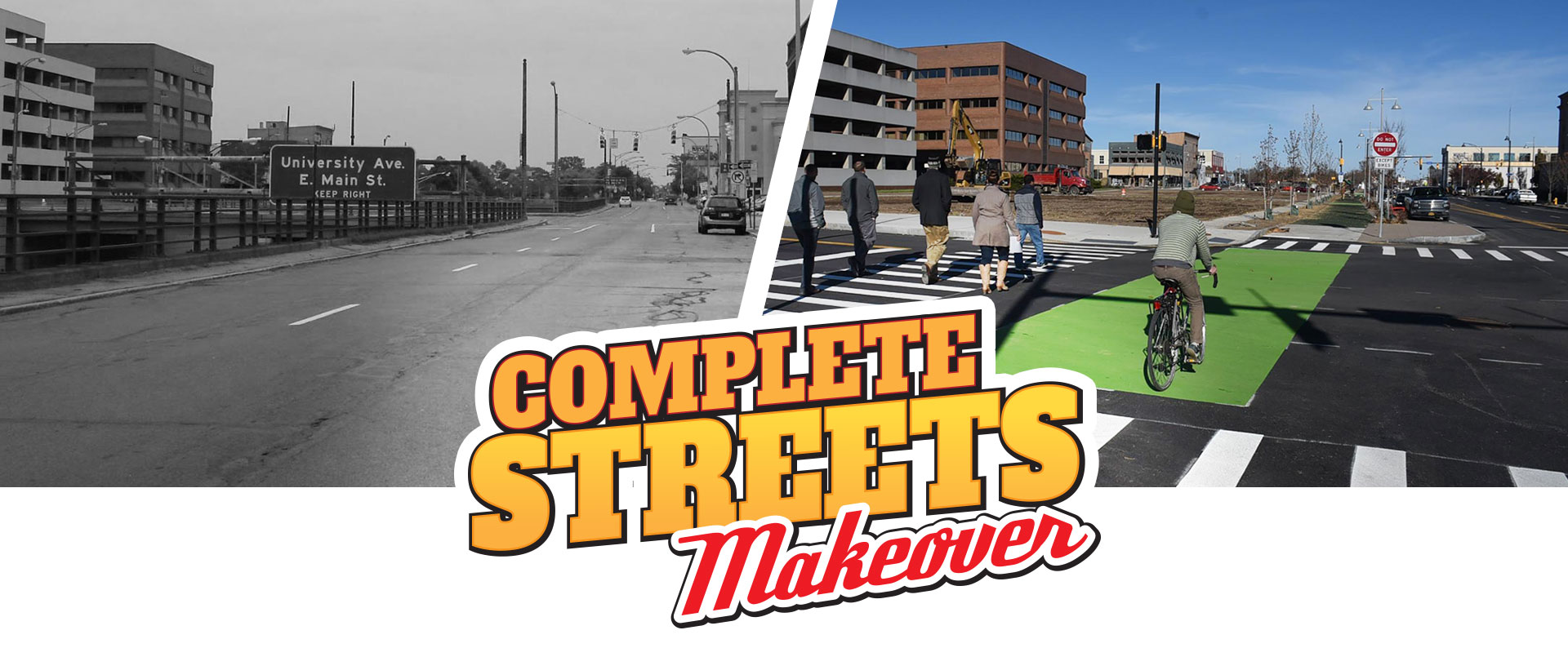
Parsells Ave. & Greeley St. Will Get a Complete Streets Makeover
 Congratulations to the Beechwood Neighborhood — Parsells Ave. & Greeley St. is the winner of our Complete Streets Makeover!
In May, we asked you to help identify the intersections and trouble-spots where you live, work and play that could be redesigned to make them safer for everyone.
We received over 90 nominations for roughly 39 City and 11 suburban locations. After a careful process to examine each and every submission, we selected the following locations:
- Parsells Ave & Greeley St. – WINNER
- Lake Ave. & Phelps St. / block encompassing Lakeview Tower – FINALIST
- Monroe Ave., Canterbury Rd. & Dartmouth St. – FINALIST

We and our team of partners had a challenging task to choose from so many quality submissions and deserving locations! A set of established judging criteria helped guide us through the selection process. In the end, we decided that Parsells & Greeley presented the right mix of community support, unsatisfactory current design and feasibility for making a real change for the better through our project.
What Happens Now?
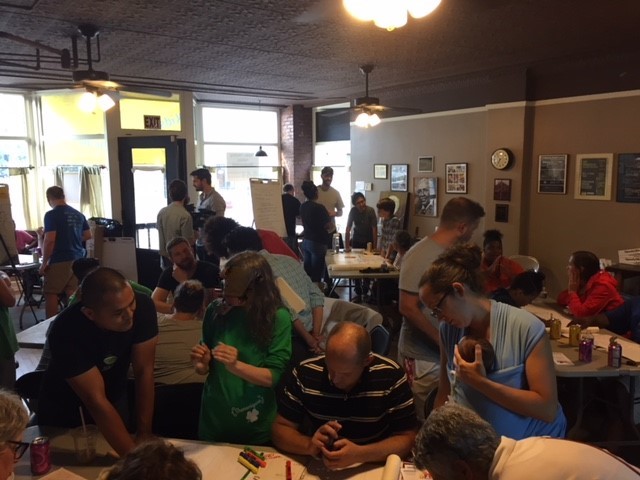
Our winner, Parsells & Greeley, gets a Complete Streets Makeover! The makeover kicked off last week with a community input session to hear from the residents of the Beechwood neighborhood. No one understands what it’s like to use our streets better than those who walk, bike, roll and ride along them everyday.
Based on feedback from this session, the complete streets design team at Stantec will draft conceptual design improvements of an improved streetscape that will be brought to life through an on-street experiment. That’s right. With the help of Healthi Kids and the City of Rochester, we are going to be testing the design improvements through some good old-fashioned tactical urbanism. Our goal is to demonstrate a successful project and move towards making the change permanent.
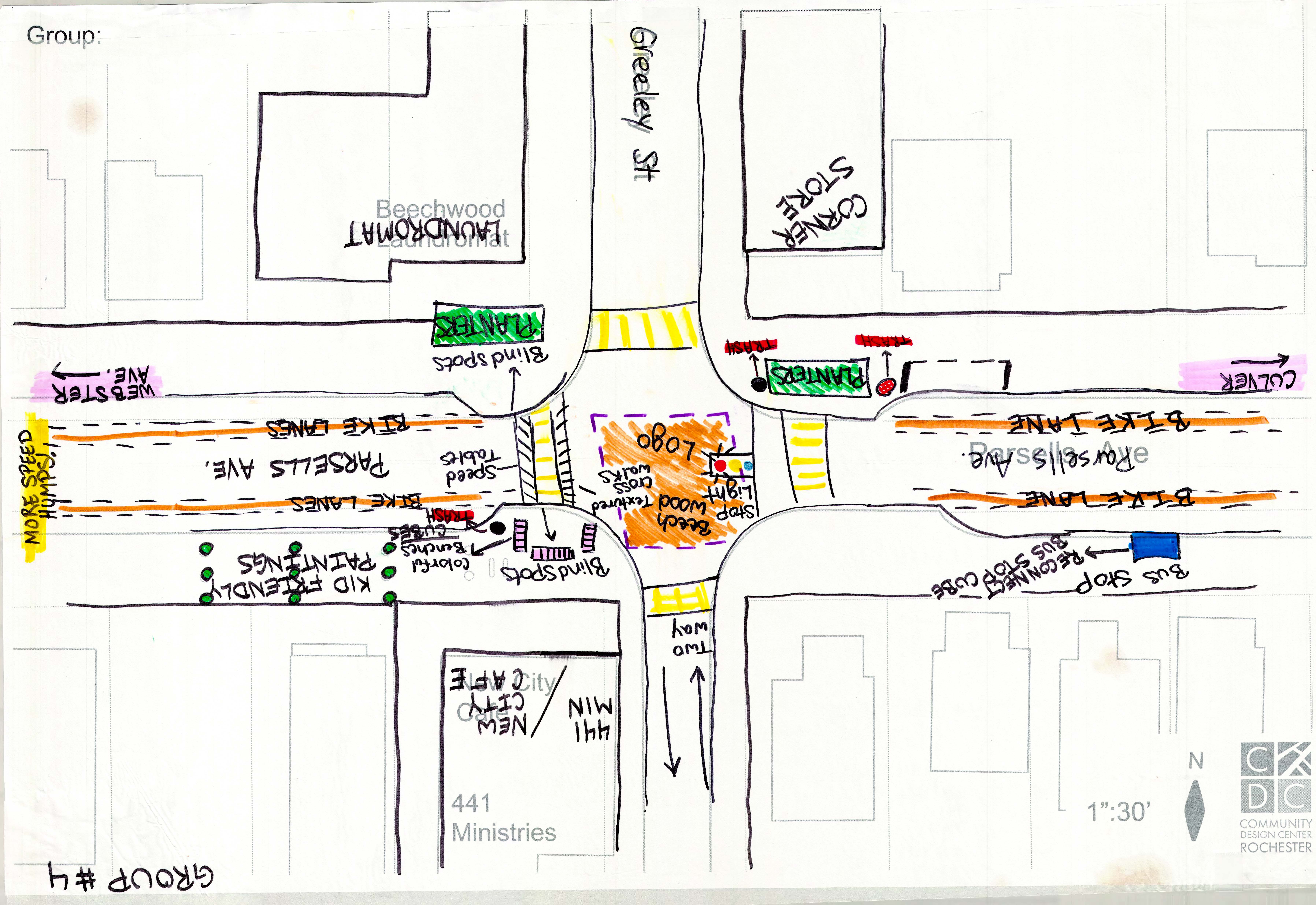
Our finalists won’t walk away empty-handed. The design team at Stantec will provide each of them with conceptual drawings of possible street design improvements. The neighborhoods can use these illustrations as a tool to help advocate for changes that would make these streets safer for everyone.
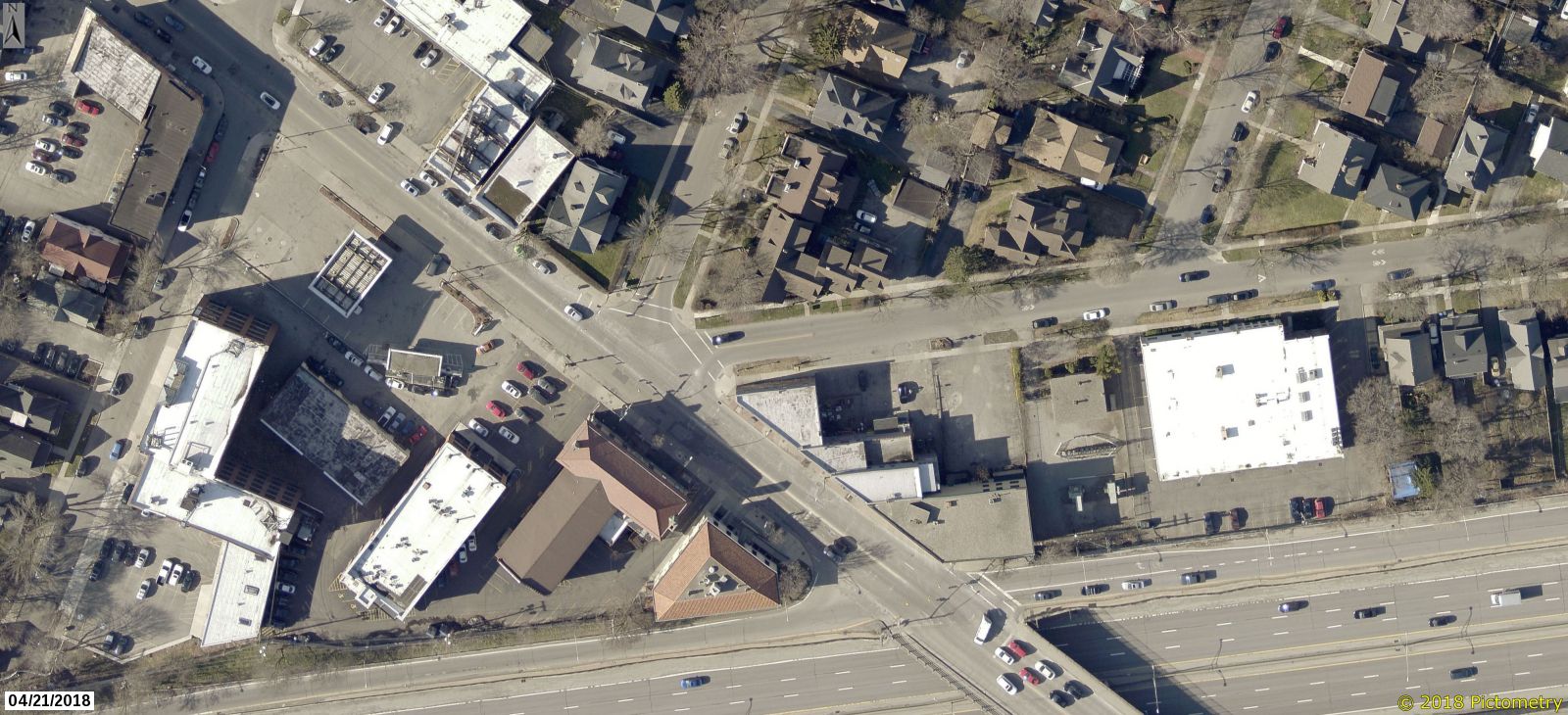
Monroe Ave., Canterbury Rd. & Dartmouth St.
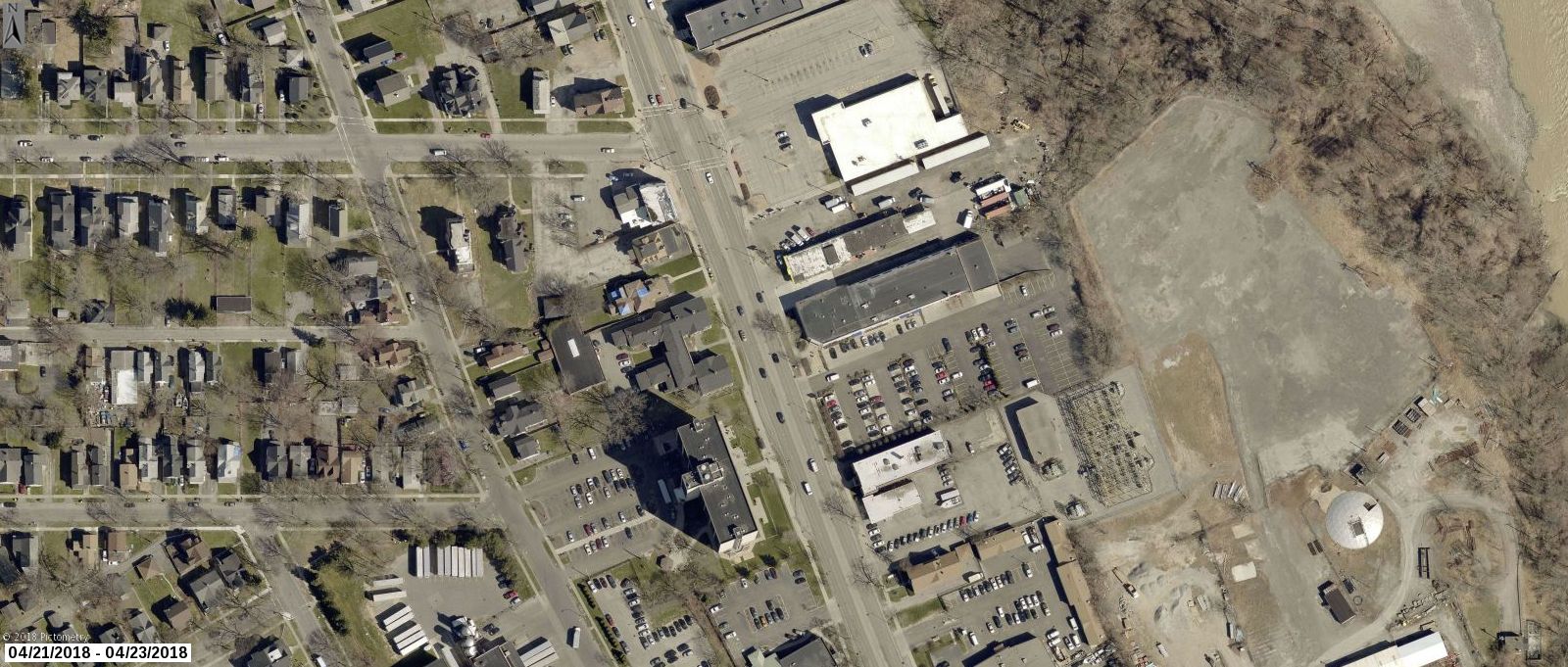
Lake Ave. & Phelps St. / block encompassing Lakeview Tower
But, wait. There’s more…
Our filmmaker, Floating Home Films, is capturing all the action and will produce a short documentary film about the project to be featured at our Street Films event on Wednesday, November 14 at The Little Theatre. Save-the-date and stay tuned for more project updates!
What we like about Reimagine RTS plan. And a few things we’d change.
[ Read the Draft Recommendations here. ]
After reviewing the draft and hearing input from many of you, Reconnect Rochester would like to formally share our assessment – including the parts we like, and a few things we’d like to see improved upon… Read more
Over 1000 ride with Bike to School Day

Here’s a great perspective on school.
Here’s exciting news for those of us who promote bikes and alternative transportation: more than 1000 people, including many community leaders, rode in Bike to School Day events at ten different Rochester-area schools on 9 May. Those events were among thousands nationwide, all held on the same day to promote biking and walking as great ways to get to school.
Biking to school has lots of benefits. At a time when childhood obesity continues to grow as one of our country’s greatest health risks, getting kids biking regularly can keep them in better physical health and form habits for a lifetime of good health. Biking is great for emotional and mental health, too. Biking builds community by allowing neighbors to get to know each other and see the impact schools have on neighborhoods. Biking is brilliant for sustainability because it burns no fossil fuels and emits no carbon dioxide. And of course, biking is fun–one student rider in Brighton said, “Biking to school is so much better than riding the bus!”
Bike to School Day rides took place all over the Rochester area this year. In the city of Rochester, School #23 drew 55 riders, and School #58 drew 50. In Honeoye Falls, Manor Intermediate School had 70 riders. In Pittsford, Calkins Road Middle School had 25 riders, Park Road Elementary School had 40, and Jefferson Road Elementary School had 150. In Brighton, Council Rock Primary School encouraged students to ride all week, French Road Elementary School had 240 riders on 9 May, and Twelve Corners Middle School had over 300. Finally, Indian Landing Elementary School in Penfield had nearly 300 riders.
Community leaders came out to support Bike to School Day in a big way. Superintendent Barbara Deane-Williams of the Rochester City School District rode in the event at School #23 and invited her entire cabinet to ride along. Many did, including Carlos Cotto, RCSD Director of Physical Education. RCSD School Board President Van White joined the School #23 ride as well. Penfield Town Supervisor Tony LaFountain and Brighton Town Supervisor William Moehle both greeted students at the event at Indian Landing, along with Penfield School Board President Catherine Dean and School Board Member John Piper. Principals and teachers rode along at many of the events, too. We are grateful to our leaders for taking the time to support kids biking and walking to school!
More thanks go to the area police departments who accompanied riders to ensure traffic safety; to businesses and organizations that donated snacks or prizes, including Park Avenue Bikes, Wegmans, and Common Ground Health; to Zagster for providing Pace bikes, and to school staff who supported the events.
Over 1000 people rode last Wednesday and had a great time. Let’s capture the momentum to get more kids biking and walking to school in the Rochester area! Think about organizing a Bike to School Day event at your own school sometime soon. Organizing requires surprisingly little work, and those of us who’ve done it before would happily serve as resources, so send us an email. Help your own kids bike to school everyday. If the ride seems too much for them to handle alone, talk to neighbors about organizing a bike train: a group of five or ten kids can ride safely together with a couple of grownups to guide them. Ask teachers and school leaders to include bikes in the physical education curriculum if they aren’t already included. You can contact the New York Bicycling Coalition for a ready-made curriculum. And consider doing more of your own daily travel by walking or biking. One teacher in Honeoye Falls said, “I’ve started biking to school myself because I’ve seen your kids doing it.” There’s a great example to follow.
Our recommendations for ROC the Riverway

A city & state initiative to improve Rochester’s riverfront, focusing on design that is oriented to pedestrians, bicyclists, boaters, and recreational enthusiasts.
The ROC the Riverway Program, jointly supported by the City of Rochester and the State of New York, will soon bring major changes to Rochester’s riverfront. The Rochester Cycling Alliance is cheering loud for our community leaders, who made the right choice when they wrote the Project’s first design principle: “Focus on design that is oriented to pedestrians, bicyclists, boaters, and recreational enthusiasts”.
That said, the details of the Project haven’t been decided yet, and for cyclists and pedestrians, some of the draft ideas are better than others. We at the RCA urge community members to give feedback as planning continues. Here are some important points to think about:
- The cycling community should oppose the Aqueduct Reimagined (“AR”) project, for the following reasons:
- The new protected bike lanes across Broad Street would be destroyed. The plan calls for no bike lanes on the pedestrian plaza that would replace it, and the current design has no bike or ADA accessible access to the east part of Broad Street. The City has consistently opposed protected bike lanes on Main, and no plans for protected bike lanes are active for Court Street, therefore our only safe east-west corridor is demolished.
- Current AR plans call for north-south pedestrian/cycling paths along the river, but there is no method for north-south bike traffic to avoid massive conflicts with east-west pedestrian flow in the plans.
- The AR project takes up a majority of the State money allocated for all the projects ($35M out of $50M), starving other projects that better promote cycling transportation and urban living.
- Recharging the Trail ($5M): The current River Trail is in appalling shape as regards to pavement quality, and badly needs repair. In addition, it is too narrow to adequately serve both pedestrians and cyclists (especially pedestrians with dogs on leashes). Improved River Trails will bring additional people downtown from the southern neighborhoods and U of R without adding to parking and traffic problems.
- Riverside Development and Arena on the River (~$8M): This is great location for mixed use commercial/residential development, with nice views of the cataracts and easy access to events at the arena. Residents of this development would be very likely to use active transportation, and the entrance to the River Trail here would be improved.
- Riverfront Reborn ($10M): (same as above, but with easy access to High Falls area as well)
- Welcome Connection ($40M): A better connection to the High Falls and MCC area from Downtown through State Street, which is currently very repellent to both pedestrians and cyclists.
- Preserving Pont de Rennes ($9M): Preserves an essential connection between east and west sides and the entertainment/pedestrian flow between MCC, High Falls and the Genesee Brewery.
- Running Track Bridge ($5M): Completes the El Camino Trail and allows residents from the northeast neighborhoods easy and safe access to the High Falls area. (Note: While this project would allow access from northeast neighborhoods, and the existing River Trails give access from the southern neighborhoods, there are currently no proposed projects that provide safe access from the northwest neighborhoods. There is an equity issue here.)
Please send your feedback right here.
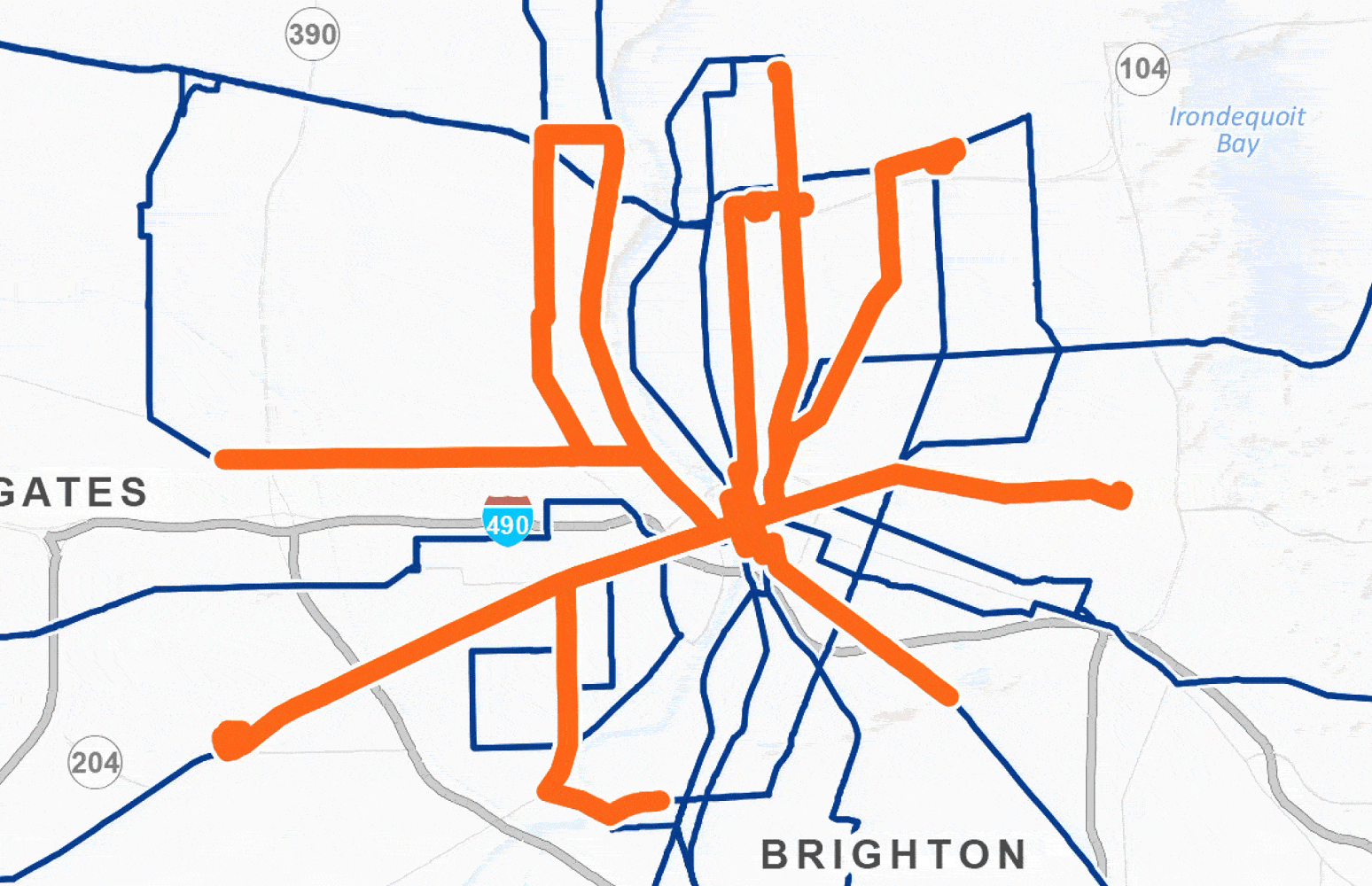
Reimagine RTS Draft Recommendations
Rochester Bike Week 2018
It’s that time of year again: kick off the summer cycling season with Bike Week 2018 in Rochester. The week (plus bonus days) spanning May 11-20 is jam-packed with bike events, and it’s a great time to get involved. You can find out about biking at the Public Market or at the Red Wings game, learn bike repair skills or just borrow a stand and some tools, watch professional racers at the Twilight Criterium, ride to honor injured cyclists, ride for racial reconciliation, ride to Rochester’s abolitionist and suffragette landmarks, ride with kids, ride with churches, ride in seersucker, or ride after tacos. All these events and more are on the RCA calendar, and you can subscribe so they will appear on your calendar, too. Come out and ride!
Be Prepared To Stop
The American Society of Civil Engineers grades the condition and performance of America’s transportation infrastructure as a ‘D’ or worse. Our roads and bridges are crumbling; Over 35,000 people are killed on our highways every year; Our transit systems are unable to keep up with demand. And the U.S. lags behind the rest of the developed world in infrastructure investment.
This week Reconnect Rochester hosted a screening of Be Prepared To Stop, a documentary film that talks about these challenges from the perspective of the freight transportation industry. We asked a panel of local experts in infrastructure policy and sustainability for their views on what America needs to do to put ourselves on the road to sustainability.
Watch the trailer and panel discussion below…
Moderator:
Elissa Orlando
Senior VP for Television & News
WXXI Public Broadcasting
Panelists:
Enid Cardinal
Senior Sustainability Advisor
Rochester Institute of Technology
Jim Hofmann
Principal & Office Leader
Stantec
Richard Perrin
Director of Planning (eastern U.S.)
T.Y. Lin International
James Stack
Executive Director
Genesee Transportation Council
Sidewalk Snow Removal: How Are We Doing in Monroe County?
Story by: David Riley
A Rochester resident and a former journalist, David is completing a master’s degree in urban planning at the University at Buffalo…
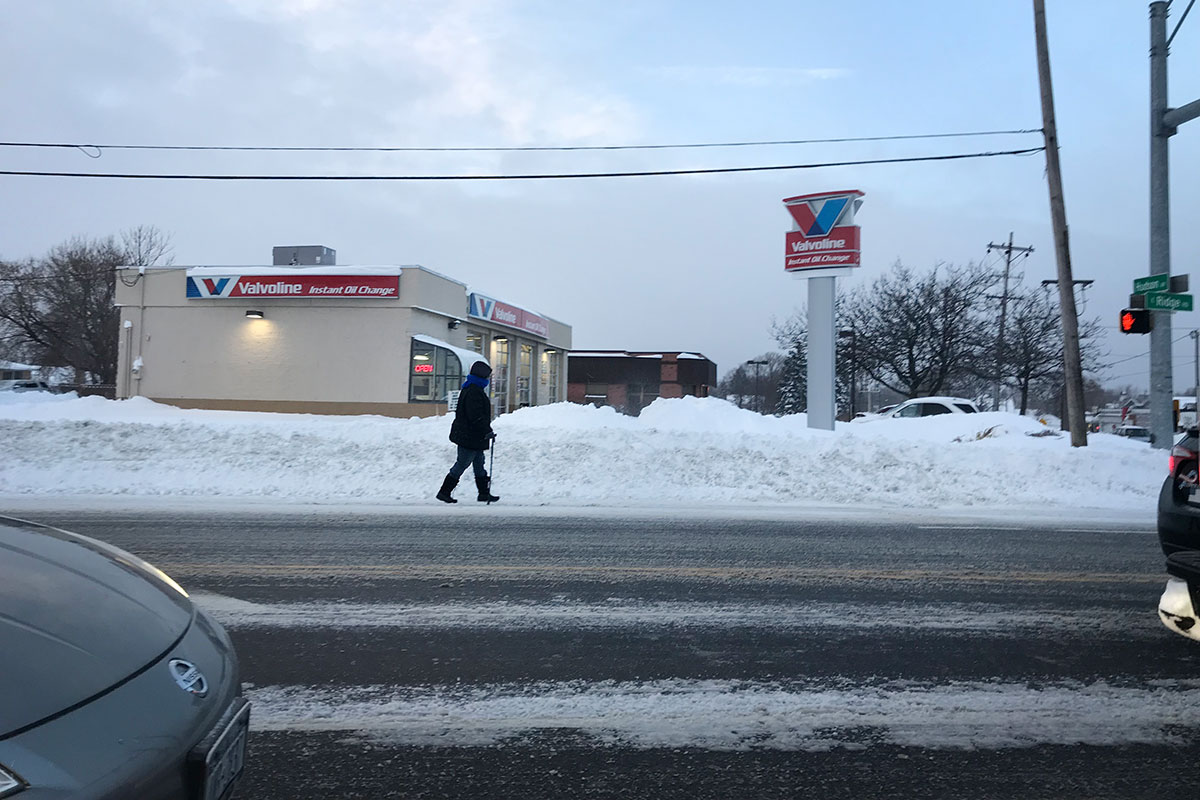
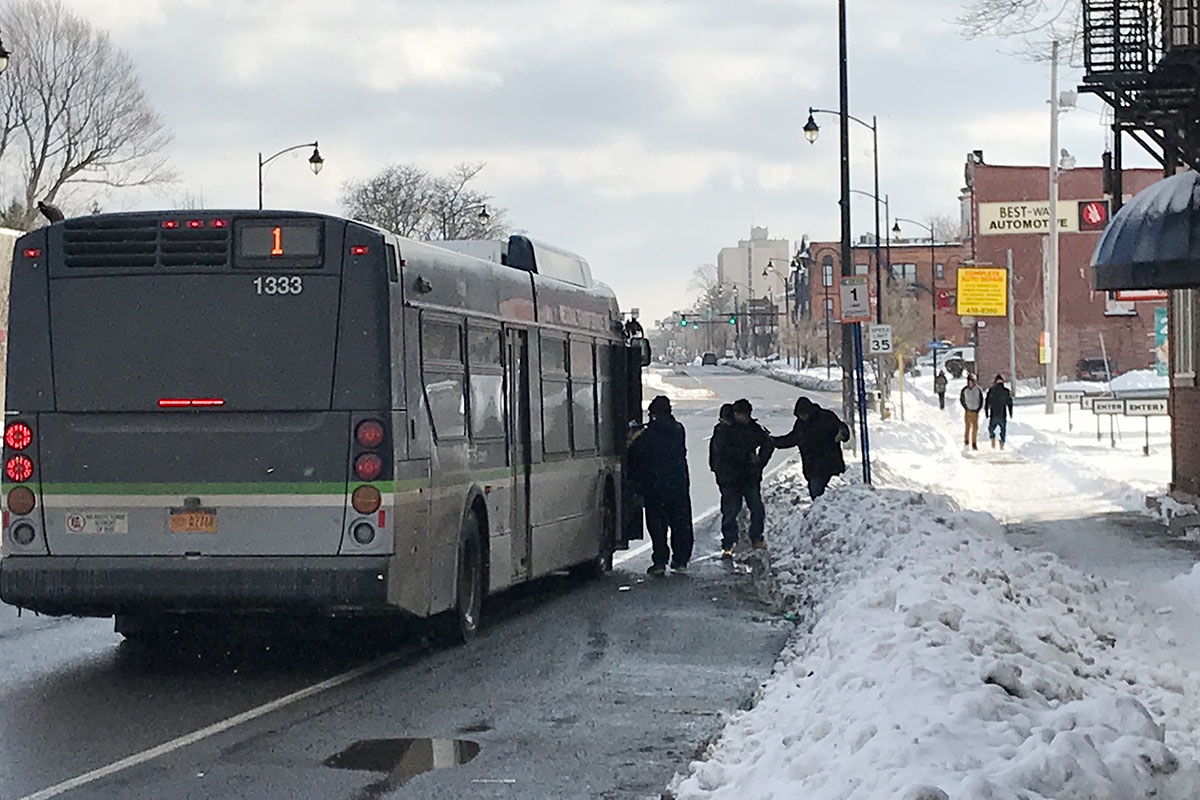
For tens of thousands of Monroe County residents, a sidewalk isn’t just a convenience. It’s a vital connection to the world.
Nearly 12,000 people here walk to their jobs, U.S. Census data shows. Another 13,000 walk to and from bus stops in order to take public transportation to work, including as many as 1 in 3 workers in some city neighborhoods. Many people also rely on sidewalks to get to and from school, medical appointments or grocery stores, much less to go for a jog or walk the dog.
So for many people, it isn’t simply an annoyance if part of a sidewalk turns into a snowdrift during the winter. It’s a disruption that forces people going about daily routines to wade through snow or take a dangerous chance and walk in the street. For people with disabilities, a snowy sidewalk can make a usually simple outing impossible.
Yet keeping sidewalks clear is not always a priority for municipalities in the Northeast and Midwest. The City of Rochester does more than many other Snow Belt cities. While property owners here are responsible for clearing adjacent sidewalks of snow and ice, the city also provides supplemental sidewalk plowing anytime it snows at least 4 inches. The program has drawn some interest in recent years from Buffalo and Syracuse, neither of which generally plow sidewalks beyond public buildings. A handful of local suburbs also provide some municipal sidewalk plowing, including Greece and Irondequoit. Read more
- « Previous Page
- 1
- …
- 9
- 10
- 11
- 12
- 13
- …
- 41
- Next Page »